



Etched Crystal Goblet
These etched crystal goblet pieces are drinking vessels featuring decorative surface work, offering collectors a touch of historical craftsmanship.
Etched Crystal Goblet
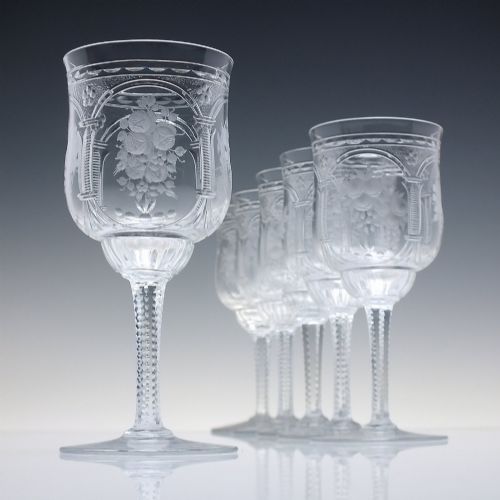
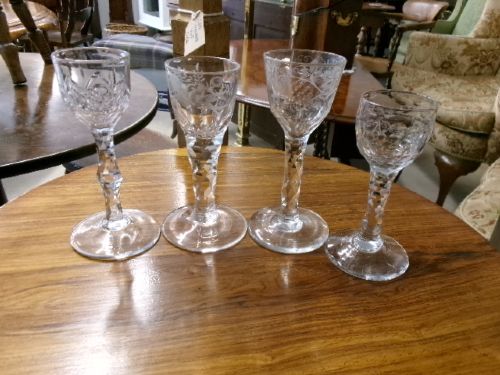
When you search for an etched crystal goblet, you are looking at drinking vessels originating from periods such as the Georgian era, the Victorian period, and Edwardian times. The pieces you are most likely to meet on this page include rummers, cordials, wine glasses, and gin glasses displaying engraved or frosted decoration.
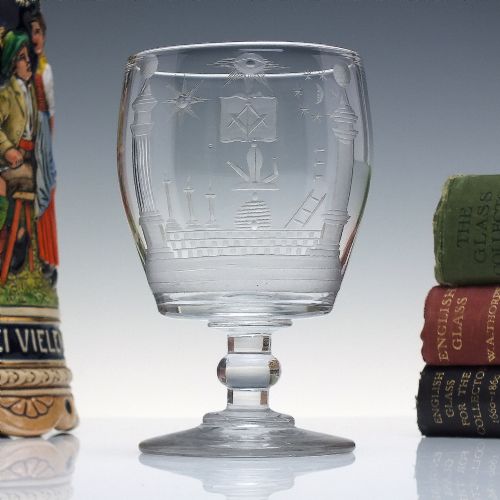
Many of these drinking glasses arrive from English and Bohemian workshops, spanning the eighteenth, nineteenth, and early twentieth centuries. Forms range from large Masonic rummers with wide foot bases to Harlequin sets of dessert wine glasses and square base goblets.
Materials and construction
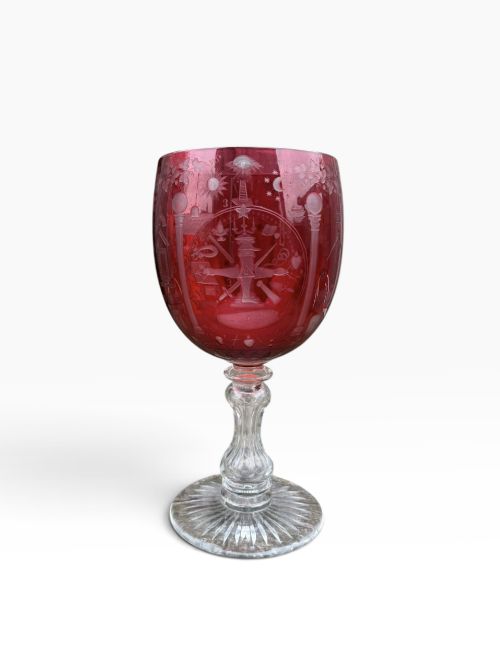
The objects listed utilise glass, lead crystal, clear glass, flint glass, and lead glass as primary materials, sometimes incorporating cranberry glass or amber glass colouration. Artisans shaped these heavy materials through glassblowing and moulding before finishing the vessel.
Surface decoration relies on techniques such as etching, engraving, cutting, frosting, and acid cutting to apply pictorial or geometric motifs to the bowls of the rummers and wine glasses.
Some Victorian glasses are large enough to be called rummers, which makes one wonder how boisterous nineteenth-century toasts actually were.
Distinctions in quality
Quality in these drinking vessels rests upon the crispness of the wheel engraving or acid etching and the clarity of the underlying lead crystal or flint glass. Heavier metal weights and well-proportioned stems with stable foot bases distinguish finer specimens.
Completeness within matching sets, such as Harlequin sets of wine glasses or sets of cordial glasses, changes the character of the group compared to single rummers or isolated goblets.
Stevens and Williams
The Etched Crystal Goblet Glossary
- Rummer
- A heavy drinking vessel with a large bowl, stout stem, and wide foot base. These pieces often feature engraved or etched decoration and date from the Georgian and Victorian periods.
- Lead crystal
- A type of glass containing metallic oxide that increases brilliance and weight. This material provides the clear, resonant body common to fine antique goblets.
- Flint glass
- An early term for high-clarity glass utilised in British drinking vessels. It offers the transparency necessary for detailed wheel cutting and engraving.
- Acid cut cameo
- A decorative technique where layers of coloured glass are partially removed using acid to create a raised design. This method appears on late nineteenth-century pieces.
Etched Crystal Goblet: Frequently Asked Questions
What is an etched crystal goblet?
An etched crystal goblet is a drinking vessel featuring decorative patterns abraded or carved into the glass surface using acid or mechanical tools.
These pieces encompass rummers, wine glasses, and cordial glasses produced during the Georgian, Victorian, and Edwardian eras.
How do I date an old goblet?
Dating relies on observing the form of the bowl, the thickness of the stem, and the style of the foot base alongside decorative motifs.
Georgian examples often display square bases or heavy faceted stems, whereas Victorian pieces frequently incorporate detailed frosted etching or cranberry glass.
Were these glasses used daily?
Many of these drinking glasses served functional roles at dining tables for wine, gin, or dessert courses during the eighteenth and nineteenth centuries.
Specialist vessels like Masonic rummers also held ceremonial purposes within specific fraternal organisations.
How should I clean my glass?
Antique glass requires gentle hand washing in warm water using mild detergent rather than machine washing.
Avoiding sudden temperature changes protects the fragile lead crystal and prevents damage to the engraved or etched surfaces.