
Antique Clear Stemware
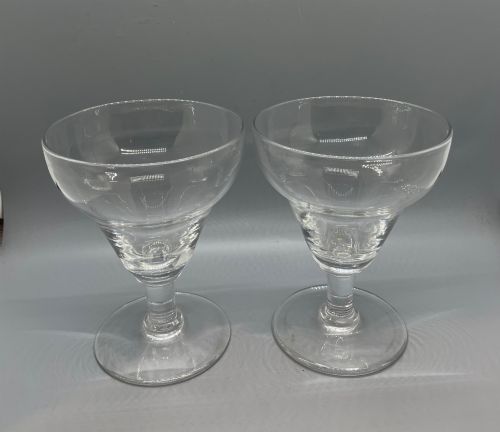
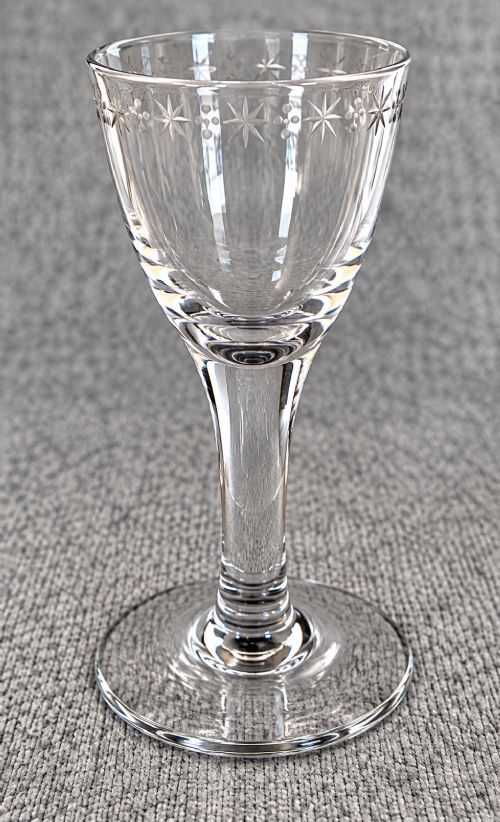
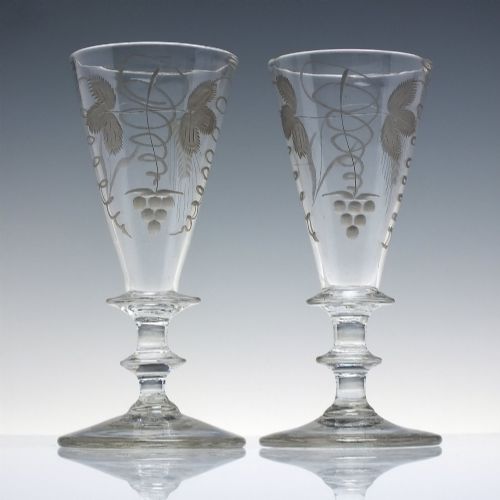
These antique clear stemware pieces bring centuries of social ritual to the table, from eighteenth-century baluster wine glasses to twentieth-century champagne coupes.
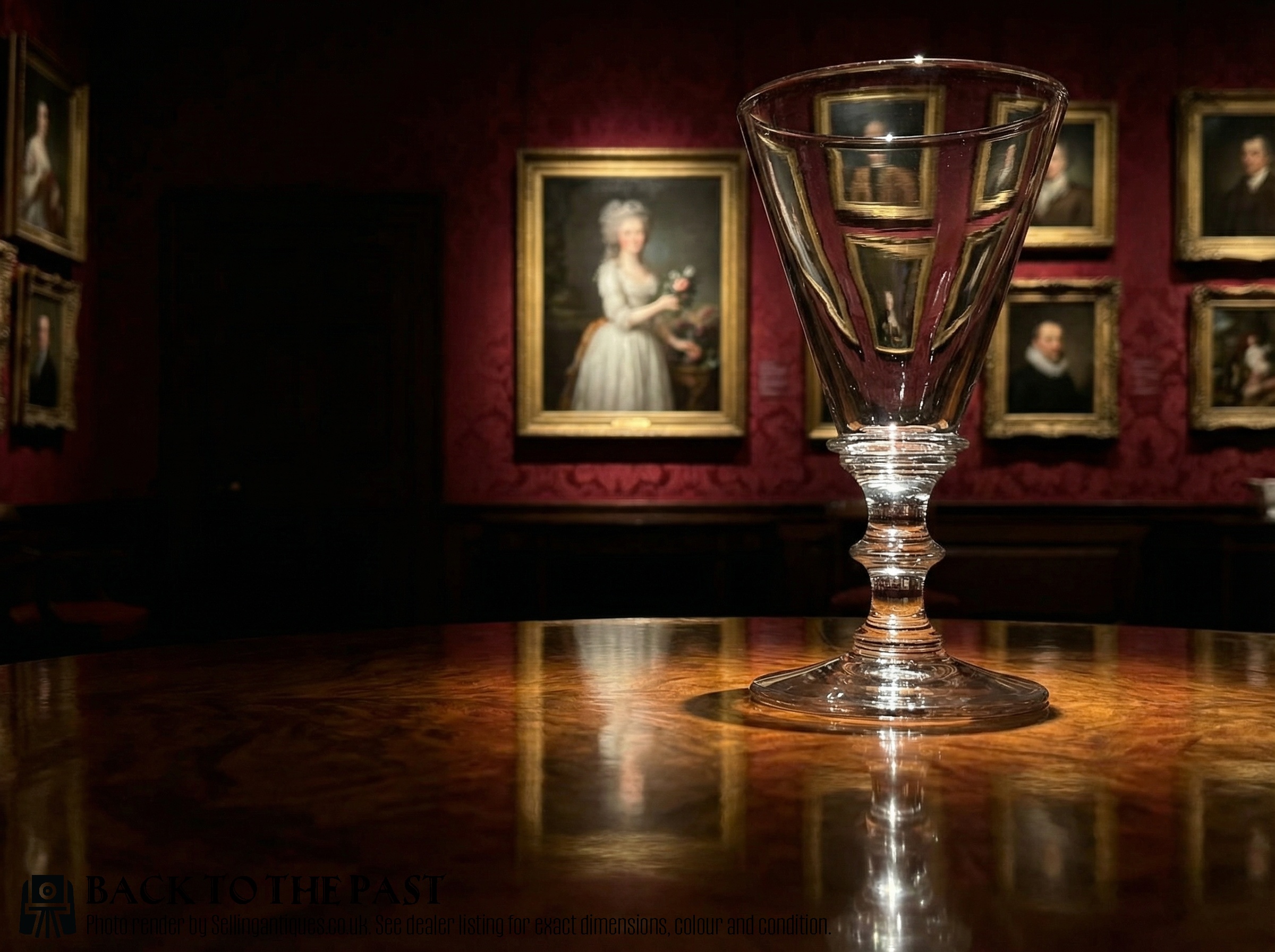
Antique Clear Stemware
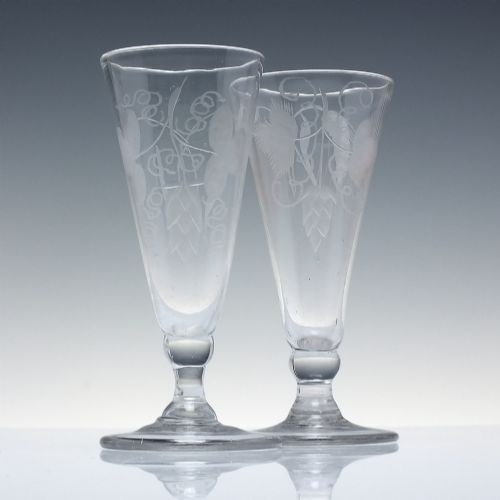
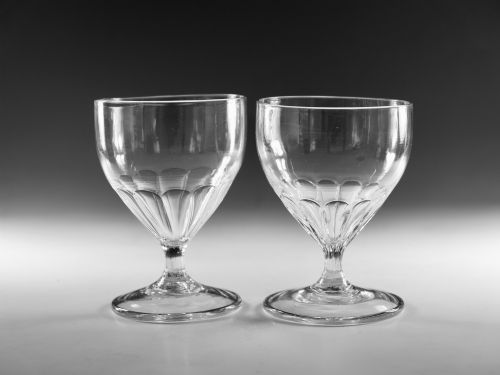
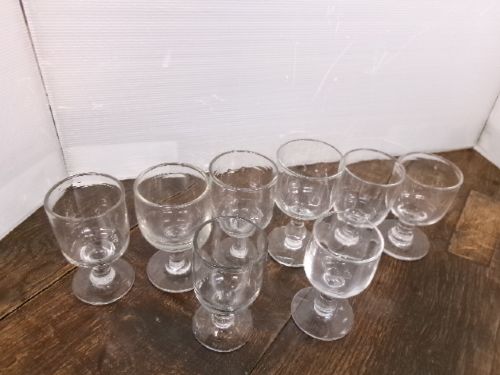
When you search for antique clear stemware, you enter a field defined by drinking vessels shaped for wine, beer, ale, rum, champagne, and spirits across the eighteenth, nineteenth, and early twentieth centuries. The assortment spans simple tavern glasses to ornate crystal goblets, with Georgian wine glasses appearing most frequently.
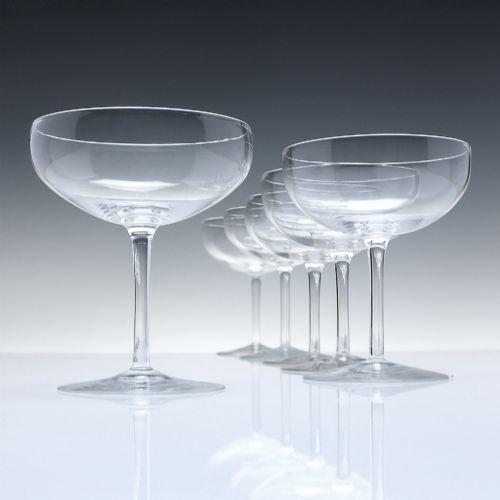
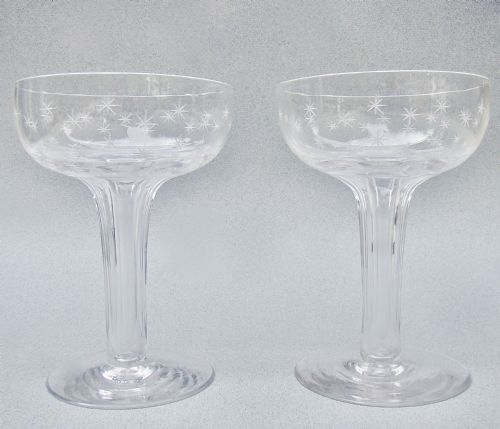
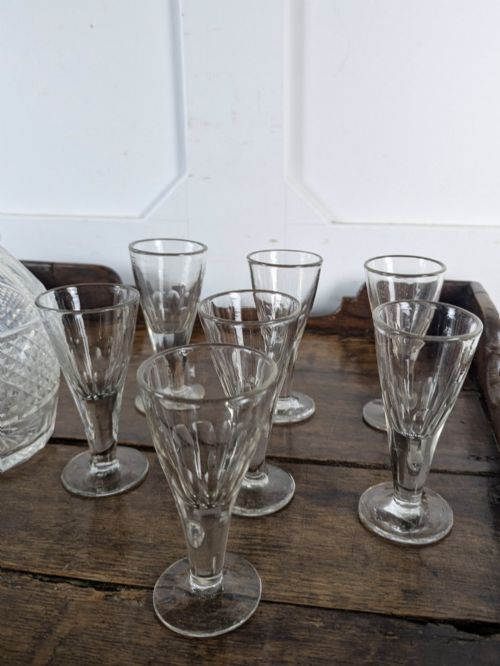
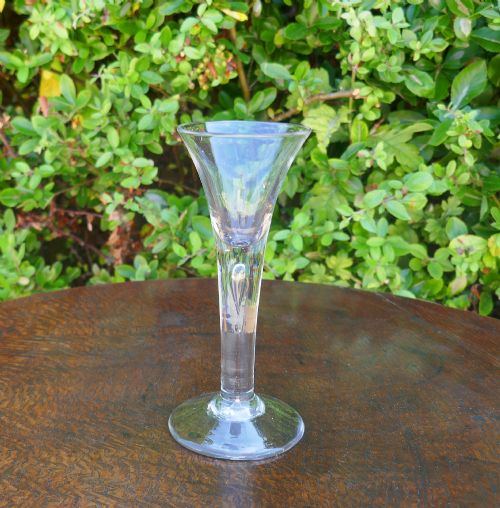
The forms range from compact dram glasses and slender flutes to generous rummers and shallow champagne bowls. Makers shaped these vessels for specific beverages, resulting in distinct bowl profiles such as trumpet, ogee, pan top, and bell.
Origins stretch from English glasshouses to continental workshops in France, Bohemia, and Germany. The selection reflects changing social habits, moving from heavy baluster drinking vessels of the 1700s to large matching suites of the Edwardian and Art Deco eras.
Materials and construction
Glassmakers utilised lead glass, flint glass, and lead crystal, prized for clarity, weight, and the capacity to hold deep wheel engraving. The addition of lead oxide to the melt increased the refractive index, giving the material a brilliant sparkle.
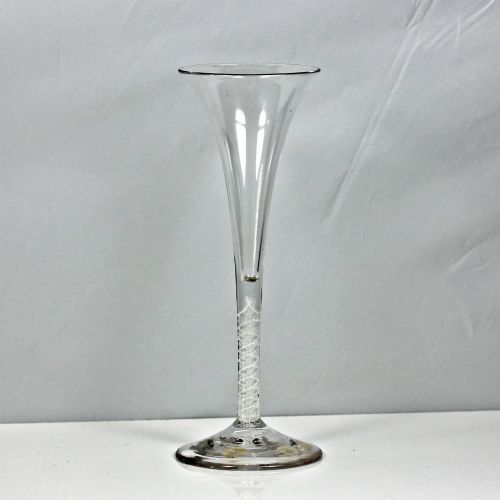
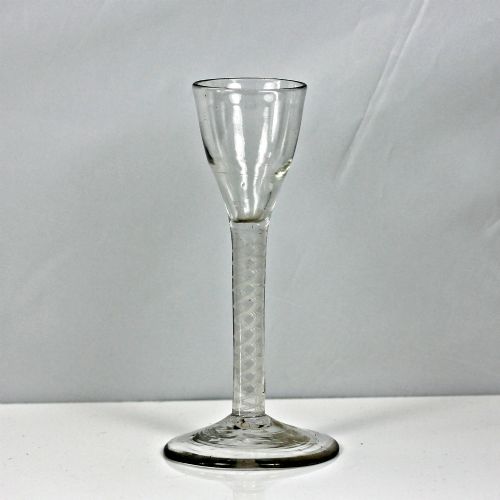
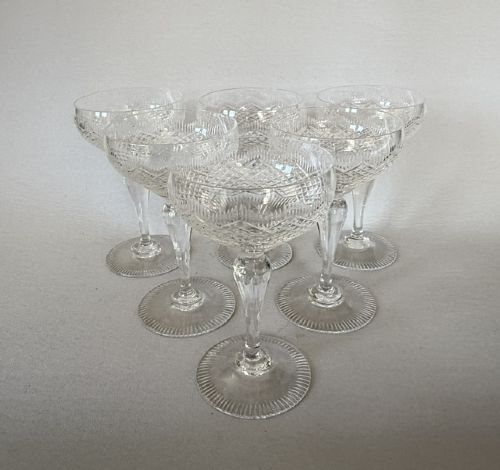
Stems were formed using distinct techniques, producing plain stems, multi-spiral air twists, and single or double series opaque twists. Craftsmen also employed faceted cutting, knops, and folded feet to strengthen the base and add decorative punctuation.
Object types span wine glasses, rummers, champagne coupes, ale glasses, whisky dram glasses, hock glasses, and sweetmeat glasses.
Judging quality
Quality rests on the precision of the form and the skill of the hand execution. In eighteenth-century pieces, the regularity of an air twist or opaque twist thread inside the stem separates masterwork from clumsy production.
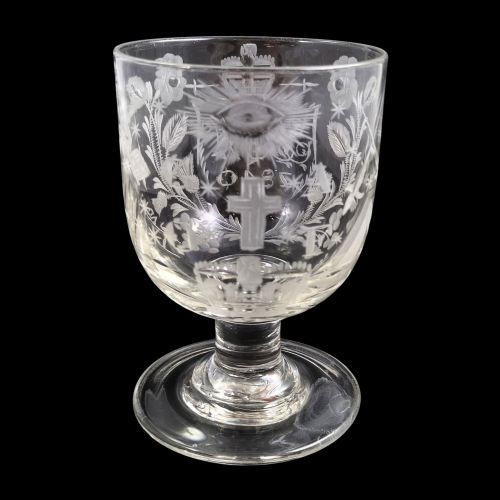
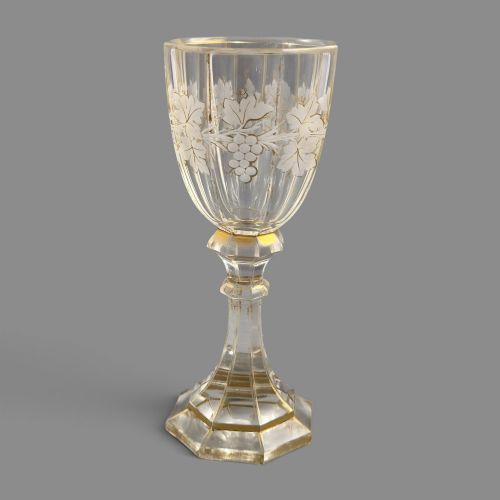
Surface ornamentation dictates distinction, where crisp wheel engraving, star-etching, gilding, or enamel work remain sharp to the touch. The balance of the bowl against the stem and foot determines the tactile weight of the vessel.
Moser·Theresienthal
The Antique Clear Stemware Glossary
- Baluster stem
- A heavy, thick stem shape popular in the eighteenth century, often featuring knops or swelling profiles that echo architectural columns.
- Air twist
- A stem containing internal threads of trapped air pulled and spiralled during manufacture to catch the light.
- Opaque twist
- A stem enclosing white or coloured enamel glass threads twisted into spiral patterns inside the clear metal.
- Rummer
- A capacious nineteenth-century drinking glass with a short stem and a round or bucket bowl, used for punch, rum, or ale.
- Folded foot
- A base edge turned under while hot to create a smooth, thickened rim that resists chipping and adds stability.
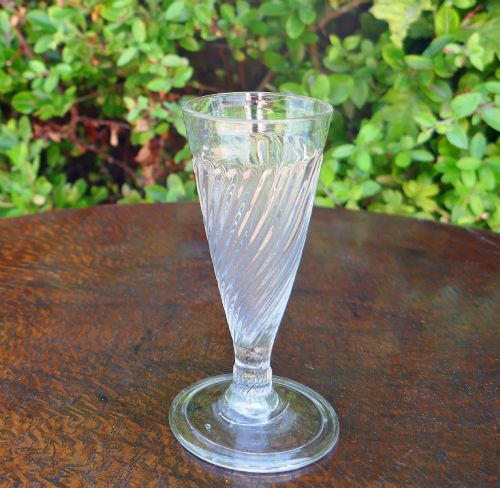
- Wrythen
- A decorative spiral moulded pattern running through the body or bowl of a glass.
Antique Clear Stemware: Frequently Asked Questions
Can I use antique wine glasses today?
Many people enjoy drinking from eighteenth and nineteenth-century glasses on special occasions, provided the glass is handled with care. The smaller bowl sizes of earlier periods suit fortified wines and spirits particularly well.
Inspect the rim and base for any microscopic chips before use, and hold the vessel by the stem rather than the bowl to avoid placing stress on historical joints.
What is an opaque twist stem?
An opaque twist stem contains fine threads of white or coloured enamel glass encased within the clear lead metal. These threads are drawn and twisted while hot during the glassmaking process to form complex internal spirals.
This technique flourished in England during the mid-eighteenth century, creating a bright contrast against the clear bowl above.
How do I tell an 18th-century glass from a later copy?
Examine the foot of the vessel for pontil marks where the pontil rod was snapped off after blowing, which often feel rough or ground flat on older pieces. Check the metal itself for tiny bubbles, striations, and the deep greyish tone characteristic of early lead glass.
Later reproductions often display a mechanical perfection and lack the subtle asymmetry found in hand-blown Georgian stemware.