



Clear Crystal Goblet
A clear crystal goblet brings weight, ring and brilliance to the table, uniting centuries of refined drinking vessels under one heading.
Clear Crystal Goblet
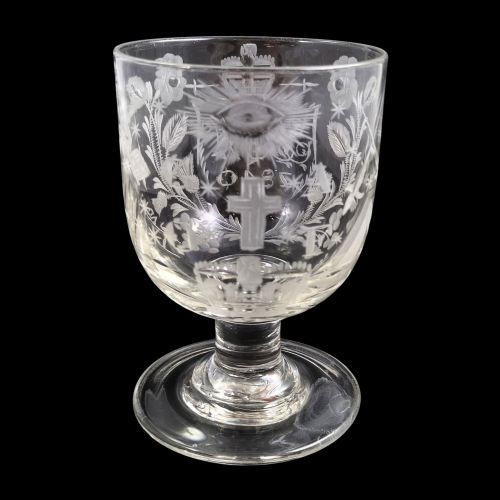
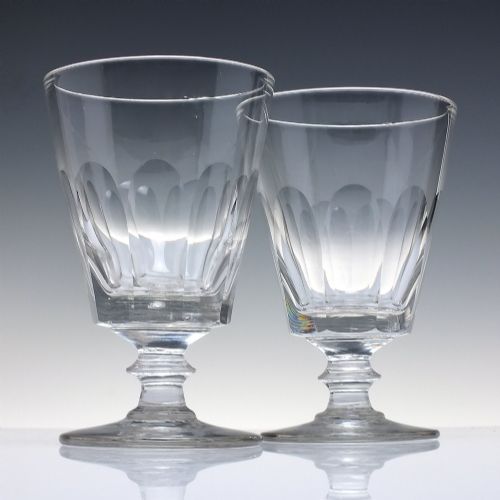
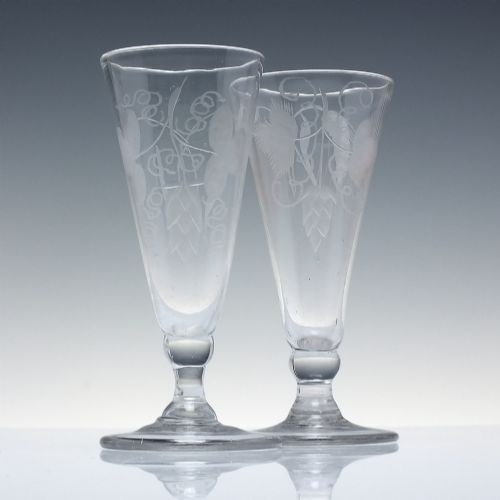
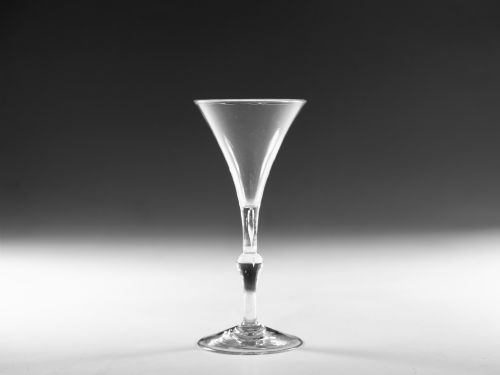
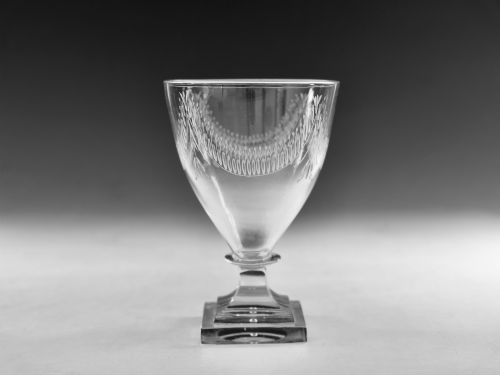
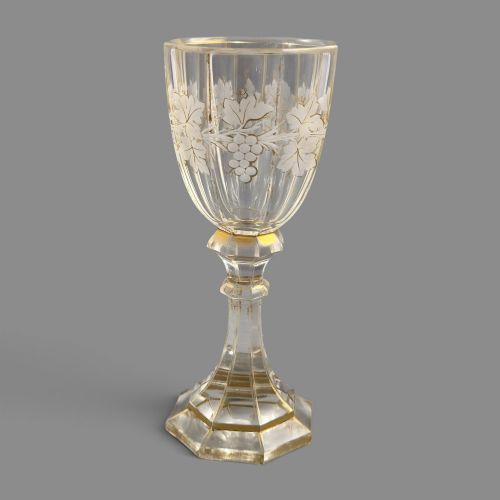
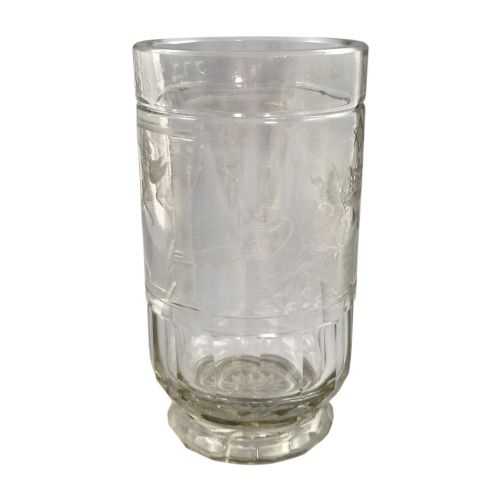
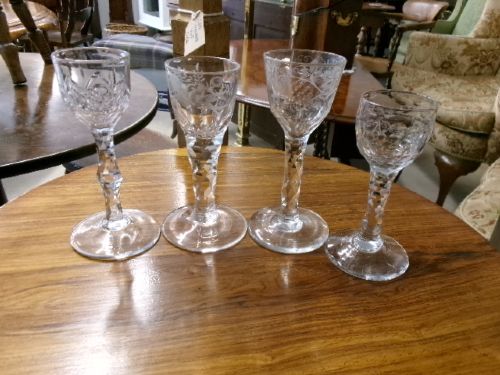
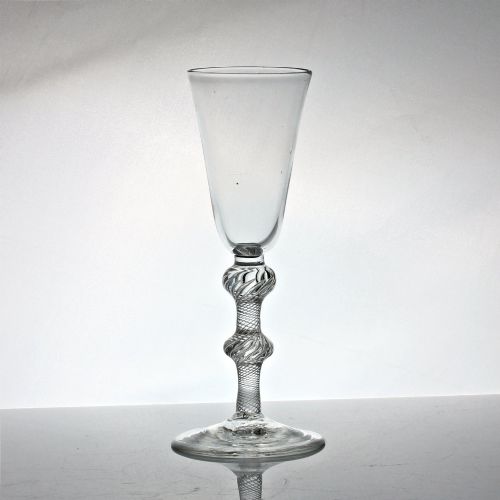
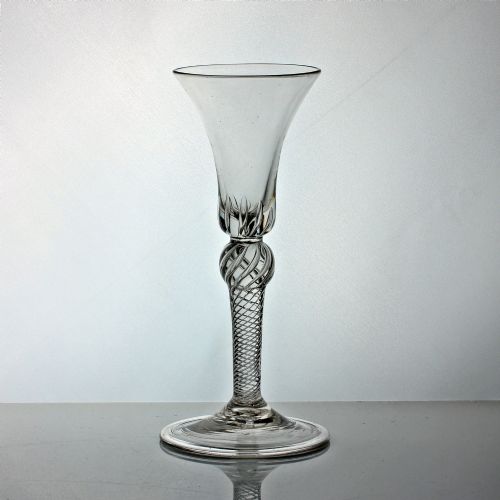
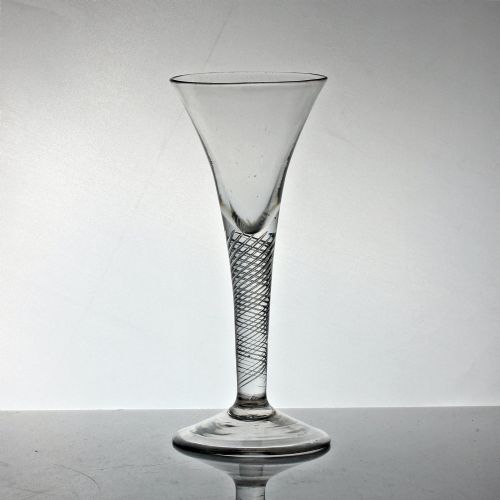
Georgian examples often display slender stems with air twist or opaque twist details supporting plain bowls. Victorian pieces tend toward larger proportions, featuring heavy cut glass designs, engraved hops and barley motifs or gilt Bohemian crystal finishes.
Assessing Quality
The fineness of the metal and the precision of the stem formation dictate the standing of a vessel. Clear lead crystal with minimal internal bubbles and sharp, clean cutting marks represents the upper tier of production.
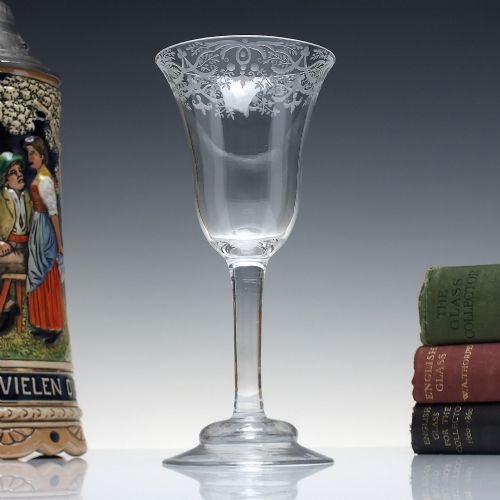
Proportion and balance define the better pieces, where the weight of the bowl matches the diameter of the foot. Fine wheel engraving with crisp depth outranks shallow surface etching.
Anti-Jacobite glasses carried hidden political defiance in their engravings, letting secret loyalties bubble to the surface over a quiet toast.
Moser Bohemian
The Clear Crystal Goblet Glossary
- Air twist
- A decorative stem formation enclosing spiral threads of tiny air bubbles inside the glass. This technique requires skilled manipulation of the metal while hot.
- Opaque twist
- A stem featuring white or coloured enamel threads drawn into spirals within the clear glass. These threads create striking linear patterns against the clear background.
- Rummer
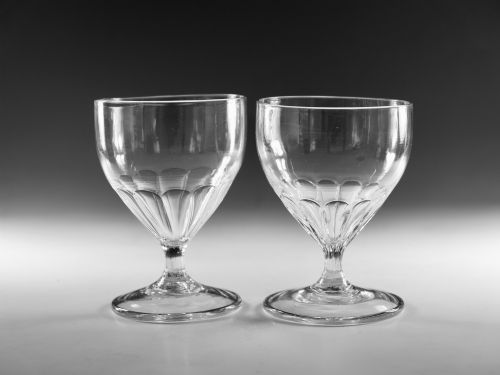
- A large, sturdy goblet used for wine, beer or punch during the Georgian and Victorian eras. They usually sit on a short, thick stem above a domed or plain foot.
- Baluster
- A thick, swelling stem form resembling architectural pillars, typical of early eighteenth-century drinking vessels. They often incorporate knops or nodes along the length.
- Pontil mark
- The rough scar left on the base of a vessel where the punty rod was snapped off after blowing. Skilled finishers often ground and polished this area smooth.
Clear Crystal Goblet: Frequently Asked Questions
How do I clean an antique crystal goblet safely?
Wash these vessels by hand in warm water using a mild detergent, supporting the bowl and stem rather than twisting them. Avoid extreme temperature changes to protect the older lead glass.
Dry them immediately with a lint-free linen cloth to prevent water spots and maintain the brilliant shine of the lead crystal.
Can I still use these goblets for drinking wine?
Many people enjoy using eighteenth and nineteenth-century goblets for special dinners, as the lead glass handles everyday toast work well. Check the rim for smoothness and ensure the vessel remains structurally sound before filling it.
Hand washing keeps them safe for regular use while preserving the historical surface finish.
How do I tell an air twist stem from an opaque twist?
An air twist contains trapped elongated bubbles drawn into fine spirals within the clear glass stem. You can see through them clearly into the core of the material.
An opaque twist uses solid white or enamel rods melted into the glass, creating bright, solid white lines that stand out sharply against the clear background.
What is the difference between a rummer and a wine glass?
Rummers are noticeably larger, heavier drinking vessels designed for robust ales, wines or mixed punches during the Georgian and Victorian periods. They feature sturdier bowls and shorter, thicker stems.
Traditional wine glasses from the same eras have finer bowls, thinner stems and lighter proportions suited for smaller pours.