

Engraved Lead Glass Goblet
An engraved lead glass goblet brings tactile weight and historic narrative to the table, connecting modern hands with centuries of drinking customs.
Engraved Lead Glass Goblet
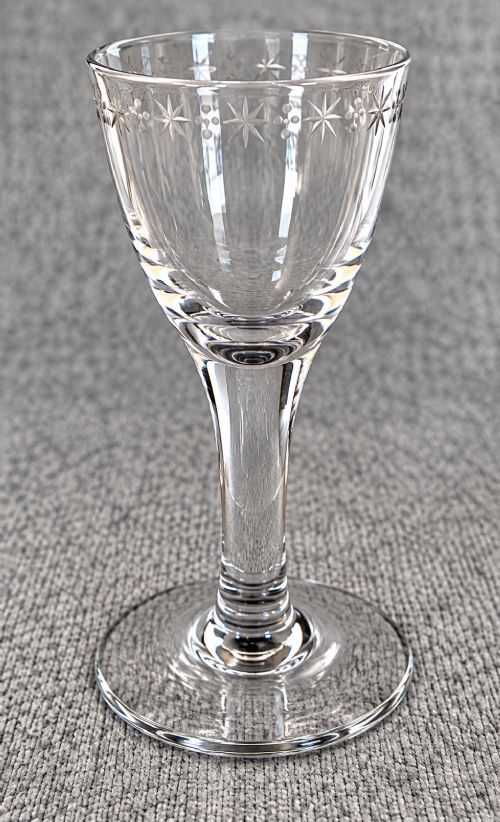
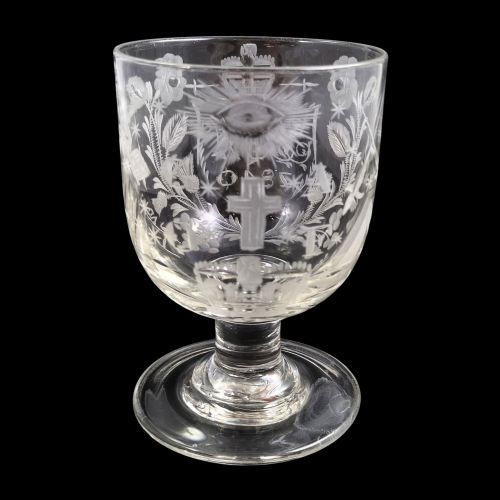
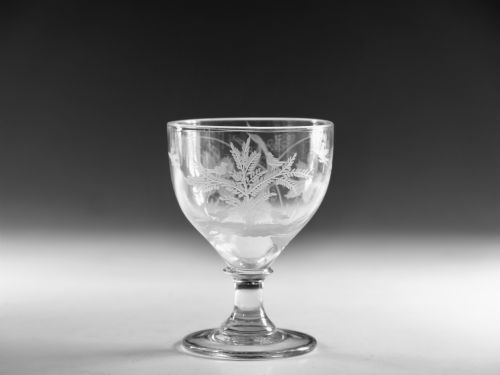
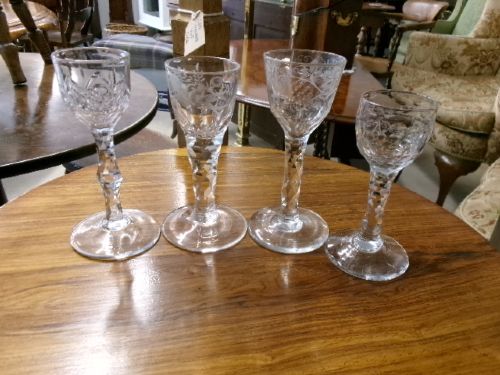
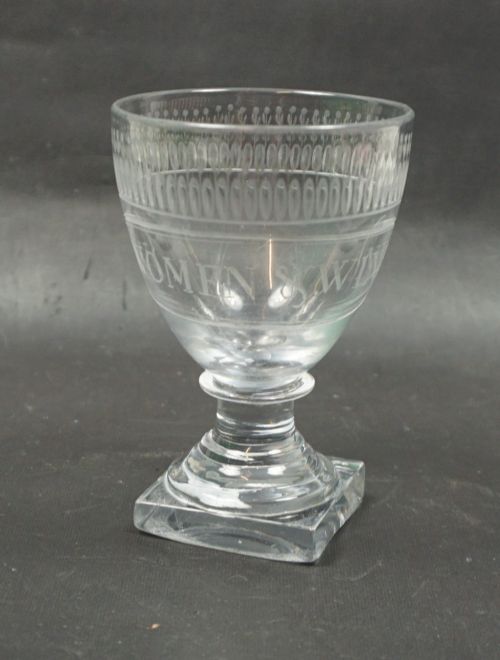
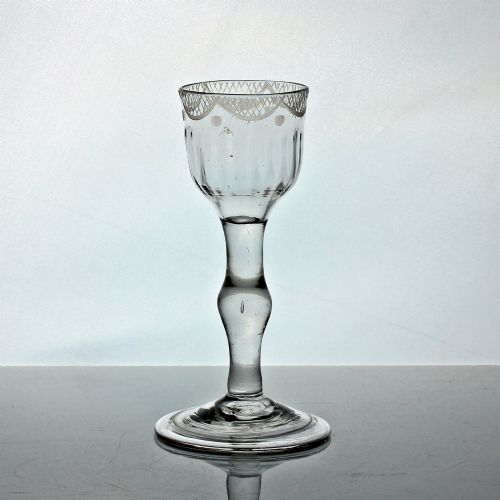
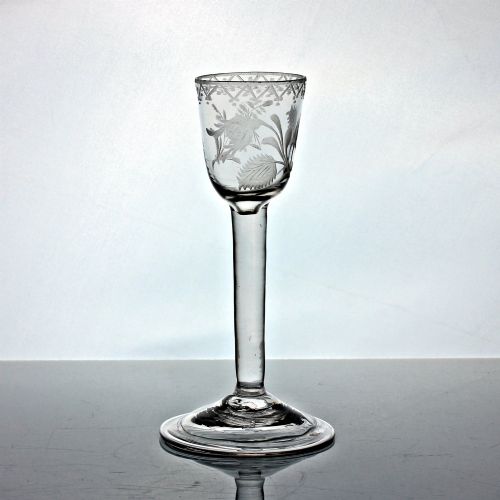
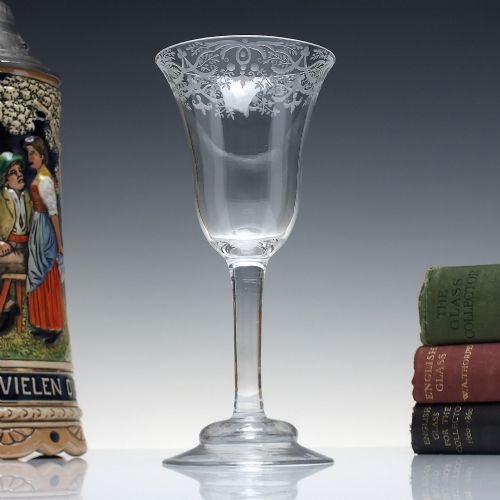
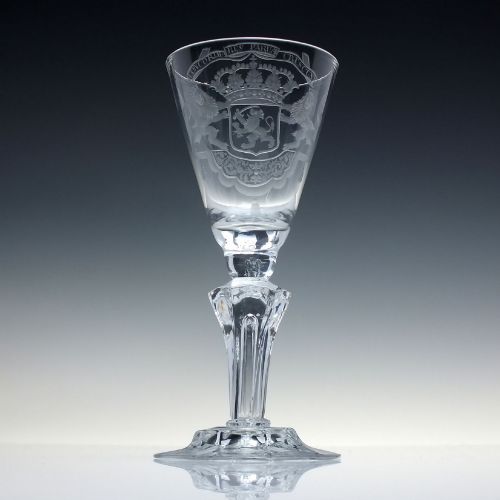
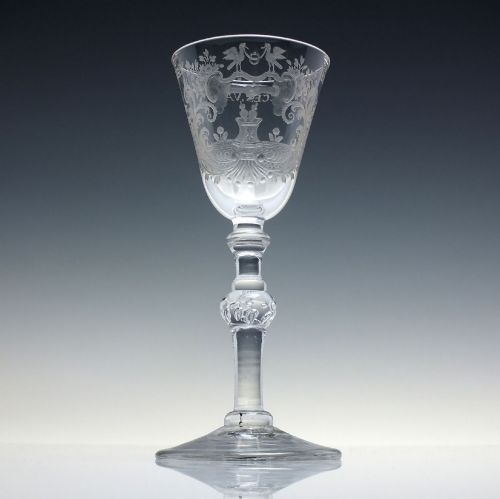
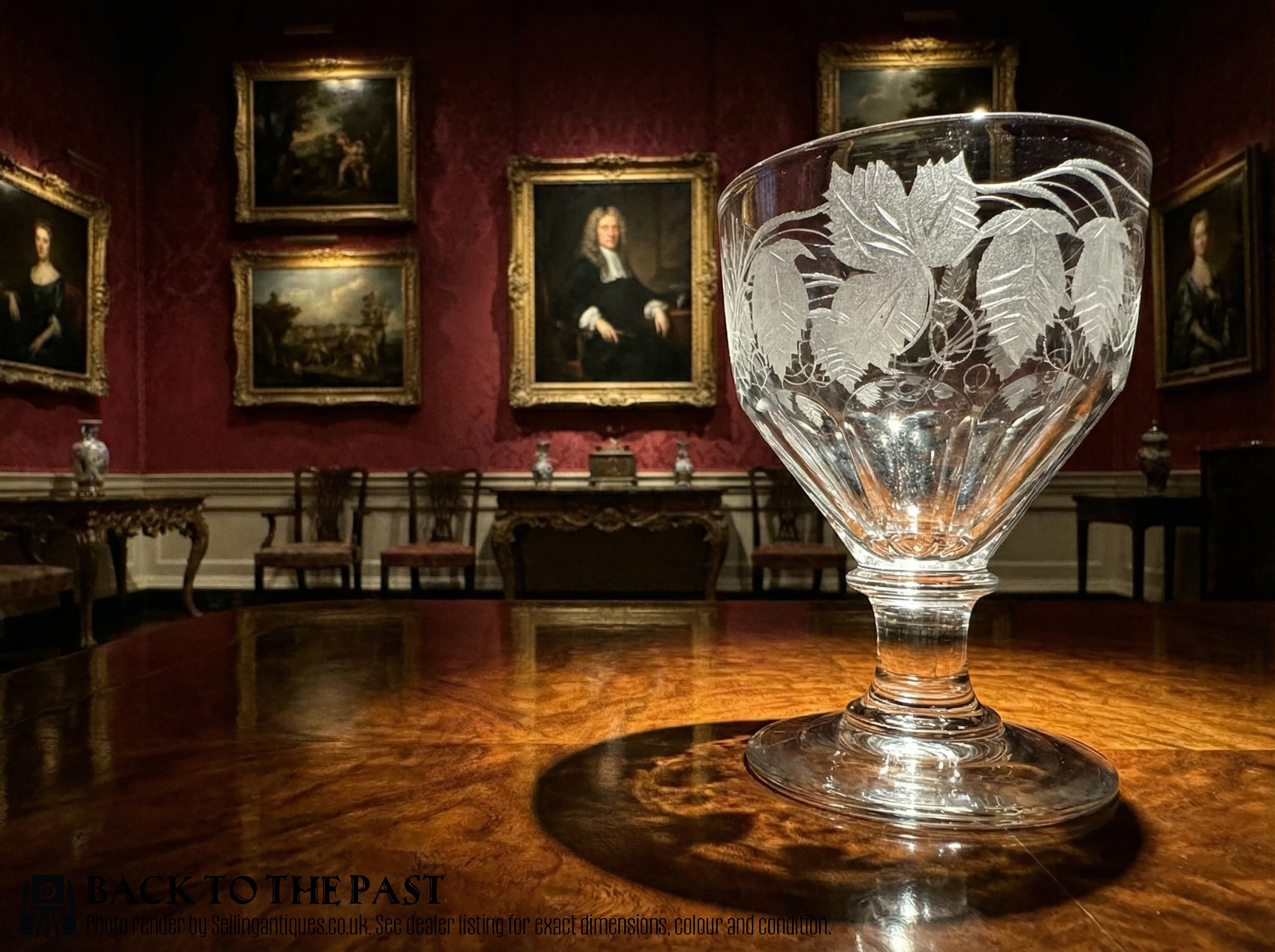
An engraved lead glass goblet is a substantial drinking vessel shaped by historical domestic and ceremonial drinking customs, most frequently encountered here in Georgian and Victorian forms. These pieces include sturdy rummers, faceted dram glasses, and tall stemmed wine goblets created across the eighteenth and nineteenth centuries.
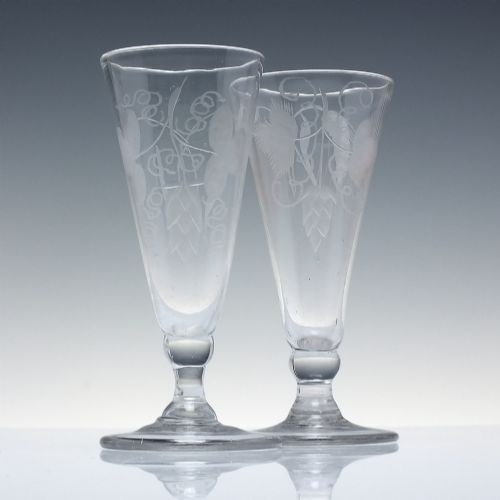
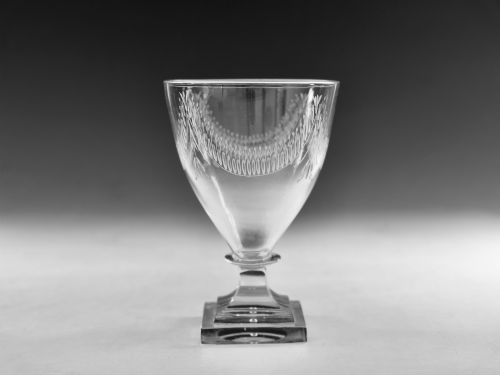
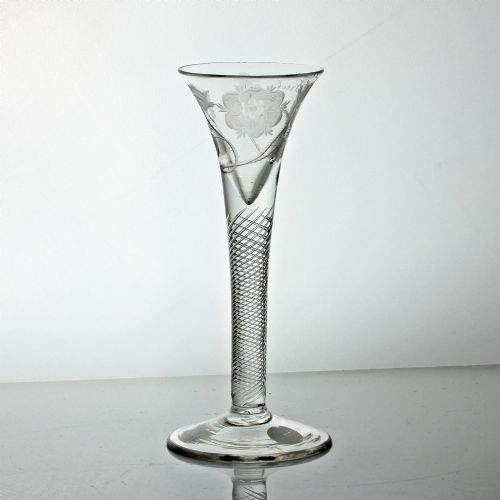
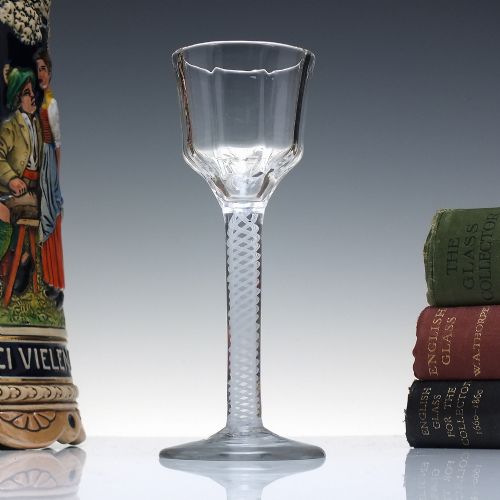
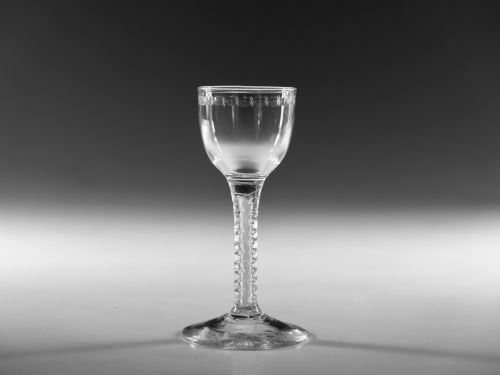
The selection ranges from large serving rummers with hops and barley motifs to delicate air twist and opaque twist wine glasses bearing Jacobite or armorial designs. Buyers will find clear lead glass and flint glass configured into pedestals, square lemon squeezer bases, and wide-footed drinking glasses.
How They Were Made
Glassmakers utilised lead glass and flint glass formulations to achieve high refractive brilliance and substantial heft, allowing for deep wheel-engraving and intaglio cuts without compromising the structural integrity of the bowl or stem.
Stems and bowls were formed through skilled hot-working techniques such as air twisting and multi-spiral opaque twisting, whilst decorative elements like swags, armorials, and bridges were meticulously wheel-engraved onto the clear glass surface.
Engraved Lead Glass Goblet Retail Price Guide 2026
Typical asking prices for engraved lead glass goblet among the pieces listed under this phrase on Sellingantiques today, from the lower quarter to the upper quarter. They describe what is for sale here now, not the wider market.
Several goblets secretly toasted a deposed king, hiding treasonous roses and oak leaves beneath seemingly innocent floral arrangements.
What Varies in Quality
Quality rests upon the crispness and depth of the wheel-engraving, where confident lines and detailed motifs like hops, barley, or armorial crests distinguish superior execution from shallower, softer etching.
The material balance and optical clarity of the lead crystal also dictate distinction, alongside the symmetry of blown bowls, knopped stems, and heavy square lemon squeezer bases.
The Engraved Lead Glass Goblet Glossary
- Rummer
- A large, capacious drinking glass popular for beer, ale, and wine during the Georgian and Regency periods. These vessels often feature sturdy stems and substantial bowls.
- Air twist
- A decorative stem formation containing internal thread-like spirals of trapped air. This technique was achieved by drawing bubbles through the molten glass before pulling and twisting.
- Lemon squeezer base
- A square, pressed glass foot with sloping sides resembling a citrus juicer. This form appeared frequently on heavy nineteenth-century rummers and drinking glasses.
- Intaglio
- A method of wheel-engraving where the design is carved directly into the surface rather than left in relief. It creates a sunken, highly detailed profile on clear lead glass.
- Ogee bowl
- An S-curve profile curving out at the rim and in at the base, commonly seen on eighteenth-century wine and dram glasses.
Engraved Lead Glass Goblet: Frequently Asked Questions
How were heavy rummers used historically?
Heavy rummers served substantial portions of ale, beer, or wine at taverns and private dining tables.
Their thick walls and sturdy bases provided durability for daily toasts and communal gatherings.
What is an air twist stem?
An air twist stem contains delicate, elongated spirals of air trapped inside the molten glass.
Craftsmen created these optical patterns by pricking air bubbles into the hot metal before drawing and twisting the stem.
What subjects appear in the engraving?
Engravings frequently display botanical motifs like hops and barley, alongside armorial crests, commemorative bridges, and political symbols.
Jacobite glasses often incorporate subtle hidden emblems such as roses and oak leaves to signal clandestine loyalties.