
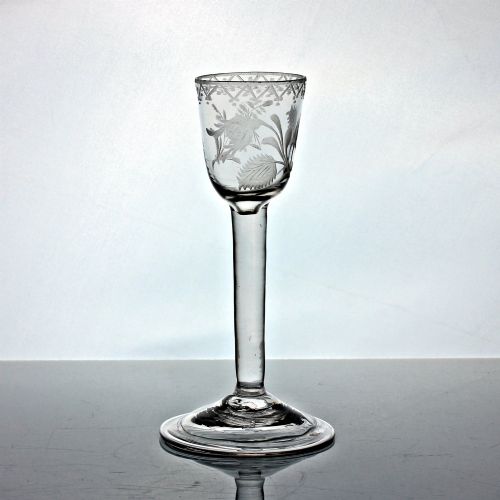
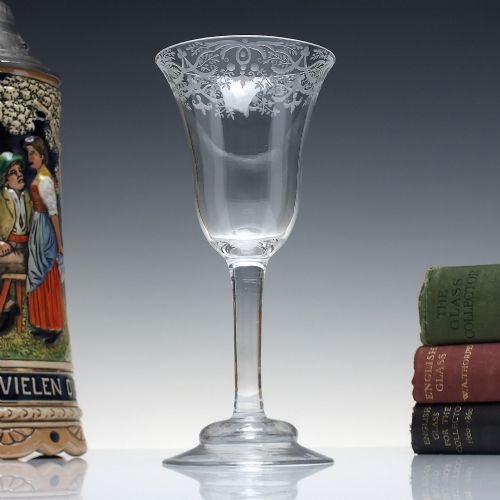
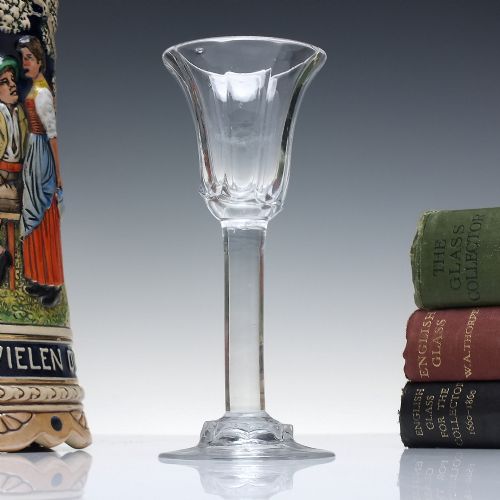

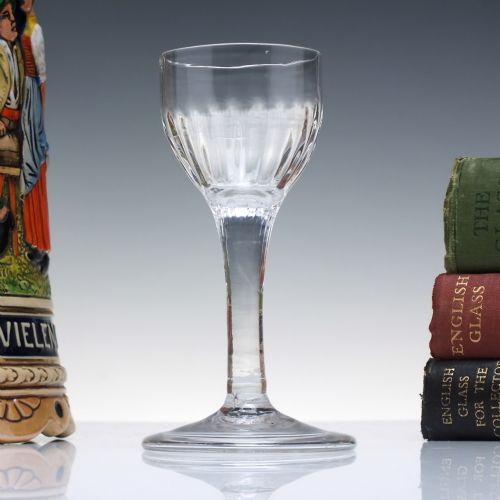
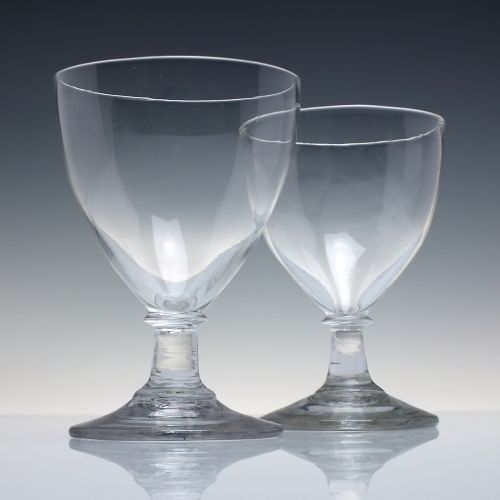


Plain Stem Wine Glass
A plain stem wine glass brings the solid weight of eighteenth-century Georgian drinking culture directly to your table.
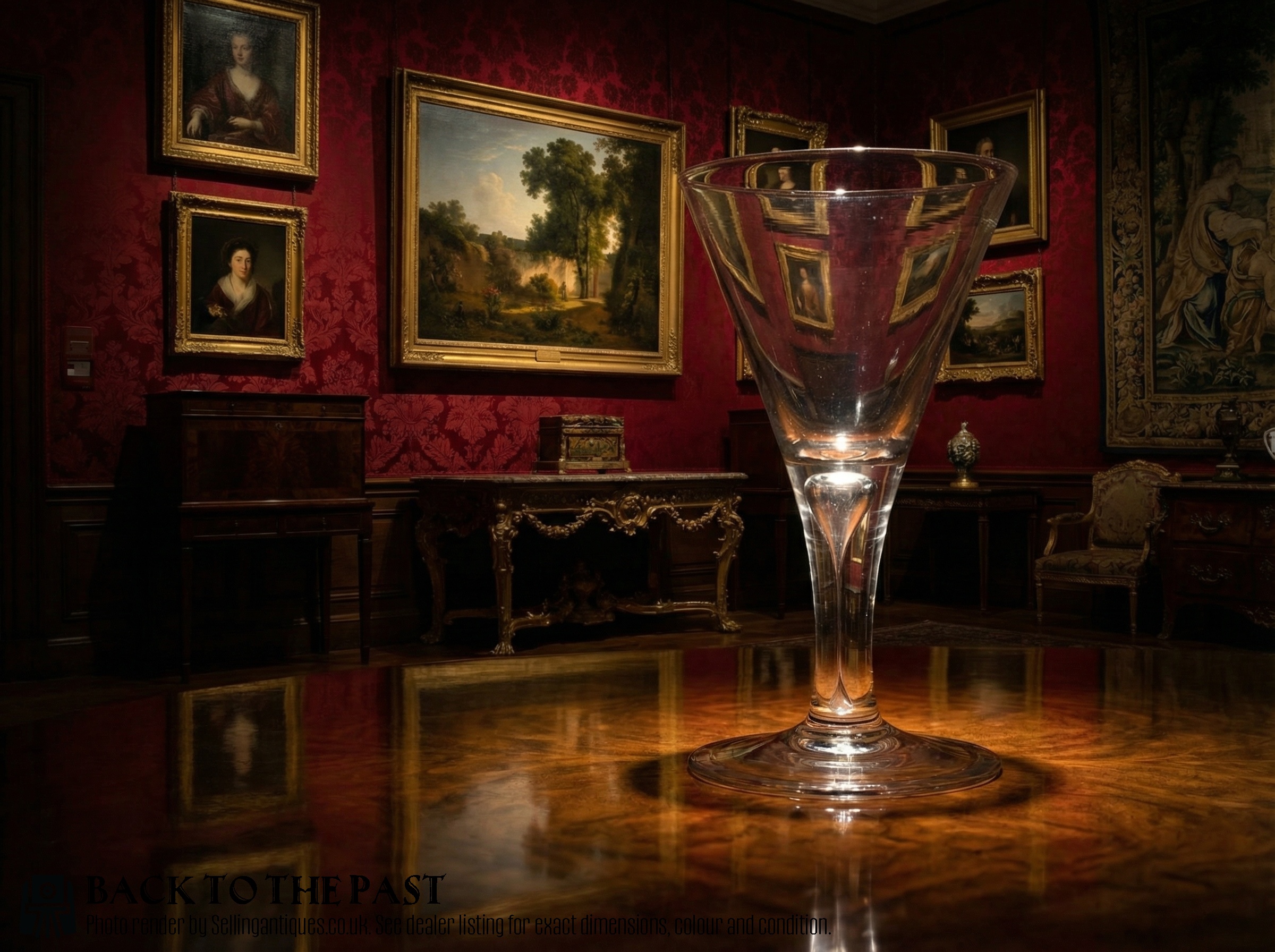
Plain Stem Wine Glasses
A plain stem wine glass is an essential piece of antique glassware originating primarily from the eighteenth century. When you search for this phrase, you encounter drinking vessels defined by their straight, unadorned stems, which provide a stark contrast to later faceted or air-twist designs. Most examples found here belong to the Georgian period, showcasing the restrained elegance favoured by drinkers of that era.
The forms vary from standard wine glasses to larger goblets, short dram glasses, and heavy-footed specimens. Trumpet bowls and cup bowls appear regularly, sometimes accompanied by a folded foot that adds stability and extra glass thickness at the base. These drinking vessels served everyday tables and celebratory toasts alike, surviving through generations of careful use.

Materials and Techniques
These vessels are fashioned from clear glass, lead glass, lead crystal, or flint glass, giving the material a substantial feel and bright clarity. Artisans sometimes incorporated accidental or deliberate air tears inside the stem during the shaping process. Ribbed bowls, nut-moulded surfaces, and folded feet demonstrate the manipulative skill of the glasshouse workforce.
Engraving adds another layer of craftsmanship, with diamond-point or wheel cutting depicting roses, vines, or specific hunting scenes like a fox with the motto Tally Ho. Green glass occasionally appears as an alternative to clear lead glass, produced through iron impurities or deliberate batch coloration in the furnace. Every piece relies on hand-blowing and hand-finishing techniques standard to Georgian glasshouses.
Retail Price Guide 2026
Typical UK retail prices for plain stem wine glass, calculated from the Sellingantiques database of over a million retail prices indexed since 2003. This retail price guide relies exclusively on Sellingantiques data; no external sources or auction records are used, so the figures do not describe the wider market.
Listings feature eighteenth-century Georgian items produced in lead glass, flint glass, and clear lead glass.
Variations in Quality
Quality rests upon the purity and weight of the lead glass, alongside the crispness of any engraved detail on the bowl. A heavier metal with deep resonance under a gentle tap signals superior batch mixing and higher lead content in the furnace.
The dexterity of the blower dictates the balance of the piece, from the symmetry of the folded foot to the clean straightness of the stem. Finely executed wheel engraving depicting floral or heraldic motifs elevates a simple drinking vessel into a work of collectible art.
The Plain Stem Wine Glass Glossary
- Folded foot
- A base formed by doubling the edge of the glass back underneath to create a thickened rim. This technique increases durability and provides extra weight at the bottom of the glass.
- Air tear
- An elongated bubble trapped inside the stem during manufacture. Makers sometimes left these small pockets of air intentionally as a decorative feature.
- Lead glass
- A heavy, brilliant glass containing lead oxide that increases refractive index and workability. Flint glass is a closely related term often used interchangeably in historical contexts.
- Nut-moulded
- A surface pattern pressed into a small mould before being expanded and shaped by the blower. It creates a textured, panelled effect around the lower section of the bowl.
- Trumpet bowl
- A conical drinking vessel profile widening smoothly from the stem upward. This classic Georgian shape disperses aromas efficiently.
Frequently Asked Questions
What is a plain stem wine glass?
A plain stem wine glass is an eighteenth-century drinking vessel featuring a straight, unadorned cylindrical stem. These pieces date primarily from the Georgian era and were produced in English glasshouses.
They represent a period of transition in glassware design before complex air twists and baluster stems became fashionable. Collectors value them for their minimalist silhouette and tactile weight.
How do I identify an 18th century glass?
Eighteenth-century glasses typically display pontil marks on the underside of the base where the punty rod was snapped off. The metal often contains tiny air bubbles and impurities characteristic of early hand-blown manufacture.
Examining the foot for wear scratches helps confirm age, as does noting the heavier weight associated with lead glass formulations of that period.
Were these glasses used for wine?
These vessels served various alcoholic beverages including wine, ale, and spirits depending on their size and capacity. Shorter variants functioned as dram glasses for potent liqueurs.
Larger versions known as goblets handled heartier pours or communal toasts during formal dinners and tavern gatherings.
What does folded foot mean?
A folded foot is a base where the hot glass edge is turned underneath itself and pressed flat against the underside. This creates a smooth, thickened rim that resists chipping.
Found frequently on Georgian glassware, the fold adds necessary counterweight to balance tall trumpet or cup bowls.
What are Jacobite wine glasses?
Jacobite glasses are political artefacts engraved with secret symbols supporting the exiled Stuart dynasty. Common motifs include six-petal roses, oak leaves, and specific Latin inscriptions.
Plain stem examples bearing these covert designs were raised in secret toasts to the king over the water.