




Bell Bowl Wine Glass
A bell bowl wine glass brings eighteenth-century elegance to the table with its distinct flared profile.
Bell Bowl Wine Glass
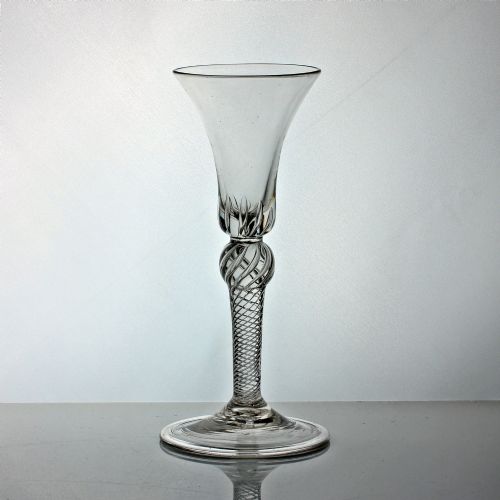
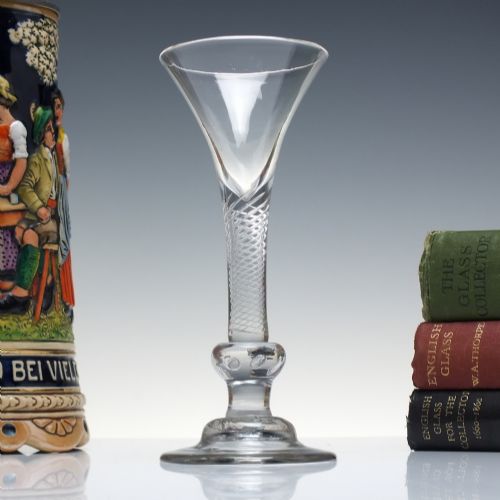
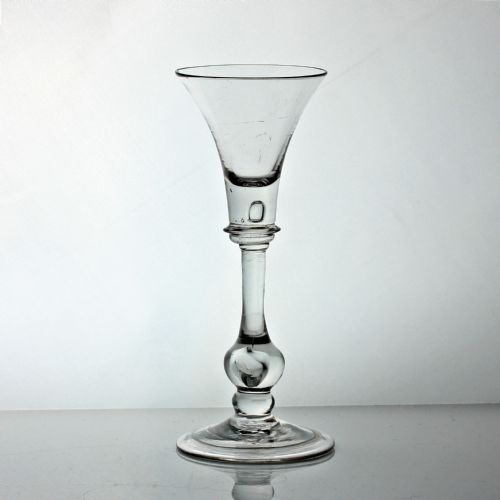
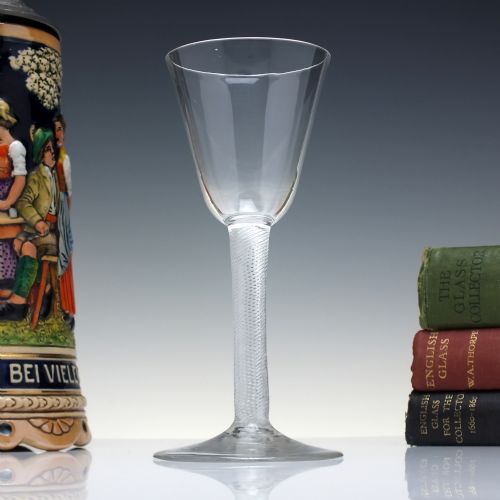
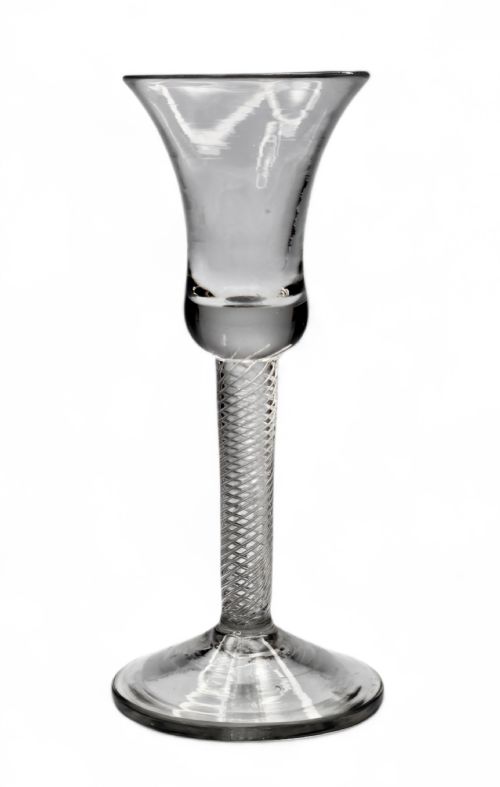
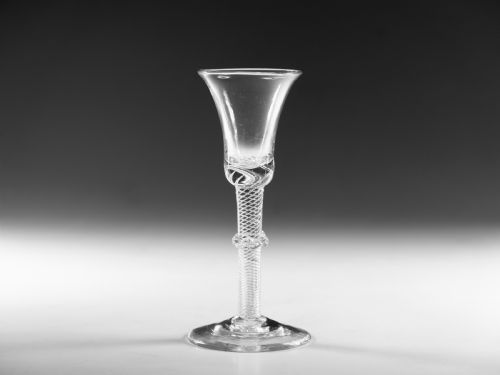
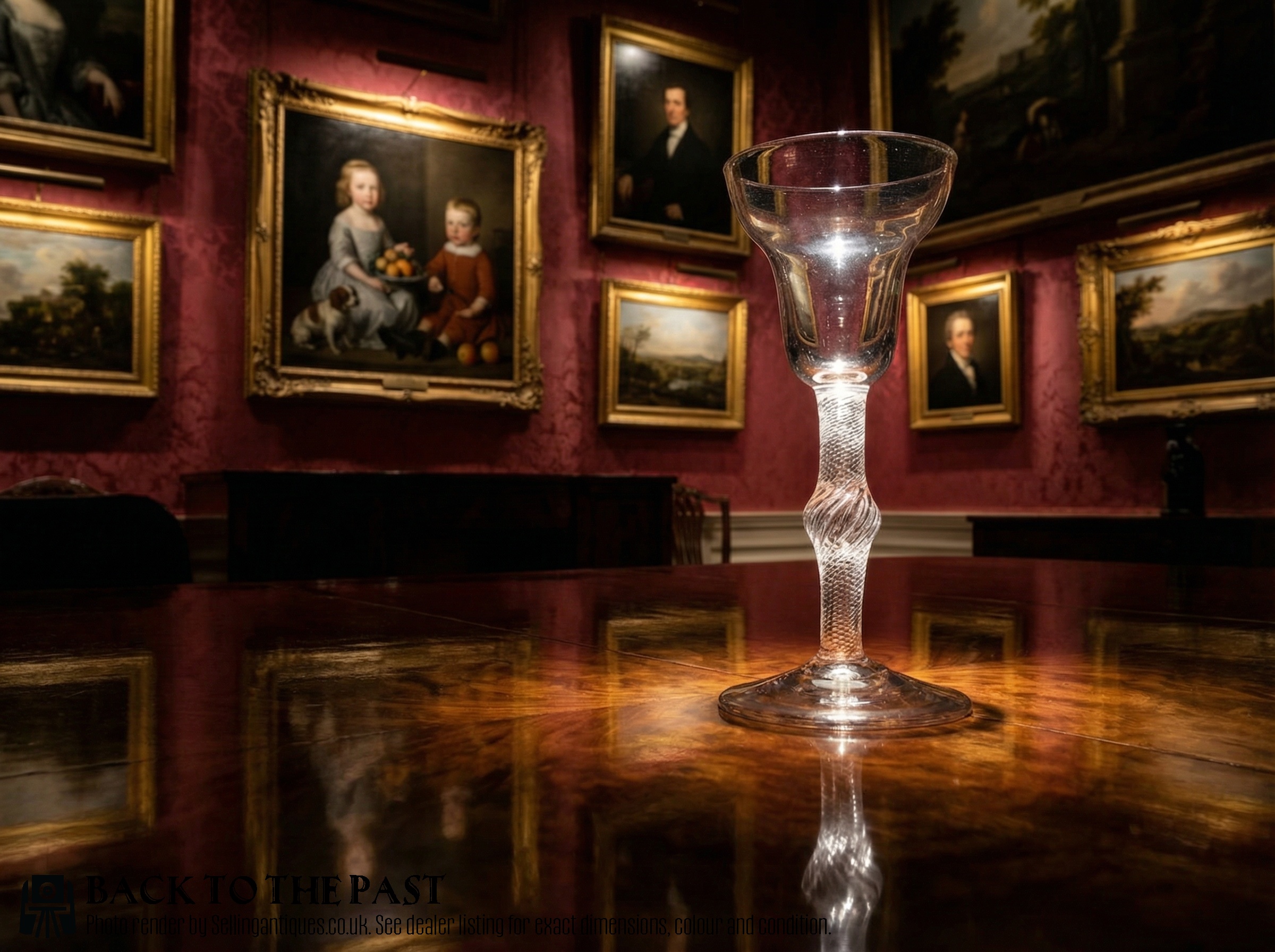
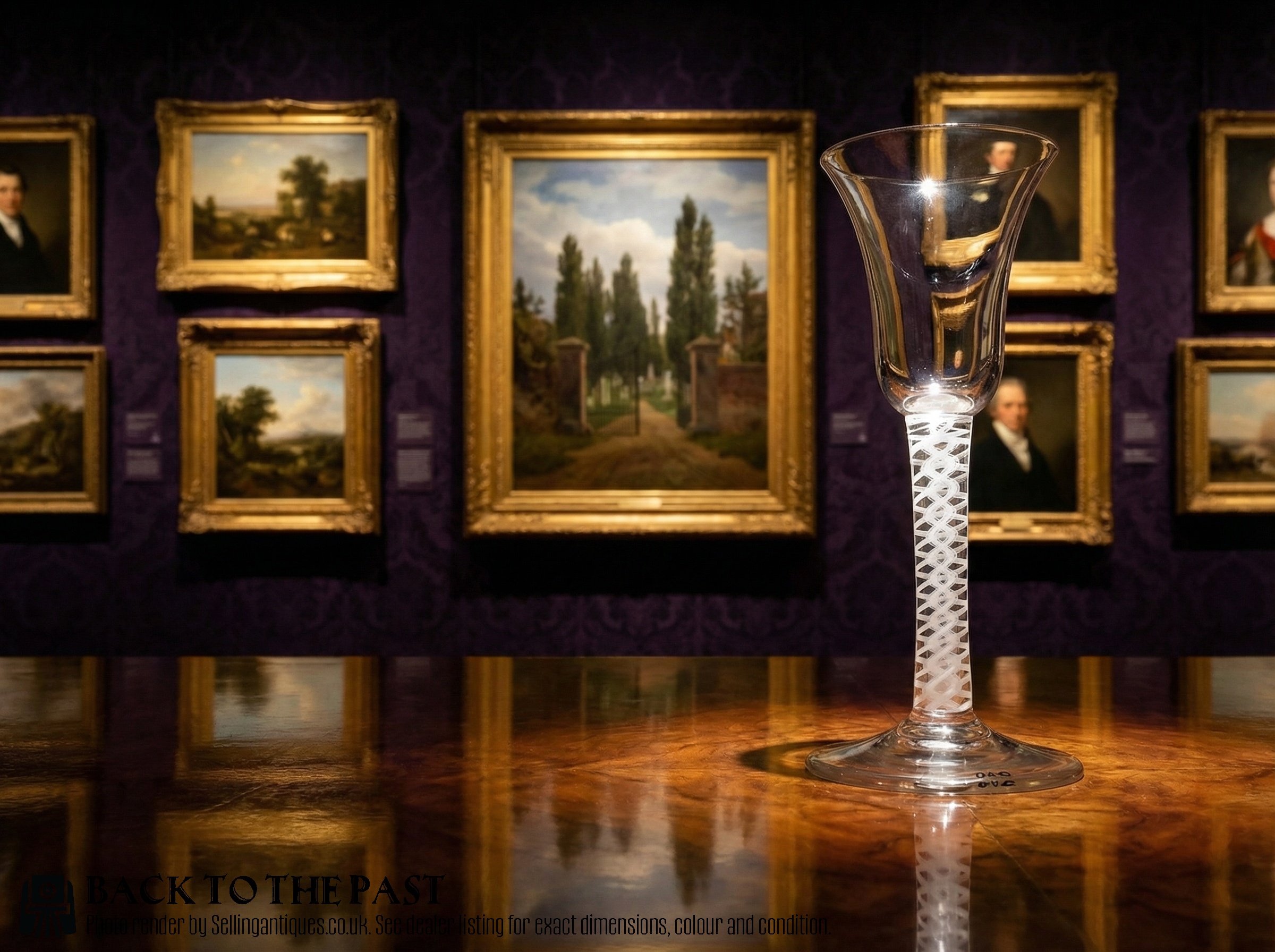
A bell bowl wine glass displays a deep, tapering bowl shaped much like an inverted church bell, curving outwards at the rim. When you search for this phrase, you look at drinking vessels primarily from the Georgian era, spanning the eighteenth century through to the Victorian period. These pieces frequently feature hand-blown lead glass or clear flint glass construction, often paired with air twist, opaque twist, or plain stems.
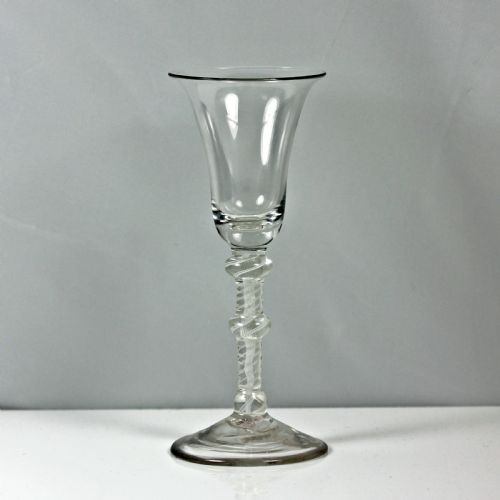
The version you meet most often on this page is the eighteenth-century Georgian specimen, shaped by hand and resting on a conical or folded foot. Many examples incorporate intricate stem formations such as shoulder knops, double knops, or composite structures. Some variants showcase delicate white enamel decoration or tulip engraving directly upon the bowl.
While eighteenth-century forms dominate the selection, nineteenth-century interpretations also appear, demonstrating the enduring appeal of the bell profile. The body of evidence shows these glasses served fine wine and cordials in domestic settings, reflecting the social drinking customs of the period.
Materials and manufacture
Makers formed each bell bowl wine glass using traditional glassblowing techniques, gathering molten metal on a punty rod and shaping the vessel by hand. The addition of lead oxide produced a heavy, clear lead crystal or flint glass that allowed for brilliant light refraction and resonant clarity.
Bell Bowl Wine Glass Retail Price Guide 2026
Typical asking prices for bell bowl wine glass among the pieces listed under this phrase on Sellingantiques today, from the lower quarter to the upper quarter. They describe what is for sale here now, not the wider market.
Listings feature lead glass, clear flint glass, and white enamel materials across eighteenth-century Georgian and Victorian periods.
Assessing quality in early glassware
Quality in a bell bowl wine glass depends on the precision of the twist formation within the stem and the overall balance of the vessel. Glasses featuring complex double series opaque twists or multiple spiral air twists demonstrate superior glassmaking skill compared to simpler plain stems.
The clarity and weight of the metal distinguish finer examples, alongside the thinness and symmetry of the blown bell bowl. Minor fabrication marks such as surface striations or tiny trapped air bubbles are normal in hand-blown eighteenth-century glass and indicate authentic period manufacture.
The Bell Bowl Wine Glass Glossary
- Bell bowl
- A deep, flared drinking vessel curving outward toward the rim resembling an inverted bell. This shape characterises many eighteenth-century wine and cordial glasses.
- Air twist
- A stem containing elongated internal spiral channels filled with air. Makers created these by drawing out glass rods containing air bubbles.
- Opaque twist
- A stem featuring white or coloured enamel glass threads twisted into a spiral pattern inside clear flint glass. These threads create striking linear patterns visible down the length of the stem.
- Knop
- A decorative swelling or bulbous protrusion on the stem of a glass. They provide structural grip and visual variety.
- Folded foot
- A base edge doubled over underneath to create a thickened rim for extra strength. This technique is frequently found on eighteenth-century drinking vessels.
- Balustroid
- A stem style echoing heavy architectural balusters, tapering from a swelling upper section down toward the foot. These stems anchor robust Georgian drinking glasses.
Bell Bowl Wine Glass: Frequently Asked Questions
What is a bell bowl wine glass?
A bell bowl wine glass is a drinking vessel featuring a deep, tapering bowl that curves outward at the lip, reminiscent of a church bell. These glasses date primarily from the eighteenth century and are celebrated for their elegant proportions and tactile surfaces.
Most examples discovered here belong to the Georgian period, showcasing various stem types including air twists, opaque twists, and plain stems. They represent a pinnacle of early British and continental glassmaking.
How were these wine glasses used?
These glasses served fine wines and cordials during formal dining and social gatherings in the eighteenth and nineteenth centuries. Their substantial lead glass composition provided durability for daily dining as well as refined sparkle by candlelight.
The deep bell shape concentrated the aromas of the wine, enhancing the tasting experience for diners of the period.
How can I tell the period of a glass?
Dating relies on examining the manufacturing traits, metal composition, and stem style. Eighteenth-century pieces often display pontil marks on the base, distinct hand-blown irregularities, and characteristic twist formations.
Comparing the foot construction, bowl depth, and stem knop configuration against documented examples helps confirm whether a glass originates from the Georgian era or later periods.