5,186  PAGES BROWSED TODAY PAGES TODAY 14 ANTIQUES UPLOADED TODAYNEW ARRIVALS
14 ITEMS ADDED TODAY
Sort Order
Items Per Page
Browse Categories
Sort order
Relevant Links
Items per page
ID #SA1212336
FOR SALE
£3,200
Email
Save
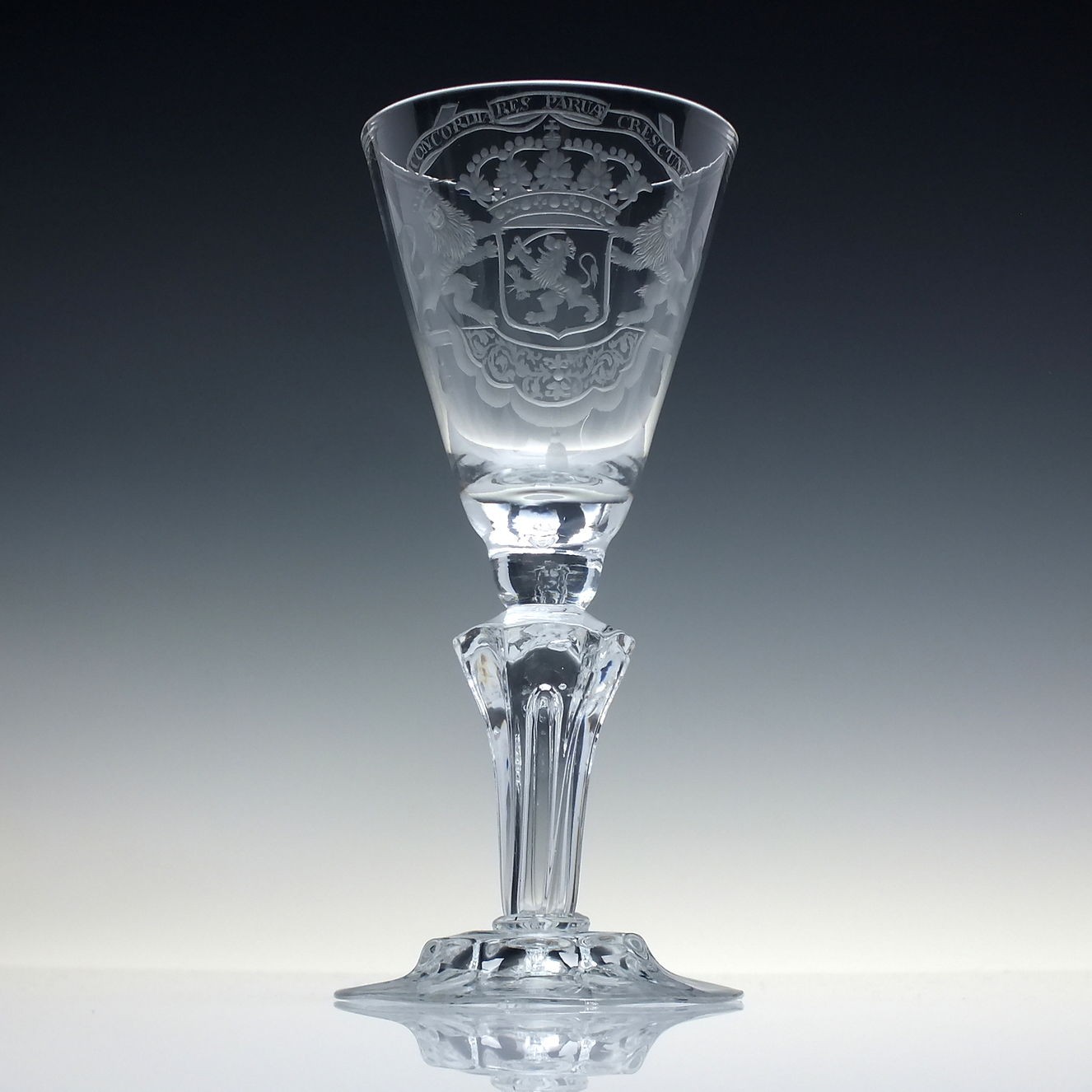
18th Century Ceremonial Armorial Pedestal Stem Wine Goblet C1730
Exhibit Antiques
for sale €3,744     $4,064
£3,200
Exhibit Antiques

Exhibit Antiques

Sellingantiques Verified Since Mar 2019
View Dealers Stock Page
  • About Us
    Specialists in 18th & 19th century antique glass
Id #SA1212336
PDF SHARE
SAVE

18th Century Ceremonial Armorial Pedestal Stem Wine Goblet C1730

18th century
For Sale by Exhibit Antiques
Description

Description

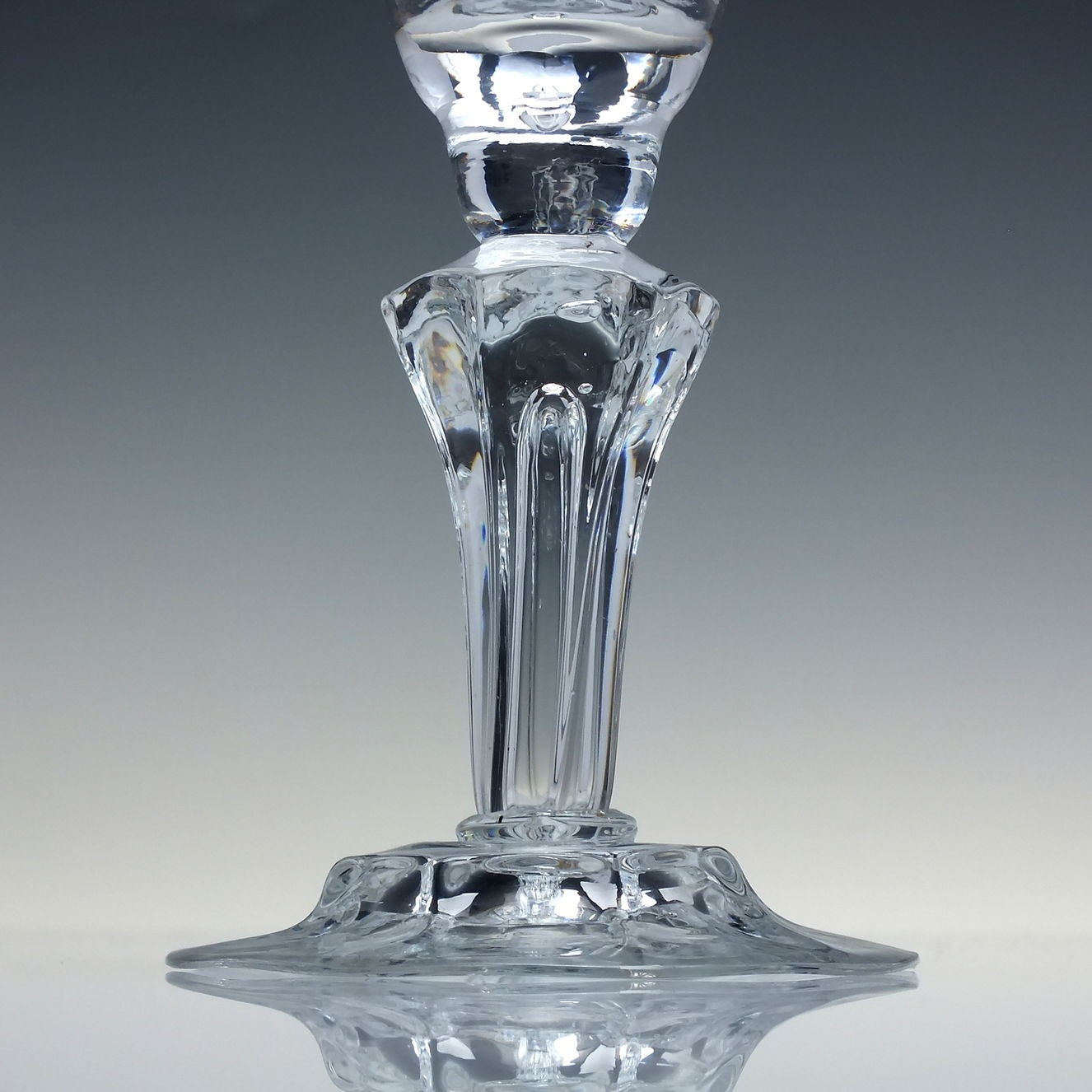
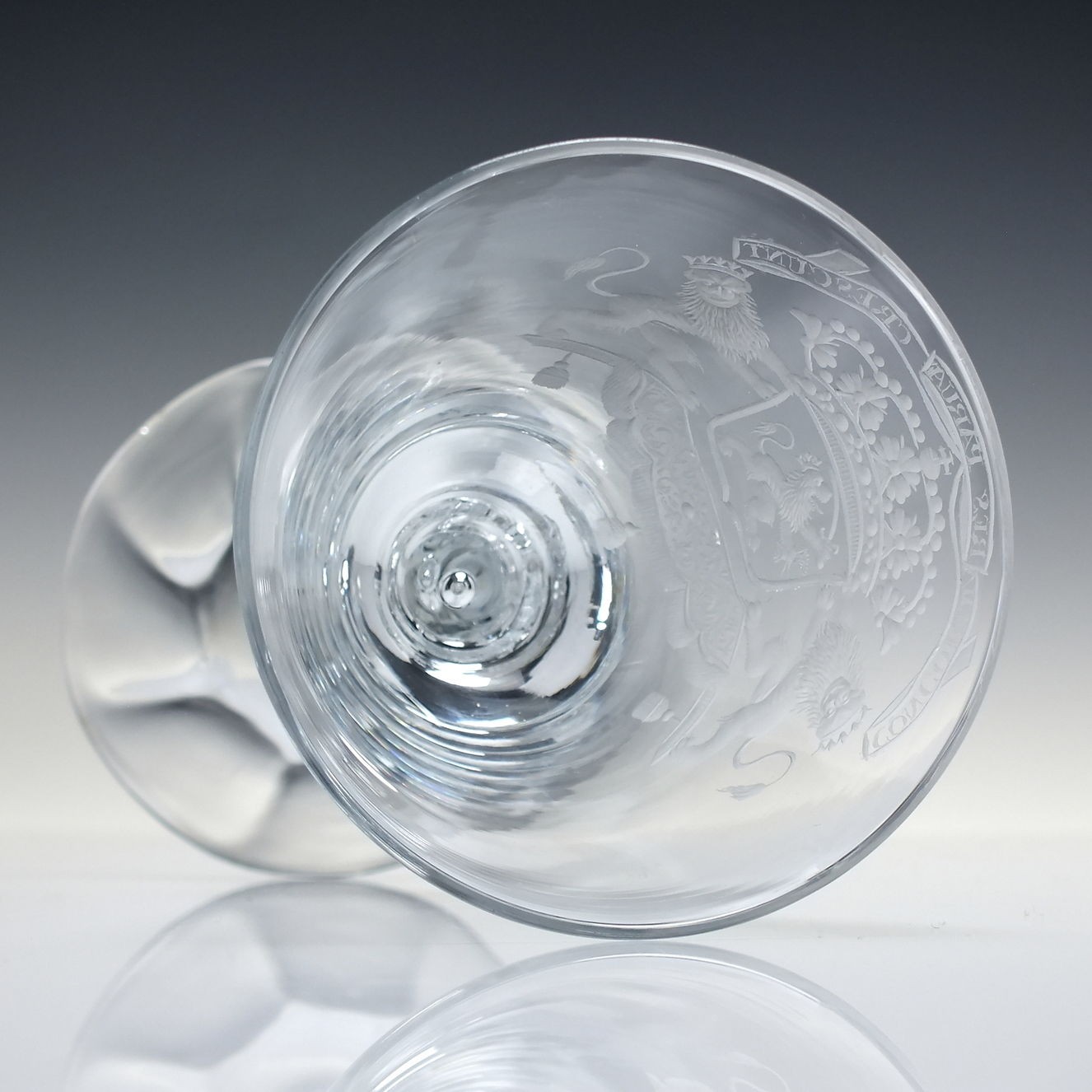
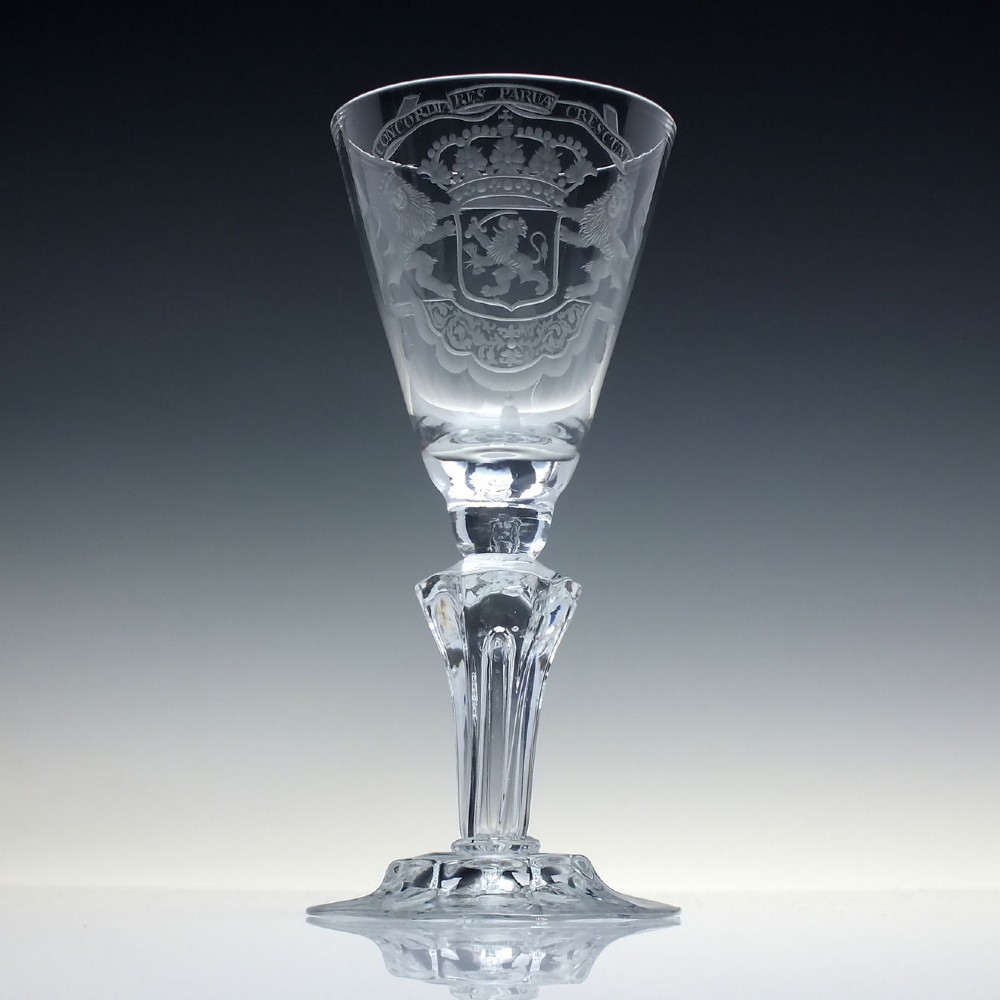
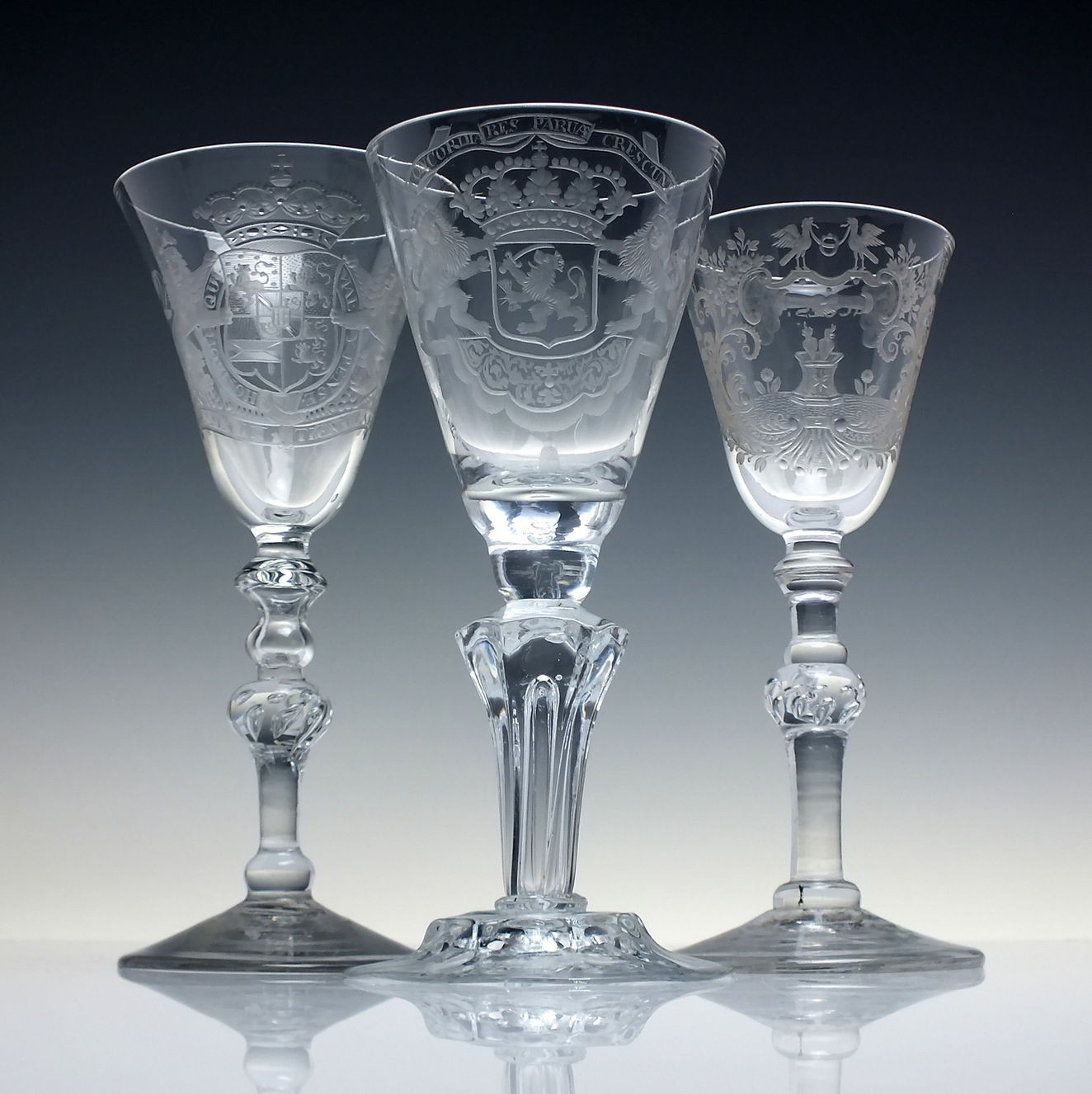
An exceptionally rare 18th-century engraved pedestal wine goblet, produced in England circa 1730. It features a pointed round funnel bowl with a solid base enclosing a single central air tear. The bowl is engraved with a ceremonial United Netherlands armorial. The glass stands on a shoulder half knop (a rare feature) above a six-sided pedestal (Silesian-type) stem, incorporating a long air column forming a hollow section to the lower stem. It is raised on a rib-moulded domed foot, with a rough snapped pontil to the underside.
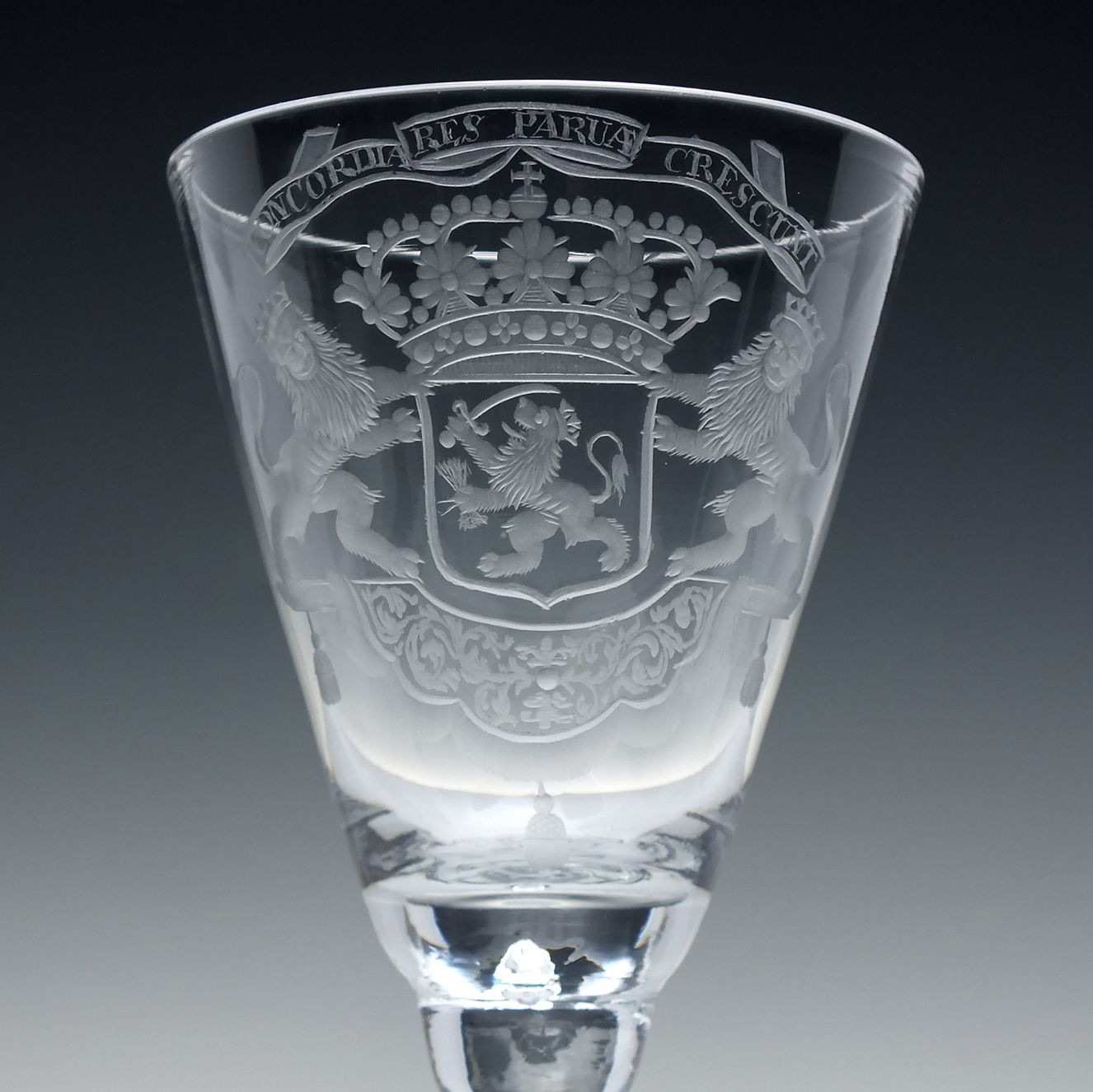
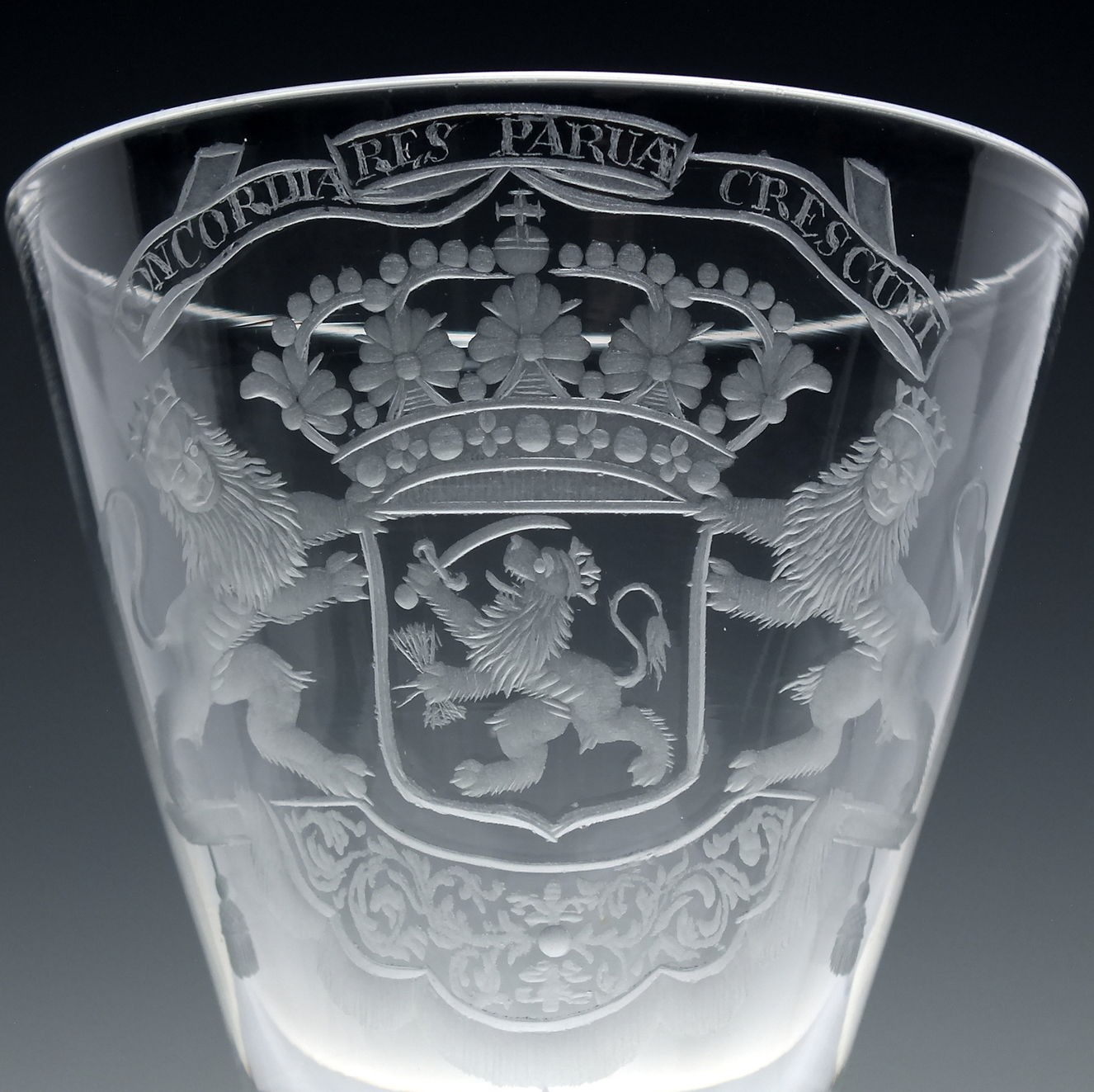
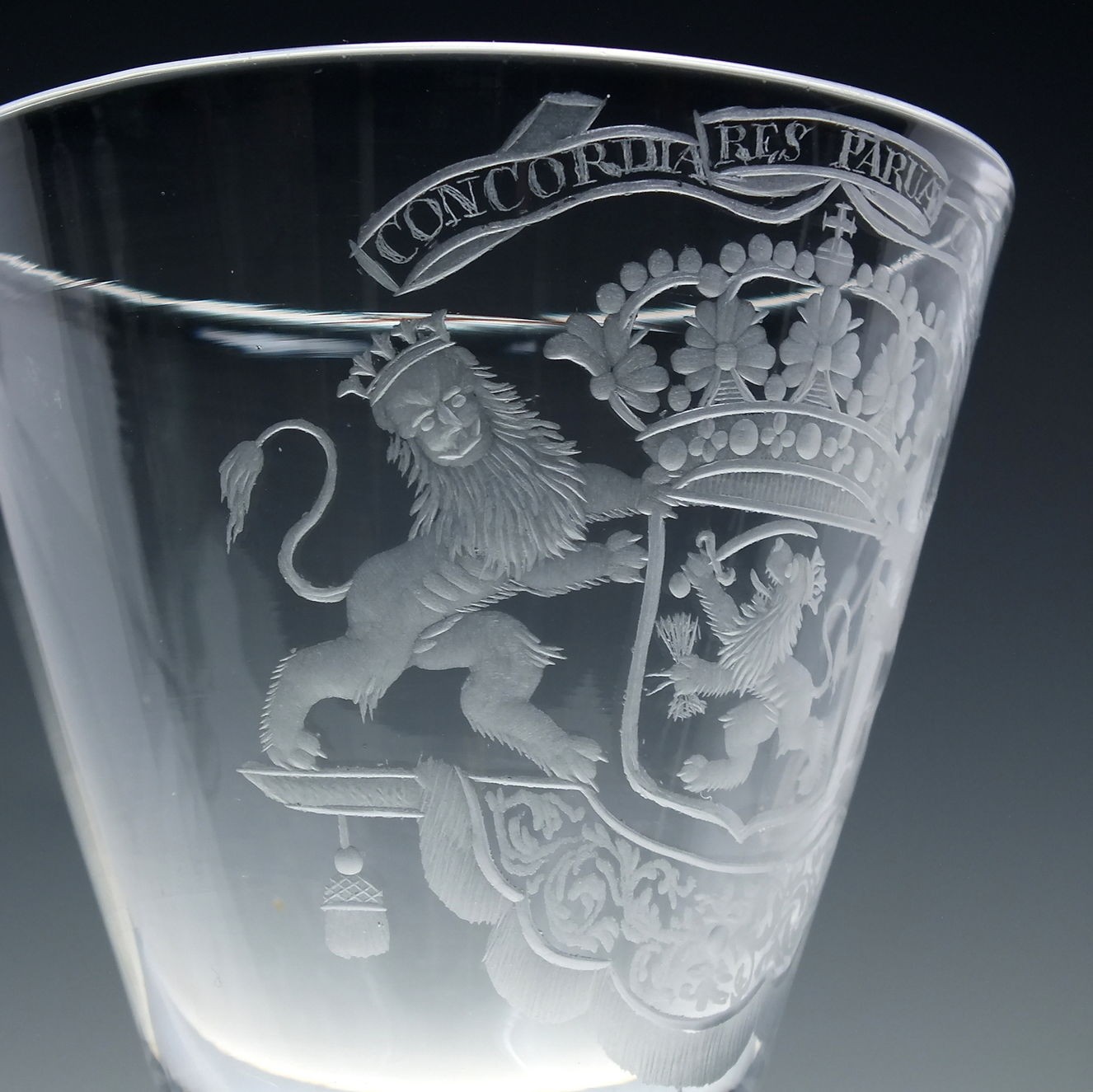
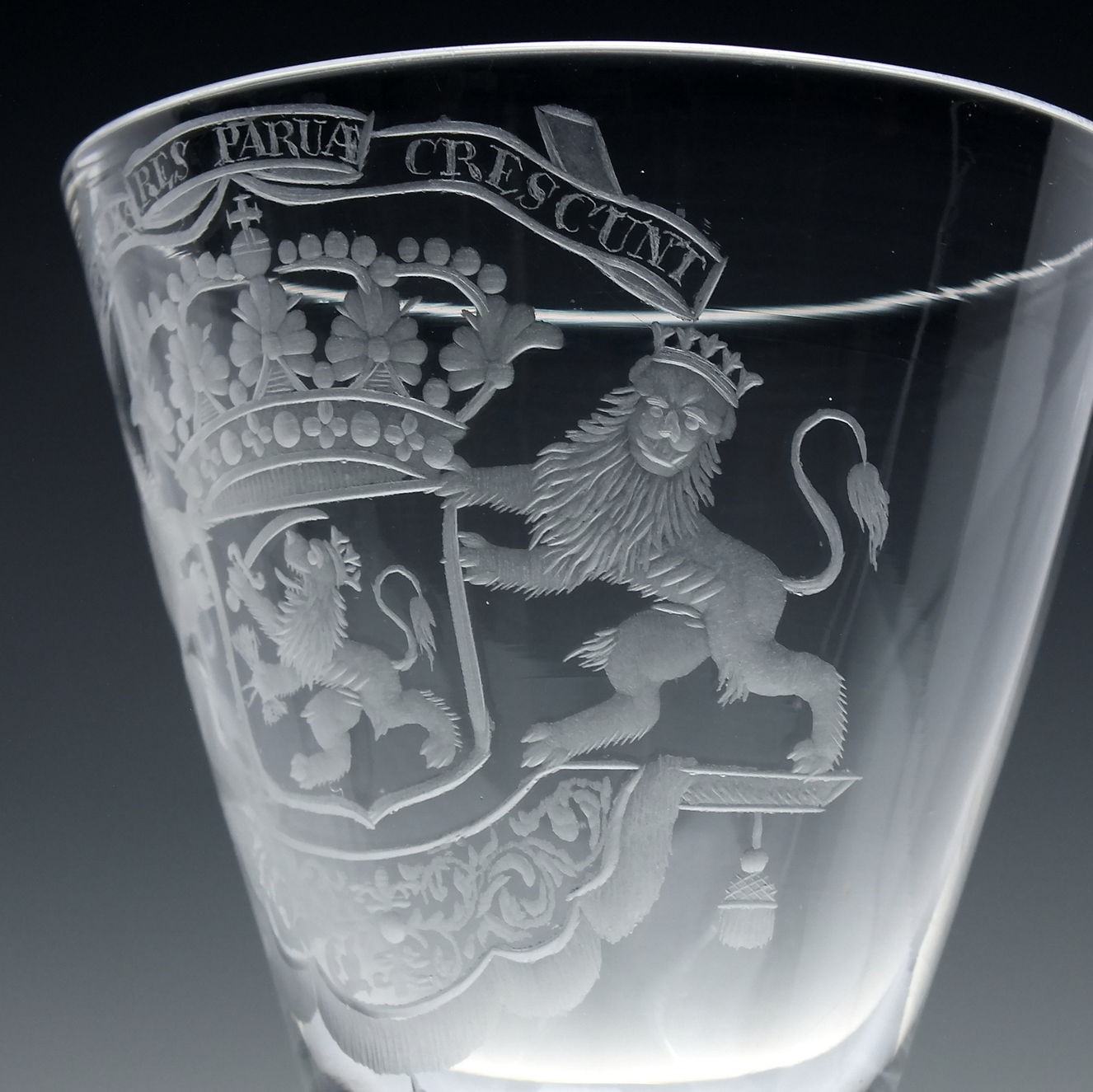
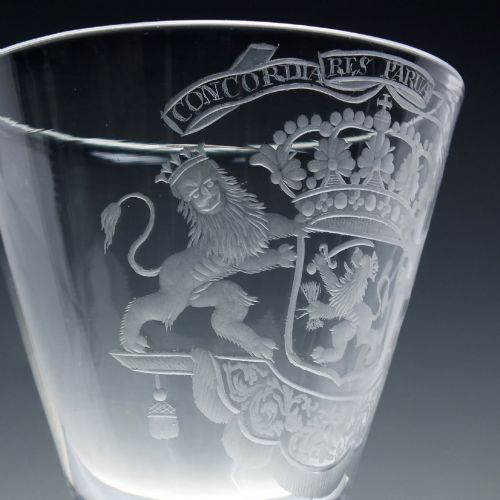
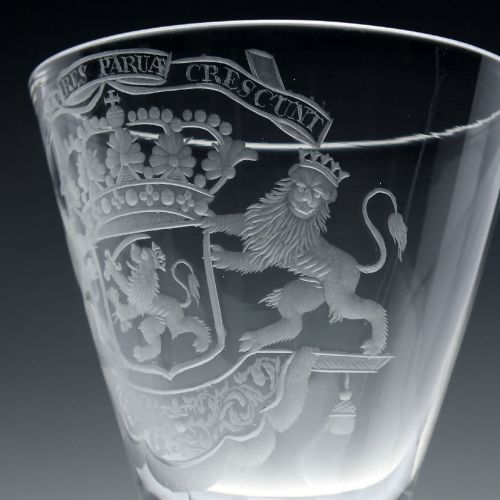
The Engraving: A wheel engraving of the coat of arms of the Republic of the Seven United Netherlands (1581–1795) - the precursor to the modern Dutch Royal Coat of Arms. It features a crowned lion rampant holding a sword and seven arrows, representing the united provinces, strength, and sovereignty. The motto is engraved with a diamond-point tool: “CONCORDIA RES PARVÆ CRESCUNT”, which translates as "Harmony makes small things grow", and was used to reflect the nature of the Republic.
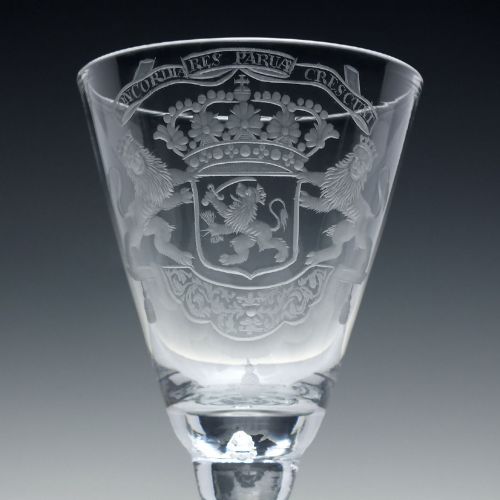
It is difficult to overstate just how rare an English armorial engraved pedestal stem is. So few examples are known that attempting to quantify their rarity in percentage terms would be meaningless.

Date & Origin
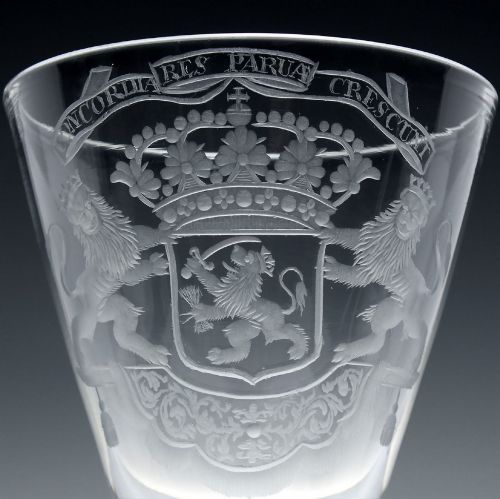
England, c1730. Period of King George II.

Condition

Excellent. No chips or cracks. There are two very small restorative fills to the wear line on the foot, both of which are difficult to detect, as shown. These were carried out professionally and sympathetically, ensuring the long-term preservation of this very important glass.
Dimensions

Height: 19.1cm

Rim diameter: 8.3cm

Foot diameter: 8.7cm

Provenance

The Dr Rigby Collection

If you wish to see more from the Dr Rigby Collection, comprising over 100 fine 18th-century wine glasses, please use the link.
Historical Context

This goblet is a rare survivor from the first half of the 18th century, capturing the Republic of the Seven United Netherlands at a time of immense pride and global influence. While the glass was blown in England during the reign of George II, its heart is purely Dutch, representing a period when the Republic was a world leader in trade, science, and art.
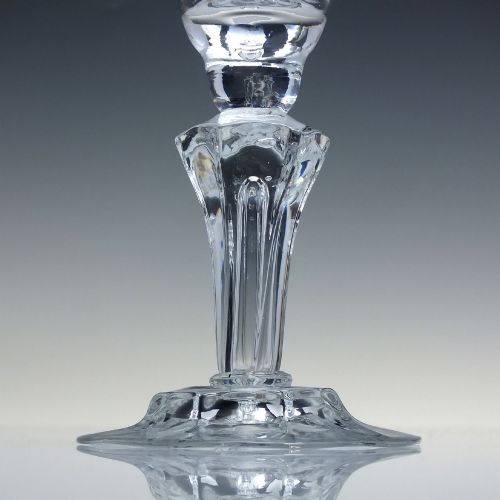
The "Silesian" Pedestal Stem: The six-sided pedestal stem was a revolutionary design in 1730. Introduced to England following the arrival of King George I from Hanover, it moved away from the heavy, rounder shapes of the late 1600s toward a more architectural, regal aesthetic. The "long air tear" within the stem was a deliberate mark of quality, showing the glassmaker’s ability to trap a perfectly symmetrical bubble of air within the molten gather.
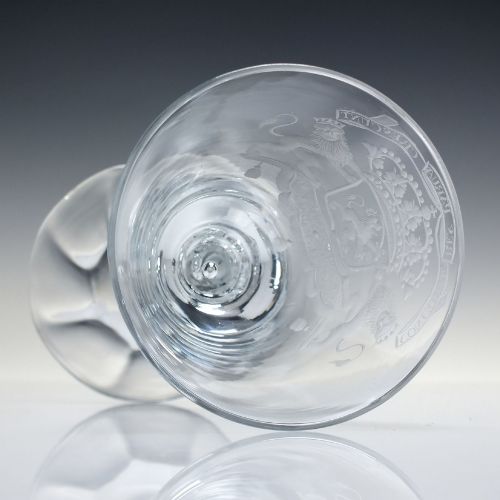
Mixed-Media Artistry: This piece is particularly interesting because it utilises two distinct decorating techniques. The intricate Coat of Arms was created using wheel engraving (grinding the glass with a copper wheel), while the motto was added using diamond-point engraving. Diamond-point was a highly specialised skill often practised by gifted amateurs and Dutch socialites, making this glass a unique collaboration between a professional workshop and a precision engraver.

A Symbol of Unity: The motto “Concordia Res Parvæ Crescunt” (Harmony makes small things grow) was the defining ethos of the Republic. The seven arrows held by the lion represent the seven provinces (including Holland, Zeeland, and Utrecht), which, though small individually, became a global superpower through their "concord" or unity.

The Rib-Moulded Foot: The "rib-moulded" domed foot is a classic 1730s feature. It wasn’t just decorative; it added structural strength to the glass and caught the candlelight during evening banquets, emphasising the brilliance of the English lead crystal.

Declaration

Exhibit Antiques has dated this Armorial Pedestal Stem Goblet to the Georgian era.

Reference Numbers
Sellingantiques Reference
SA1212336
Dealers Internal Reference
2026031711
Description
Description

An exceptionally rare 18th-century engraved pedestal wine goblet, produced in England circa 1730. It features a pointed round funnel bowl with a solid base enclosing a single central air tear. The bowl is engraved with a ceremonial United Netherlands armorial.

The glass stands on a shoulder half knop (a rare feature) above a six-sided pedestal (Silesian-type) stem, incorporating a long air column forming a hollow section to the lower stem.
Exhibit Antiques

It is raised on a rib-moulded domed foot, with a rough snapped pontil to the underside.

fig 1. An 18th-century clear glass wine goblet with a wheel-engraved heraldic coat of arms on the bowl, a moulded pedestal stem, and a flat circular foot.
fig 1. 18th Century Ceremonial Armorial Pedestal Stem Wine Goblet C1730

The Engraving: A wheel engraving of the coat of arms of the Republic of the Seven United Netherlands (1581–1795) - the precursor to the modern Dutch Royal Coat of Arms. It features a crowned lion rampant holding a sword and seven arrows, representing the united provinces, strength, and sovereignty. The motto is engraved with a diamond-point tool: “CONCORDIA RES PARVÆ CRESCUNT”, which translates as "Harmony makes small things grow", and was used to reflect the nature of the Republic.

fig 2. An 18th-century clear glass wine goblet with a wheel-engraved heraldic coat of arms on the bowl, a moulded pedestal stem, and a flat circular foot.
fig 2. 18th Century Ceremonial Armorial Pedestal Stem Wine Goblet C1730

It is difficult to overstate just how rare an English armorial engraved pedestal stem is. So few examples are known that attempting to quantify their rarity in percentage terms would be meaningless.

Date & Origin

fig 3. An 18th-century clear glass wine goblet with a wheel-engraved heraldic coat of arms on the bowl, a moulded pedestal stem, and a flat circular foot.
fig 3. 18th Century Ceremonial Armorial Pedestal Stem Wine Goblet C1730

England, c1730. Period of King George II.

Condition

Excellent. No chips or cracks. There are two very small restorative fills to the wear line on the foot, both of which are difficult to detect, as shown. These were carried out professionally and sympathetically, ensuring the long-term preservation of this very important glass.

fig 4. An 18th-century clear glass wine goblet with a wheel-engraved heraldic coat of arms on the bowl, a moulded pedestal stem, and a flat circular foot.
fig 4. 18th Century Ceremonial Armorial Pedestal Stem Wine Goblet C1730

Dimensions

Height: 19.1cm

Rim diameter: 8.3cm

Foot diameter: 8.7cm

Provenance

The Dr Rigby Collection

If you wish to see more from the Dr Rigby Collection, comprising over 100 fine 18th-century wine glasses, please use the link.

fig 5. An 18th-century clear glass wine goblet with a wheel-engraved heraldic coat of arms on the bowl, a moulded pedestal stem, and a flat circular foot.
fig 5. 18th Century Ceremonial Armorial Pedestal Stem Wine Goblet C1730

Historical Context

This goblet is a rare survivor from the first half of the 18th century, capturing the Republic of the Seven United Netherlands at a time of immense pride and global influence. While the glass was blown in England during the reign of George II, its heart is purely Dutch, representing a period when the Republic was a world leader in trade, science, and art.

fig 6. An 18th-century clear glass wine goblet with a wheel-engraved heraldic coat of arms on the bowl, a moulded pedestal stem, and a flat circular foot.
fig 6. 18th Century Ceremonial Armorial Pedestal Stem Wine Goblet C1730

The "Silesian" Pedestal Stem: The six-sided pedestal stem was a revolutionary design in 1730. Introduced to England following the arrival of King George I from Hanover, it moved away from the heavy, rounder shapes of the late 1600s toward a more architectural, regal aesthetic. The "long air tear" within the stem was a deliberate mark of quality, showing the glassmaker’s ability to trap a perfectly symmetrical bubble of air within the molten gather.

fig 7. An 18th-century clear glass wine goblet with a wheel-engraved heraldic coat of arms on the bowl, a moulded pedestal stem, and a flat circular foot.
fig 7. 18th Century Ceremonial Armorial Pedestal Stem Wine Goblet C1730

Mixed-Media Artistry: This piece is particularly interesting because it utilises two distinct decorating techniques. The intricate Coat of Arms was created using wheel engraving (grinding the glass with a copper wheel), while the motto was added using diamond-point engraving. Diamond-point was a highly specialised skill often practised by gifted amateurs and Dutch socialites, making this glass a unique collaboration between a professional workshop and a precision engraver.

fig 8. An 18th-century clear glass wine goblet with a wheel-engraved heraldic coat of arms on the bowl, a moulded pedestal stem, and a flat circular foot.
fig 8. 18th Century Ceremonial Armorial Pedestal Stem Wine Goblet C1730

A Symbol of Unity: The motto “Concordia Res Parvæ Crescunt” (Harmony makes small things grow) was the defining ethos of the Republic. The seven arrows held by the lion represent the seven provinces (including Holland, Zeeland, and Utrecht), which, though small individually, became a global superpower through their "concord" or unity.

The Rib-Moulded Foot: The "rib-moulded" domed foot is a classic 1730s feature. It wasn’t just decorative; it added structural strength to the glass and caught the candlelight during evening banquets, emphasising the brilliance of the English lead crystal.

Date of Manufacture

Exhibit Antiques has dated this Armorial Pedestal Stem Goblet to the Georgian era.

Reference Numbers
Sellingantiques Ref
SA1212336
Dealers Internal Ref
2026031711
Exhibit Antiques
Exhibit Antiques
Sellingantiques verified Since Mar 2019

Specialists in 18th & 19th century antique glass

Dealer Profile

You can view the stock and full dealer information on the Exhibit Antiques Profile Page
PDF SHARE
SAVE
An 18th-century clear glass wine goblet with a wheel-engraved heraldic coat of arms on the bowl, a moulded pedestal stem, and a flat circular foot.
1 / 9
Archive I An 18th-century clear glass wine goblet with a wheel-engraved heraldic coat of arms on the bowl, a moulded pedestal stem, and a flat circular foot.

18th Century Ceremonial Armorial Pedestal Stem Wine Goblet C1730
Archive II An 18th-century clear glass wine goblet with a wheel-engraved heraldic coat of arms on the bowl, a moulded pedestal stem, and a flat circular foot. View II
Archive III An 18th-century clear glass wine goblet with a wheel-engraved heraldic coat of arms on the bowl, a moulded pedestal stem, and a flat circular foot. View III
Archive IV An 18th-century clear glass wine goblet with a wheel-engraved heraldic coat of arms on the bowl, a moulded pedestal stem, and a flat circular foot. View IV
Archive V An 18th-century clear glass wine goblet with a wheel-engraved heraldic coat of arms on the bowl, a moulded pedestal stem, and a flat circular foot. View V
Archive VI An 18th-century clear glass wine goblet with a wheel-engraved heraldic coat of arms on the bowl, a moulded pedestal stem, and a flat circular foot. View VI
Archive VII An 18th-century clear glass wine goblet with a wheel-engraved heraldic coat of arms on the bowl, a moulded pedestal stem, and a flat circular foot. View VII
Archive VIII An 18th-century clear glass wine goblet with a wheel-engraved heraldic coat of arms on the bowl, a moulded pedestal stem, and a flat circular foot. View VIII
Archive IX An 18th-century clear glass wine goblet with a wheel-engraved heraldic coat of arms on the bowl, a moulded pedestal stem, and a flat circular foot. View IX
Enlarged Archival View
Telephone 01501 228 282
Location
Glasgow
Scotland
United Kingdom
Verified Since Mar 2019
Items For Sale 135
Items Sold 2,183
Exhibit Antiques
Exhibit Antiques
Verified Since Mar 2019
View Dealer Info
Location: Glasgow, Scotland, United Kingdom
Verified
Mar 2019
For Sale
135
Sold
2,183
An 18th-century clear glass wine goblet with a wheel-engraved heraldic coat of arms on the bowl, a moulded pedestal stem, and a flat circular foot.
18th Century Ceremonial Armorial Pedestal Stem Wine Goblet c1730
Ref: SA1212336
An 18th-century clear glass wine goblet with a wheel-engraved heraldic coat of arms on the bowl, a moulded pedestal stem, and a flat circular foot.
Detail View 1
Detail View 2
Detail View 3
Detail View 4
Detail View 5
Detail View 6
Detail View 7
Detail View 8
Archival Detail
Every single antique dealer on our platform is individually approved by our internal team. We verify their professional trade history, ethical standards, and photographic quality to ensure a secure, high-standard buying environment. Upon joining, every dealer agrees to a strict 9-point code of conduct. While issues can occasionally arise, our dealers typically resolve them swiftly and directly with the buyer. In fact, since our founding in 2002, Sellingantiques has only had to step in to help resolve an issue on roughly five occasions—a true testament to the quality of our dealers and their dedication to your happiness.
Our dealers are highly experienced in packing and shipping fragile, high-value antiques. Because you are in direct contact with the dealer, you will be able to easily go through all available shipping and insurance options together to ensure your item arrives safely.
Antiques are the ultimate green purchase. By choosing historical pieces over newly manufactured goods, you completely eliminate the carbon footprint of modern mass production while preserving exceptional, timeless craftsmanship.

A Georgian pedestal stem wine goblet, often featuring a Silesian or moulded stem, is a luxury drinking vessel dating from the early 18th century. These pieces frequently feature wheel-engraved armorial crests or mottos celebrating specific families, heraldic alliances, or civic societies.

Early 18th-century goblets were hand-blown using lead glass, known for its weight, clarity, and resonance. Stems were pressed into sectioned moulds to create faceted shapes, and intricate heraldic decoration was applied by hand using copper wheel engraving.

Authentic period glassware typically features a hand-finished pontil mark on the underside of the foot, subtle striations or air bubbles within the glass batch, and natural wear under the foot rim. Copper wheel engraving from this era displays fine, shallow cut variations distinct from modern acid-etched or laser-cut reproductions.

Antique glassware serves as an elegant accent when styled on a sideboard, drinks trolley, or within an illuminated glass cabinet. Placing lead glass near subtle directional lighting highlights the detail of the surface engraving.

Hand-wash antique glass gently using lukewarm water and a mild detergent, avoiding dishwashers and abrasive cloths. Dry immediately with a soft microfibre towel to prevent mineral spots, and handle carefully by the bowl or base rather than applying pressure to the stem.
items
Add keywords to the filter
Price
£100
£250000
Era
Movements
Material
Origin
Stock Location
Freshness
Online Payments
Categories