



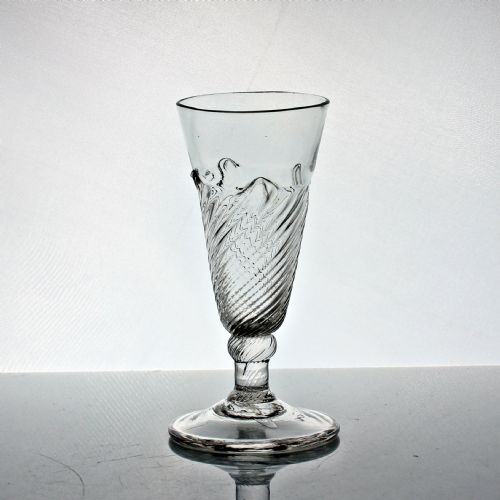


18th Century Ale Flute
These 18th century ale flute pieces are tall drinking vessels designed for celebration and daily toast, prized for their slender bowls.
18th Century Ale Flute
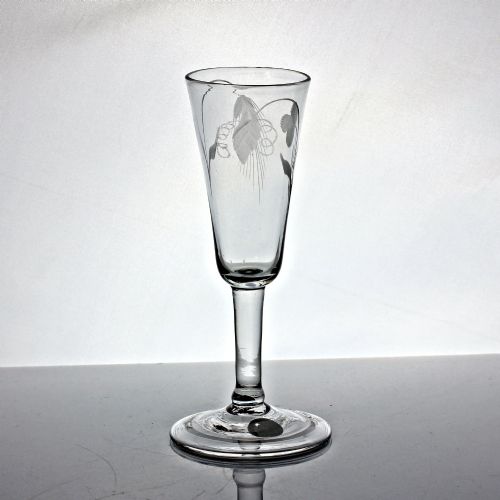
An 18th century ale flute takes the form of a slender, elongated drinking glass created to showcase the effervescence of historic beers and ales. When you search for this phrase, you encounter pieces spanning the Georgian era and around eighteen hundred.
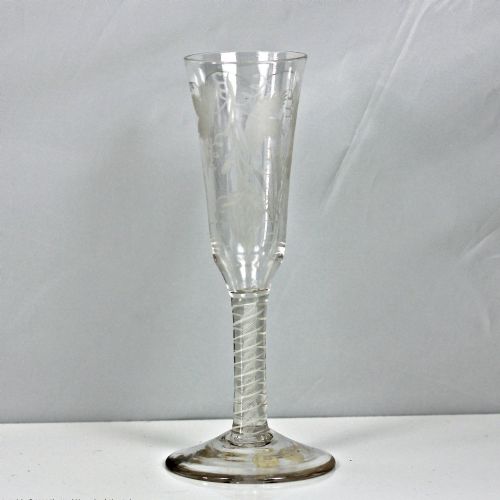
The objects listed on this page predominantly show English origins from the middle and late decades of the seventeen hundreds. Collectors meet varied stem formations ranging from plain stems to air twists and opaque twists.
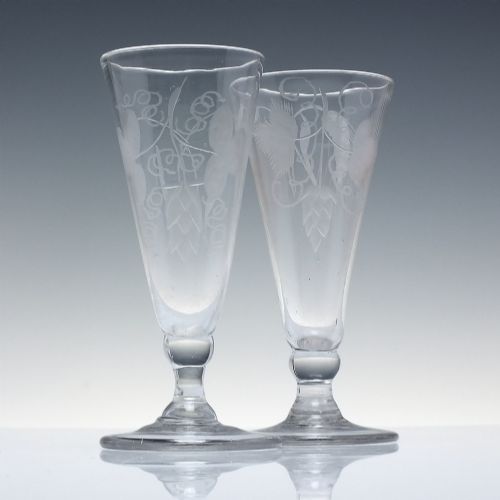
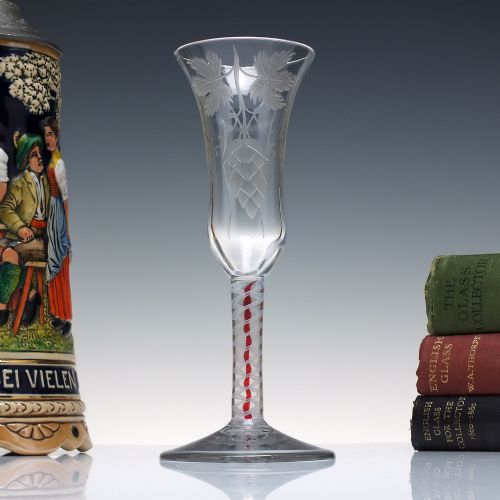
Forms include dwarf versions, flammiform examples, and vessels engraved with hops and barley motifs. These drinking glasses capture the domestic and social tavern customs of Georgian Britain.
Materials and construction methods
These drinking glasses are formed from lead glass, lead crystal, clear glass, and flint glass using hand-blown techniques. The handling of hot metal allows makers to shape delicate bowls and draw out stems.
Makers incorporate decorative elements like white enamel twists within the stem structure and apply wheel engraving to the surface. Folded feet provide stability at the base of these fragile vessels.
18th Century Ale Flute Retail Price Guide 2026
Typical asking prices for 18th century ale flute among the pieces listed under this phrase on Sellingantiques today, from the lower quarter to the upper quarter. They describe what is for sale here now, not the wider market.
Some seventeenth- and eighteenth-century drinkers preferred narrow flutes because they believed the shape kept the small beer fizzy for longer conversations.
Distinctions in quality
Quality rests upon the skill required to manipulate the glass while hot, particularly in the formation of complex internal air twists and coloured threads. Precision in the wheel engraving of hop and barley details elevates certain pieces above plain counterparts.
The integrity of the form, such as a well-balanced dwarf proportion or a properly executed folded foot, distinguishes superior examples. Clarity of the metal and the absence of heavy distortion reveal the proficiency of the glasshouse.
The 18th Century Ale Flute Glossary
- Air twist
- A stem formation containing internal spiral threads of air trapped during the manufacturing process. This optical effect is achieved by drawing and twisting the glass.
- Opaque twist
- A stem containing white enamel glass rods twisted into a spiral pattern inside the clear metal. These are categorised as single or double series depending on the complexity of the threads.
- Folded foot
- A base edge turned under and flattened to provide extra rim strength. This technique is typical of earlier drinking vessels.
- Wrythen
- A decorative spiral pattern moulded into the body of the glass. It gives a gentle twist to the surface of the bowl.
- Facet cut
- Geometric planes cut and polished onto the stem or bowl of the glass. This technique catches the light and reflects it across the surface.
18th Century Ale Flute: Frequently Asked Questions
What were 18th century ale flutes used for?
These tall vessels served for consuming beer, ale, and barley wine during social gatherings and formal meals. Their narrow shape kept the beverage lively.
Today, collectors use them to display Georgian glassware collections or for occasional celebratory toasts.
How do I identify a Georgian ale glass?
Look for characteristic 18th-century stem types such as air twists, opaque twists, or plain stems supporting a long, narrow bowl. English pieces often feature engravings of hops and barley.
Materials typically include heavy lead glass or flint glass with a characteristic dark ring and deep resonance when tapped.
Are these glasses safe to use today?
While these drinking glasses are historic artefacts, many owners prefer to keep them as display pieces. Hand washing in lukewarm water is essential if handled.
Thermal shock and modern dishwashers will damage lead glass and historic metal.
What is a dwarf ale glass?
A dwarf ale glass is a shorter, more robust version of the standard tall flute. It retains the narrow bowl shape but sits on a reduced stem.
These pieces were suited for smaller servings or everyday tavern use in the Georgian period.