






Engraved Beer Glasses
Engraved beer glasses are tactile pieces of social history, bringing historic toast-raising into the modern room.
Engraved Beer Glasses
Engraved beer glasses comprise historical drinking vessels designed for ales and beers, often decorated with floral or botanical motifs. When browsing engraved beer glasses, collectors encounter pieces spanning the eighteenth century through to the Edwardian era and the 1920s.
Georgian examples predominate in the current selection, offering robust lead glass and flint glass bodies suited to daily historic hospitality. Later Edwardian and 1920s pairings continue these robust drinking traditions with characteristic period proportions.
Materials and construction
Makers utilised lead glass, lead crystal, and clear glass to achieve the weight and clarity required for deep wheel engraving. Flint glass also provided a brilliant surface that caught the tavern or dining room candlelight.
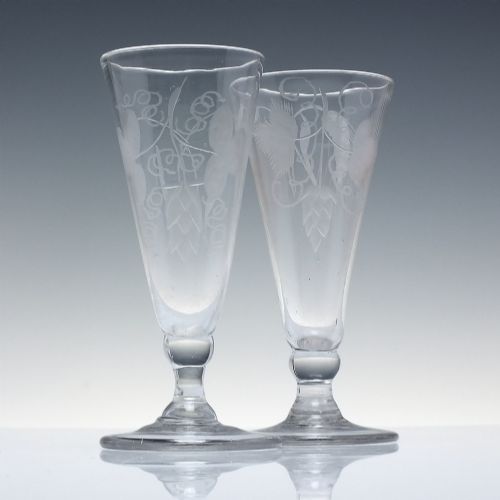
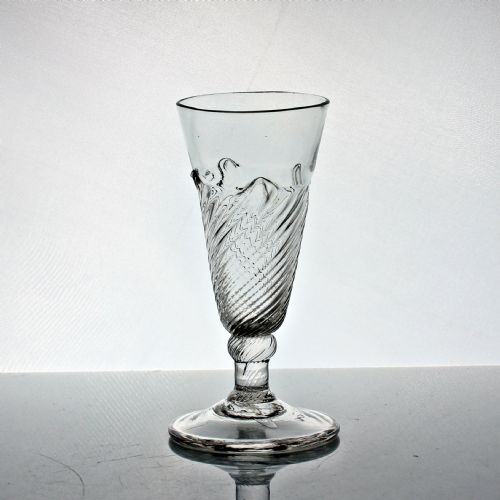
Surface decoration relies on skilled wheel engraving, typically depicting hops and barley motifs directly onto the bowl of the glass. Stems were shaped using techniques like air twisting or facet cutting to add structural and visual complexity.
Engraved Beer Glasses Retail Price Guide 2026
Typical asking prices for engraved beer glasses among the pieces listed under this phrase on Sellingantiques today, from the lower quarter to the upper quarter. They describe what is for sale here now, not the wider market.
Materials recorded across the inventory include lead crystal, flint glass, and silver plate.
Distinctions in quality
Quality rests upon the crispness and depth of the wheel engraving, where fine botanical detailing on hops and barley demonstrates superior craftsmanship. The clarity of the metal itself, whether lead crystal or flint glass, dictates the brilliance of the vessel.
Proportion and form define the finer pieces, such as balanced facet cut stems or well-executed air twists that require advanced glasshouse skill. Tankards combine quality glass bodies with sturdy silver plate mounts, where the integrity of both materials matters.
The Engraved Beer Glasses Glossary
- Rummer
- A large drinking glass popular for ale or wine, possessing a stout bowl and a short stem. These heavy vessels were standard in eighteenth and nineteenth-century taverns and homes.
- Air twist
- A stem formation containing internal spiral threads of trapped air. This decorative technique demands considerable skill from the glassblower.
- Facet cut
- Geometric cutting applied to stems or bowls to create flat, polished planes that reflect light. It became widespread during the Georgian period.
- Ale flute
- A tall, narrow drinking glass designed to retain the head and carbonation of beer. They often feature engraved hops and barley motifs.
Engraved Beer Glasses: Frequently Asked Questions
What drinks were served in these glasses?
These vessels were specifically shaped for historical ales, beers, and occasionally rum. The proportions accommodated the generous measures typical of past dining customs.
Collectors often display them as decorative items, though sturdy examples remain functional for traditional table service.
How do I date an engraved glass?
Dating relies on combining the silhouette of the vessel with stem construction and the style of engraving. Georgian pieces often display distinct knops and pontil marks on the base.
Comparing the specific type of glass metal, such as heavy lead crystal or flint glass, further narrows the period of manufacture.
Why do hops and barley appear so often?
Botanical motifs of hops and barley celebrated the agricultural ingredients used in brewing. Engravers used these symbols to connect the drinking vessel directly to its contents.
This imagery remained popular across multiple centuries, appearing on eighteenth-century rummers and later Edwardian glassware alike.
Can I use antique beer glasses today?
Many robust lead glass and crystal vessels remain entirely suitable for careful modern use. Hand washing in warm water preserves the historic material safely.
Owners should avoid thermal shock from sudden temperature changes to protect the centuries-old glass.