

Antique Salt Box
An antique salt box is a domestic timber vessel designed to keep dry grain close to the hearth.
Antique Salt Box
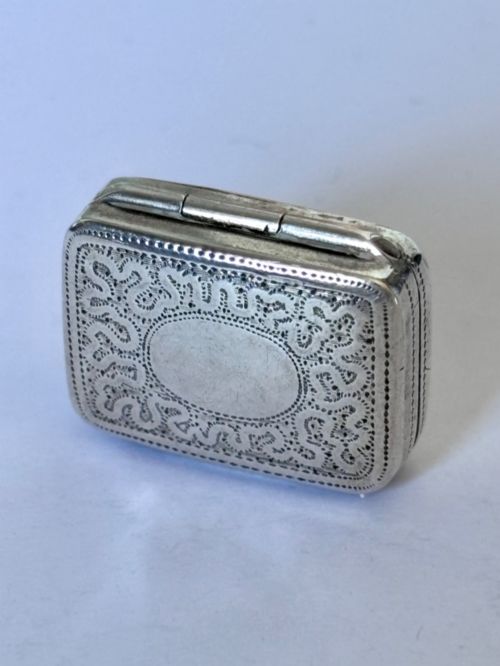
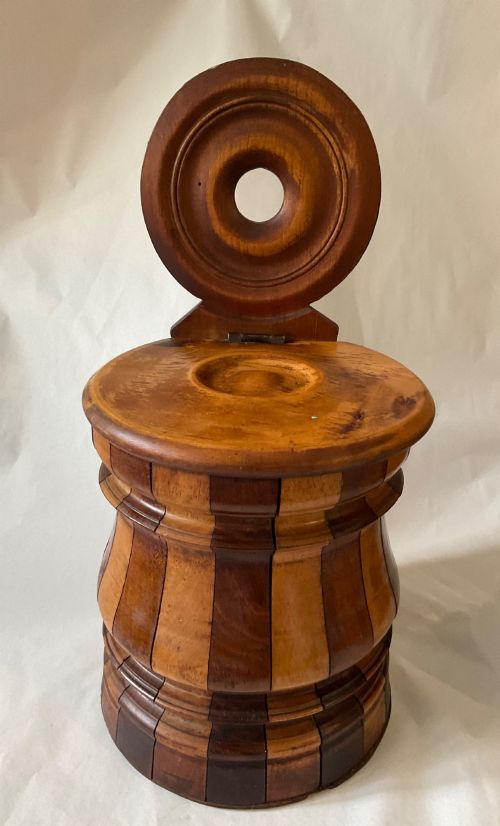
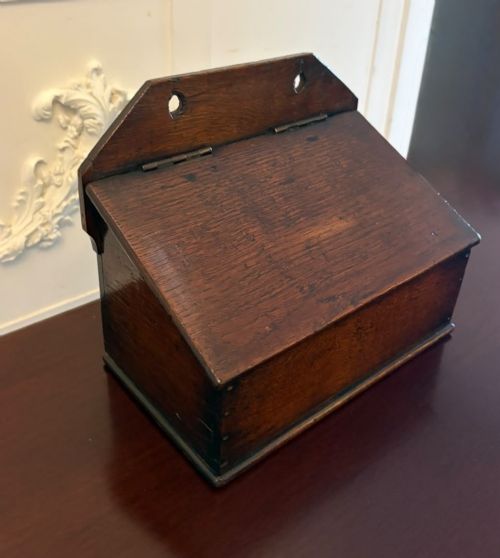
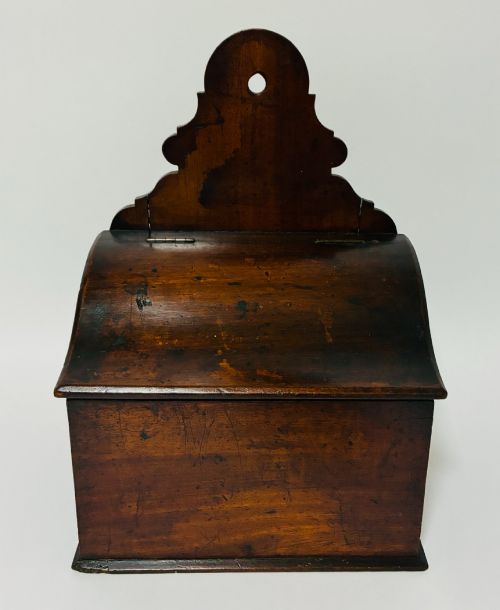
When you search for an antique salt box, you encounter wall-hanging timber containers constructed for domestic use beside the fireplace during earlier centuries. The pieces on this page span the seventeenth, eighteenth, and nineteenth centuries, originating from British, Welsh, and Swedish makers who worked primarily in oak.
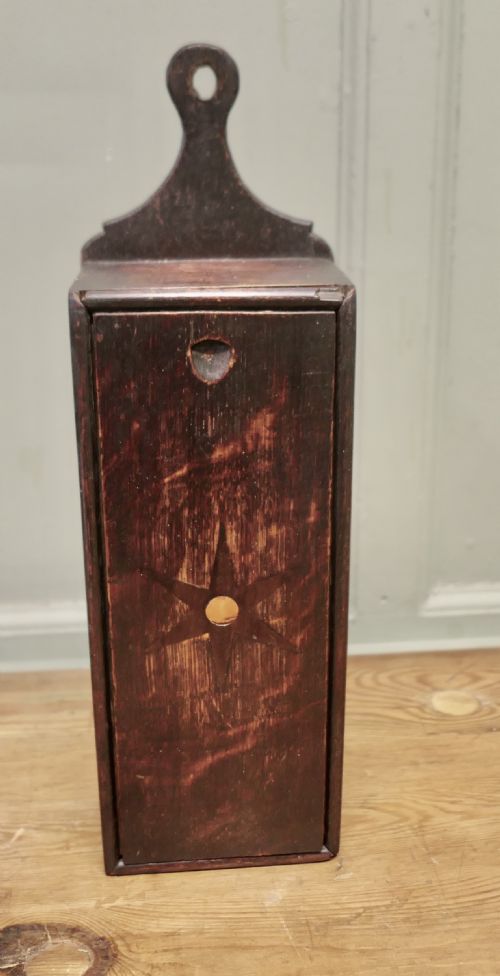
Domestic timber examples frequently feature high backboards pierced for wall suspension, protecting hygroscopic salt from damp stone kitchen walls while keeping it within reach of the cook. Alongside standard oak constructions, the records show variant forms executed in pine, boxwood, and walnut, sometimes retaining early painted finishes or inlaid geometric details.
Beyond wall-hanging receptacles, the broader category encompasses floor and table variants alongside related kitchen storage containers intended for candles and spices. The survival of original iron hinges and hanging loops defines the authenticity of these utilitarian kitchen pieces.
Materials and construction
The primary material found across these utilitarian vessels is oak, selected for its durability and resistance to shrinking in damp domestic environments. Makers joined boards using traditional pegging and dovetail construction, incorporating iron hardware such as strap hinges and latches forged by local blacksmiths.
Secondary timbers like pine and boxwood appear in regional variations, while decorative treatments range from simple heart-shaped cutouts on backboards to inlaid banded borders. Surfaces typically show the dry patination of scrubbed timber, though surviving examples occasionally display traces of early red paint.
Some vernacular pieces feature heart-shaped cutouts in the backboard, allowing a cook to check the salt level while adding a touch of rustic charm.
Judgement of quality
Quality in these timber containers rests upon the integrity of the original surface patination and the survival of early ironwork. Unrestored boards that exhibit deep, mellow colour without modern intervention command higher regard among collectors.
Proportion and domestic details also separate ordinary kitchen vessels from superior examples, particularly where makers incorporated shaped backboards, sliding lids, or subtle boxwood stringing into the design.
Samuel Pemberton·Thomas Johnson·Nathaniel Mills·Edward Smith·Jacob Amyand
The Antique Salt Box Glossary
- Backboard
- The vertical wooden panel rising behind the container, usually pierced with a hole for hanging on a wall peg. This structural element prevented the salt from drawing moisture directly from plaster or stone kitchen walls.
- Patina
- The surface sheen and colour developed over decades of cleaning, handling, and exposure to hearth smoke. A genuine dry patination indicates uncompromised timber age.
- Treen
- Small handmade wooden household objects. In the context of domestic storage, this encompasses turned or carved boxes fashioned from boxwood and other dense hardwoods.
- Strap hinge
- A long, flat iron fixture securing the lid to the body of the container. Hand-forged examples with irregular hammering marks confirm early manufacture.
Antique Salt Box: Frequently Asked Questions
How were salt boxes used?
These receptacles hung beside the domestic hearth to keep dry salt accessible for cooking and food preservation. The sloped lid and overhanging hood protected the contents from ash and kitchen moisture.
Because salt readily absorbs water and cakes together, keeping it elevated near the warmth of the fire kept the mineral usable for daily culinary tasks.
How do I hang a wall box?
Wall-hanging containers utilise the aperture pierced through the upper wooden backboard to suspend securely from a sturdy wall hook. The weight of the timber rests against this single point of support.
Ensure the mounting point is fixed directly into a stud or masonry anchor to safely bear the combined weight of the box and its mineral contents.
How do I clean antique timber?
Maintenance requires only a soft, dry cloth to remove dust from the grain and crevices. Moisture and modern chemical polishes will strip the historical surface sheen.
Preserving the dry patination of older wood ensures the piece retains its historical character and visual depth over time.
What wood was used?
Oak serves as the predominant timber across domestic storage pieces due to its strength and availability in British workshops. Regional variations also incorporate pine, walnut, and boxwood.
Makers selected native hardwoods that could withstand the heavy daily wear of a busy historical kitchen environment.