
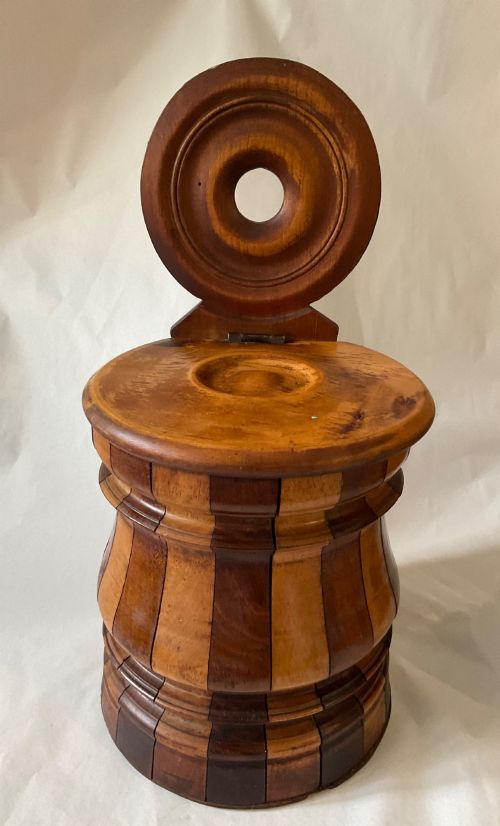
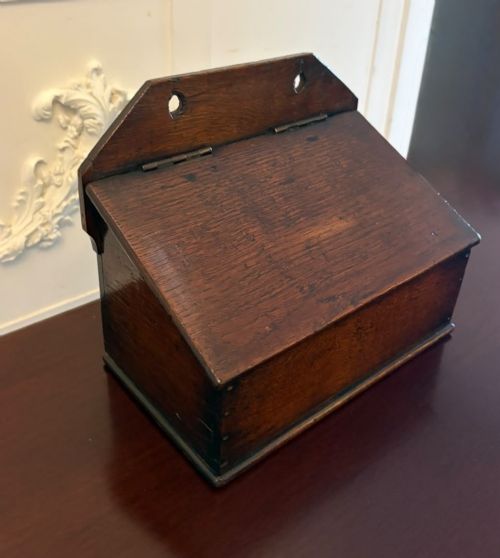
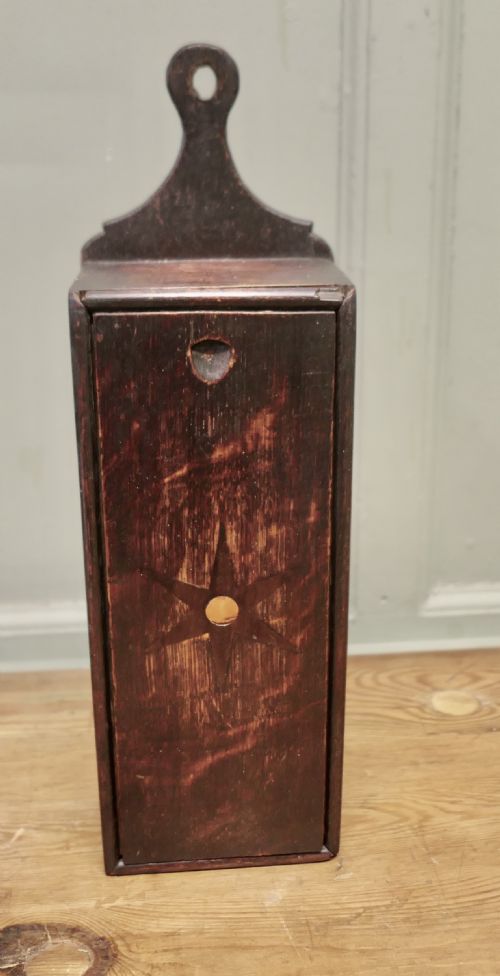
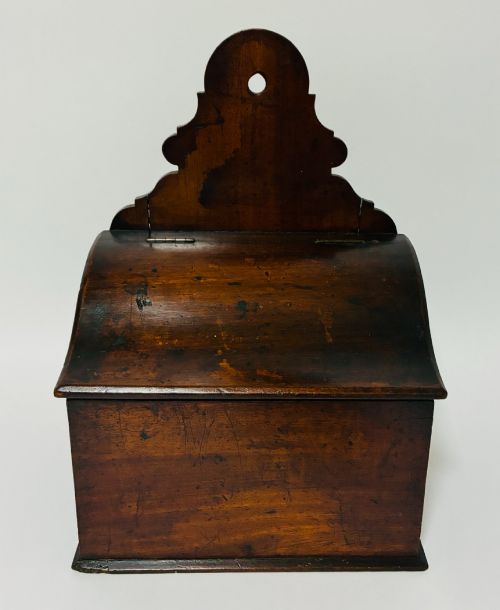
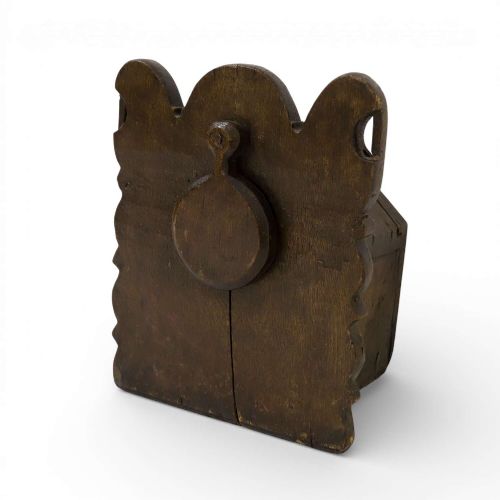
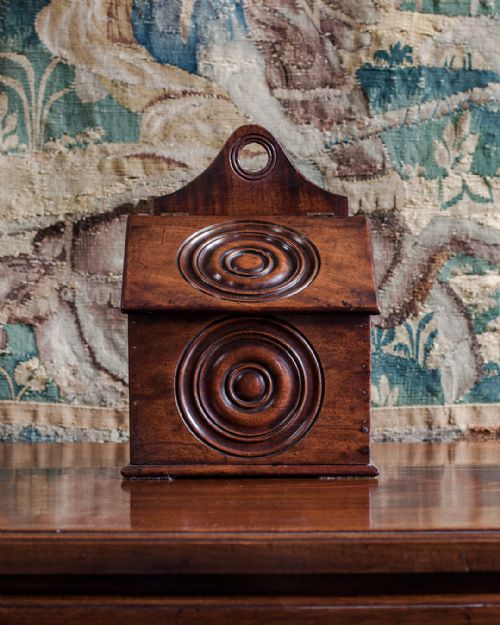
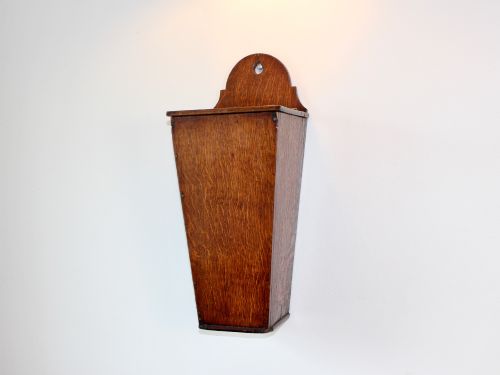


Wall Hanging Salt Box
These wall hanging salt box examples are practical timber kitchen containers designed to keep seasoning dry, offering honest rural utility for the home.
Wall Hanging Salt Box
A wall hanging salt box is a utilitarian timber container designed to be mounted on a kitchen wall, keeping coarse salt dry and close to the hearth. The examples found here span from the seventeenth century through the Victorian period, including Georgian iterations and rustic country pieces.
Most pieces encountered on this page are fashioned from oak, mahogany, or pine, often doubling in function as candle boxes or spice storage. Forms range from tapered rectangular shapes to boxes fitted with small drawers or original iron hardware.
How They Were Made
Cabinetmakers and rural joiners constructed these boxes using solid timbers such as oak, mahogany, pine, and elm, sometimes combining mixed woods within a single piece. Construction relies on traditional joinery methods suited to utilitarian kitchenware, frequently incorporating wood inlay or traces of early paint.
Hardware such as hinges and hanging loops are predominantly forged from iron or brass, fixed directly to the timber backboards to support the weight of the box and its contents against a cottage or kitchen wall.
Some boxes retain traces of bright red paint applied centuries ago, proving our ancestors liked a cheerful splash of colour by the stove.
What Varies in Quality
Quality in these domestic containers rests upon the choice of timber, the crispness of the joinery, and the survival of original components such as iron hardware and backboards. Finer examples display figured mahogany or dense seventeenth and eighteenth century oak, alongside thoughtful proportions and minimal alterations.
The presence of early surface treatments, such as red paint traces or untouched patination, elevates a piece above standard utility items. Conversely, heavy replacement of hardware or excessive timber loss diminishes the integrity of the object.
The Wall Hanging Salt Box Glossary
- Treen
- Small handmade wooden domestic objects and kitchenware. This term covers boxes, spoons, and turned vessels produced before the era of mass manufacturing.
- Patina
- The surface sheen and colour developed on timber through decades of handling, cleaning, and exposure to hearth smoke. It serves as an indicator of age and continuous use.
- Flame mahogany
- A decorative veneer cut from timber where the branch meets the trunk, producing a rippled, flame-like grain pattern. It appears on finer Georgian and Victorian pieces.
Wall Hanging Salt Box: Frequently Asked Questions
How were they hung on the wall?
These boxes feature a vertical backboard pierced with a hole or fitted with a small bracket designed to sit securely over a wall peg or nail.
This method kept the container elevated above damp kitchen work surfaces and within easy reach of the cook.
Were they used only for salt?
While intended for salt, many served multiple purposes in the kitchen and were frequently utilised to store candles, spices, or keys.
Makers often produced versatile forms that could accommodate tapered candles or small household provisions alongside seasoning.
How do I date an oak salt box?
Dating relies on examining the construction methods, nail types, timber grain, and any surviving iron hardware or paint traces.
Earlier pieces from the seventeenth and eighteenth centuries display hand-split boards and forged iron hinges, while Victorian examples often show more uniform machine-sawn timber.
Can I hang these boxes on modern walls?
Yes, provided the weight of the timber and its contents is supported by an appropriate wall anchor or a sturdy screw fixed into a stud.
The original hanging apertures on the backboards are generally robust enough to bear the load when properly aligned.