




Antique Treen Kitchenware
Antique treen kitchenware gathers the turned and carved wooden utensils of earlier domestic life, offering tactile links to historic domestic routines.
Antique Treen Kitchenware
Antique treen kitchenware encompasses utilitarian wooden objects created for food preparation and storage in the home, spanning centuries of domestic craft. These pieces range from simple practical vessels to more specific implements designed for daily household labour.
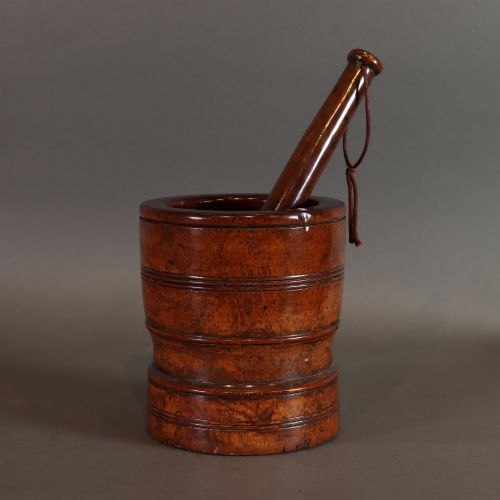
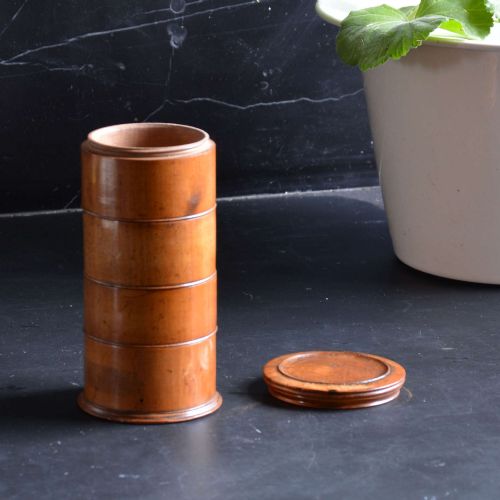
The selections available here lean heavily into 19th-century and Georgian forms, reflecting domestic life through turned bowls, spice towers, and mortars. Common survivals include Welsh vernacular pieces alongside objects in fruitwood, sycamore, and lignum vitae.
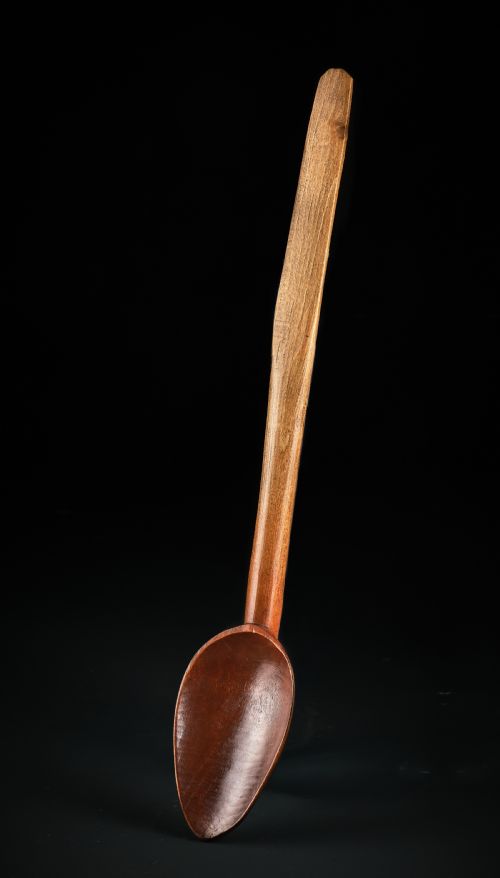
Buyers will encounter specialised kitchen tools such as apple corers, basting spoons, and salt boxes that reveal the manual nature of past kitchens. Each object demonstrates the straightforward intersection of utility and woodturning skill.
How these pieces were made
Makers utilised dense timbers such as lignum vitae, boxwood, fruitwood, and walnut to withstand the rigours of food preparation and daily kitchen wear. These woods were chosen for their hardness, grain density, and stability under pressure.
Turning on a lathe formed the primary method of production for symmetrical objects like mortars, pestles, and bowl stands, while hand carving shaped items like spoons and scoops. Metal elements occasionally reinforced structural points, as seen in specific strainers or graters.
Listings feature items spanning the seventeenth, eighteenth, and nineteenth centuries, constructed from fruitwood, boxwood, lignum vitae, and walnut.
What varies in quality
Quality rests in the crispness of the turning and the preservation of the original surface patina achieved through decades of use and handling. Pieces that retain their structural integrity without excessive timber shrinkage or replacement parts command greater attention.
Sophistication of form separates standard utilitarian objects from those with decorative regional details, such as Welsh folk art carving or architectural spice towers. The balance between practical function and refined execution defines the better examples.
The Antique Treen Kitchenware Glossary
- Treen
- Small handmade wooden objects for domestic use. The term derives from the Middle English word for tree.
- Lignum vitae
- An extremely dense and heavy hardwood from tropical American trees. It was frequently utilised for mortars and heavy kitchen implements.
- Searce
- A fine sieve or strainer used in early kitchens for sifting flour or spices. Examples often incorporate woven mesh or pierced wooden bases.
- Vernacular
- Objects made by local craftsmen following regional traditions rather than high-style metropolitan designs. Welsh vernacular pieces are particularly notable in this category.
Antique Treen Kitchenware: Frequently Asked Questions
What is antique treen kitchenware?
Antique treen kitchenware consists of functional wooden household objects made before modern mass production. These items include bowls, spoons, and spice containers used in daily food preparation.
They reflect the traditional woodworking skills of periods ranging from the seventeenth century through to the Victorian era. Each piece served a specific domestic purpose in the kitchen.
How were these wooden items used?
These pieces performed everyday tasks such as grinding spices, coring fruit, sifting flour, and storing salt. They were essential tools in domestic kitchens before metal and plastic utensils became common.
Many objects also doubled as decorative or social tokens, such as love spoons carved for courtship. Their design was entirely dictated by their practical function.
What woods were commonly used?
Woodturners selected dense hardwoods that could resist moisture and heavy friction without splitting. Common materials include fruitwood, sycamore, beech, boxwood, and the exceptionally heavy lignum vitae.
Each timber offered distinct qualities suitable for specific tasks, such as hard boxwood for intricate spice towers or tough fruitwood for turned bowls.