



Rustic Wall Salt Box
These rustic wall salt box pieces are dependable country containers meant to keep kitchen salt dry, offering genuine utility and modest charm.
Rustic Wall Salt Box
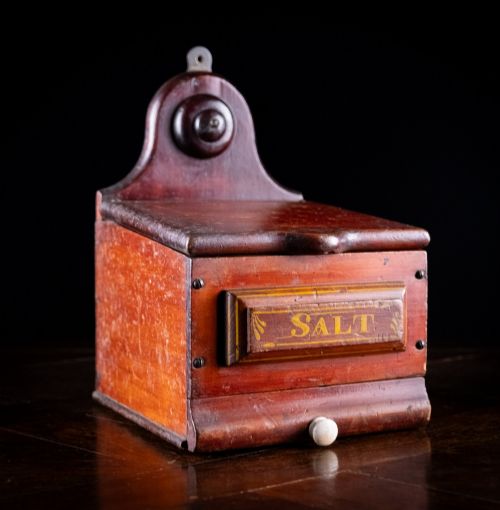
A rustic wall salt box is a domestic storage form designed to hang securely on kitchen walls near the hearth or work surface. The selection spans the eighteenth century, the nineteenth century, and the Victorian period, reflecting long traditions of rural woodworking.
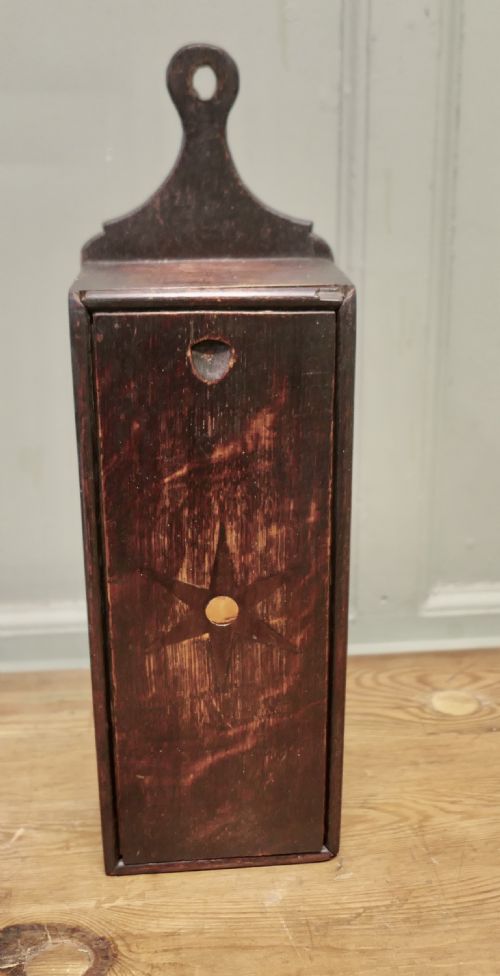
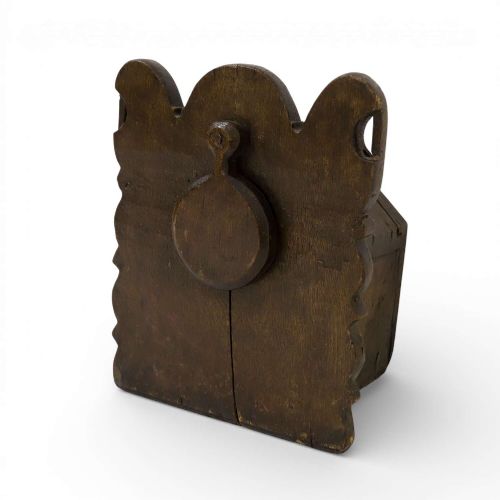
Most examples take the form of wall boxes, hanging boxes, or candle boxes intended for domestic utility. They appear in regional variants including Welsh pine and British oak forms.
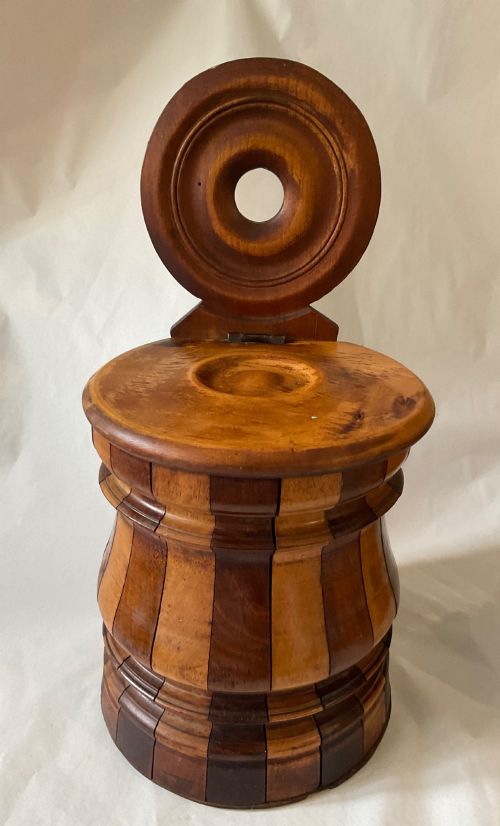
Makers shaped these utilitarian kitchenware objects from mixed hardwoods, oak, pine, and mixed timber. They frequently incorporate hanging provisions for wall mounting alongside hinged lids and compartmented interiors.
How they were made
Joiners and rural craftsmen constructed these containers primarily from solid timber boards of oak and pine, often utilising mixed hardwoods for internal panels. Construction methods relied upon pegged joints, dovetailed corners, and sturdy mounting backboards designed to endure daily household use.
Metal elements played an essential functional role, with original iron hardware and brass fixtures securing lids and hanging points. Surface treatments range from bare timber to traces of early red paint.
Rustic Wall Salt Box Retail Price Guide 2026
Typical asking prices for rustic wall salt box among the pieces listed under this phrase on Sellingantiques today, from the lower quarter to the upper quarter. They describe what is for sale here now, not the wider market.
Traces of old red paint still linger on certain seventeenth and eighteenth century boards, refusing to vanish completely after centuries of kitchen life.
What varies in quality
The distinction between standard domestic items and finer pieces lies in the selection of timber and the sophistication of construction. Superior examples feature well-figured oak boards, subtle carved details, and integrated wood inlay work.
The retention of original iron hardware and untouched surface patination elevates a piece considerably. Simpler utility boxes executed in basic pine with later replacements sit at the other end of the range.
The Rustic Wall Salt Box Glossary
- Salt box
- A wall-mounted container specifically designed to store domestic cooking salt and keep it free from dampness. These typically feature a sloping lid and a high backboard with a hanging hole.
- Spice cabinet
- A small wall-hung storage piece with internal divisions or miniature drawers for culinary herbs and spices. These represent a more complex form of kitchenware.
- Vernacular
- Everyday objects built by local artisans using regional traditions and readily available materials rather than high-style academic designs. This term describes the unpretentious character of country furniture.
- Hardware
- The functional metal components attached to a box, such as hinges, latches, and hanging rings. Original iron hardware adds significant interest to early pieces.
Rustic Wall Salt Box: Frequently Asked Questions
Where were rustic wall salt boxes hung?
These boxes hung near hearths or preparation tables where salt was needed constantly for cooking and food preservation. The wall-mounting design kept them out of the way of busy kitchen surfaces.
Their placement ensured that dry salt remained accessible while utilising vertical wall space in modest rural kitchens.
How do I distinguish a salt box from a candle box?
Salt boxes usually feature a slanted lid designed to shed dust and allow quick access to loose salt inside. Candle boxes often have flat or sliding lids and narrower bodies suited to holding tapers.
Both forms served domestic storage roles in the kitchen, leading to occasional overlap in how historical pieces are described.
What woods were used for these boxes?
Country makers relied on native timbers such as oak, pine, and mixed hardwoods. Oak was chosen for durability, while pine appeared frequently in regional pieces like Welsh wall boxes.
Some examples incorporate mixed timber construction or decorative wood inlay details to add visual interest to utilitarian objects.
Are these boxes eighteenth or nineteenth century?
Dated examples span from the seventeen hundreds through the Victorian era, showing steady continuity in rural design. Eighteenth-century pieces often display pegged joinery and simpler, heavier boards.
Victorian country examples can include carved decoration or lighter construction while maintaining traditional wall-hanging formats.