

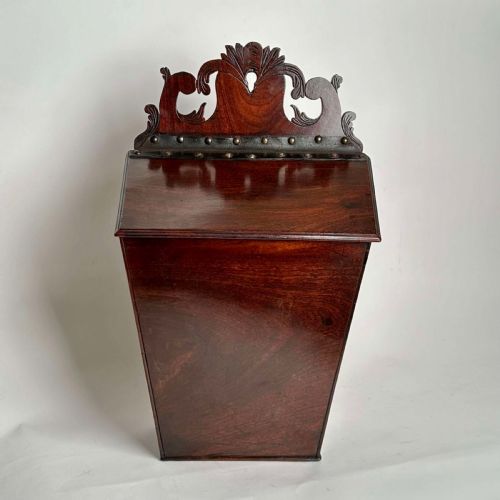


Wooden Salt Container
A wooden salt container keeps domestic kitchen salt dry near the hearth, appearing here in oak, mahogany, and pine across seventeenth, eighteenth, and nineteenth century forms.
Wooden Salt Container
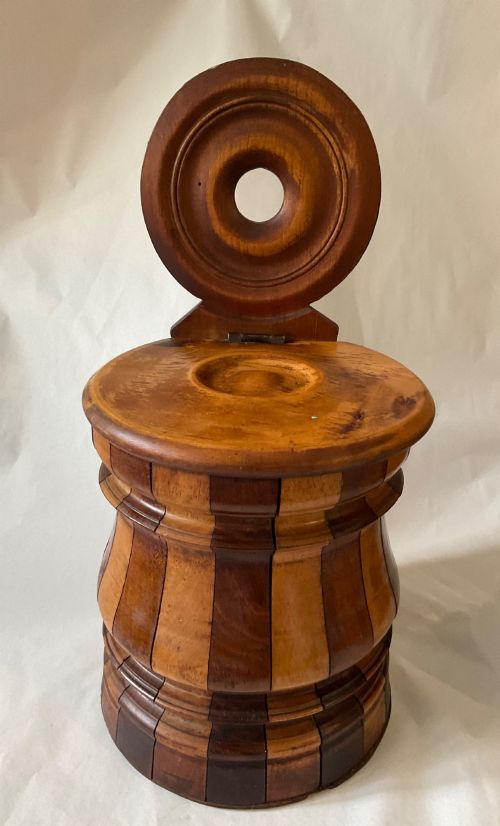
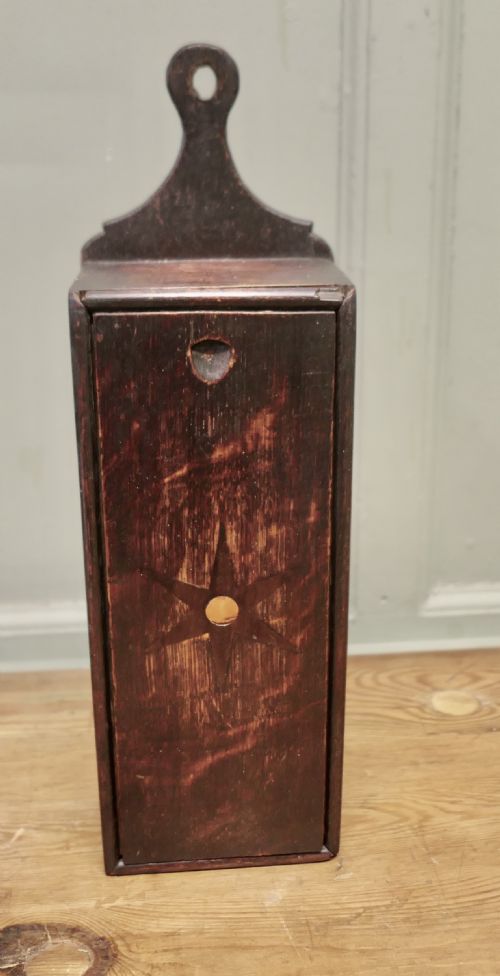
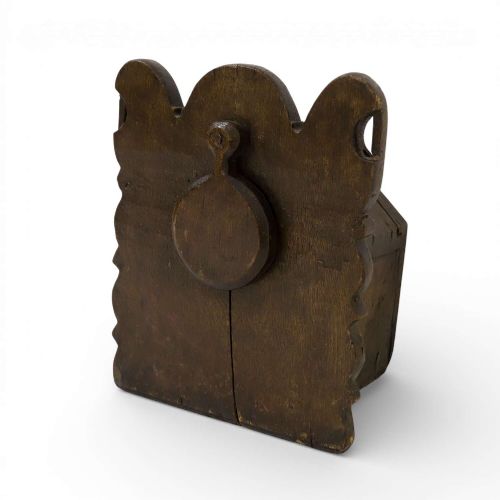
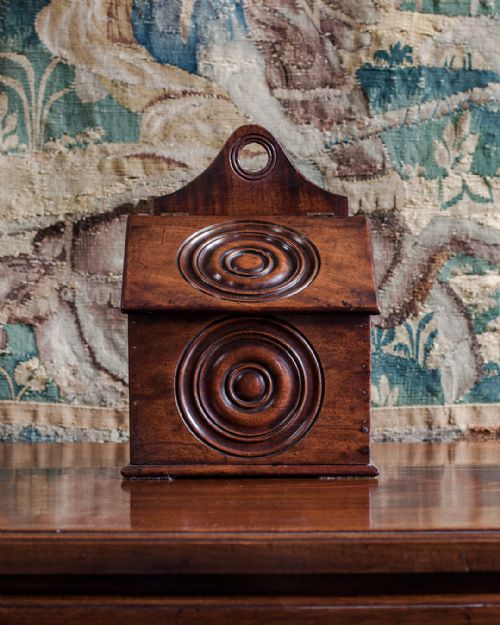
A wooden salt container serves as a traditional kitchen storage piece designed for wall hanging or domestic utility. These items most frequently appear on this page as salt boxes, wall boxes, and hanging boxes dating from the seventeenth, eighteenth, and nineteenth centuries.
The selection encompasses Georgian, Victorian Country, and rustic country styles shaped from oak, mahogany, and mixed hardwoods. Alongside dedicated salt containers, related kitchenware forms such as candle boxes and cutlery boxes also emerge within the listings.
How they were made
Joiners and country craftsmen constructed these containers primarily from solid timbers like oak, mahogany, and pine, often utilising mixed hardwoods for structural parts. Boards were joined to withstand daily domestic use in busy kitchens.
Original iron hardware and brass fittings secure the lids and hanging points, whilst occasional pieces retain traces of early red paint. Selected examples incorporate wood inlay or carved details suited to the prevailing Georgian vernacular and Victorian country tastes.
The listings span the 17th Century, 18th Century, and 19th Century, incorporating oak, mahogany, brass, and iron.
What varies in quality
The grade of a wooden salt container depends upon the selection of timber and the integrity of its construction. Heavy oak boards with deep patination stand apart from plainer pine or mixed timber examples.
Survival of original iron hardware and early surface treatments defines the upper tier of pieces. The presence of authentic tool marks and untouched period surfaces elevates an everyday container into a notable vernacular object.
The Wooden Salt Container Glossary
- Wall box
- A container specifically built with a flat back and suspension hole to hang securely upon a kitchen wall.
- Vernacular
- Everyday utilitarian objects made by local craftsmen following regional traditions rather than high style.
- Patina
- The surface sheen and colour developed on wood through decades of handling, light, and waxing.
- Hardwood
- Timber derived from broad-leaved deciduous trees, providing the dense material required for durable kitchenware.
Wooden Salt Container: Frequently Asked Questions
What is a wooden salt container?
A wooden salt container is a domestic wall-hanging box designed to keep dry salt near the hearth. These functional items protected hygroscopic salt from kitchen dampness.
Craftsmen built them in various forms, including salt boxes, wall boxes, and hanging boxes, using regional timbers like oak and pine.
How were they used?
These boxes hung on kitchen walls near cooking areas for easy access to salt during food preparation. The sloping lid allowed quick scooping whilst shielding the contents from dust and steam.
Many doubled as storage for candles or cutlery depending on the household requirements and the specific compartment layout.
How do I date an antique salt box?
Dating relies on timber species, construction methods, and hardware styles. Seventeenth and eighteenth-century examples typically feature heavy oak boards and hand-wrought iron hinges.
Victorian pieces often display mahogany or pine construction, machine-cut elements, and refined finishes reflecting nineteenth-century country aesthetics.
How should I hang one safely?
Utilise the existing suspension hole or bracket on the flat wooden backboard to mount the box securely to a solid wall. Ensure the fixing supports the weight of the timber without straining the historical structure.
Keep the container away from direct heat sources and excessive moisture to preserve the wood and original ironwork.