





Antique Boxwood Treen
Antique boxwood treen comprises small, utilitarian turned wooden objects shaped by domestic and tradesman hands during the eighteenth, nineteenth, and early twentieth centuries.
Antique Boxwood Treen
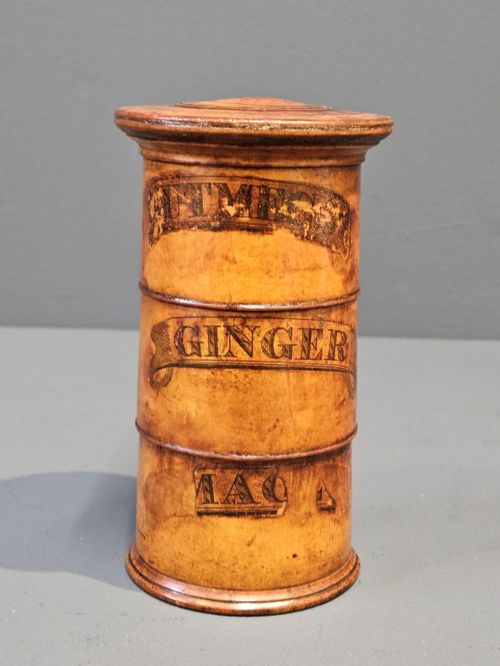
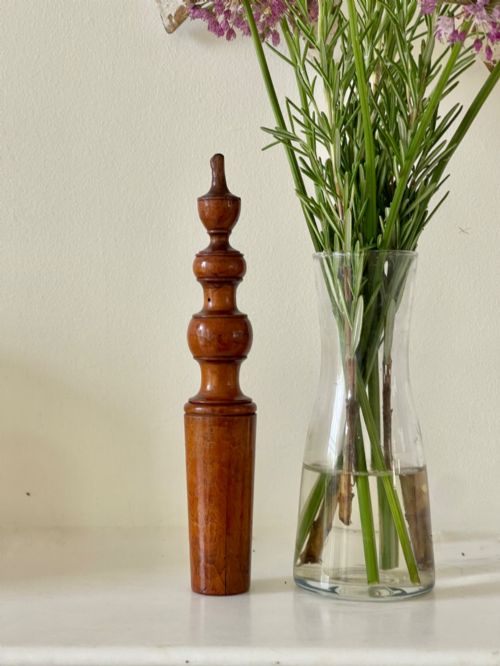
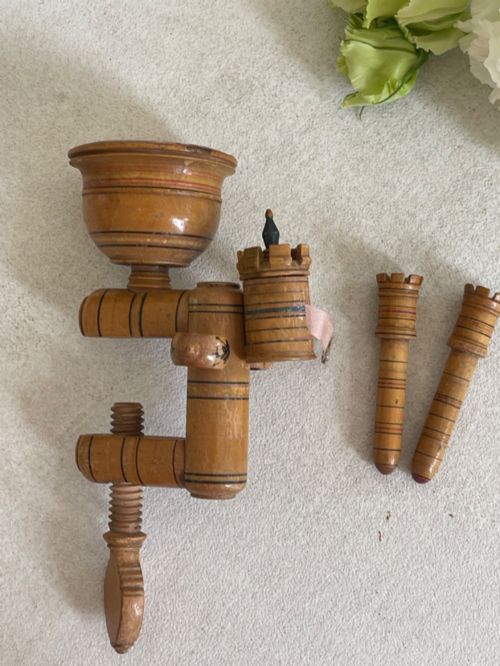
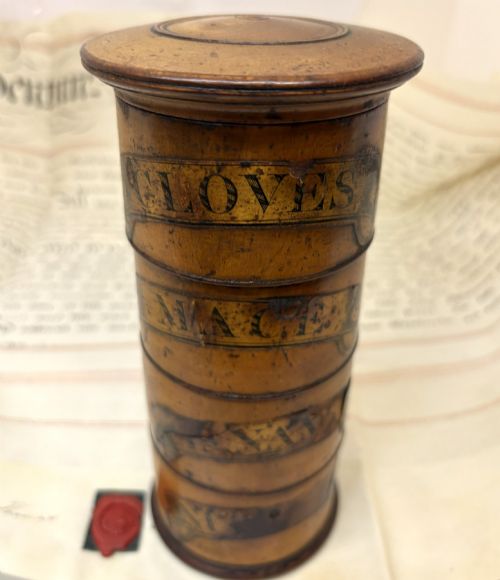
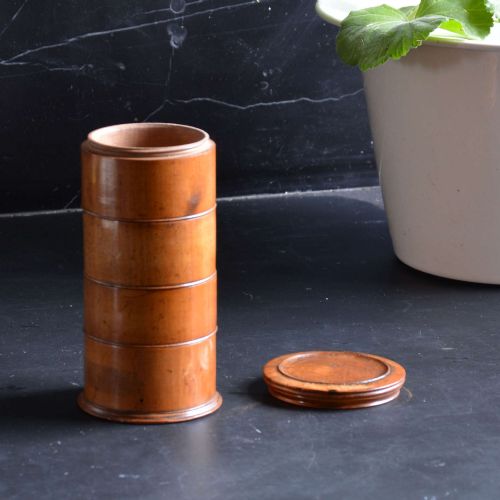
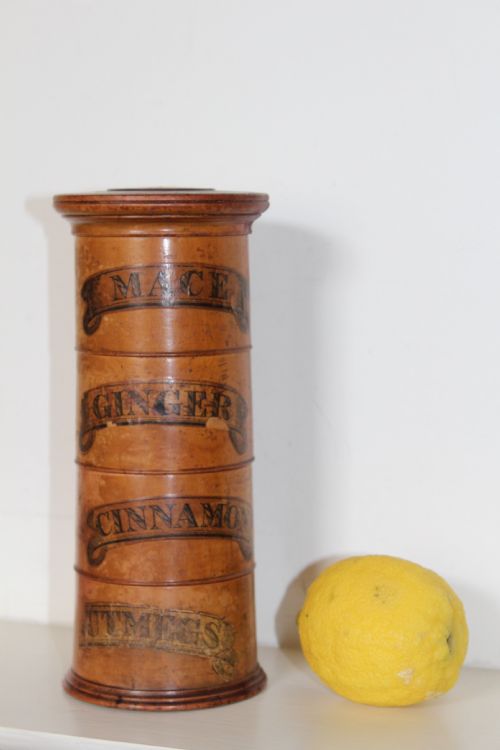
Antique boxwood treen encompasses a diverse range of small domestic and pocket items, from spice towers and apothecary pill rounders to sewing clamps, lemon squeezers, and pipe tampers. These objects served functional daily purposes in Georgian, Victorian, and Edwardian households, apothecary shops, and workshops.
The objects frequently encountered on this page span the eighteenth to the early twentieth centuries, with a strong representation of nineteenth-century turned implements. These include multi-tiered containers, pocket compasses, nutcrackers, and intricate desk accessories shaped from dense timber.
Many survivors display specific occupational or recreational uses, such as sailmakers' seam rubbers, watchmakers' oil pots, fishing priests, and child's toys like rattles and diabolo sets. Collectors encounter both utilitarian kitchenalia and curious pocket items carved with notable precision.
What varies in quality
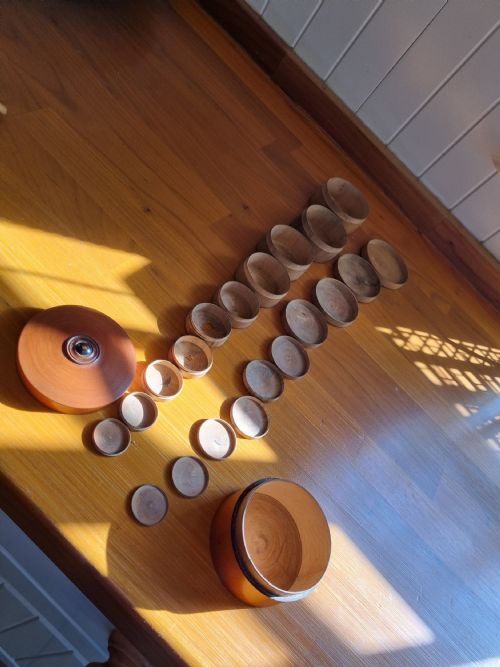
Quality rests upon the crispness of the original turning and the preservation of intricate details, such as the threading on screw-type pocket nutcrackers or the snug fit of nesting compartments in multi-tiered spice towers. Pieces that retain their original threaded lids, matching internal components, and crisp carved motifs stand apart from heavily worn examples.
The presence of secondary elements, such as original glass inserts in inkwells, intact paper labels, or accompanying steel and leather components, elevates a piece. Superior examples demonstrate a harmonious balance between functional utility and decorative turning without excessive loss of form or structural distortion.
Listings feature 19th Century, Georgian, Victorian, 1800, Edwardian, and 18th Century periods across various wooden forms.
The Antique Boxwood Treen Glossary
- Treen
- Small handmade wooden domestic objects. The term derives from the old English word for tree.
- Spice tower
- A turned multi-compartment wooden vessel used for storing culinary spices. Individual sections thread or stack securely together.
- Pill rounder
- An apothecary tool consisting of grooved wooden boards used for rolling medicinal masses into uniform pills. Pharmacists relied on these daily.
- Pipe tamper
- A small pocket implement used for packing tobacco into a pipe bowl. They often took figural carved forms.
- Seam rubber
- A smooth hand tool used by sailmakers and tailors to flatten fabric or canvas seams without heat. Boxwood provided the necessary density and smooth friction.
Antique Boxwood Treen: Frequently Asked Questions
How do you date antique boxwood treen?
Dating relies on stylistic markers, historical context, and mechanical assembly methods typical of periods like the Georgian and Victorian eras.
Tool marks, wear patterns, and the evolution of domestic items also provide clear indicators of a piece's manufacturing decade.
Why was boxwood chosen for treen?
Boxwood offers an exceptionally dense, tight grain that resists splitting and accepts fine lathe-turning and delicate hand-carved details without splintering.
This made the timber ideal for items subject to friction or pressure, such as pocket nutcrackers, screw mechanisms, and medical measuring tools.
What is an apothecary pill rounder?
An apothecary pill rounder is a wooden tool featuring parallel grooves used in nineteenth-century dispensaries to shape medicinal pastes into uniform spheres.
Pharmacists pressed the material across the grooved board to prepare precise doses for patients before mass-manufactured pills became common.