





Victorian Turned Wooden Containers
Victorian turned wooden containers are useful, tactile treen pieces crafted on a lathe, offering functional storage with distinct nineteenth-century character.
Victorian Turned Wooden Containers
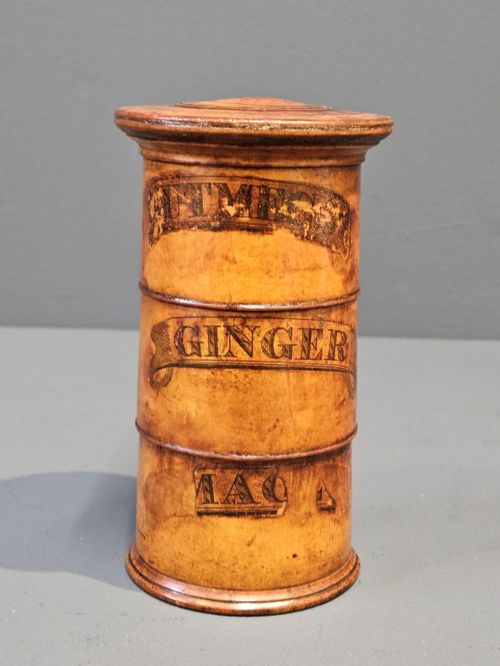
Victorian turned wooden containers comprise a diverse assortment of treen and utility items produced during the nineteenth century, including multi-tiered spice towers, jars and covers, string holders, and saltboxes. These domestic objects reflect the era's reliance on turned timber for everyday household storage and kitchen organisation.
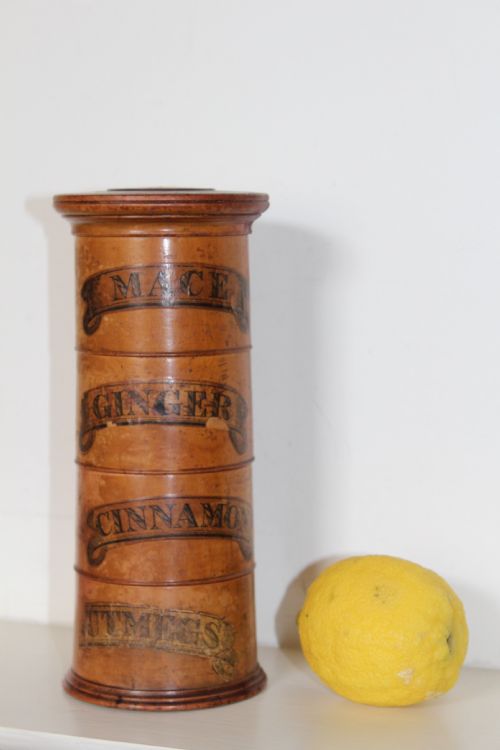
Buyers browsing this selection are most likely to encounter sycamore and boxwood spice towers with multiple compartments, along with sycamore string barrels and lidded jars dating from the nineteenth century. The assortment extends to fruitwood and lignum vitae examples, representing both folk art traditions and more formal nineteenth-century manufacturing.
The typology includes specialised forms such as novelty snuff boxes in burr walnut, decorative urns, and round mahogany boxes alongside standard kitchen collectables. While the majority of pieces originate from the nineteenth century, occasional Edwardian examples also appear within the selection.
How they were made
These items are shaped on a lathe using various timbers such as boxwood, sycamore, fruitwood, mahogany, lignum vitae, and burr walnut. Turners utilised the dense grain of hardwood to achieve precise fitted lids, screw threads, and stacked tiers.
Construction methods rely entirely on turning wood on a lathe, creating symmetrical vessels, barrels, and towers. Some pieces incorporate paper labels or domestic hand-finishing alongside the primary turned structure.
What varies in quality
The distinction between standard utility items and finer examples rests on the complexity of the turning, particularly multi-tiered assemblies like four-tier spice towers and nested containers. Precision in the fit of lids and covers demonstrates the skill of the original maker.
Choice of material significantly affects the character of a piece, with dense exotic hardwoods like lignum vitae or figured timbers such as burr walnut offering superior visual depth compared to plain softwood or basic fruitwood.
The Victorian Turned Wooden Containers Glossary
- Treen
- Small handmade wooden objects for domestic use. This term encompasses everything from kitchen collectables to decorative boxes and string holders.
- Sycamore
- A light-coloured hardwood commonly utilised for nineteenth-century treen and dairy utensils. It provides a clean, pale surface often seen in string barrels and jars.
- Lignum Vitae
- An extremely dense and heavy dark hardwood used for durable turned items. It frequently appears in robust string barrels from the nineteenth century.
- Spice Tower
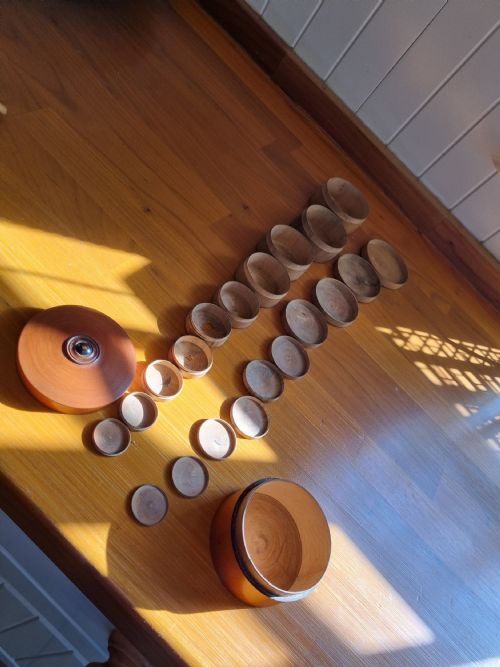
- A multi-tiered turned container designed to hold various spices within stacked compartments. These pieces screw or fit together vertically.
- String Holder
- A hollow turned container designed to dispense ball twine through a central aperture. They take various bulbous and cylindrical forms.
Victorian Turned Wooden Containers: Frequently Asked Questions
What were spice towers used for?
Spice towers served as compact kitchen storage for domestic culinary ingredients during the nineteenth century. Their multi-tiered design allowed households to keep several seasonings within a single vertical vessel.
Today, collectors appreciate these stacked containers for their ingenious construction and visual presence on display.
How do I identify a string holder?
String holders feature a hollow turned body designed to house a ball of twine, often with a small central hole in the lid or side for the string to feed through. They typically appear in sycamore or lignum vitae.
These utilitarian objects were standard fixtures in nineteenth-century shops and domestic kitchens.
What woods are common in treen containers?
Makers utilised dense hardwoods such as boxwood, sycamore, fruitwood, mahogany, and lignum vitae for turned containers. These timbers provided the stability needed for intricate lathe work.
Variations in the wood grain give each Victorian piece its distinct appearance and weight.
How should I care for turned wooden containers?
Keep wooden containers away from direct sunlight and extreme temperature fluctuations to prevent the timber from drying out or splitting. Gentle dusting is usually sufficient for maintenance.
Applying a light coat of appropriate wax helps nourish the antique finish over time.