





Turned Wood Spice Box
A turned wood spice box brings tactile warmth and domestic history to a room, offering clever tiered storage or pocket-sized utility.
Turned Wood Spice Box
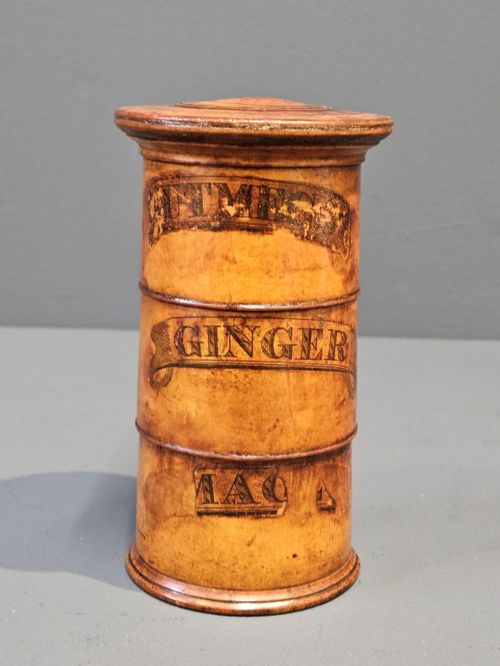
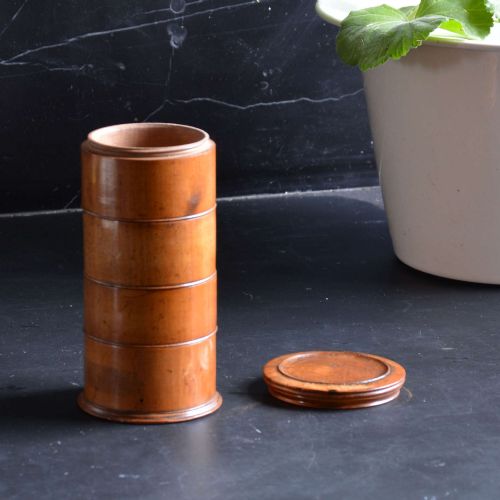
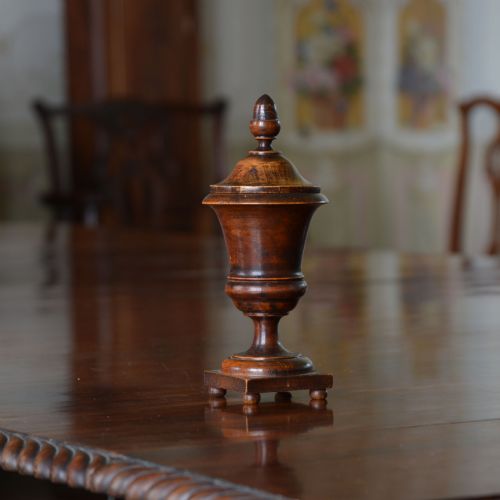
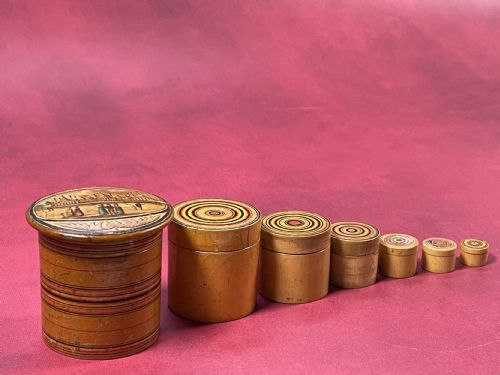
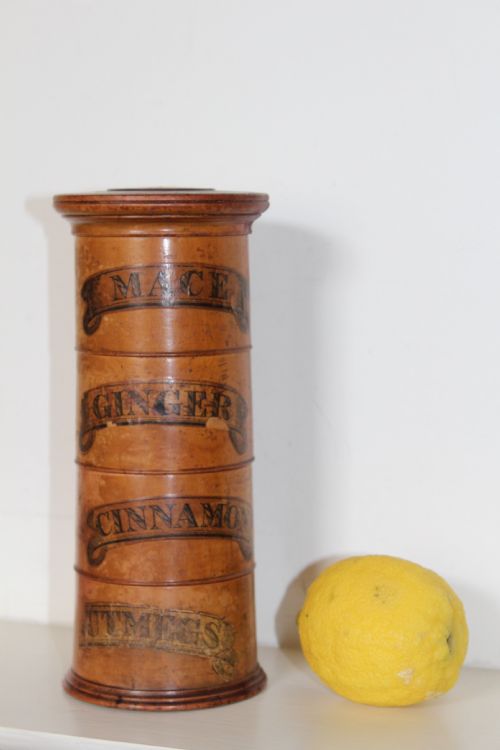
A turned wood spice box encompasses miniature multi-tiered towers, decorative urns, and fitted containers designed for culinary provisions. These items belong principally to the treen and kitchen collectables categories, representing centuries of domestic woodturning. You will most frequently encounter nineteenth-century pieces alongside Georgian and Edwardian examples on this page.
The selection ranges from four-tier spice towers to specialised nutmeg graters shaped like wine bottles and souvenir whitewood stacking pots. Boxwood and fruitwood dominate the material record, often displaying the precise lathe work characteristic of traditional treen containers. Each form reflects the practical requirements of period kitchens and the decorative ambitions of folk art.
How they were made
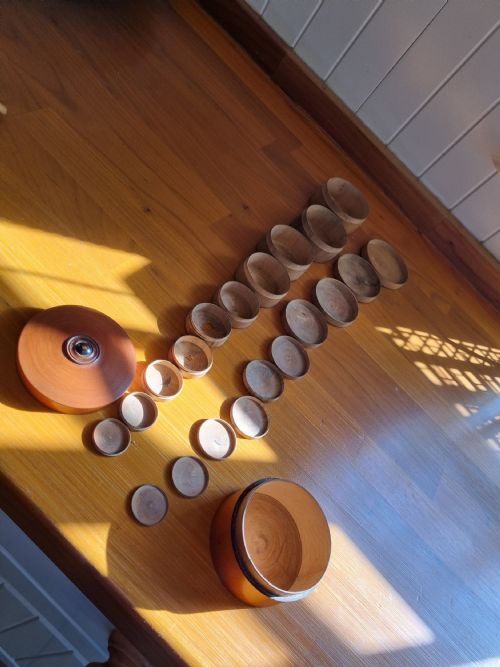
Turned wood spice box creations rely entirely on the lathe, shaping dense hardwoods such as boxwood and fruitwood into precise, symmetrical forms. Artisans exploited the fine grain of these timbers to achieve thin walls, tightly fitted lids, and multiple stacking compartments that screw or slot together seamlessly.
Surface finish depends on natural timber characteristics rather than heavy pigmentation, sometimes supplemented by paper labels or specialised inserts like cork. The craftsmanship relies on accurate turning to ensure that stacked tiers align correctly and remain functional after generations of use.
Listings feature items spanning the eighteenth century through the Edwardian period, constructed from boxwood, fruitwood, and general timber.
What varies in quality
Quality in a turned wood spice box rests on the crispness of the lathe work and the integrity of the timber. Finer examples display sharp mouldings, well-preserved threads on stacking sections, and rich natural patination developed through handling.
Simpler or later items may show softer turning lines and less refined joinery between tiers. The presence of original fitted elements, such as internal compartments or associated graters, distinguishes exceptional survivals from standard domestic utilitarian pieces.
The Turned Wood Spice Box Glossary
- Treen
- Small handmade wooden domestic objects intended for household use. This broad category covers everything from spice containers to decorative tableware.
- Spice Tower
- A vertical, multi-tiered container designed to hold various seasonings within separate stacked compartments. These ingenious vessels maximise storage efficiency.
- Boxwood
- A dense, pale hardwood prized by turners for its fine, even grain. It allows for extremely detailed and precise lathe work.
- Campana Urn
- A classical vase shape featuring a flared rim and pedestal foot, often rendered in miniature as decorative treen. This form echoes ancient pottery styles translated into timber.
- Nutmeg Grater
- A small culinary implement designed to grate hard spices before use, frequently housed in portable turned wooden casings. These pocket-sized tools were essential dining table accessories.
Turned Wood Spice Box: Frequently Asked Questions
What is a turned wood spice box?
A turned wood spice box is a small, lathe-turned wooden container or multi-tiered tower created to store culinary spices. These objects combine practical kitchen utility with decorative woodworking traditions.
Most examples date from the Georgian, Victorian, and Edwardian eras, serving as both functional storage and charming domestic ornaments.
How were spice towers used?
Spice towers were utilised in period kitchens and dining rooms to keep valuable spices organised and protected from moisture. The stacked compartments allowed multiple flavours to be kept in a single vertical unit.
Users would unscrew or lift individual tiers to access specific seasonings during food preparation or at the table.
How do I date a wooden spice container?
Dating these items involves examining the timber species, turning style, and overall construction methods. Georgian and early Victorian pieces often feature dense boxwood or fruitwood with hand-finished lathe marks.
Later Victorian and Edwardian examples may show standardised threading or different decorative flourishes, while materials like paper labels help narrow the timeline.