





Antique Treen Spice Box
These antique treen spice boxes are small wooden containers built to hold aromatic roots and powders, offering tactile history for the collector.
Antique Treen Spice Box
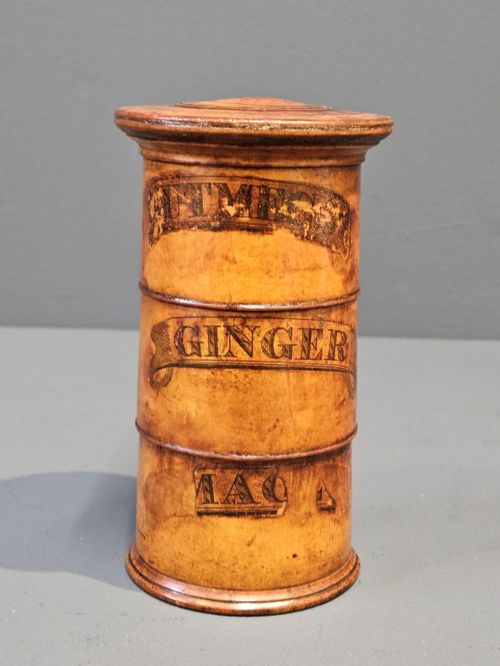
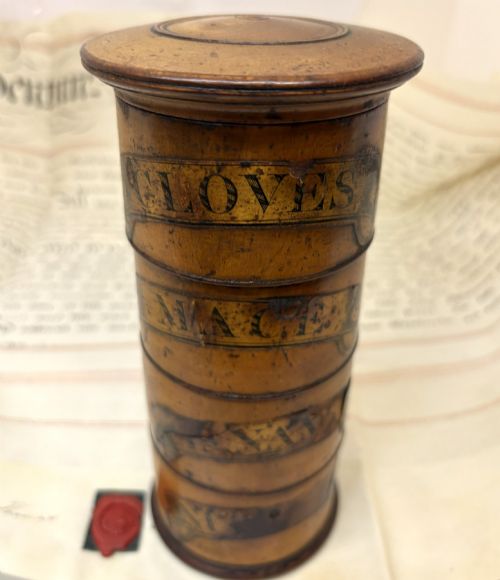
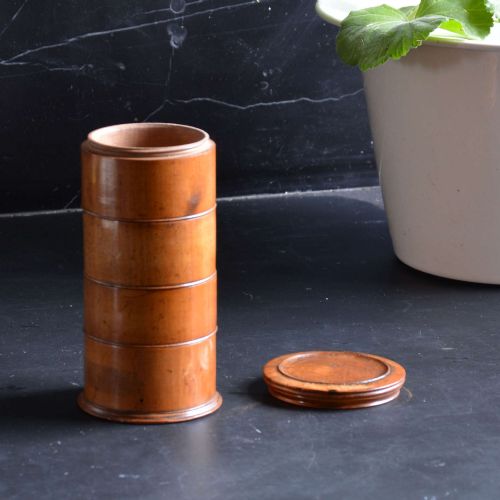
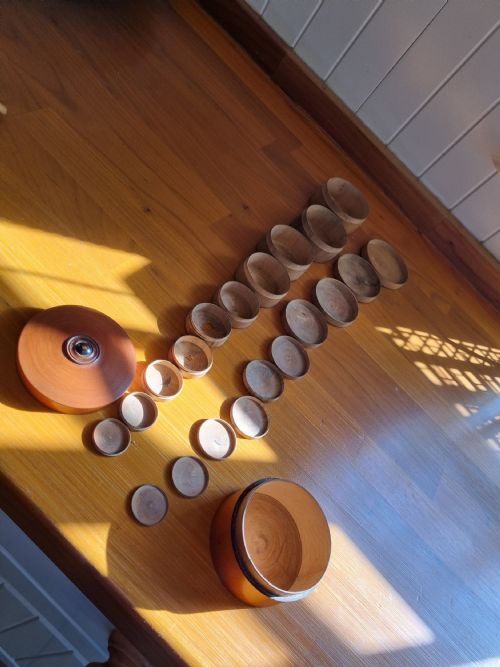
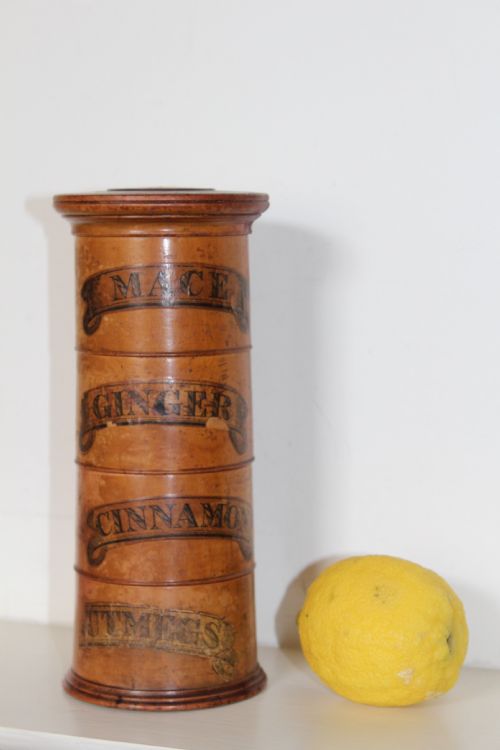
An antique treen spice box takes several distinct forms, most frequently appearing as multi-tiered towers or flasks designed to keep valuable flavorings dry and separate. The items on this page range from Georgian examples with multiple interior compartments to Victorian turned wood containers and novelty nutmeg graters shaped like wine bottles.
Makers fashioned these pieces for domestic kitchens and dining tables, utilising individual pots and lidded sections to store nutmegs, cloves and cinnamon. Buyers encounter simple cylindrical containers alongside sophisticated four-tier towers and burr boxwood flasks that have survived from the eighteenth and nineteenth centuries.
Materials and construction
Craftsmen relied on dense hardwoods such as boxwood, fruitwood, beech and walnut, which could be shaped accurately on a lathe. These turned woods provided the stability needed for tight-fitting lids and nesting compartments that protected volatile kitchen spices from damp air.
Workshops utilised simple hand tools alongside foot-powered lathes to cut clean lines and threaded joints into the timber. Additional elements like paper labels and cork stoppers occasionally completed the storage vessels, while folk art carving added decorative surface detail.
Antique Treen Spice Box Retail Price Guide 2026
Typical asking prices for treen spice box among the pieces listed under this phrase on Sellingantiques today, from the lower quarter to the upper quarter. They describe what is for sale here now, not the wider market.
Materials documented across these listings include boxwood, fruitwood, walnut, beech, paper labels and cork.
Judging quality and condition
Quality rests upon the precision of the turning and the completeness of the internal pots or tiers. A finer piece maintains crisp vertical lines and smooth screw threads that operate without sticking, while lesser examples show excessive wear or replaced components.
The choice of timber heavily influences desirability, with richly figured burr boxwood or deeply patinated walnut commanding greater attention than plain utility woods. Original surfaces untouched by modern refinishing preserve the authentic warmth of the aged material.
The Antique Treen Spice Box Glossary
- Treen
- Small handmade wooden objects for domestic use. This broad category covers everything from tableware to kitchen containers.
- Spice tower
- A vertical multi-tiered wooden container designed to hold several different powdered or whole spices. Each section nests or screws into the one below.
- Nutmeg grater
- A pocket-sized device for grating hard nutmeg seeds before use. Many examples take amusing miniature forms such as wine bottles.
- Boxwood
- A dense, pale hardwood favoured for intricate turning. Its fine grain permits exceptionally sharp detail.
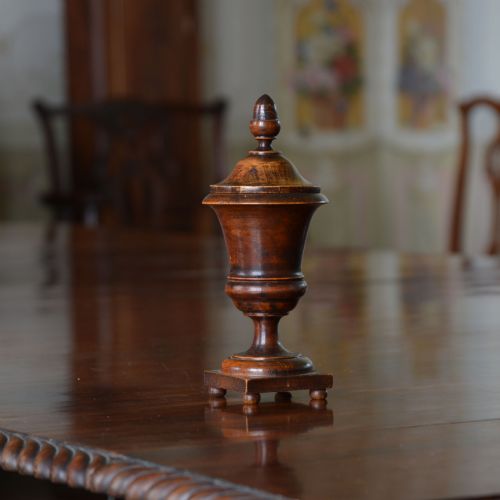
- Campana urn
- A classical vase shape with an inverted bell profile. Makers occasionally adapted this silhouette for decorative wooden vessels.
Antique Treen Spice Box: Frequently Asked Questions
What are antique treen spice boxes?
These items are small turned wooden containers created to store cooking spices securely in historic households. They range from simple lidded pots to complex multi-tiered towers.
Collectors prize them for their tactile qualities and the ingenuity of their multi-compartment designs.
How were spice towers used?
Cooks and hosts used these stacked vessels to keep expensive imported spices organised and protected from moisture on the dining table or in the kitchen.
Each tier held a different powder or whole seed, allowing easy access during food preparation.
How do I date a wooden spice container?
Dating relies on observing turning styles, timber choices, and historical context such as Georgian or Victorian design traits. Simple tool marks and natural wear patterns also provide clues to age.
Comparing construction methods with dated examples helps narrow down the period of manufacture.
How should I care for antique treen?
Keep wooden containers away from direct sunlight, central heating sources, and damp environments to prevent wood movement or splitting. Dust them gently with a dry, soft cloth.
Applying wax is rarely necessary if the piece retains its historic patina and dry surface finish.