

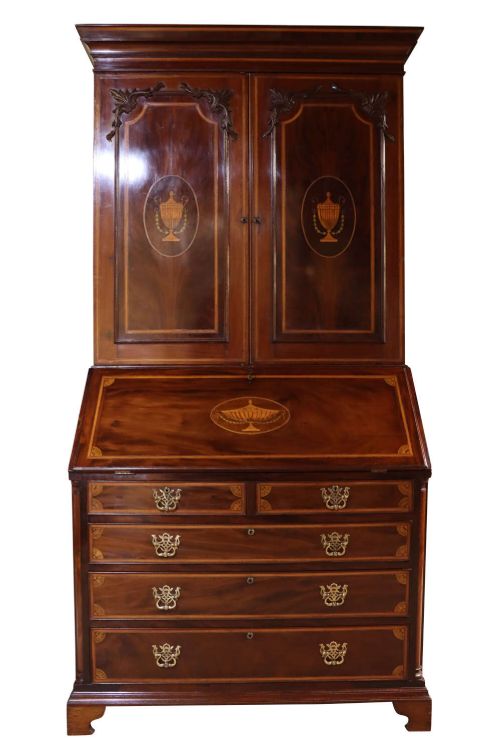
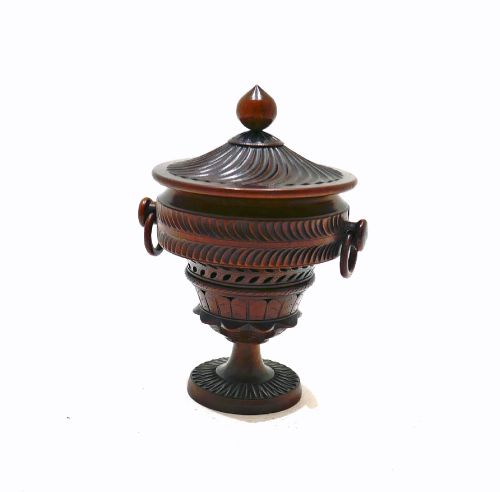


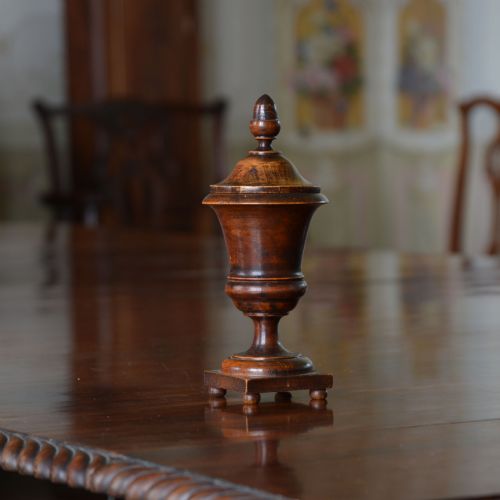


Regency Wooden Urn
A regency wooden urn brings neoclassical proportion and rich mahogany or fruitwood grain to a room.
Regency Wooden Urn
When you search for a regency wooden urn, you look for classic campana shapes and turned timber vessels rooted in the neoclassical taste of the period. These objects bridge decorative arts and functional display, often taking the form of treen fruitwood pieces or larger architectural stands.
The versions most likely to meet you on this page span the Georgian, Regency, and William IV eras, constructed from materials like mahogany, fruitwood, and walnut. They reflect a period when classical antiquity heavily influenced English and continental design.
Makers and craftsmen of the 18th and 19th centuries turned these urns to serve as decorative centrepieces, pomanders, or campana vessels. Their presence in a room adds a distinct architectural gravity derived from classical motifs.
Materials and construction methods
Makers relied on dense hardwoods such as mahogany, fruitwood, and yew wood, often enhanced with wood inlay to accentuate the turned profiles. These timbers provided the stability needed for intricate turning on a lathe.
The construction of a campana urn or lidded cup demands precise woodturning techniques to achieve the smooth curves and flared rims characteristic of the neoclassical style. Artisans sometimes incorporated brass elements or marble details to complement the polished timber surfaces.
Some small fruitwood vessels originally held fragrant herbs and spices to sweeten the air in Georgian parlours.
Factors of quality in wooden urns
The grade of timber and the precision of the turning set the standard for each piece. Richly figured mahogany or finely grained fruitwood elevate an object far above simpler domestic items.
Proportion and fidelity to neoclassical design dictate the visual success of the piece. Crisp turning lines and balanced form separate masterwork specimens from more routine workshops.
Matthew Boulton
The Regency Wooden Urn Glossary
- Campana urn
- A bell-shaped vessel with a flared rim, inspired by ancient Roman wine kraters and widely reproduced during the neoclassical revival.
- Treen
- Small handmade wooden household objects and utilitarian wares, prized by collectors for their tactile surfaces and patination.
- Neoclassical
- A style spanning the 18th and 19th centuries that drew direct inspiration from the art and architecture of classical antiquity.
- Fruitwood
- Timber sourced from fruit-bearing trees such as pear, apple, or cherry, commonly utilised by turners for its tight grain.
- Inlay
- A technique where contrasting woods are inserted into cavities within the primary timber base to create decorative patterns.
Regency Wooden Urn: Frequently Asked Questions
What is a regency wooden urn used for?
These pieces served primarily as decorative ornaments, mantel displays, or small lidded containers for spices and pomanders during the Georgian and Regency periods.
Today, they function as sculptural interior accents that introduce historical depth and rich timber textures to mantelpieces and side tables.
How do I identify a Regency period piece?
Look for classic neoclassical proportions, disciplined symmetry, and the use of dense timbers such as mahogany and fruitwood. Details often reference ancient Roman or Greek architectural forms.
Comparing the turning style and timber patination against known 19th-century examples helps confirm the period of manufacture.
What woods were commonly used?
Cabinetmakers and turners of the era favoured dense, reliable hardwoods that held a sharp profile when worked on a lathe. Mahogany and fruitwood appear frequently across these listings.
Exotic additions like yew wood and walnut also surface, selected for their distinct grain patterns and warm natural tones.
How do I care for antique wooden urns?
Keep wooden objects away from direct sunlight and extreme temperature fluctuations to prevent the timber from drying out or splitting. Gentle dusting with a dry cloth maintains the surface.
Avoid commercial liquid polishes, relying instead on traditional wax applications sparingly if the wood requires nourishment.