


Antique Oak Salt Box
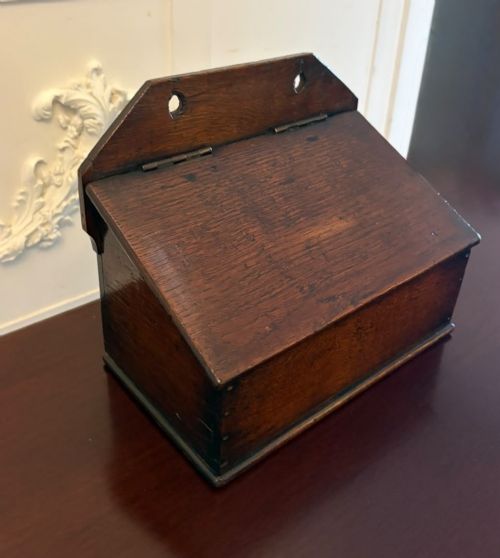
An antique oak salt box is a domestic wall-hanging utilitarian chest made to store kitchen salt, built from solid timber to last.
Antique Oak Salt Box
An antique oak salt box is a wall-mounted domestic container designed to keep kitchen salt dry near the hearth. The pieces on this page span the seventeenth, eighteenth, and nineteenth centuries, alongside Georgian, Victorian, and rustic country styles.
While the search targets salt boxes, buyers frequently encounter related wall containers such as hanging candle boxes, spice cabinets, and knife boxes. These items share the same wall-hanging form and domestic purpose as the primary salt box search term.
Origins stretch across British and English country workshops, with specific examples noted from Wales. Construction typically involves wall-mounting designs with slanted lids and high backboards pierced for hanging.
Distinguishing quality factors
The standard of a piece depends on the presence of original hardware, untouched timber surfaces, and early paint traces. Altered backboards, replaced hinges, or stripped wood reduce the integrity of the object.
Proportion and regional form define the better examples, such as heart-cut backboards or unusually small dimensions. Heavy later repairs or inappropriate modern restoration shift items toward the lower end of the range.
Antique Oak Salt Box Retail Price Guide 2026
Typical asking prices for oak salt box among the pieces listed under this phrase on Sellingantiques today, from the lower quarter to the upper quarter. They describe what is for sale here now, not the wider market.
Some salt boxes feature heart-shaped cutouts in the backboard, adding a touch of romance to kitchen utility.
The Antique Oak Salt Box Glossary
- Salt Box
- A wall-mounted container featuring a sloped lid and a high pierced backboard designed to hold domestic salt near a fireplace. These domestic items formed a standard fixture in kitchens before the advent of modern packaging.
- Backboard
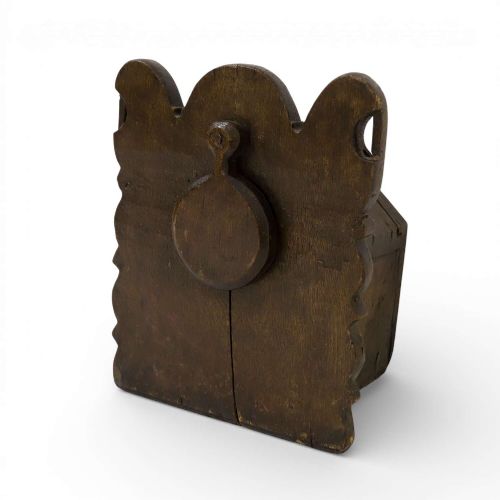
- The vertical rear panel of a hanging box that extends upward to provide a hole for wall suspension. This structural element takes the weight of the box and its contents.
- Treen
- Small handmade wooden household objects produced before the widespread use of ceramics and plastics. Collectors prize these functional kitchen items for their honest utility and tactile surfaces.
- Hardware
- The metal hinges, latches, and fixings attached to wooden boxes. Original iron hardware provides crucial evidence for dating and verifying the authenticity of an antique piece.
- Inlay
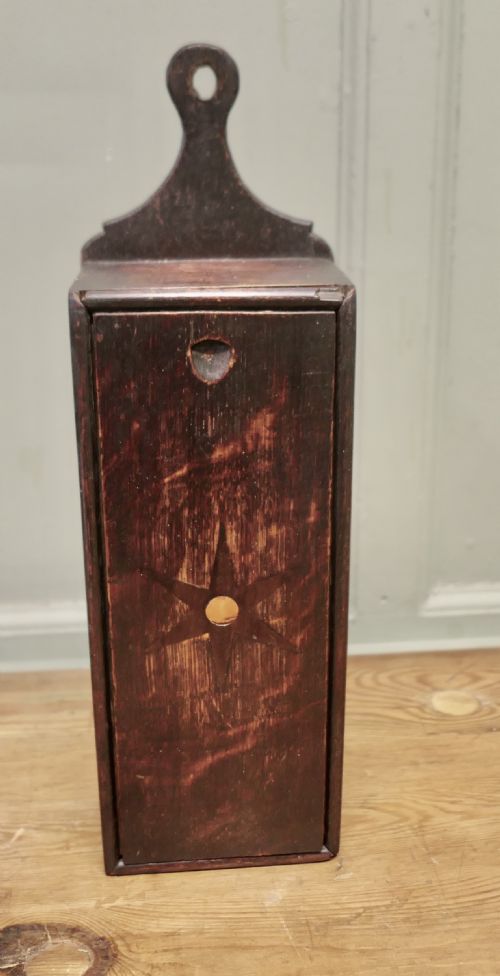
- The technique of embedding contrasting woods into the primary surface of an item for decoration. Late eighteenth-century examples occasionally display this ornamental detail.
Antique Oak Salt Box: Frequently Asked Questions
What is an antique oak salt box used for?
These boxes held dry salt close to the domestic hearth to prevent moisture clumping in damp stone cottages. The sloped lid allowed quick access while protecting the contents from kitchen soot and dust.
Today, collectors repurpose them as wall planters, letter racks, or small storage cupboards in country-style kitchens.
How do I hang a wall box safely?
Most pieces feature an original mounting hole cut into the upper wooden backboard. You should support the weight using a secure wall screw matching the historic aperture without forcing wider modern fixings through the old timber.
Check that the internal backboard timber remains structurally sound around the hanging point before mounting.
How can I tell the age of these boxes?
Dating relies on examining the construction methods, nail types, and wear patterns on the oak timber. Seventeenth and eighteenth-century examples typically display hand-riven boards and forged iron strap hinges rather than mass-produced brass screws.
Surface patination, tool marks, and traces of early paint also help establish the chronological period of the piece.
Did salt boxes come from specific regions?
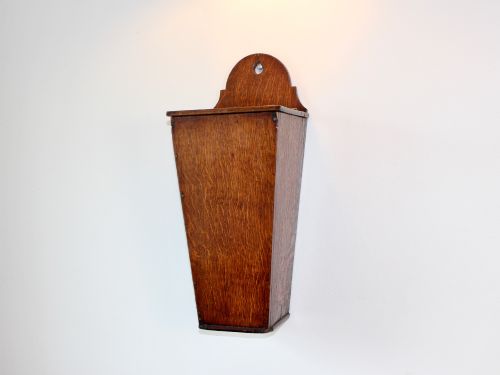
Many surviving examples originate from Welsh and English country workshops where local carpenters supplied utilitarian items for rural farmhouses. Regional preferences influenced design details such as heart-shaped cutouts on the backboards or tapered side profiles.
Makers utilised locally available oak and pine, reflecting the timber traditions of their specific locale.