
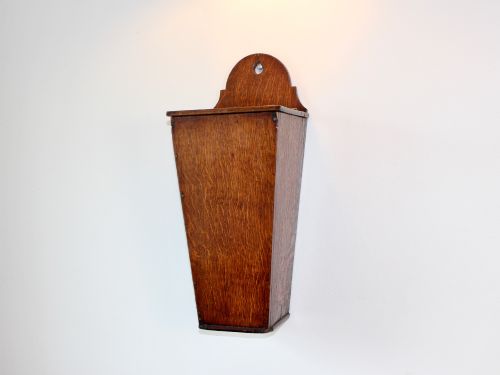


Antique Oak Candle Box
An antique oak candle box stores tallow dips securely on a wall or surface, offering rustic utility and rich patination.
Antique Oak Candle Box
An antique oak candle box is a utilitarian timber container designed to protect fragile tallow or beeswax dips from pests and dampness in domestic interiors. Buyers seek these objects for their honest construction, warm timber tones, and practical hanging forms that suit modern country interiors.
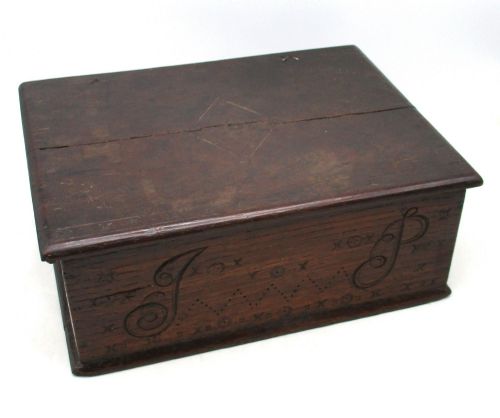
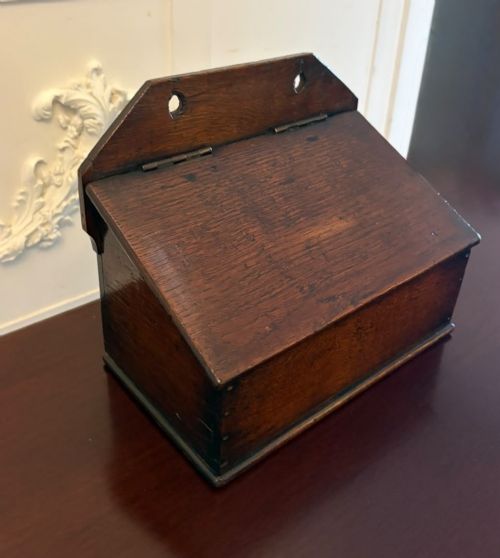
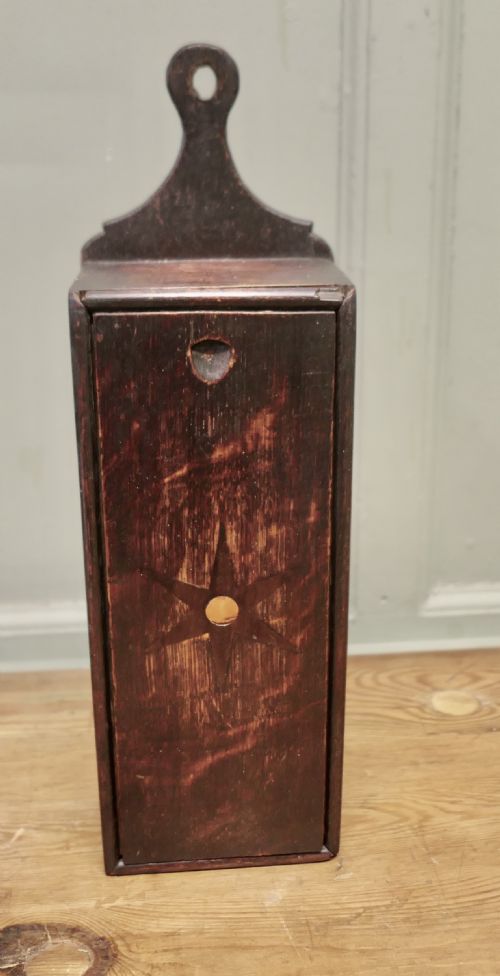
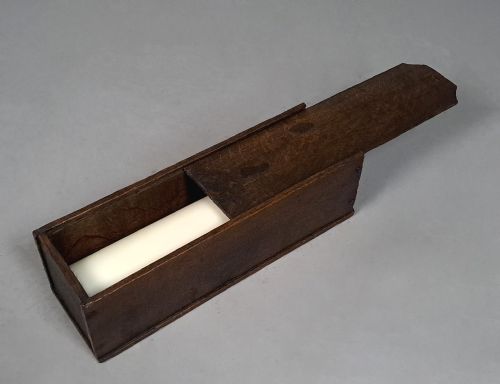
The examples found here range from simple wall-hanging receptacles with shaped backboards to sliding-lid boxes and internal compartments within larger coffers. Most pieces date from the eighteenth and seventeenth centuries, reflecting vernacular English and Welsh craftsmanship.
Simpler hanging wall boxes dominate the selection, often featuring hinged lids and shaped hanging boards drilled for wall mounting. Collectors also encounter double compartments, spoon racks, and candle boxes integrated directly into seventeenth-century coffer chests.
How they were made
Maker-joiners constructed these containers primarily from solid oak, sometimes combining pine for internal divisions or backing boards. Boards were joined using traditional pegged tenons, dovetails, or iron nails, depending on the period and regional workshop practice.
Hardware consists of forged iron hinges, wire hinges, locks with keys, and brass details, which secure lids and provide hanging strength. Surface decoration often includes carved motifs, red paint traces, or simply waxed finishes that highlight the natural grain of the timber.
One unusual survivor even paired its candle box with a star wheel finial.
What varies in quality
Quality rests upon the crispness of carved details, the integrity of original iron or brass hardware, and the depth of the timber patination. Boxes retaining their original sliding or hinged lids, backboards, and hanging holes command greater appreciation from collectors.
Subtleties such as a shaped finial, a bell-shaped lid, or an unusual double compartment elevate a vernacular piece above standard utility items. Conversely, extensive timber replacement or unsympathetic modern repairs diminish the historical value of the box.
The Antique Oak Candle Box Glossary
- Wall box
- A container with a flat pierced backboard designed to hang on a vertical surface rather than sit on a table. These items kept candles elevated away from household dampness and rodents.
- Treen
- Small handmade wooden domestic objects produced by turners and joiners. Candle boxes fall within this broad category of utilitarian wooden bygones.
- Coffer
- A large sturdy chest used for storage, occasionally containing a smaller internal candle box compartment. Seventeenth-century examples often exhibit robust panelled construction.
- Vernacular
- Architecture and objects built by local craftsmen using traditional regional methods and local materials rather than high-style academic designs. Most country oak boxes belong to this honest tradition.
- Patina
- The surface sheen and colour developed by aged oak through decades of handling, waxing, and exposure to light. Good patination is prized by collectors.
Antique Oak Candle Box: Frequently Asked Questions
How were candle boxes used?
Householders mounted wall boxes near hearths or doorways where lighting was needed most urgently. The enclosed timber protected soft tallow dips from dust, insects, and mice.
Some designs included divided interiors or lower drawers to store spills, matches, or pewter spoons alongside the candles.
How do I hang a wall box?
Most antique wall hanging boxes feature an integrated wooden backboard pierced with a pre-drilled hole for suspension on a secure wall hook or peg. Care must be taken to support the weight evenly without stressing the ancient timber joints.
Wall placement should avoid direct sunlight and damp zones to preserve the historical oak and original surface finish.
How do I date an oak candle box?
Dating relies on observing construction methods, nail types, hinge styles, and timber characteristics. Seventeenth-century pieces often display heavier joined frames and pegged construction, while eighteenth-century items utilise simpler nailed or dovetailed boards.
Surface wear, tool marks, and traces of early paint or wax also offer reliable clues to a box's age and regional origin.