
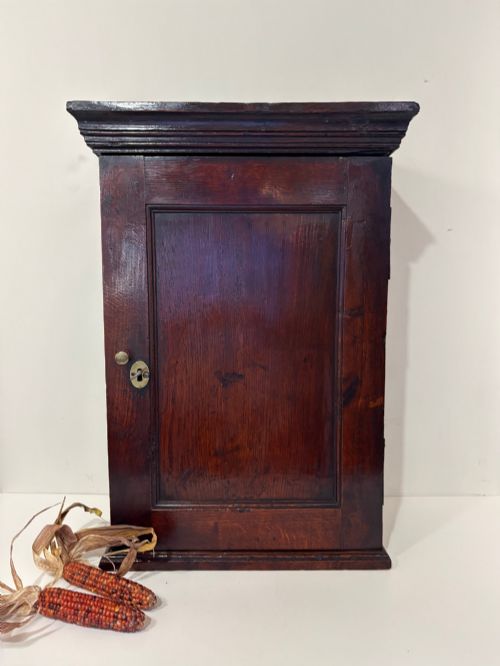
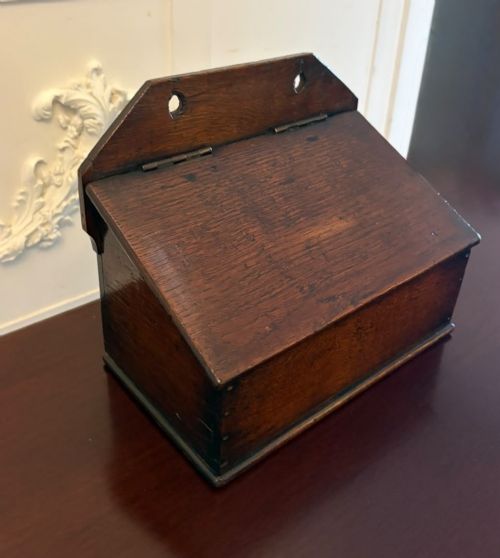
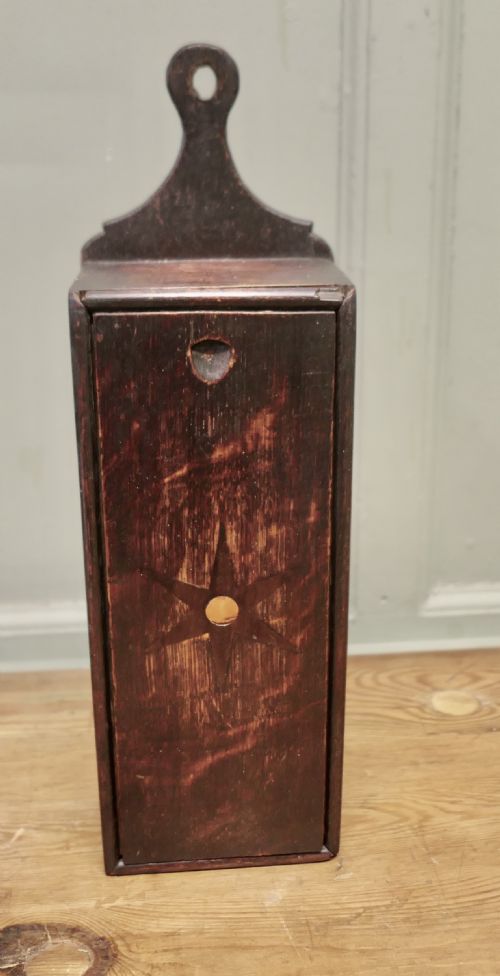
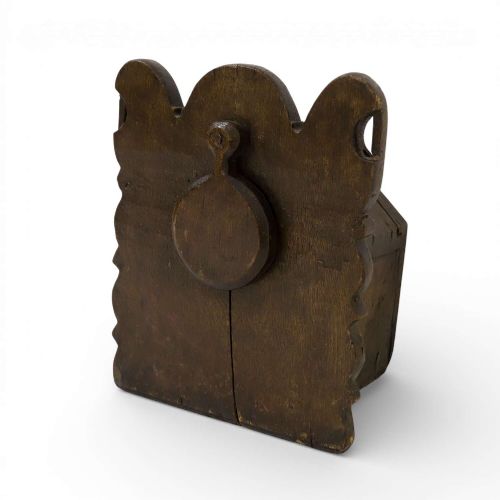
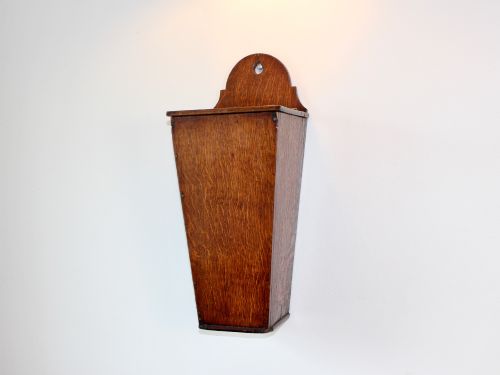


Country Oak Hanging Box
A country oak hanging box brings tactile warmth and historic utility to any wall, offering neat storage with unmistakable age.
Country Oak Hanging Box
When buyers search for a country oak hanging box, they encounter practical wall-mounted containers designed to hold household essentials like candles, salt, spices, and letters. These pieces span several distinct eras, stretching from the seventeenth century through the Georgian period and into the nineteenth century.
The versions most commonly met on this page take the form of wall-hanging candle boxes, salt boxes, spice cabinets, and simple cupboards. Makers constructed these items for everyday domestic convenience, employing sturdy timbers to withstand constant household use.
Regional styles range from 17th-century British and primitive eighteenth-century work to nineteenth-century country pieces and Victorian variations. Each form reflects the specific storage needs of historic domestic spaces, utilising wall space efficiently in kitchens and hallways.
How they were made
Craftsmen built these hanging containers primarily using solid oak, occasionally combining it with secondary woods such as pine for internal elements or backing boards. Wood inlay also appears on select examples, adding subtle decorative contrast to the plain timber surfaces.
Functional metal components complete the construction, featuring brass elements alongside original iron hardware like hinges, latches, and hanging brackets. Traces of early finishes, including red paint, survive on certain salt boxes and utility pieces, showing the original surface treatments applied by makers.
Surviving traces of old red paint remind us that our ancestors liked a splash of pillar-box bright in the kitchen.
What varies in quality
Quality in these utilitarian items rests upon the integrity of the timber, the honesty of the construction, and the survival of original components. Pieces retaining their early iron hardware and untouched surface patinas hold greater historical interest than heavily restored examples.
The degree of sophistication in the joinery and any decorative additions, such as wood inlay or tapered shaping, also mark the distinction between simple primitive workshop output and more resolved Georgian cabinet work.
The Country Oak Hanging Box Glossary
- Salt Box
- A wall-mounted container traditionally used to keep dry salt near the hearth. These often feature a sloping hinged lid and a high backplate with a hanging hole.
- Candle Box
- A narrow receptacle designed to protect tallow or wax candles from dust and pests. They typically include a sliding or hinged lid for quick access.
- Spice Cabinet
- A small wall-mounted cupboard containing multiple internal drawers or compartments. These allowed households to store expensive culinary seasonings securely.
- Primitive
- A descriptive term for vernacular furniture made without sophisticated academic design. These items display direct, functional construction methods.
Country Oak Hanging Box: Frequently Asked Questions
What were hanging boxes used for?
These boxes served essential storage roles in historic homes, keeping perishable or valuable items safely elevated off damp floors and away from pests.
Households utilised specific forms for daily commodities such as salt, candles, spices, knives, and letters, mounting them near work areas for immediate access.
How do I hang an antique box safely?
Most pieces feature built-in hanging apertures, brackets, or sturdy backboards designed to support their own weight against a wall.
Ensure that any mounting hardware matches the historic fixing points without straining the original timber or iron fixings.
How do I tell an 18th-century box from a 19th-century one?
Earlier pieces from the seventeenth and eighteenth centuries often display vernacular joinery, hand-carved details, and primitive construction methods.
Nineteenth-century examples frequently incorporate secondary woods like pine and exhibit more standardised workshop practices.
Did these boxes sit on desks or hang on walls?
While the vast majority are designed specifically for wall suspension, certain forms like small cupboards feature flat bases that allow dual placement on desks or tabletops.
Examining the backboard for hanging holes or brackets usually reveals the intended mounting method.
Are painted surfaces original?
Some early salt boxes and utilitarian containers retain traces of historic pigments, such as red paint, applied during their working life.
These surviving surface traces offer insight into early domestic decoration before modern stripping practices became common.