


Antique Parrot Ornament
An antique parrot ornament brings vibrant plumage and character into a room, capturing birds in porcelain, bronze, wood and pottery.
Antique Parrot Ornament
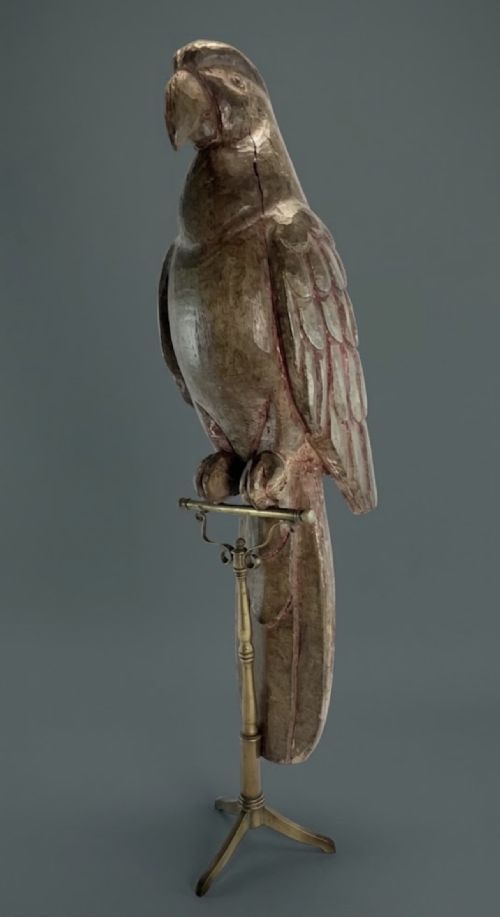
An antique parrot ornament spans figures, sculptures, and novelties created across the nineteenth and early twentieth centuries. These pieces take the form of porcelain figurines, carved wooden sculptures, cold painted bronze statues, and ceramic inkwells depicting perched birds.
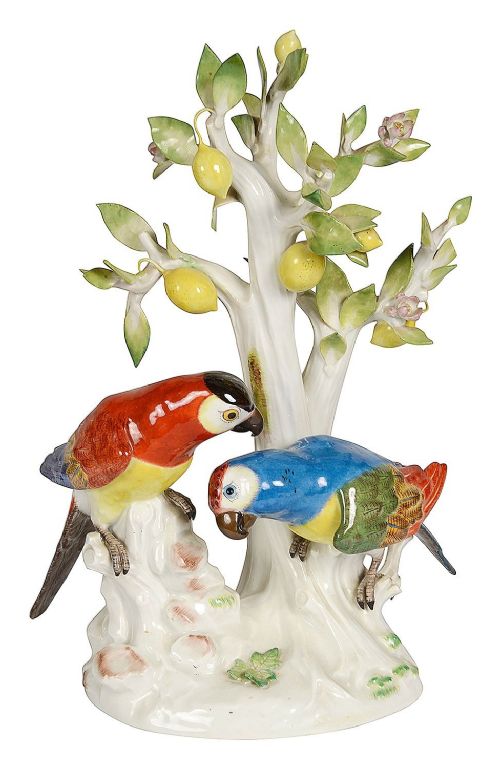
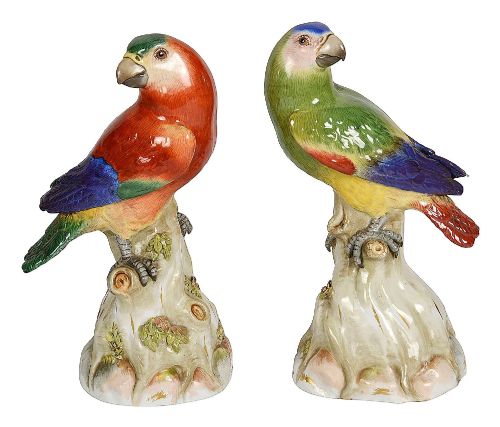
The selections encountered on this page heavily feature German porcelain factories alongside Victorian folk art, Chinese export ceramics, and English novelties. Figures range from single seated birds to large pairs positioned beneath lemon trees or upon brass stands.
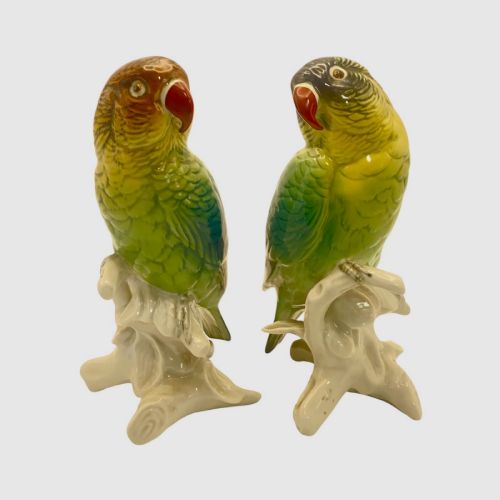
Makers such as Meissen and Karl Ens dominate the porcelain offerings, whilst Staffordshire pottery and cold painted bronze provide alternative material interpretations. Each piece reflects the nineteenth and early twentieth century fascination with exotic bird life translated into domestic decorative objects.
Materials and construction
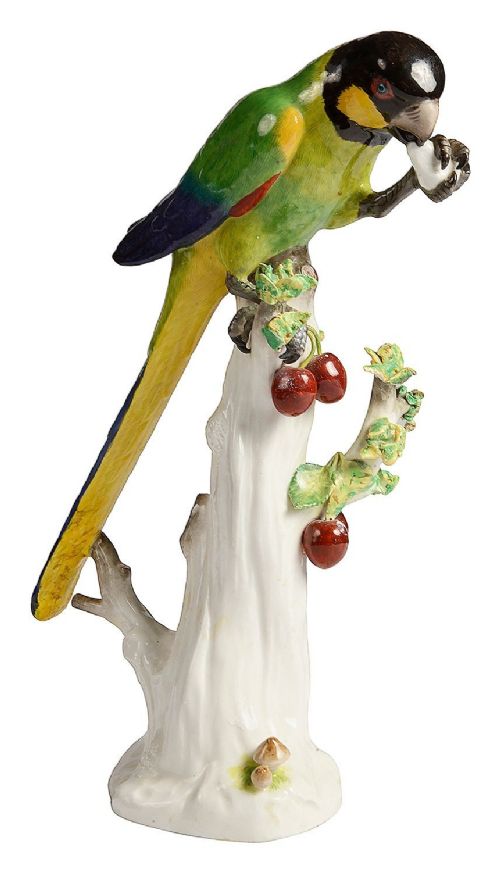
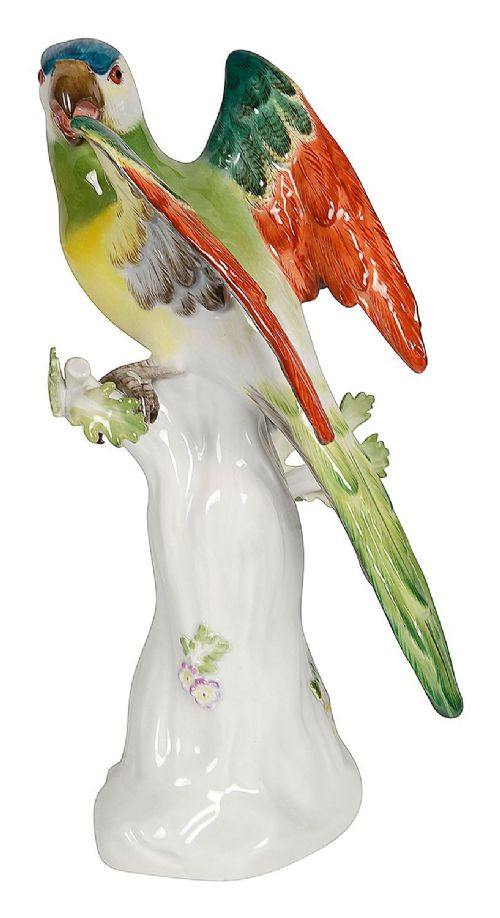
Porcelain figures utilise hard-paste porcelain shaped through moulding and hand-modelling, finished with detailed glazes and enamel paint to render multi-coloured feathers. Meissen and Karl Ens pieces demonstrate precise kiln firing to set these brilliant ceramic colours.
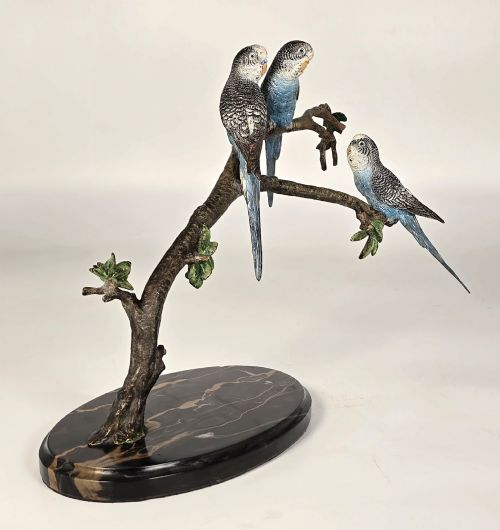
Metal sculptures employ bronze casting, subsequently decorated with cold painted pigments applied directly onto the surface rather than refired. Wooden items rely on hand carving, often pairing carved timber bodies with brass stands or mounts.
Pottery examples such as Staffordshire figures utilise earthenware bodies covered in coloured glazes, while inkwells combine functional metal or ceramic receptacles with sculptural bird subjects.
Listings feature hard-paste porcelain, bronze, wood, and enamel across the nineteenth and twentieth centuries.
Distinctions in quality
Quality rests in the precision of the modelling and the finesse of the hand-painting, particularly in how naturalistically the plumage and expression are rendered. Superior porcelain and bronze examples display crisp feather detailing and convincing posture rather than rigid or generic forms.
Scale and complexity elevate specific pieces, such as large pairs, birds perched on elaborate tree trunks, or multi-figure compositions under lemon trees. Simpler single-bird figures rely entirely on the vibrancy of the enamel palette and the accuracy of the glaze application.
Karl Ens·Meissen
The Antique Parrot Ornament Glossary
- Hard-paste porcelain
- A durable ceramic paste composed of kaolin and petuntse, fired at high temperatures to create a vitrified, non-porous body. This material forms the base of many nineteenth-century German bird figures.
- Cold painted bronze
- A bronze sculpture technique where oil paint is applied to the cold metal surface instead of being fired in a kiln. This method allows for subtle shading on small bronze statues.
- Famille verte
- A Chinese ceramic palette dominated by green enamels, used to decorate porcelain objects for export. Pieces in this style feature transparent green hues combined with other enamel colours.
- Enamel
- A decorative glass-like coating fused to ceramic or metal surfaces through heat. Enamels provide the bright, permanent colours seen on bird plumage.
- Staffordshire pottery
- Earthenware produced in the Staffordshire region of England, known for popular figures and animals. These figures typically feature characteristic hand-applied glazes.
Antique Parrot Ornament: Frequently Asked Questions
How do I identify a Meissen parrot?
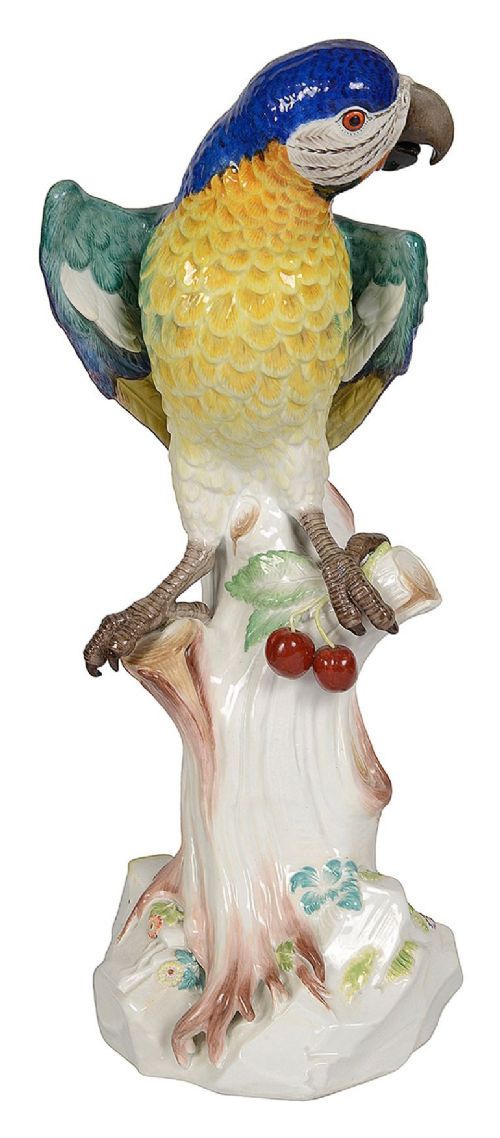
Meissen parrots typically feature sophisticated hand-painted enamels on hard-paste porcelain, often modelled with great attention to anatomical detail and natural postures. Look for the characteristic crossed swords mark applied beneath the glaze.
These figures frequently show birds perched on tree trunks or amongst foliage, rendered in large scales such as twenty-six to forty-one centimetres high. The quality of the modelling distinguishes them from lesser factory reproductions.
What is cold painted bronze?
Cold painted bronze refers to bronze sculptures where the pigment is painted onto the metal surface without undergoing a high-temperature kiln firing. This technique permitted fine, lifelike detail on small decorative subjects.
Because the paint sits on the metal rather than fusing with it, handling these pieces requires care to preserve the original pigment layers. They often depict budgerigars or parrots perched on naturalistic branches.
Where were these ornaments displayed?
Nineteenth-century homeowners placed these decorative figures on mantelpieces, side tables, and within glass-fronted cabinets to add exotic colour to domestic interiors. Larger pairs often served as symmetrical garnitures for a fireplace or sideboard.
Functional items like the novelty inkwell combined desk utility with sculptural display, serving writers in studies and libraries during the Victorian era.
How do I date a porcelain parrot?
Dating relies on stylistic markers, manufacturing techniques, and factory marks recorded during periods like the late nineteenth century or the Art Deco era of the 1930s. The complexity of the moulding and the specific chemical composition of the glaze offer further clues.
Comparing the piece to documented examples from makers like Meissen or Karl Ens helps narrow the production window to a specific decades-long bracket.