

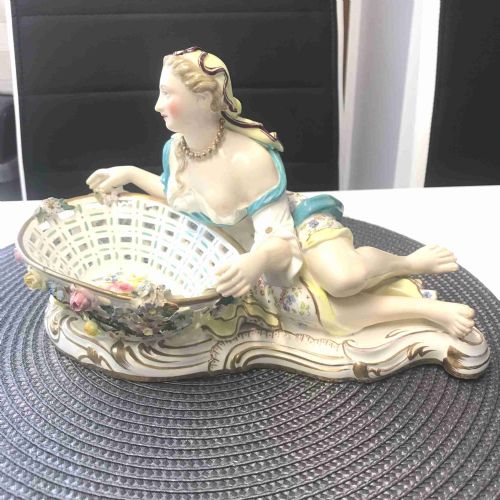


Polychrome Meissen Figure
A polychrome meissen figure brings the ceramic artistry of European kilns into a room, offering modelled human, animal, and allegorical subjects in painted detail.
Polychrome Meissen Figure
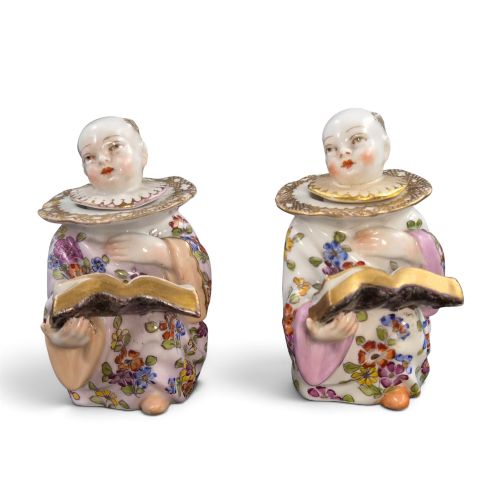
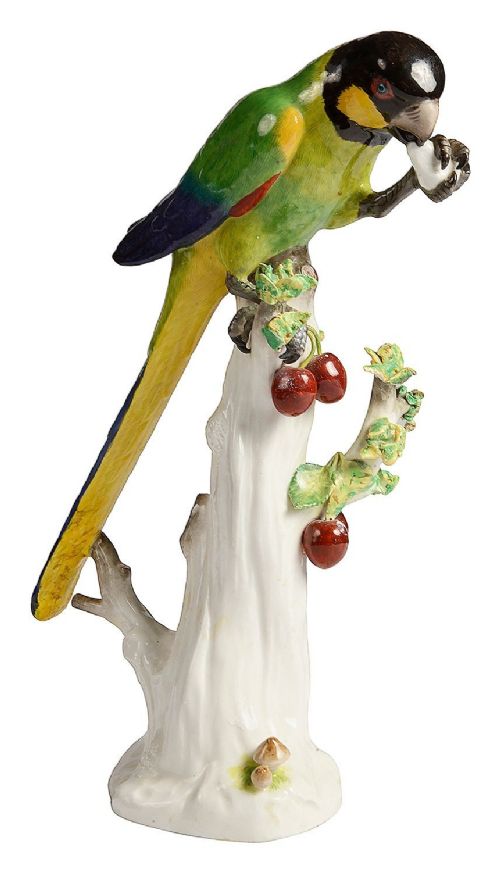
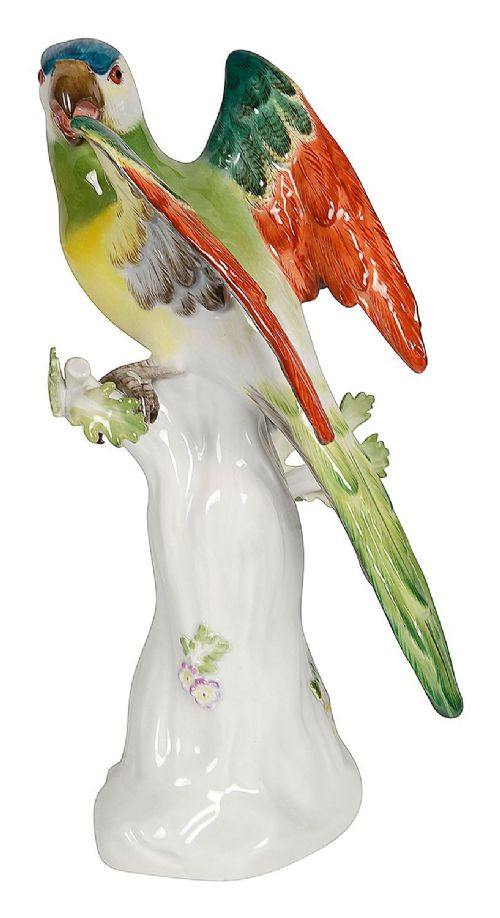
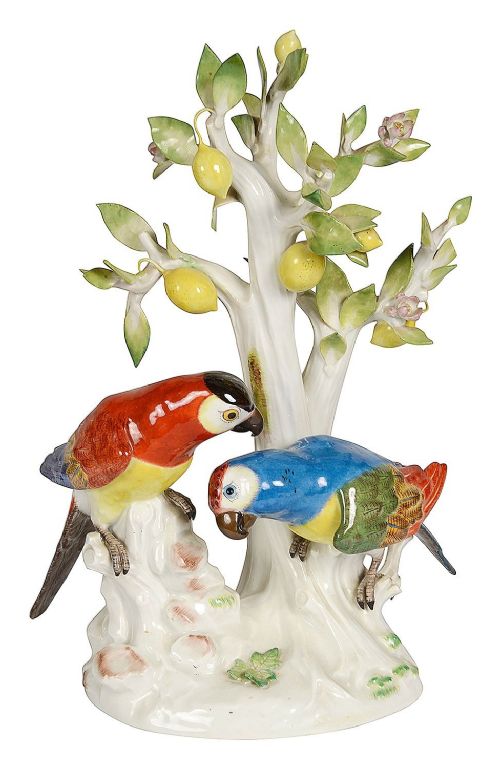
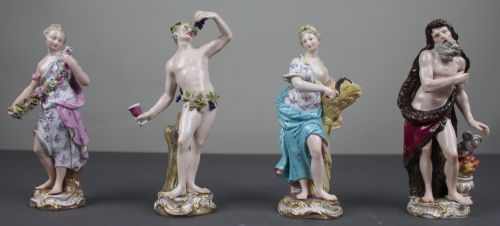
A polychrome meissen figure comprises porcelain sculptures produced by the German factory, alongside related continental interpretations from the nineteenth century. These objects take the form of individual characters, pairs, animals, and complex groupings depicting traders, musicians, allegories, and mythological scenes.
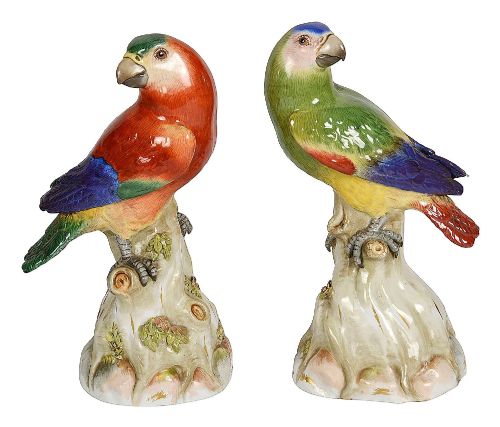
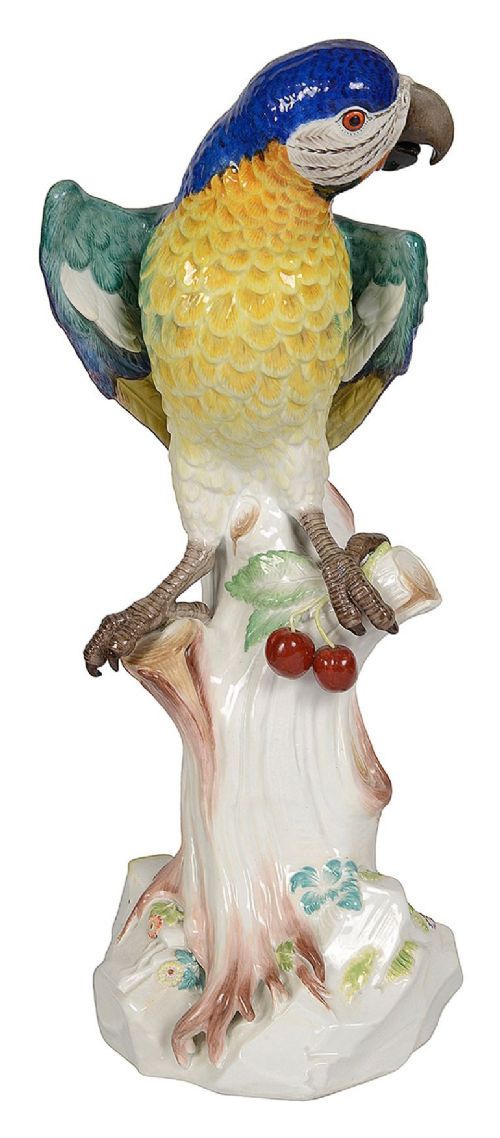
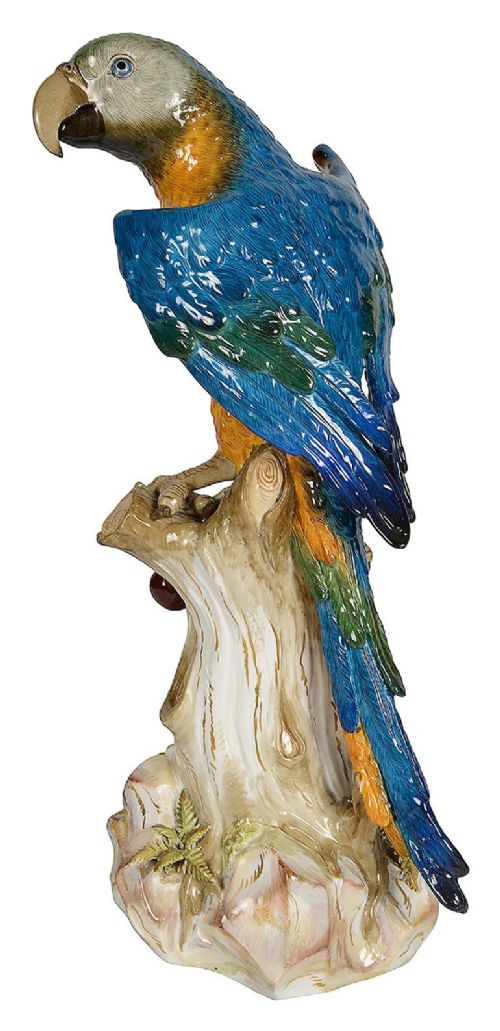
Buyers encounter eighteenth-century originals alongside nineteenth-century productions and historicist revivals. The subjects range from parrots perched on branches and street vendors to expansive romantic groups and allegorical figures.
Materials and Manufacture
The objects utilise hard-paste porcelain shaped in moulds and finished by hand. Artisans applied enamel colours over the glaze, frequently accompanied by gilding and gold leaf to highlight garments and structural elements.
Modelting involved intricate assembly of separate limbs, foliage, and bases before high-temperature firing. Overglaze enamel decoration provided the multi-coloured palette characteristic of these pieces.
Site listings demonstrate that hard-paste porcelain figures span production dates from the mid-eighteenth century through to the early twentieth century.
Distinctions in Quality
Quality rests in the crispness of the modelling and the precision of the hand-painted enamel work across faces, drapery, and naturalistic settings. Earlier pieces and superior nineteenth-century productions maintain sharper relief in intricate details such as lace, feathers, and facial expressions.
The sophistication of the composition dictates the visual success of the piece, distinguishing standard decorative figures from complex multi-figure groups with elaborate bases and accessories.
Edmé Samson·Helena Wolfsohn·Sitzendorf
The Polychrome Meissen Figure Glossary
- Hard-paste porcelain
- A dense, vitrified ceramic material composed of kaolin and petuntse, fired at high temperatures. This substance forms the robust body of traditional European figures.
- Overglaze enamel
- Pigments applied to the surface of a previously fired and glazed ceramic piece before undergoing a subsequent lower-temperature firing. This technique permits a wide spectrum of stable colours.
- Sweetmeat dish
- A small vessel designed for serving confectionery or dried fruits, often incorporated into figural arrangements. These bowls form an integral part of specific serving figures.
- Marcolini period
- The phase of Meissen production dating to the late eighteenth century under the direction of Count Camillo Marcolini. Pieces from this era display distinct neoclassical influences.
- Candelabra
- A branched candlestick holder designed to support multiple lights, occasionally decorated with mounted porcelain figures. These functional objects combine lighting with sculptural ornament.
Polychrome Meissen Figure: Frequently Asked Questions
What subjects do these figures show?
The subjects encompass a broad array of human and animal forms, including street traders, musicians, gardeners, romantic couples, and mythological figures. Birds such as parrots also appear frequently.
Group compositions depict allegorical themes like the seasons, alongside narrative scenes and literary or classical subjects.
How were these pieces used historically?
Such figures served primarily as decorative ornaments for aristocratic and bourgeois interiors, displayed on mantelpieces, consoles, and cabinet tops. Certain forms incorporated practical functions.
Examples include figural inkwells, candelabra, and sweetmeat holders designed to hold table salt or confectionery during dining.
How do I distinguish eighteenth-century pieces from nineteenth-century copies?
Differentiation relies upon examining the modelling depth, the quality of the enamel painting, and the characteristics of the paste. Eighteenth-century examples typically display sharper toolwork and softer enamel integration.
Nineteenth-century revivals and factories such as Samson or Dresden produced faithful interpretations that often reflect the historicist tastes of the later period.
How should I care for antique porcelain figures?
Maintenance requires gentle dusting with a soft, dry brush to prevent the accumulation of dirt within intricate crevices and painted surfaces. Avoid using harsh cleaning agents or submerging pieces in water.
Placement should be stable and away from direct sunlight or heavy foot traffic to protect delicate extremities, foliage, and gilding from accidental damage.