


Antique Ceramic Parrot
These antique ceramic parrot figures bring vibrant colour and lively character to any room, crafted by major European porcelain houses.
Antique Ceramic Parrot
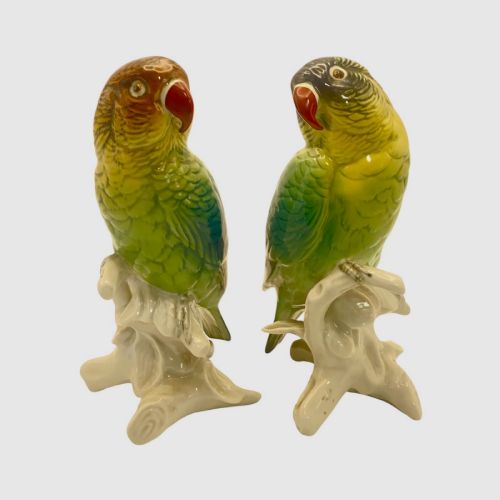
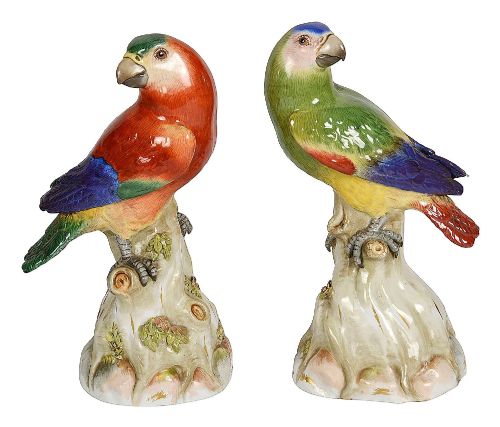
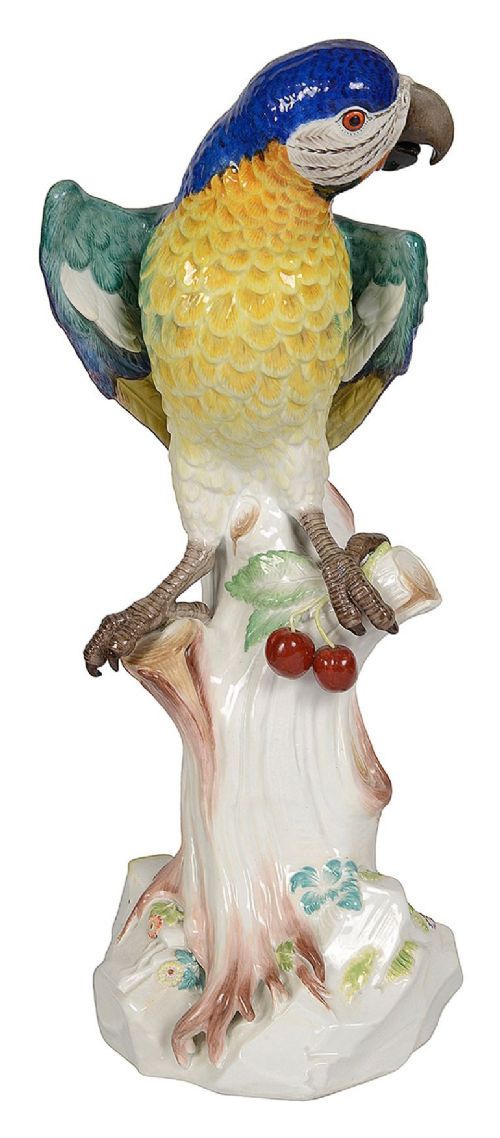
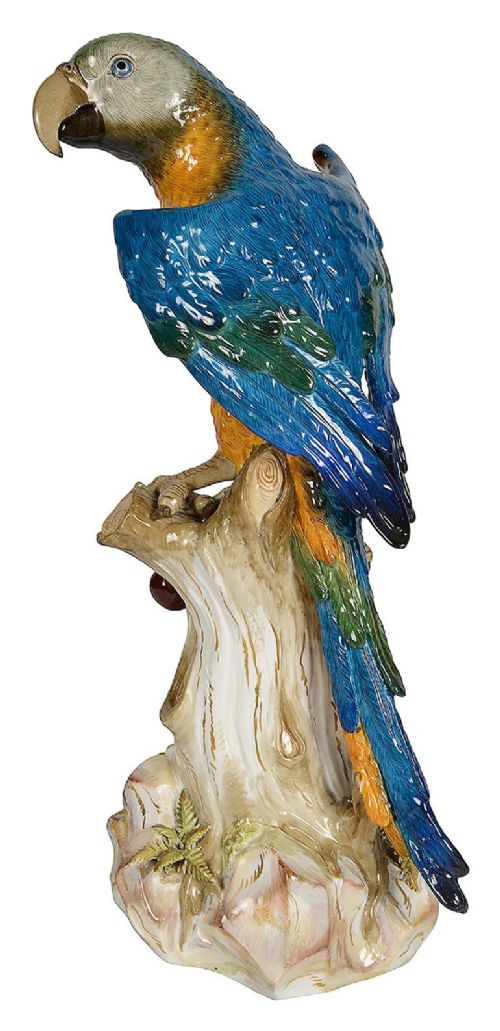
An antique ceramic parrot is a figural ceramic piece capturing the exotic bird in porcelain, earthenware or pottery. When you search for antique ceramic parrot, you encounter 18th-century jugs, 19th-century figures perched on tree trunks, and Art Deco models.
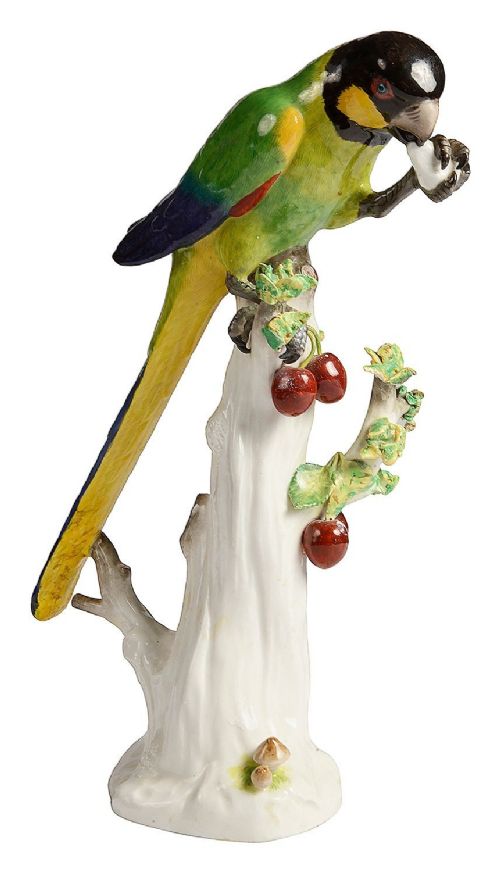
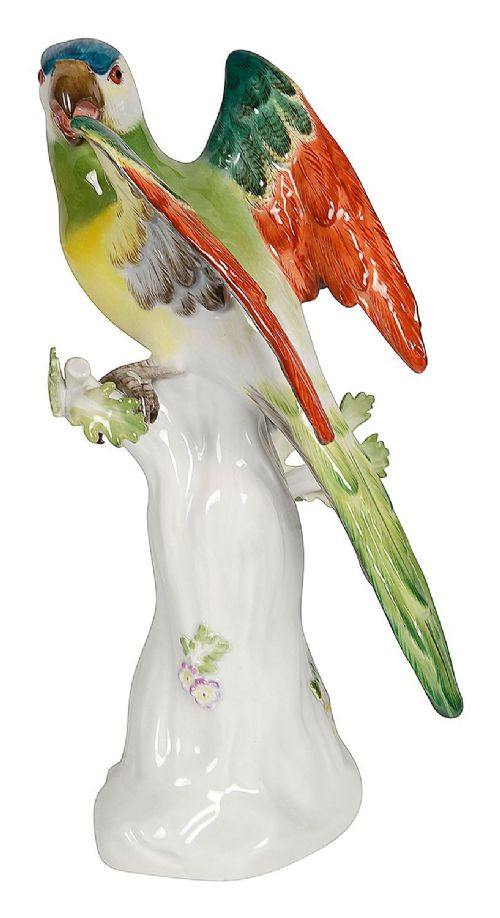
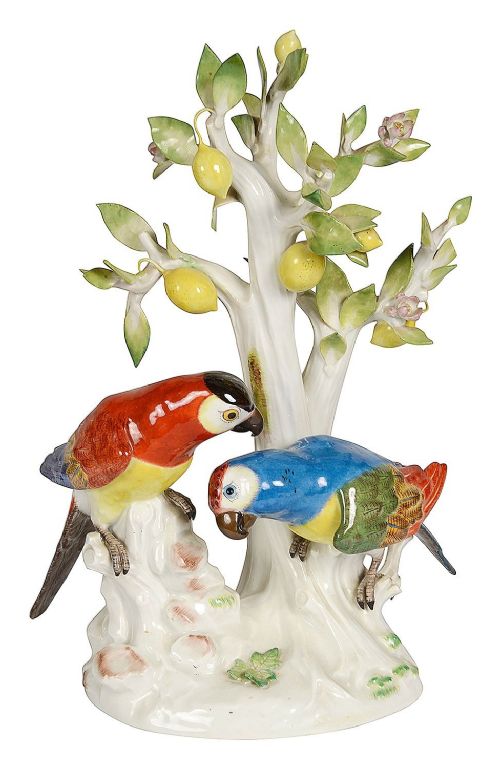
The most common examples on this page are 19th-century Meissen figures and pairs, often shown perched on branches or paired beneath lemon trees. These range from modest nineteenth-century models to large figures standing over forty centimetres high.
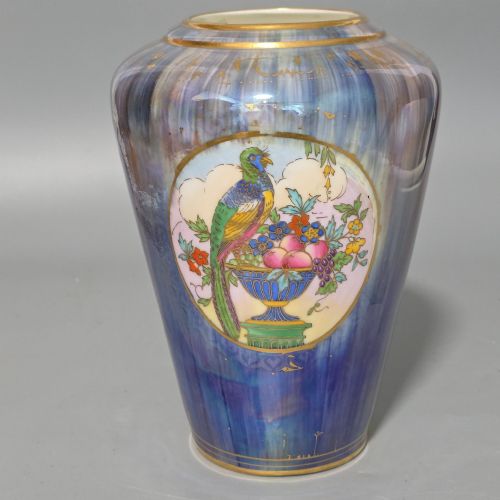
Earlier pieces from the eighteenth century appear as porcelain jugs with bird-pecking fruit mask designs, alongside Staffordshire pottery iterations on hoops and Minton lustre vases from the early twentieth century.
How they were made
Makers utilised hard-paste porcelain and earthenware moulded into complex avian forms, supporting heavy bird bodies with integrated tree trunks or branches. Potters then applied intricate overglaze enamels and enamel glazes to render the vivid plumage.
Listings feature hard-paste porcelain, earthenware, and enamel glaze across Victorian, Art Deco, and Georgian styles.
What varies in quality
Quality rests in the precision of the modelling and the crispness of the feather details, where sharp moulding distinguishes superior workshop output from softer castings. The complexity of the composition also matters, such as pairs nestled under lemon trees or birds perched atop hoops versus simple single figures.
The vibrancy and skill of the overglaze enamel painting dictate visual success, with master painters achieving subtle shifts in multi-coloured plumage that lesser hands miss. Scale and presence play a major role, as larger figures demand exceptional technical control during the kiln firing process to prevent warping.
Karl Ens·Meissen·Minton·Worcester
The Antique Ceramic Parrot Glossary
- Hard-paste porcelain
- A dense, durable ceramic material fired at very high temperatures, composed of kaolin and petuntse. It provides the crisp body for many European bird figures.
- Overglaze enamel
- Pigments applied on top of a fired glaze and fused in a second, lower-temperature kiln. This technique allows for brilliant multi-coloured plumage details.
- Famille verte
- A palette of green enamels dominant in Chinese export ceramics, translated into European parrot figures. It creates a distinctive verdant aesthetic.
- Staffordshire pottery
- Earthenware produced in the English potteries, known for robust domestic figures. Pieces often feature whimsical interpretations of birds on hoops.
Antique Ceramic Parrot: Frequently Asked Questions
How do I date an antique ceramic parrot?
Dating relies on identifying factory marks on the base, stylistic clues from the Victorian or Art Deco periods, and the specific ceramic body used.
Earthenware pieces with Staffordshire styles point towards the late nineteenth century, while hard-paste porcelain figures often align with eighteenth or nineteenth-century German workshops.
Where should I display my porcelain parrot?
These colourful figures suit prominent spots like mantelpieces, sideboards, or dedicated display cabinets where their bright glazes catch the light.
Keep them away from direct sunlight and areas of heavy traffic to protect the overglaze enamel decoration from accidental knocks.
Are these parrot figures purely decorative?
Most pieces serve as decorative figurines or vases designed to bring exotic colour into domestic interiors.
Certain items, such as eighteenth-century jugs, combine sculptural bird forms with functional pouring vessels.
How do I clean an antique ceramic parrot?
Dust the surface gently with a soft, dry brush to prevent dirt buildup in the crevices of the feathers and tree trunks.
Avoid using harsh chemical cleaners or submerging painted pieces in water, as this can damage delicate overglaze enamels.