
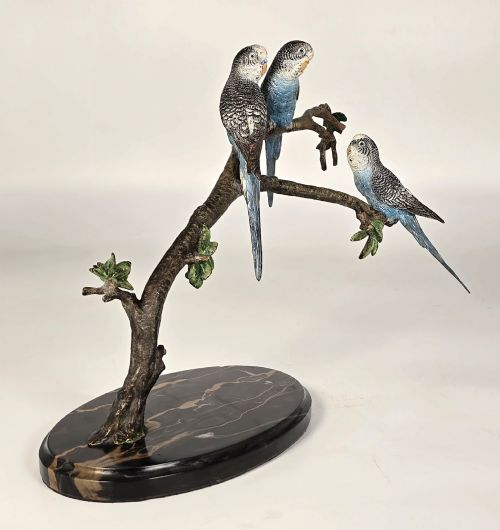


Antique Parrot Figurine
An antique parrot figurine brings bright plumage and character to a room, ranging from grand Meissen porcelain birds to small bronze and wooden studies.
Antique Parrot Figurine
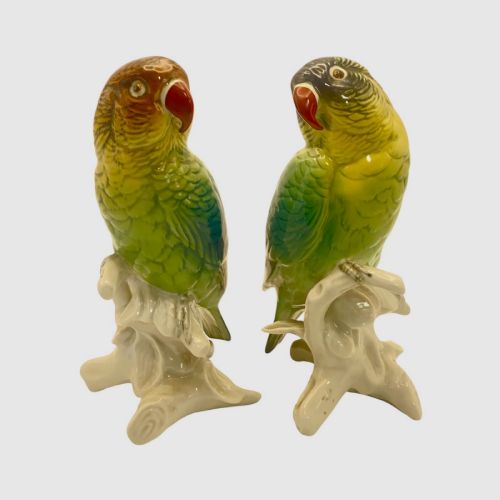
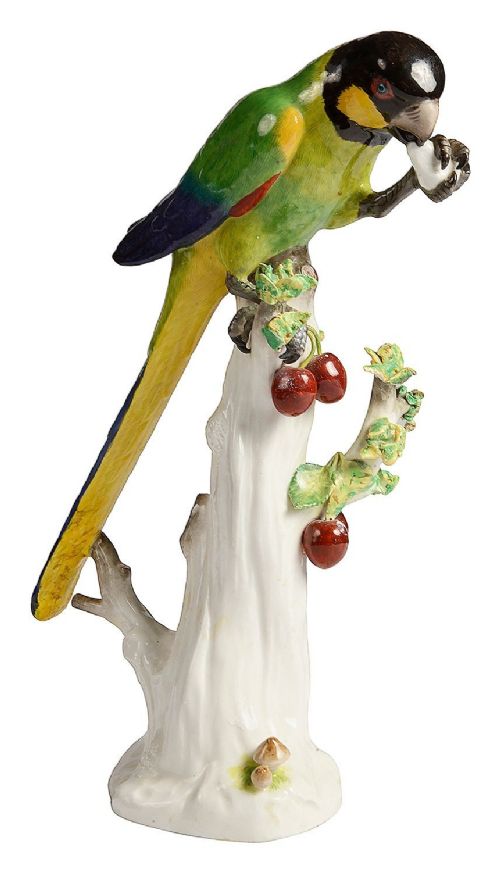
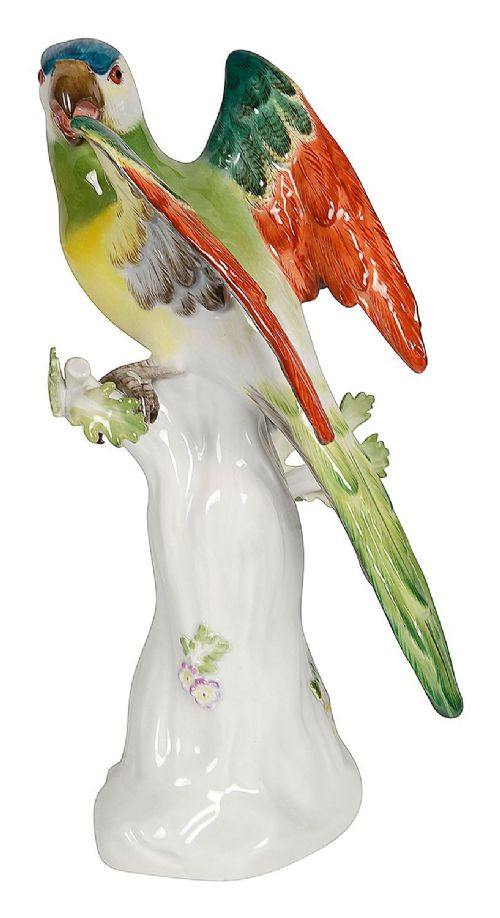
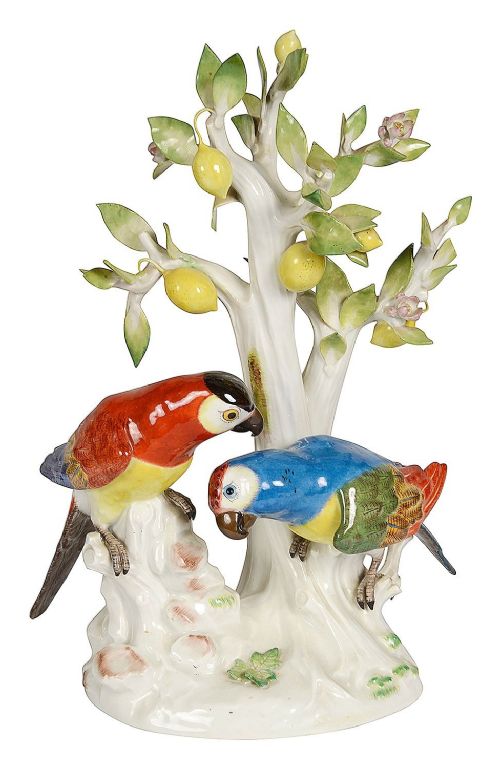
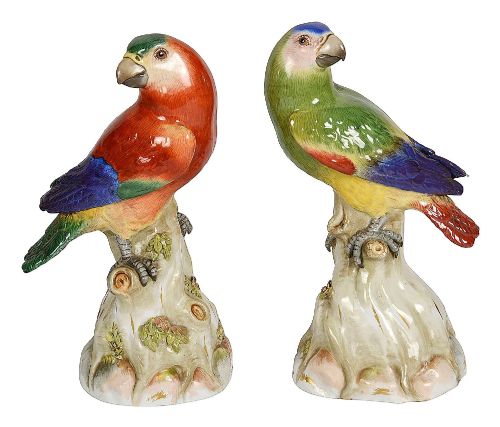
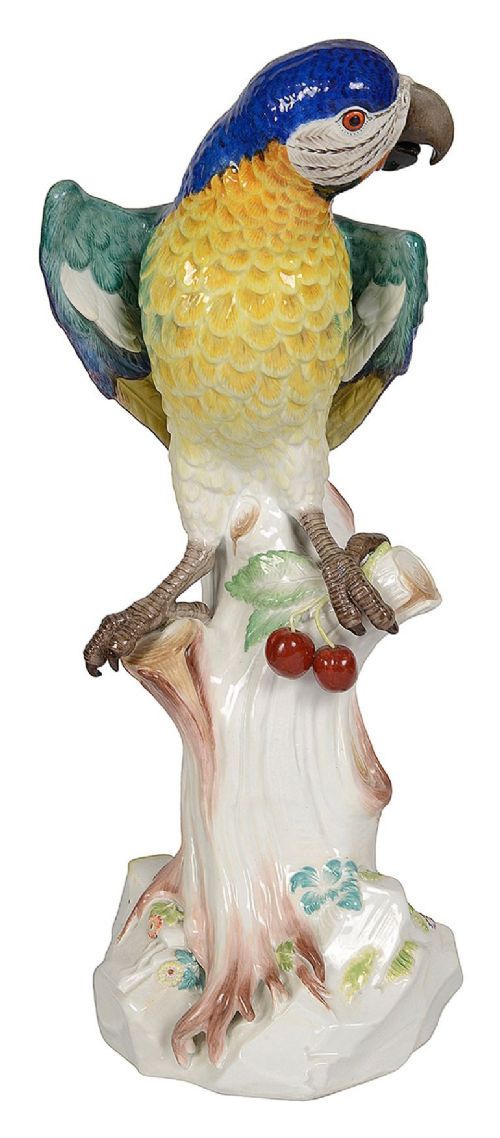
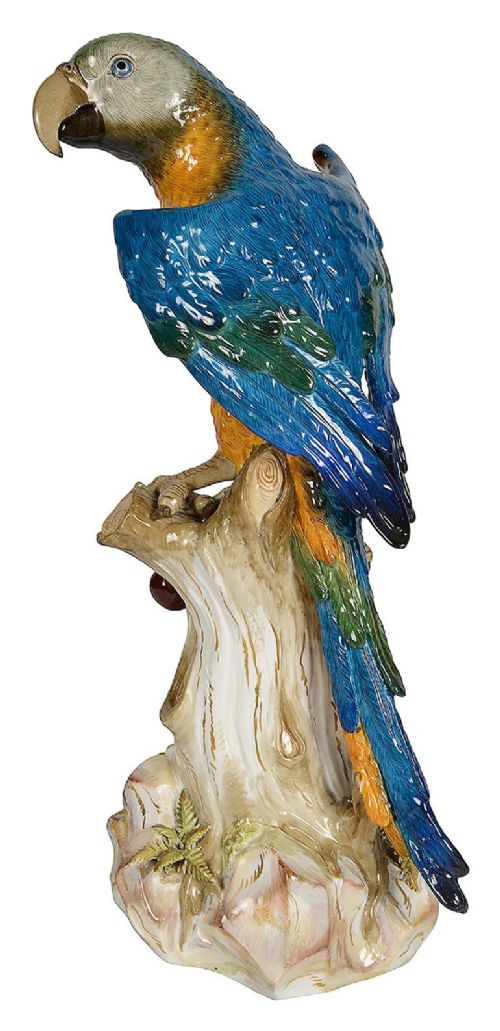
When you search for an antique parrot figurine, you enter a diverse field spanning porcelain, bronze, wood, and silver. The most frequent encounters on this page are porcelain examples, particularly from the 19th Century, often modelled as birds perched upon tree trunks or branches.
Makers such as Karl Ens and Meissen dominate the ceramic offerings, producing both single figures and dramatic pairs that stand tall on mantelpieces or cabinets. Alongside these sit cold painted bronze statues and pepperettes from Austrian workshops, reflecting a fascination with exotic avian forms during the Victorian and Art Deco eras.
The scope extends from Chinese Export pieces to Victorian folk art, capturing everything from naturalistic studies of budgerigars to grand multi-coloured cockatoos. Buyers will find that these decorative figures vary significantly in scale, from intimate desk accessories to substantial ceramic centrepieces.
Materials and construction
Hard-paste porcelain forms the foundation of many European figures, shaped in moulds and finished with detailed glaze and hand-applied enamel painting to capture the vibrant feathers. Meissen and similar factories relied on skilled modellers and painters to bring realism and depth to each bird's plumage.
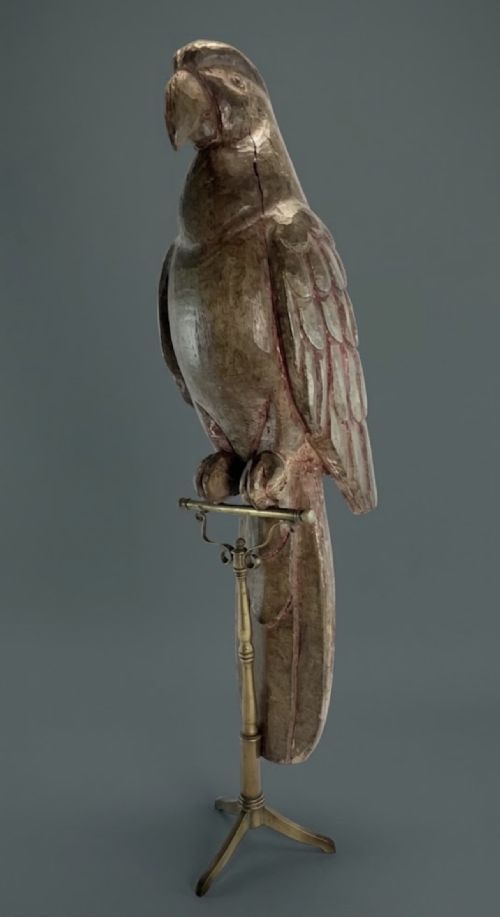
Metal pieces utilise bronze cast through traditional methods, then finished with cold paint which sits on the surface rather than being fired in a kiln. Wooden examples employ hand-carving techniques, often mounting the bird on brass stands or natural bases to create stability and height.
Several porcelain parrots manage to look stern despite being painted in bright lemon and green enamels.
Assessing quality and execution
The distinction between ordinary and exceptional pieces lies in the fineness of the hand-painting and the crispness of the modelling in feathers and claws. Finer porcelain figures display subtle shading in the enamel and careful anatomical observation, particularly in the rendering of beaks and eyes.
In cold painted bronzes, the preservation of the original surface pigment largely dictates the standard, as the delicate paint is prone to loss over time. The ambition of the composition, such as pairs beneath lemon trees or complex multi-coloured glaze work, also separates standard production from masterworks.
Karl Ens·Meissen
The Antique Parrot Figurine Glossary
- Hard-paste porcelain
- A durable ceramic material fired at high temperatures, composed of kaolin and petuntse. This body was widely used by European factories for crisp detailing.
- Cold painted
- A technique where metal sculptures are painted with unfired pigments rather than enamel passed through a kiln. This method allowed for vibrant colour but requires careful handling to preserve the finish.
- Famille verte
- A Chinese ceramic palette dominated by green enamel overglaze, used extensively on export wares. It often complements iron-red and other bright tones on avian figures.
- Pepperette
- A small tabletop container designed for dispensing ground pepper, frequently modelled in the form of animals or birds in sterling silver. These functional items doubled as miniature sculptures.
Antique Parrot Figurine: Frequently Asked Questions
How are porcelain parrots cleaned?
Dusting with a soft, dry brush is generally sufficient for glazed ceramic surfaces without risking the enamel paint.
Avoid immersing antique painted pieces in water, as moisture can damage cold painted finishes or historical adhesives.
Where should I display my figurine?
These colourful pieces suit placement on mantelpieces, bookshelves, or cabinets where adequate light highlights the enamel and glaze.
Keep them away from direct sunlight to prevent the fading of cold-painted metal surfaces and delicate overglaze colours.
How do I date a porcelain parrot?
Examining the base for factory marks, impressed numbers, and the style of the glaze offers strong clues to the period of manufacture.
Stylistic shifts, such as the transition from Victorian realism to Art Deco abstraction, also help narrow down the decade.
Were these figures purely decorative?
Most porcelain and bronze examples served as ornamental ornaments for the home, reflecting 19th Century tastes for exotic nature.
Some smaller silver pieces, such as cockatoo pepperettes, combined ornamental display with a practical dining function.