


Antique Porcelain Parrot
These antique porcelain parrot figures bring vibrant plumage and character to a room, ranging from grand Victorian pairs to striking Art Deco works.
Antique Porcelain Parrot
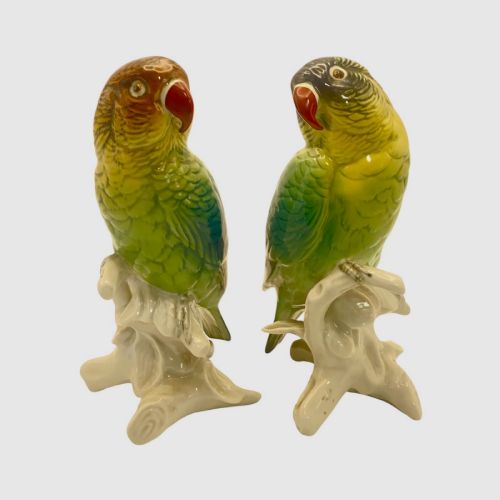
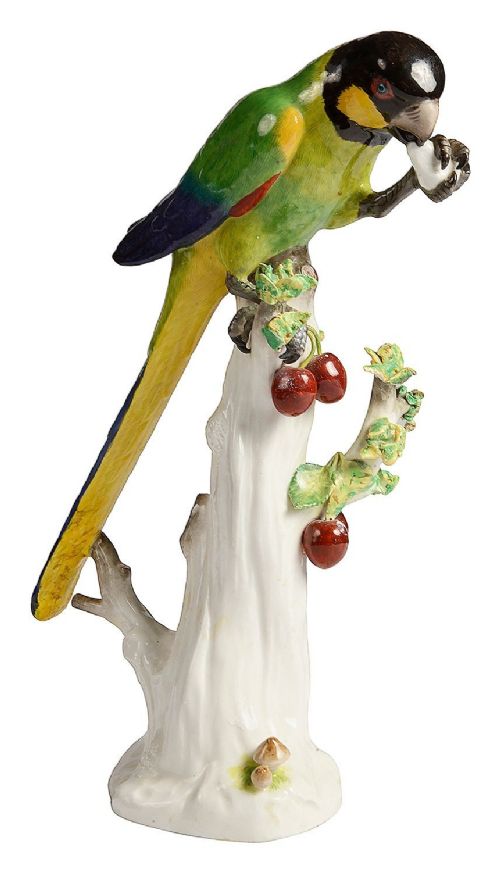
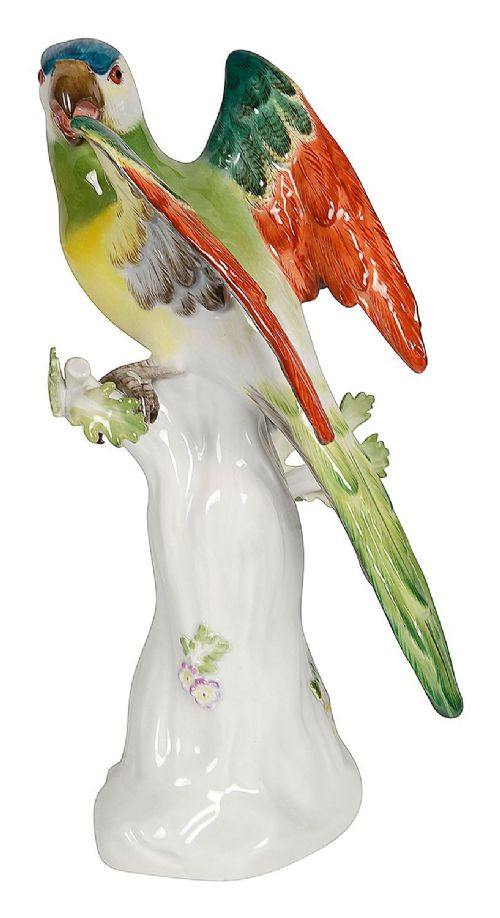
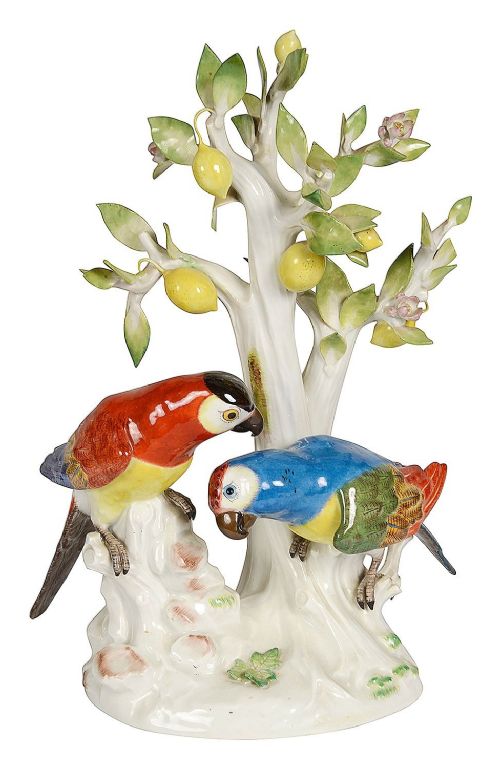
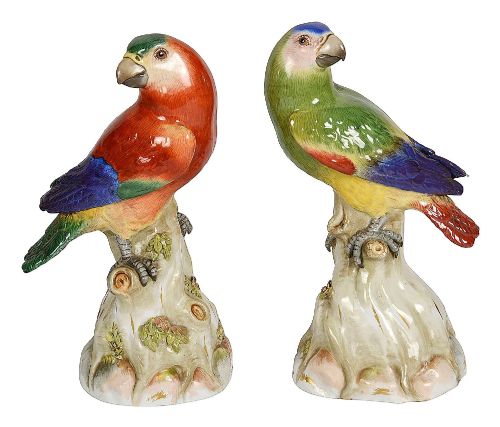
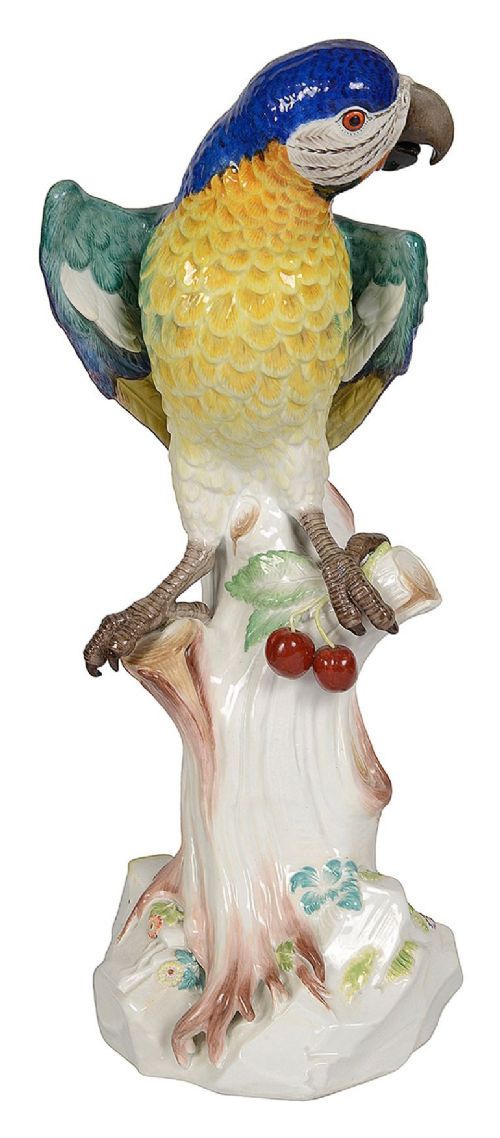
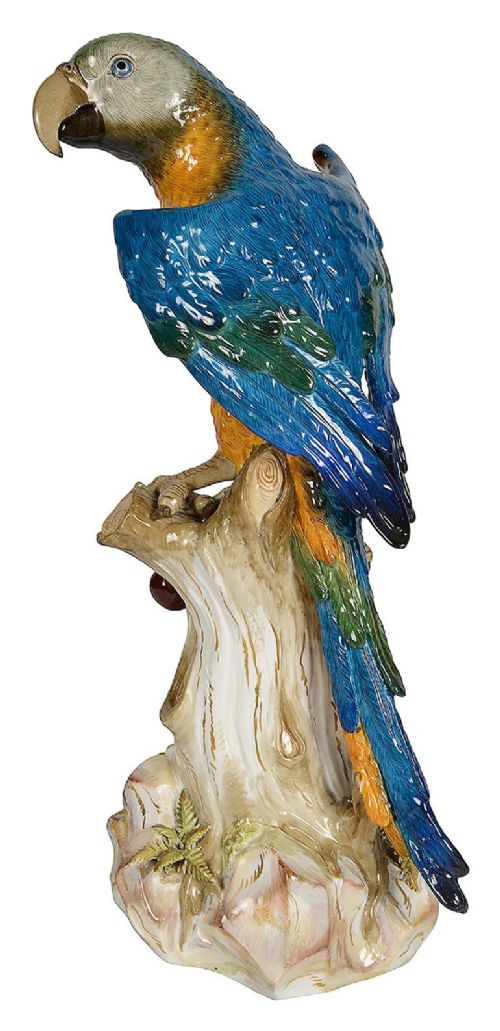
When you search for an antique porcelain parrot, you encounter figures and decorative vessels shaped after these colourful birds. The examples seen on this page span several centuries, featuring forms ranging from single perching figures to pairs under lemon trees.
The pieces include German art porcelain, Chinese export pieces, and English Worcester works. You will frequently find figures perched on tree trunks or branches, capturing the characteristic posture of the bird.
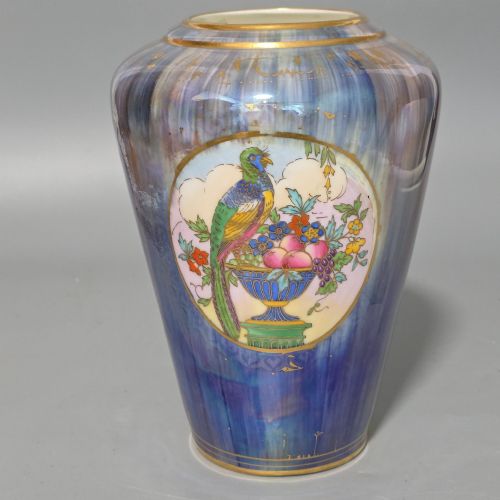
Object types vary from standalone figurines to decorative vases and jugs. The range covers 18th-century Worcester, 19th-century European items, and later 1930s designs.
Materials and construction
The construction relies on hard-paste porcelain, earthenware, and standard porcelain bodies shaped into detailed bird forms. Makers applied glazes and enamel colours, often using overglaze enamel techniques to achieve rich plumage details.
Finish details involve the application of glaze and enamel glaze to create a glossy surface. Some pieces incorporate lustre finishes, seen in hand-enamelled decorative art pottery from the early twentieth century.
Listings feature periods spanning the 18th century, 19th century, Victorian era, and 1930s, utilising porcelain, earthenware, and enamel glaze.
Distinctions in quality
The sophistication of the enamel work and the depth of the glaze define the upper tier of these pieces. Articulation of the natural form, from the beak to the tail feathers, dictates the artistic success of each figure.
Karl Ens·Meissen·Minton
The Antique Porcelain Parrot Glossary
- Hard-paste porcelain
- A dense, vitrified ceramic material fired at high temperatures. It provides a durable body for detailed figural modelling.
- Overglaze enamel
- Pigments applied over a previously fired glaze and refired at a lower temperature. This technique allows for bright, varied surface colours.
- Famille verte
- A palette of green enamels dominant in Chinese export ceramics. It provides the primary colour scheme for specific decorative parrot figures.
- First Period Worcester
- The initial phase of production at the Worcester factory during the eighteenth century. Pieces from this time feature early English soft-paste or porcelain bodies.
Antique Porcelain Parrot: Frequently Asked Questions
What periods do these porcelain parrots come from?
The listings include pieces from the eighteenth, nineteenth, and early twentieth centuries. You will find items attributed to periods like the Victorian era, the Art Deco years, and the eighteenth century.
Specific dates in the records range from the seventeen-seventies through to the nineteen-thirties. This spans Georgian production, late nineteenth-century German works, and twentieth-century European designs.
How were these figures used originally?
These pieces served primarily as decorative ornaments for display on mantlepieces, tables, and cabinets. Their bright enamel colours made them focal points in period interiors.
Certain items functioned as utilitarian objects, such as jugs, pitchers, and vases, while remaining decorative display pieces. The figural works were designed purely for visual appeal.
How do I identify different styles?
Styles reflect the manufacturing period and regional traditions, such as German art porcelain or Chinese export wares. Nineteenth-century European pieces often show naturalistic perching poses on tree stumps.
Art Deco items and later twentieth-century pieces present simplified or stylized forms. Examining the base, glaze texture, and enamel palette helps determine the origin and style.
What materials are used in these birds?
The primary material is porcelain, including hard-paste porcelain and standard glazed porcelain varieties. Some listings also mention earthenware and decorative art pottery.
Surfaces are finished with enamel, enamel glaze, and occasional lustre treatments. Hand-enamelling provides the multi-coloured plumage seen across the figures.