
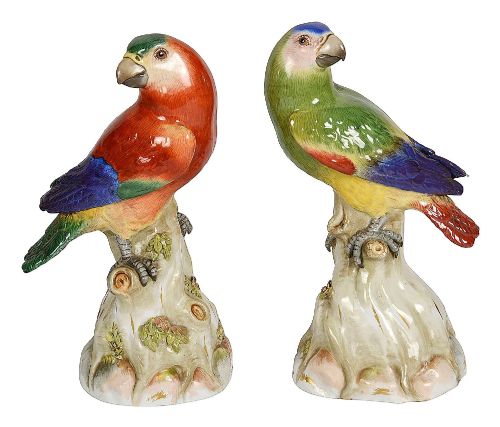
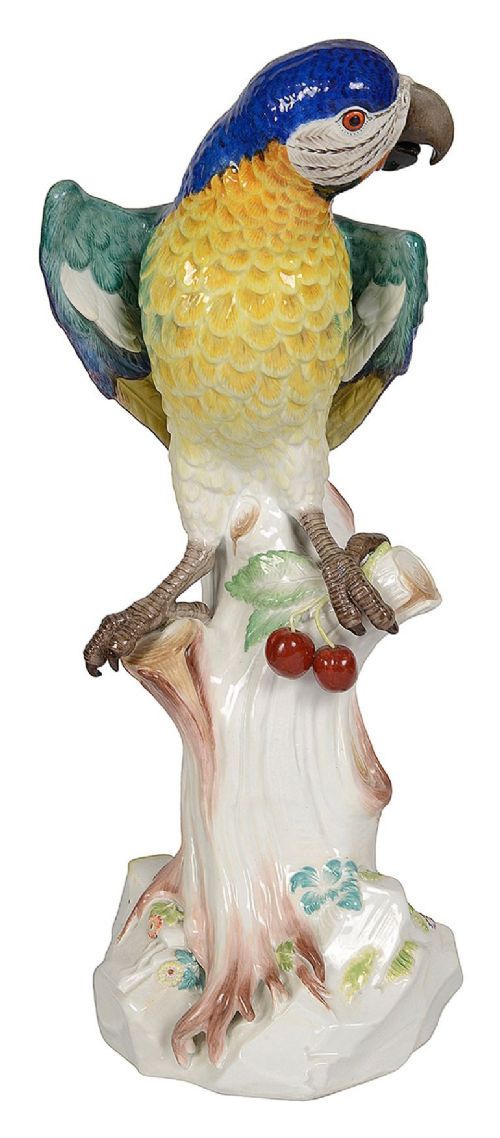
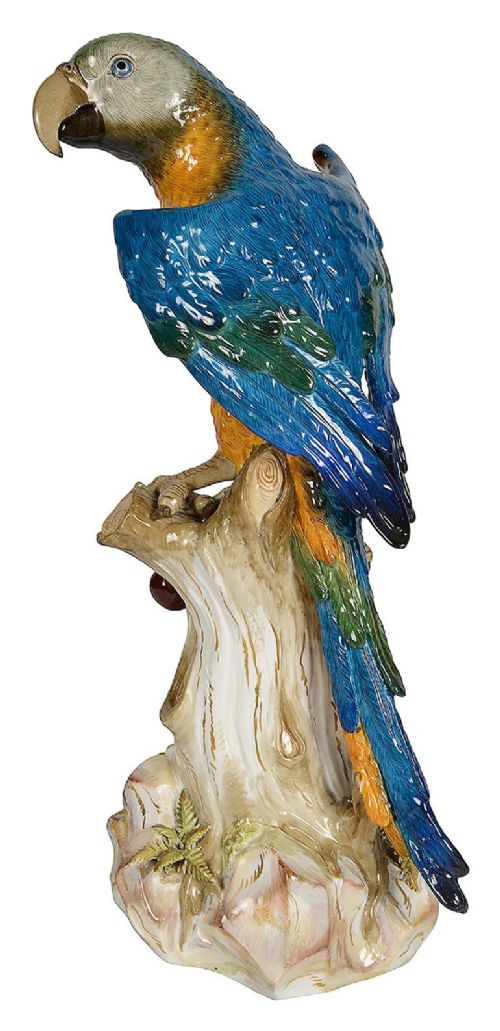


Porcelain Parrot Figurines
These porcelain parrot figurines bring vibrant colour and character to a room, crafted from hard-paste porcelain and decorated in overglaze enamel.
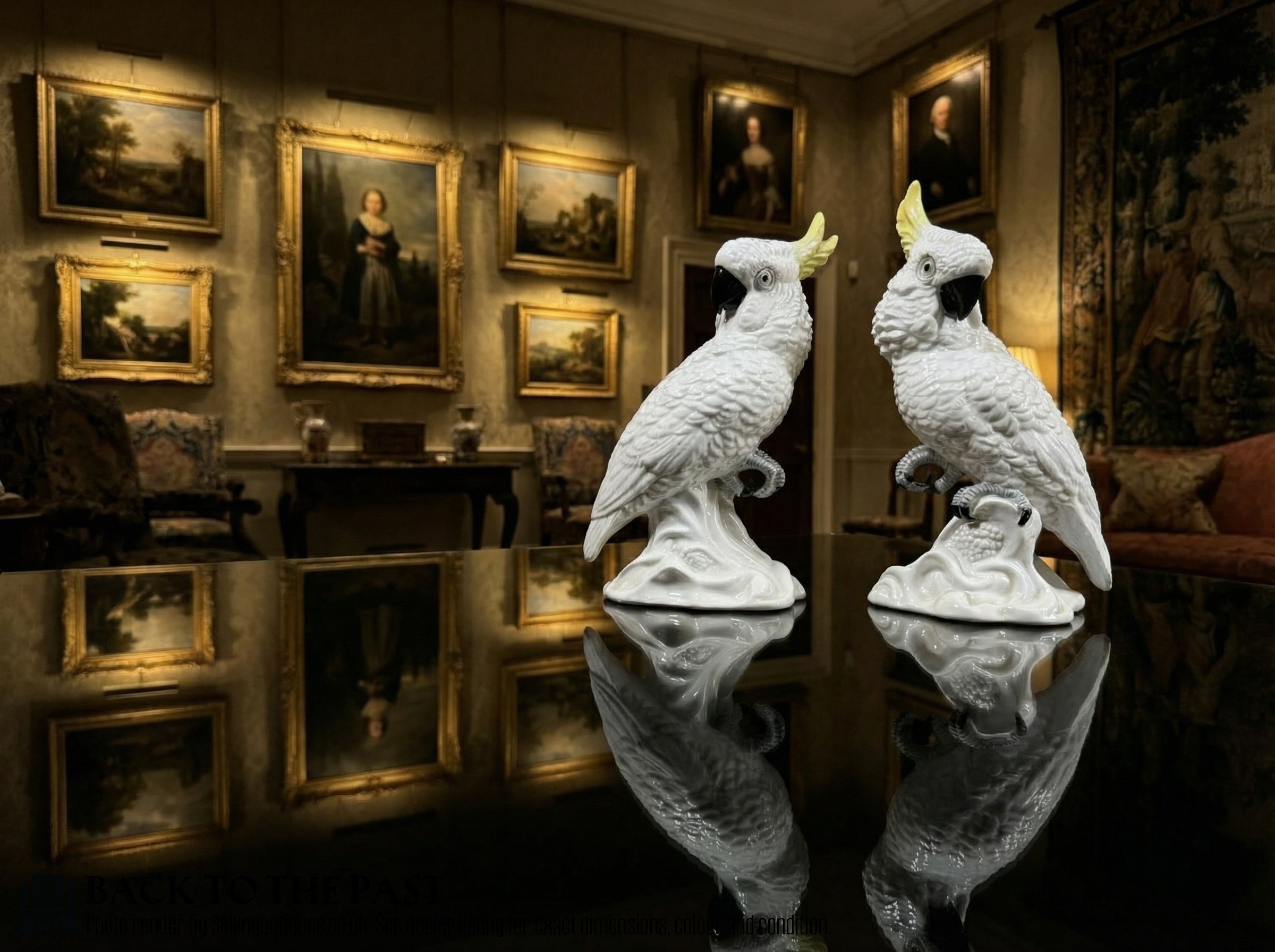
Porcelain Parrot Figurines
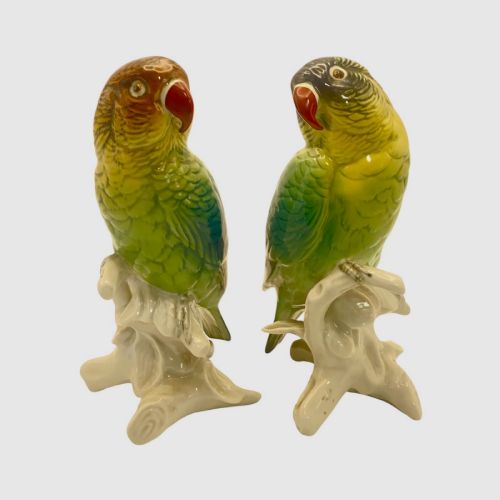
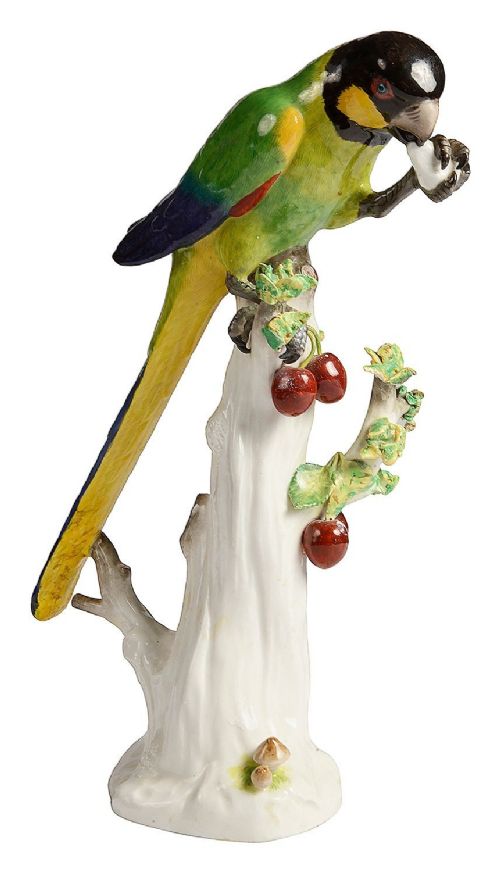
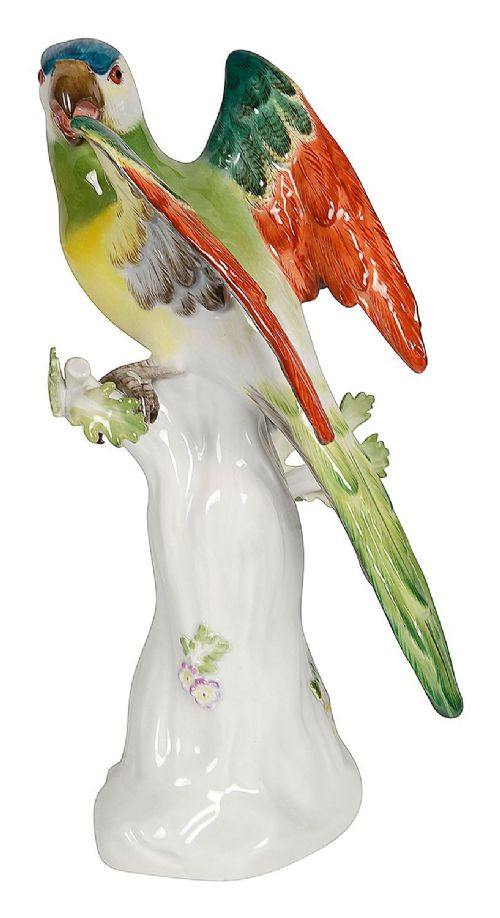
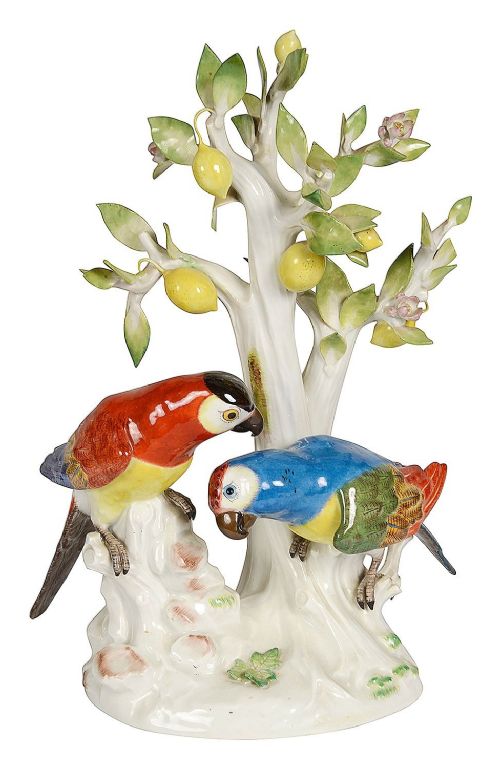
Porcelain parrot figurines encompass decorative sculptures of birds modelled in various postures, often perched on tree trunks or branches. Buyers seeking these porcelain parrot figurines encounter pairs and individual models ranging from small decorative ornaments to large statement pieces.
The selection here includes works from the nineteenth century and the mid-century modern period. European factories and Chinese export workshops dominate the origins of these pieces, showing diverse interpretations of exotic birds.
Victorian examples sit alongside twentieth-century models, reflecting shifts in ceramic design from naturalistic nineteenth-century Meissen forms to later interpretations. These figures serve purely decorative functions within domestic interiors.
Materials and Manufacture
Makers utilised hard-paste porcelain, fired at high temperatures to achieve a dense and durable body suitable for complex animal forms. This dense material supported elaborate modelling without collapsing in the kiln.
Surface decoration relies on enamel, overglaze enamel, and lead glaze to render the bright plumage of parrots and cockatoos. Artisans applied these pigments by hand over the fired glaze before a final low-temperature fixation.
These ceramic birds provide permanent tropical colour without requiring any seed.
Assessing Quality and Execution
Quality rests upon the sharpness of the modelling in the feathers and the naturalism of the bird's posture. Superior pieces display intricate detail in the claws, beak, and foliage bases.
The application of overglaze enamel dictates the visual richness of the surface. Finer examples exhibit subtle shading and vibrant colour saturation that capture the iridescent quality of real plumage.
Karl Ens·Meissen·T.J Jones
The Porcelain Parrot Figurines Glossary
- Hard-paste porcelain
- A durable ceramic composition of kaolin and petuntse fired at high temperatures. This material forms the sturdy body of traditional European and Asian figures.
- Overglaze enamel
- Vitreous coloured pigments applied on top of the fired glaze surface. These enamels require a subsequent low-temperature firing to bond with the glaze.
- Lead glaze
- A glossy coating containing lead oxide applied to ceramics to produce a smooth, reflective surface. It enhances the depth of the underlying body.
- Famille verte
- A palette of green enamels dominant in Chinese export ceramics, often combined with other colours. This style translates traditional oriental decoration to avian forms.
Porcelain Parrot Figurines: Frequently Asked Questions
What periods do these figurines come from?
The available selection spans from the late nineteenth century through to the mid-twentieth century.
Pieces include Victorian models alongside 1930s and 1940s examples.
How are pairs distinguished from single figures?
Makers frequently produced birds in mirror-image pairs designed to sit symmetrically on a mantelpiece or console.
Single figures stand alone as larger statement ornaments, often perched on tree trunks.
What materials make up these sculptures?
The primary material is hard-paste porcelain, selected for its strength and ability to hold fine sculptural detail.
Surfaces are finished with enamel glazes to replicate natural bird colours.
Where were these figures manufactured?
Origins include European porcelain factories such as Meissen, alongside Chinese export workshops.
German manufacturers feature prominently alongside mid-century British makers.