
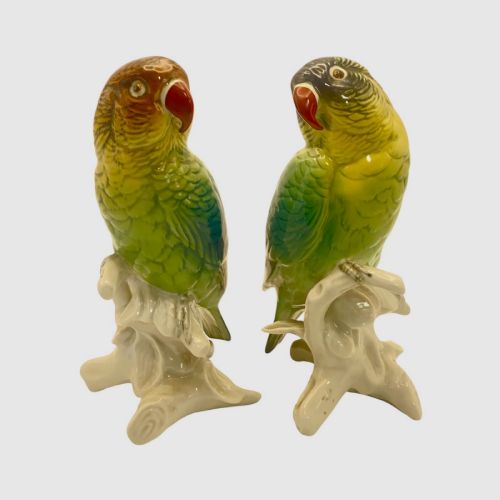
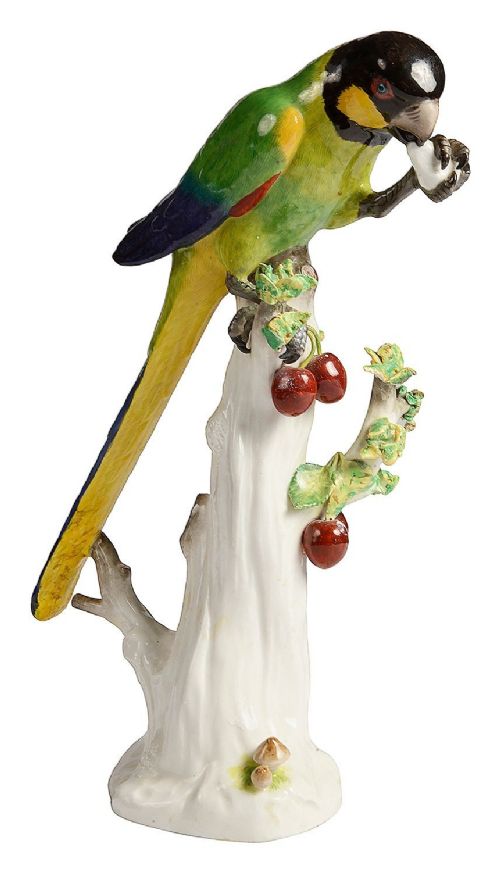
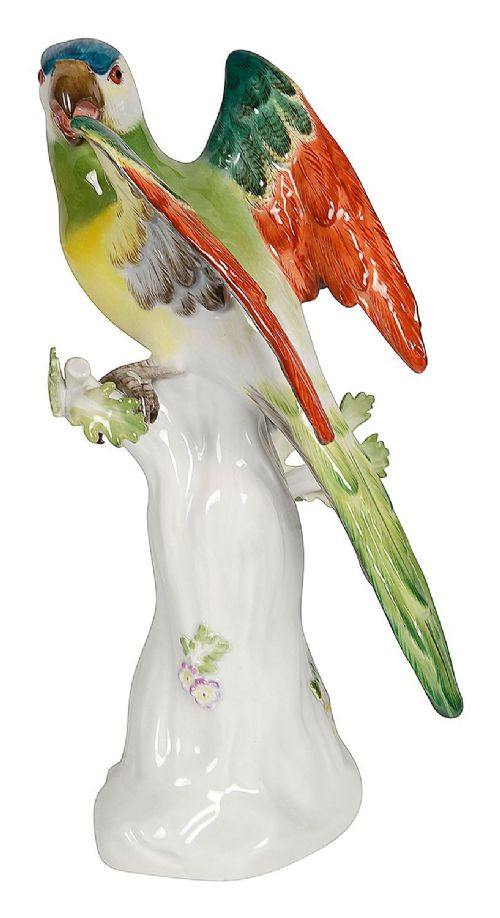


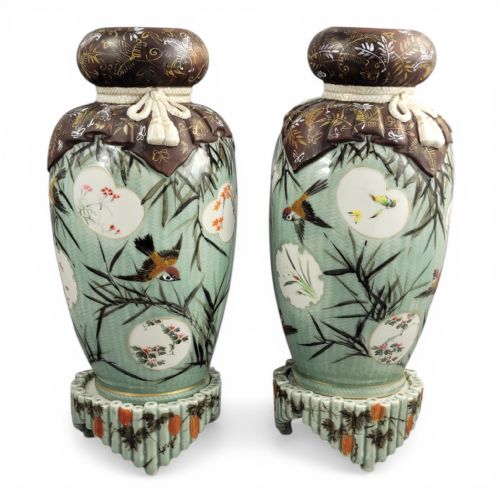


Green Porcelain Birds
Green porcelain birds bring colour and character to a room, ranging from vibrant parrots to ducks and pheasants.
Green Porcelain Birds
Green porcelain birds cover sculptural figures and decorative objects across several centuries of manufacture. You encounter figures like parrots and ducks alongside vases and candlesticks featuring avian motifs.
The selection spans periods from the eighteenth century through the Victorian era to the 1930s. European factories and Chinese kilns both contribute to the variety found here.
How they were made
Potters utilised hard-paste porcelain and soft-paste porcelain to shape these birds, often applying detailed glazes and enamel. Gold leaf highlights appear on select pieces to accent the ceramic forms.
Listings feature porcelain, enamel, and gold leaf applied across Victorian, Georgian, and twentieth-century pieces.
What varies in quality
Quality rests upon the precision of the modelling and the depth of the glaze. Master modellers captured the lifelike posture of a perched parrot or the natural curve of a duck's neck.
The refinement of the enamel work distinguishes standard factory output from exceptional studio pieces. Hand-painted details and well-preserved surface colours elevate certain figures.
Karl Ens·Meissen·Kato Sanhei·Le Manceau
The Green Porcelain Birds Glossary
- Hard-paste porcelain
- A durable ceramic material fired at high temperatures, composed of kaolin and petuntse. It produces a dense and vitreous body.
- Soft-paste porcelain
- An early European ceramic composition fired at lower temperatures, prized for its warm glaze texture. It lacks the true hardness of oriental porcelain.
- Famille verte
- A Chinese ceramic palette dominated by green enamels, developed during the Qing dynasty. It often incorporates cobalt blue, iron red, and yellow.
- Sancai
- A traditional three-colour lead glaze technique originating in China. It typically combines green, amber, and creamy white tones.
- Enamel
- A glassy substance fused to the surface of porcelain during firing to add colour and decoration. It provides a smooth and glossy finish.
Green Porcelain Birds: Frequently Asked Questions
What periods do green porcelain birds come from?
The pieces span the eighteenth century, the Victorian period, and twentieth-century decades like the 1930s. Each era brought distinct modelling styles to bird ceramics.
European factories and Chinese kilns both produced these decorative subjects across different centuries.
How were green glazes applied to porcelain?
Potters used specialised enamel washes and traditional glazes like sancai or famille verte. These coatings were fired onto the ceramic body to achieve rich green hues.
Hand-painting often layered the colours to create realistic feather textures and shading.
Where should I display porcelain birds?
These decorative figures and vases suit tabletops, mantelpieces, and dedicated display cabinets. Their bright glazes add focal points to traditional and eclectic interiors alike.
Keep them away from areas with heavy foot traffic or direct sunlight to protect the enamel surfaces.
How do I identify different types of porcelain?
Examine the weight, translucency, and glaze texture of the piece. Hard-paste porcelain feels denser and resists scratching, while soft-paste has a softer appearance.
Maker marks on the base often provide definitive clues to the factory and manufacturing period.