







Antique Lidded Ceramic Jar
An antique lidded ceramic jar offers both container and display, spanning English factories, European potteries, and Japanese export kilns.
Antique Lidded Ceramic Jar
An antique lidded ceramic jar encompasses covered vessels made for storage, potpourri, or ornament, appearing in forms such as ginger jars, urns, and potpourri pots. These pieces emerge from the eighteenth, nineteenth, and early twentieth centuries across English, European, and Asian traditions.
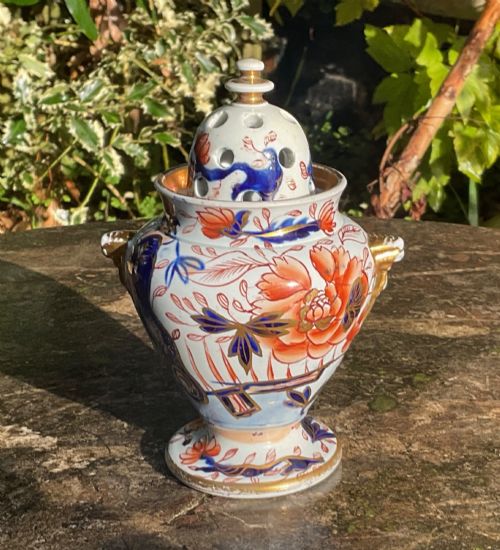
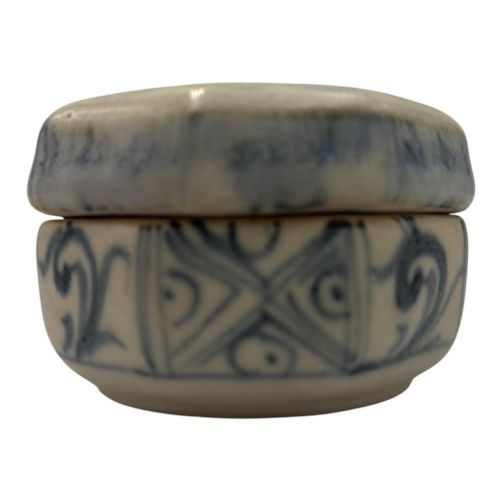
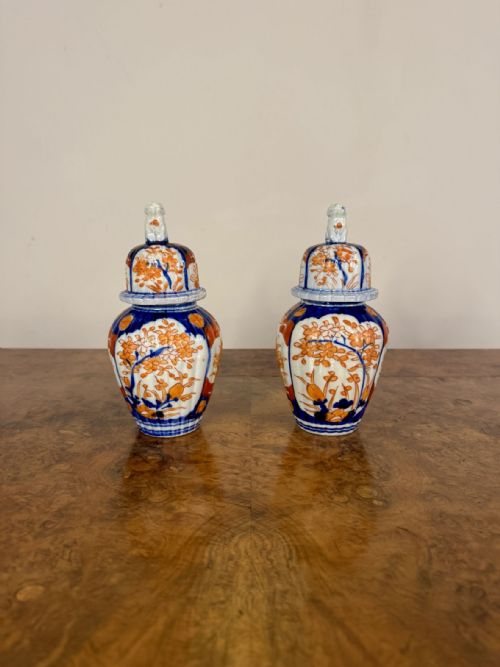
Buyers most frequently encounter nineteenth-century examples, particularly Japanese Imari wares, Dutch and English delftware, and Victorian porcelain productions. The selection ranges from apothecary containers and biscuit barrels to garniture vases and armorial display pieces.
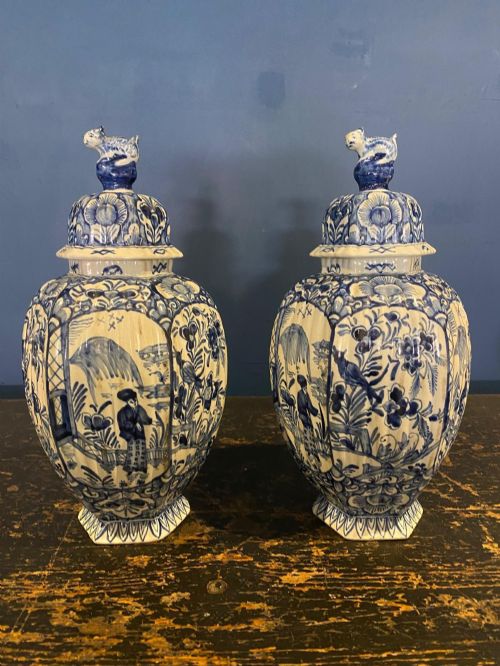
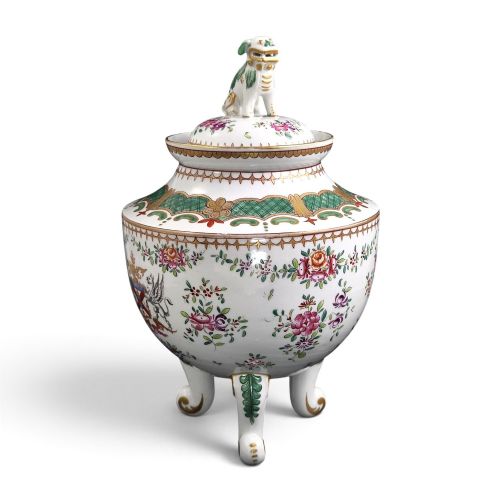
European makers frequently drew inspiration from Eastern motifs, resulting in chinoiserie designs, Japanese-style panels, and Delft blue and white painting. Functional forms like tobacco jars and butter dishes sit alongside purely decorative lidded vases and urns.
How They Were Made
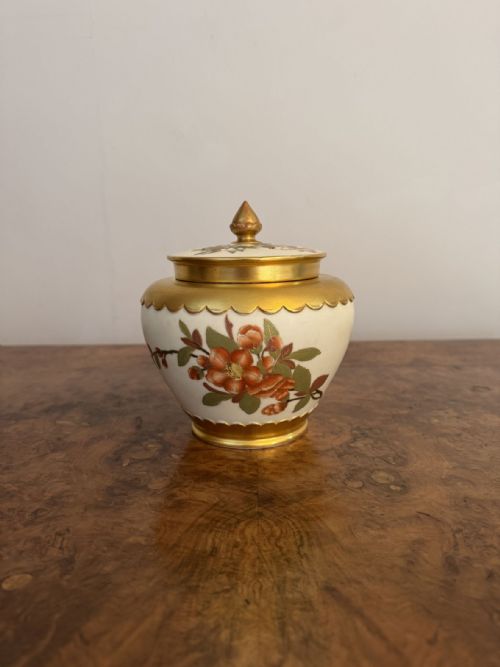
Potters shaped these vessels from ceramic, earthenware, and porcelain bodies, applying tin-glazes, coloured enamels, and white glazes before firing. Many pieces incorporate hand-painted details, gilding, and gold leaf applied over the glaze.
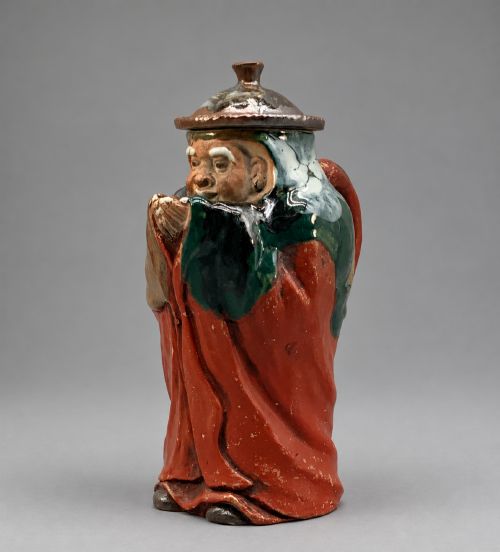
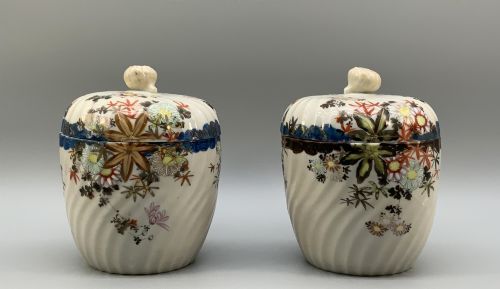
Makers utilised specialised techniques depending on their origin, such as the tin-glazing methods seen in Delftware and maiolica, or the intricate enamel work characteristic of Japanese Imari and Satsuma porcelain.
Antique Lidded Ceramic Jar Retail Price Guide 2026
Typical asking prices for lidded ceramic jar among the pieces listed under this phrase on Sellingantiques today, from the lower quarter to the upper quarter. They describe what is for sale here now, not the wider market.
Listings feature eighteenth and nineteenth-century eras alongside Victorian and Edwardian periods, utilising materials such as porcelain, earthenware, and enamel.
What Varies in Quality
The precision and detail of the hand-painted decoration distinguish standard production items from finer studio or factory pieces. Artisans who executed complex floral, figurative, or armorial schemes with careful brushwork achieved greater visual depth.
The material body and glaze consistency also indicate quality, with fine porcelain and well-finished tin-glazed earthenware showing superior refinement compared to heavier utilitarian wares. The crispness of moulded details and the integration of the lid into the overall silhouette further set apart exceptional examples.
Royal Worcester·Royal Crown Derby·Coalport·Minton·Samson Paris
The Antique Lidded Ceramic Jar Glossary
- Imari
- A style of Japanese porcelain featuring cobalt blue, iron red, and gilt decoration. This aesthetic influenced numerous European factories during the nineteenth century.
- Delftware
- Tin-glazed earthenware produced in the Netherlands and England, typically decorated in blue and white. Pieces often imitate Chinese export porcelain designs.
- Potpourri
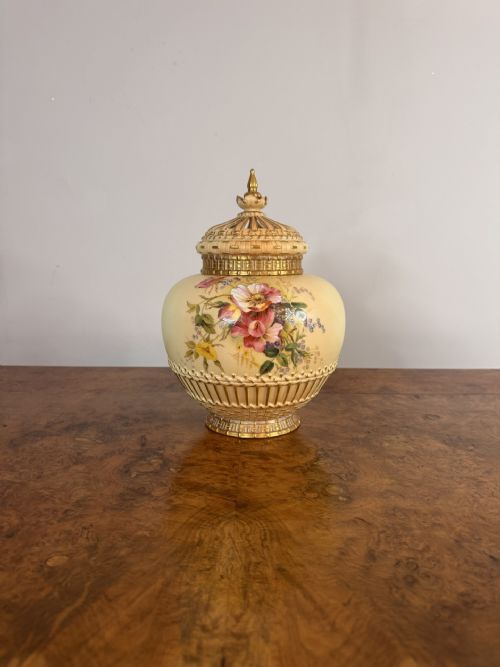
- A mixture of dried plant materials scented with spices, held within a lidded vessel pierced to release fragrance. These containers often feature decorative perforations on the cover.
- Garniture
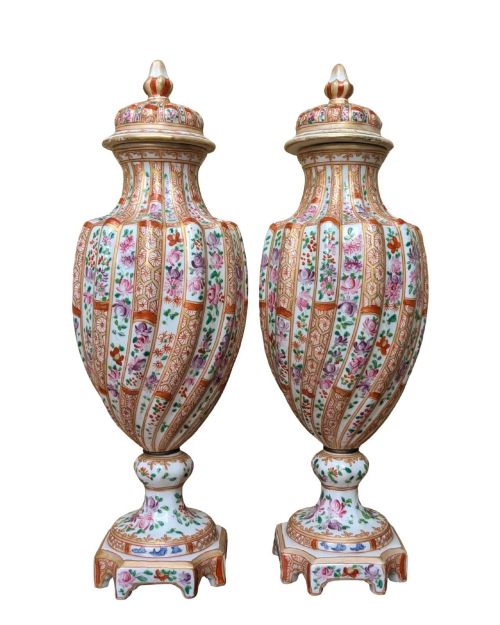
- A set of matching vases and lidded jars designed to be displayed together on a mantelpiece or cabinet. Such sets usually comprise three to five graduated pieces.
- Maiolica
- Italian tin-glazed earthenware decorated with colourful pigments. The technique spread to other European regions during the nineteenth-century revival periods.
Antique Lidded Ceramic Jar: Frequently Asked Questions
What were antique lidded ceramic jars used for?
These vessels served diverse domestic functions, ranging from storing ginger, tobacco, or biscuits to holding scented potpourri in formal rooms. Many larger examples functioned purely as decorative display pieces within nineteenth-century interiors.
Over time, utilitarian containers transitioned into cabinet ornaments, particularly when decorated with elaborate hand-painted scenes or armorial motifs.
How do I identify Japanese Imari wares?
Japanese Imari pieces display a distinct palette dominated by underglaze cobalt blue and iron red, frequently accented with gilding. The motifs typically incorporate floral arrangements, panels, and traditional figures.
Arita kilns produced the majority of these export wares during the Edo period and later nineteenth-century revivals.
What is the difference between delftware and porcelain?
Delftware consists of tin-glazed earthenware, which has an opaque white surface over a porous, buff-coloured clay body. Porcelain is a vitrified, hard-paste or soft-paste ceramic that is dense and sometimes translucent.
Earthenware jars tend to feel heavier and show a softer glaze texture than their porcelain counterparts.
How should I clean an antique ceramic jar?
Dust these pieces gently with a dry, soft brush to remove surface particles without risking fragile overglaze enamels or gilding. Avoid using liquid cleaners, water, or abrasive cloths, particularly on nineteenth-century enamel or gold leaf decorations.
Unglazed areas or restored sections are especially vulnerable to moisture and chemical agents.