


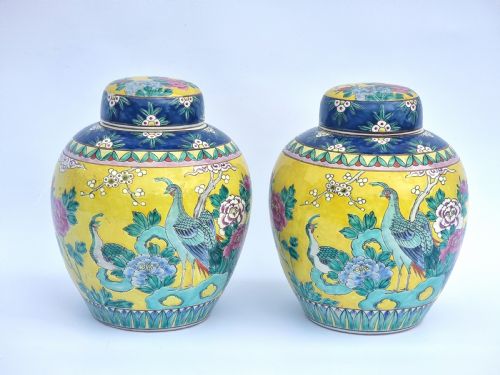


Chinoiserie Ceramic Jar
A chinoiserie ceramic jar brings painted scenes of distant pavilions and blossoming branches into a room.
Chinoiserie Ceramic Jar
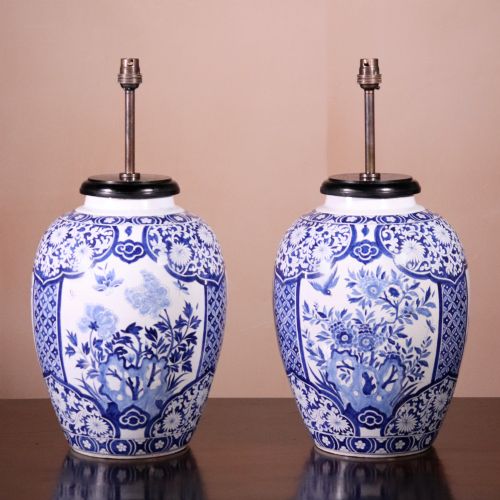
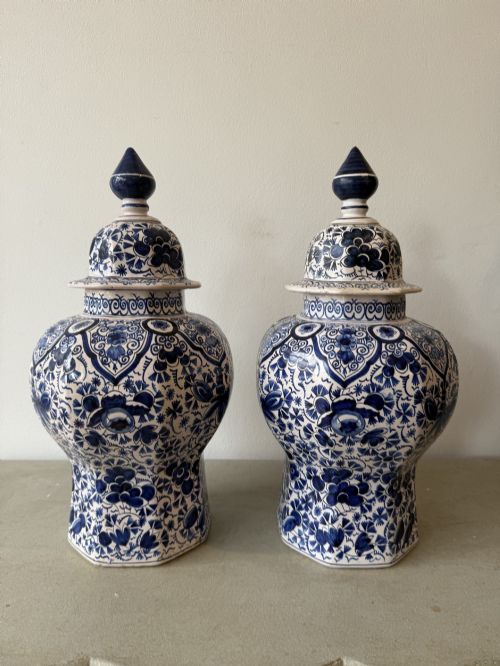
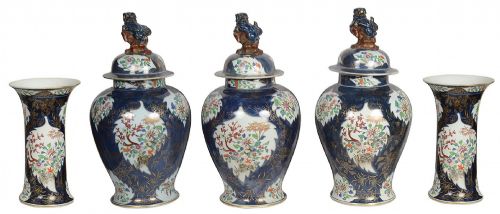
A chinoiserie ceramic jar brings together European interpretations and direct imports of Asian forms, spanning ginger jars, baluster shapes, and lidded urns. These vessels often appear adapted as table lamps or retained as decorative storage containers with their original covers.
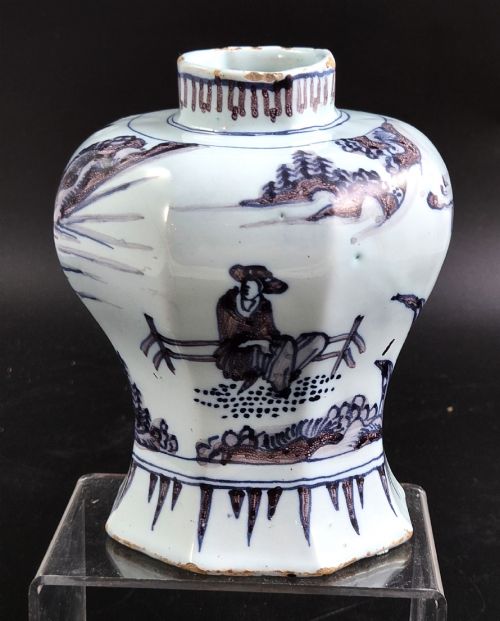
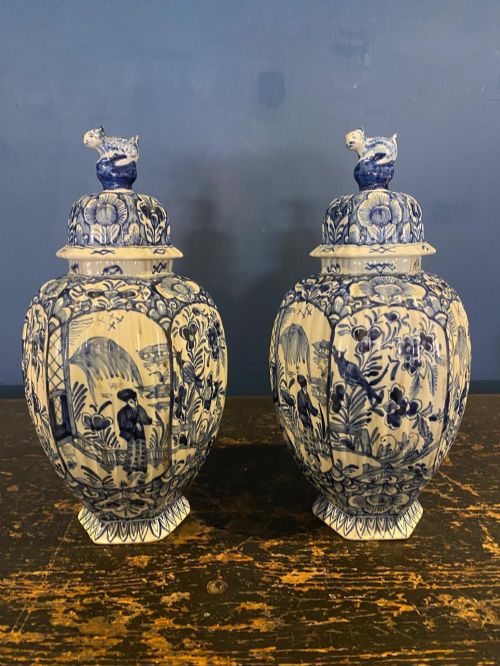
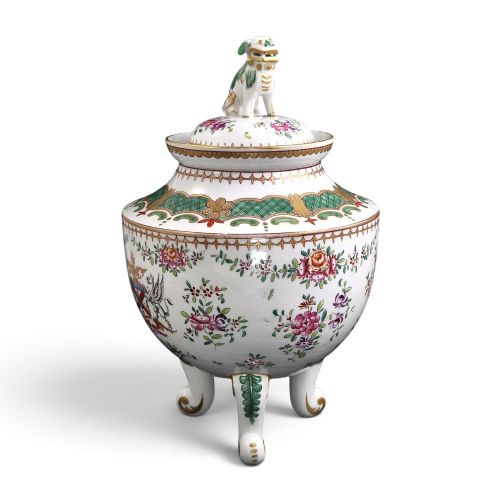
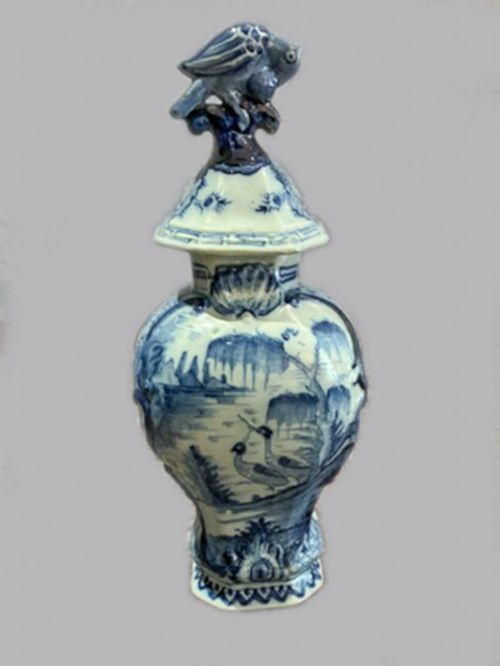
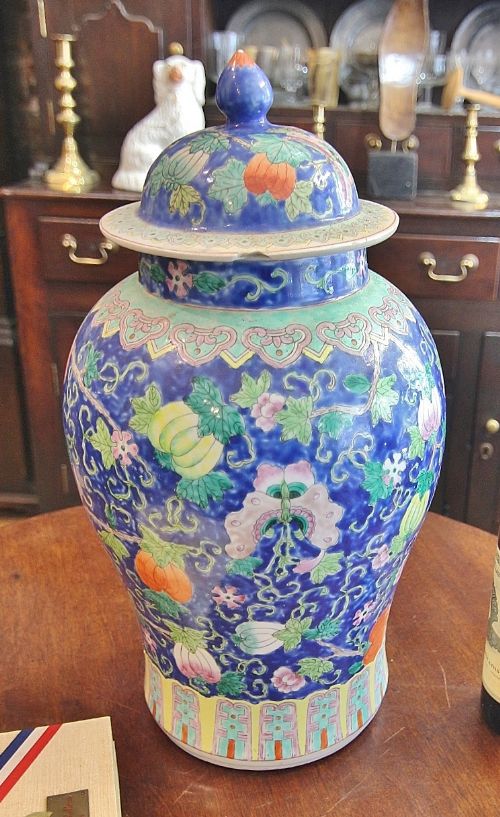
The selections here range from eighteenth-century delftware and nineteenth-century Samson porcelain to twentieth-century factory wares. Many pieces display traditional blue and white painting, while others show the polychrome palettes of famille rose and famille verte.
Makers and workshops across Britain and continental Europe produced these items to satisfy enduring European tastes for Eastern motifs. Collectors encounter everything from nineteenth-century Mason's ironstone to hand-painted Paris porcelain.
Materials and construction
Potters shaped these jars using ceramic bodies that range from porous earthenware and dense ironstone to refined porcelain. Glazes applied to the surfaces provide smooth finishes, occasionally accented with underglaze blue or hand-painted enamel colours.
Many examples incorporate decorative metalwork, such as brass or ormolu mounts fitted around the rims and bases. Selected nineteenth-century pieces also feature applied gold leaf to highlight intricate painted patterns.
Several jars spent decades serving as bedside lamps before anyone remembered they were once meant to hold ginger.
Assessing the work
The refinement of the hand-painted brushwork dictates much of the visual success of a jar. Skilled artists rendered fine details in foliage, birds, and figures with crisp control, whereas lesser examples show hurried or mechanical execution.
The clarity of the glaze and the precision of the ceramic firing determine the integrity of the surface. Potteries utilising superior materials achieved vibrant colour saturation and even coverage without heavy warping.
Mason·Samson Paris·Royal Doulton·Carlton Ware·Meissen·Herend
The Chinoiserie Ceramic Jar Glossary
- Chinoiserie
- European artistic style reflecting Chinese motifs. Artisans applied these decorative themes to ceramics, furniture, and textiles throughout the eighteenth and nineteenth centuries.
- Famille Rose
- A primary palette of Chinese ceramic glazes introduced in the eighteenth century. The colours rely heavily on an opaque pink or rose enamel derived from colloidal gold.
- Baluster
- A jar shape characterised by a rounded body that tapers toward the base and swells near the middle. This classical profile frequently supports a domed cover.
- Ironstone
- A patented heavy earthenware developed in Britain during the early nineteenth century. It offered a durable and dense alternative to standard porcelain.
- Ormolu
- Gilded bronze mounts applied to the rims, handles, or bases of ceramic vessels. European makers used these metal fittings to elevate the decorative status of porcelain jars.
Chinoiserie Ceramic Jar: Frequently Asked Questions
What is a ginger jar?
A ginger jar is a wide-shouldered storage vessel originally used in China to transport spices, oils, and other goods. Over time, European and Asian potteries adopted the rounded silhouette purely for decorative display.
Most examples feature a matching lid that sits flush against the rim. Today, collectors value these jars both in their original form and converted into table lamps.
How do I date a ceramic jar?
Dating relies on examining the ceramic body, the characteristics of the glaze, and the style of the painted decoration. Ironstone pieces often point toward the nineteenth century, while specific factory marks provide clear chronological clues.
Stylistic shifts between cobalt blue underglaze work and polychrome famille enamels further assist in narrowing the period of production. Comparing base marks with known factory registries remains a primary method for verification.
Are these jars waterproof?
Many antique ceramic jars retain watertight glazes suitable for holding cut flowers or foliage. However, hairline cracks or porous earthenware bodies can develop leaks over long periods.
Placing a discreet glass or plastic liner inside older vessels protects the interior moisture from damaging the historic ceramic fabric. Checking the base for seepage is advisable before filling any unglazed or restored piece.
Why do some jars have metal mounts?
European makers frequently added brass or ormolu mounts to imported porcelain jars during the eighteenth and nineteenth centuries. These metal additions served to repair chipped rims or to enhance the decorative presence of the vessel for wealthy interiors.
Mounts often reflect the prevailing interior design trends of the period, such as Regency or Victorian tastes. They indicate how previous owners valued and adapted these ceramic objects.