


Regency Floral Ceramic Vase
A regency floral ceramic vase brings classical form and hand-painted botanical detail straight into a room, offering a distinct piece of early nineteenth-century artistry.
Regency Floral Ceramic Vase
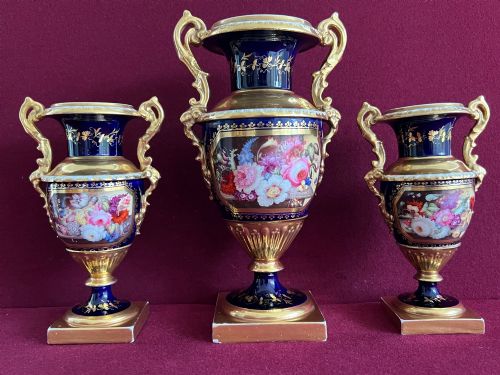
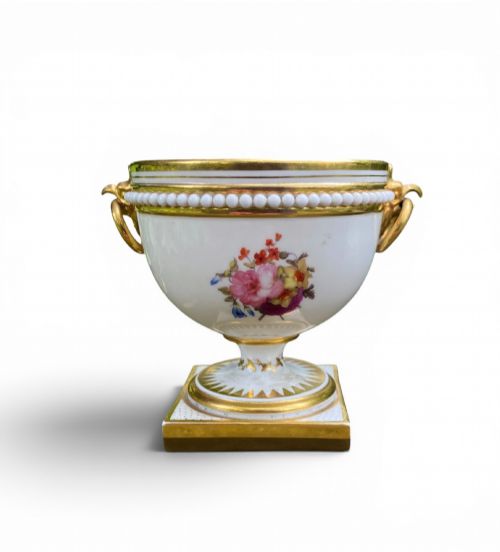
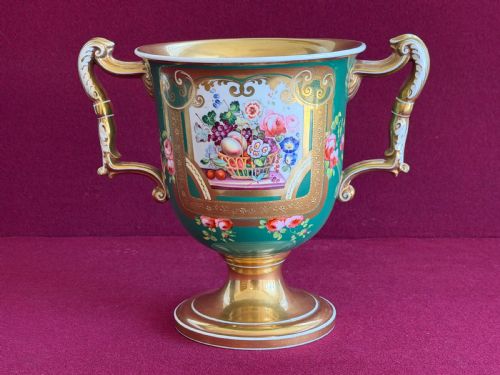
A regency floral ceramic vase encompasses classical vessel shapes such as campagna urns, bottle vases, and cornucopia forms. These decorative pieces date primarily from the Regency, Georgian, and wider nineteenth-century periods, capturing an era of revivalism and elegance.
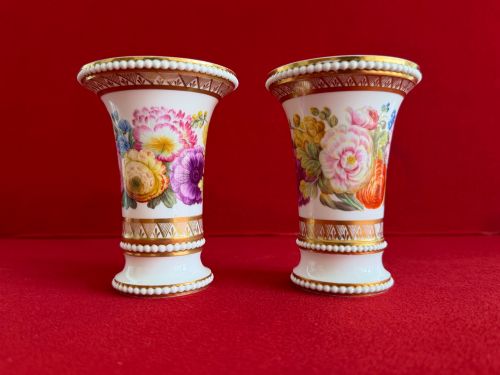
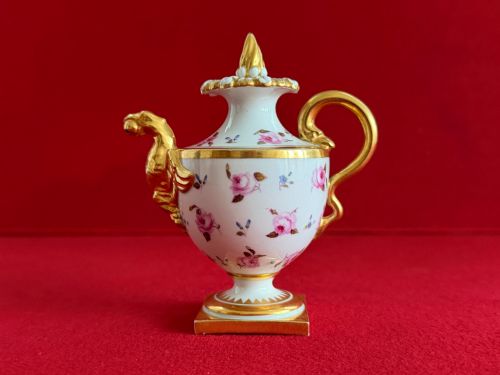
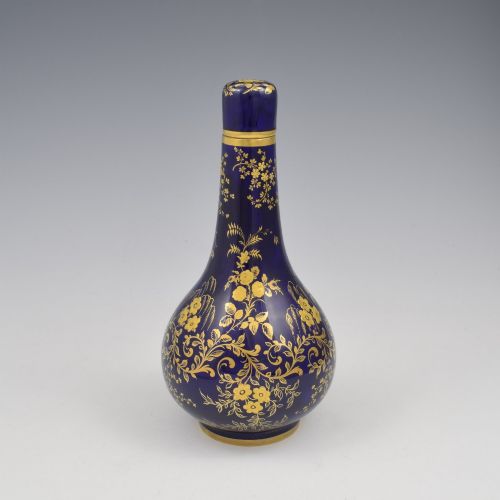
The most common examples on this page feature hand-painted botanical decoration, often rendered against colourful grounds or highlighted with gold leaf and gilding. Forms range from covered urns and loving cups to specialised sprinklers, reflecting the diverse output of period potteries.
Materials and construction methods
The pieces listed here utilise fine bodies such as porcelain, bone china, and ironstone, moulded or turned into classical shapes. Potters then applied skilled hand-painted decoration, often incorporating polychrome enamels and rich gilding to accent the ceramic surface.
Many items combine traditional ceramic production with delicate surface finishes, such as gold leaf application and coloured glazes. Ironstone examples provide robust durability, while porcelain and bone china achieve a more refined, translucent quality suited to intricate floral motifs.
Listings feature porcelain, ironstone, and bone china, decorated with enamel and gold leaf in Regency and Chinoiserie styles.
Distinguishing quality across the range
Quality in a regency floral ceramic vase rests upon the precision of the hand-painted brushwork and the clarity of the ceramic form. Finer pieces demonstrate meticulous botanical detail and controlled gilding that enhances the classical proportions without crowding the glaze.
The execution of the ground colour and the crispness of moulded details also separate standard production from superior examples. Workshops known for high-standard porcelain output display a greater refinement in both body preparation and artistic finish.
Flight, Barr and Barr·Derby·H and R Daniel·Coalport·Spode·Miles Mason·Mason's
The Regency Floral Ceramic Vase Glossary
- Campagna urn
- A bell-shaped classical urn with a flared rim and pedestal base, often utilised for decorative display during the Regency period.
- Bone china
- A type of soft-paste porcelain incorporating bone ash, developed to provide a strong, white, and translucent ceramic body.
- Ironstone
- A heavy, durable earthenware patented in the nineteenth century to rival true porcelain while offering robust utility and decorative capacity.
- Gilding
- The application of gold leaf or powdered gold to the ceramic surface, used extensively to highlight rims, handles, and painted panels.
Regency Floral Ceramic Vase: Frequently Asked Questions
How do I identify a Regency period vase?
Look for classical architectural shapes, such as campagna or Warwick urn forms, combined with hand-painted floral motifs and rich gilding. These design traits reflect the neoclassical tastes prevalent during the early nineteenth century.
Material composition also helps, as authentic pieces frequently utilise bone china, ironstone, or refined porcelain characteristic of the era's leading potteries.
Were these ceramic vases used for cut flowers?
Many decorative vessels of this period served primarily as mantelpiece ornaments or garniture sets rather than functional flower holders. Forms like covered urns and specialised sprinklers were designed to showcase the artistry of the maker.
When water containers were intended, the interior glaze protected the ceramic body, though collectors often display them empty to preserve the delicate hand-painted surfaces.
What is Chinoiserie decoration on these ceramics?
Chinoiserie refers to European artistic interpretations of Chinese and East Asian design motifs, popular during the Georgian and Regency periods. On ceramics, this appears as stylised landscapes, figures, or botanical elements rendered in the Western palette.
Early ironstone pieces frequently adopted these exotic patterns to satisfy contemporary demand for imaginative, decorative orientalist designs.
How should I care for antique porcelain?
Keep antique porcelain and ironstone away from direct sunlight and dramatic temperature fluctuations to protect the enamel colours and fragile gilding. Dust them gently with a soft, dry cloth rather than using liquid cleaners.
Avoid immersing gilded or enamelled pieces in water, as harsh cleaning methods can wear away the historic hand-painted details over time.