
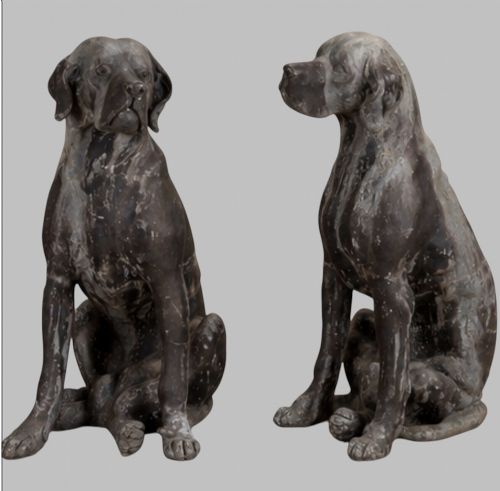


Antique Hound Statue
An antique hound statue brings centuries of sculptural animalier art into your interior, capturing the grace and energy of hunting dogs in bronze, marble, and porcelain.
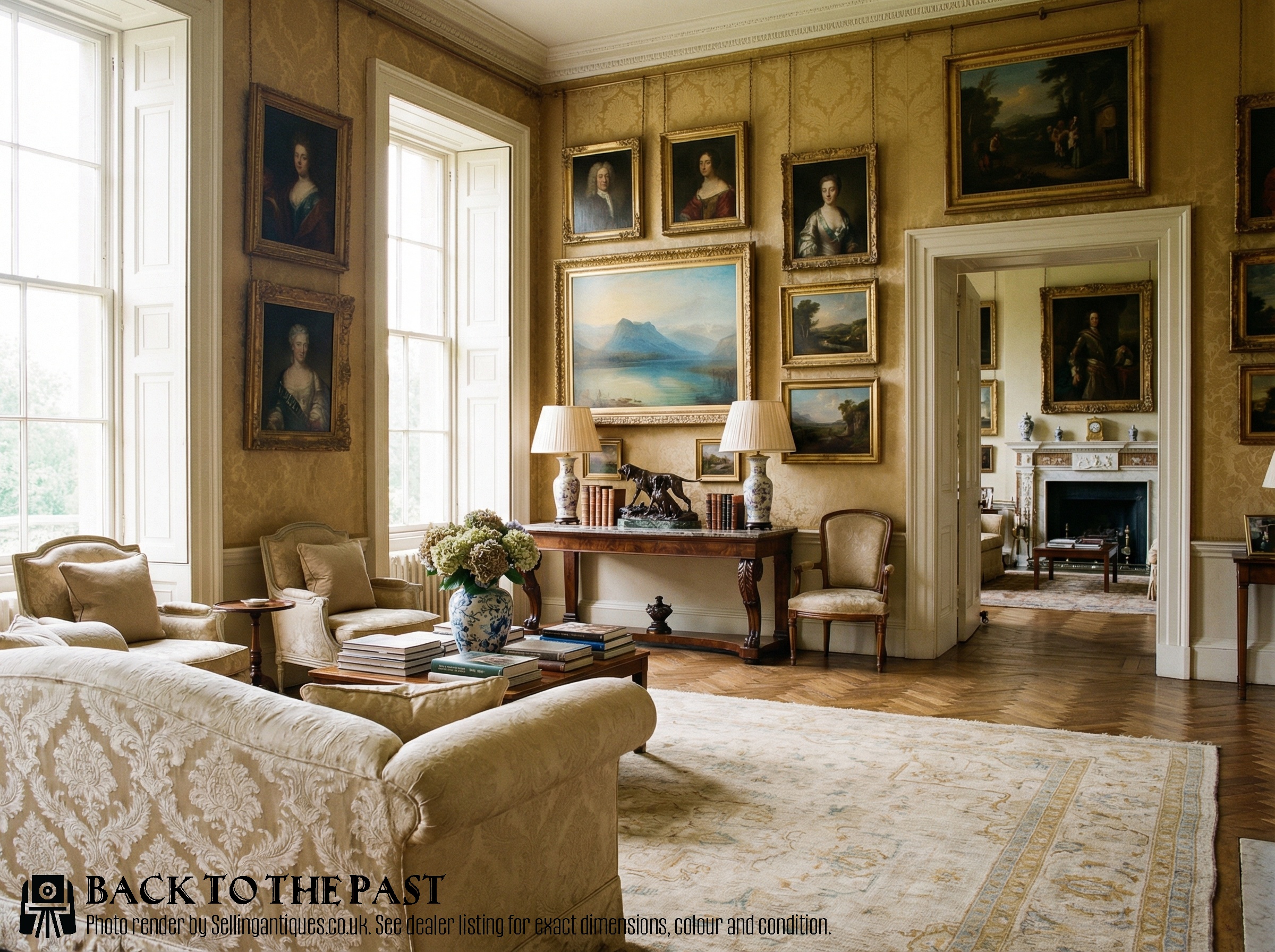
Antique Hound Statue
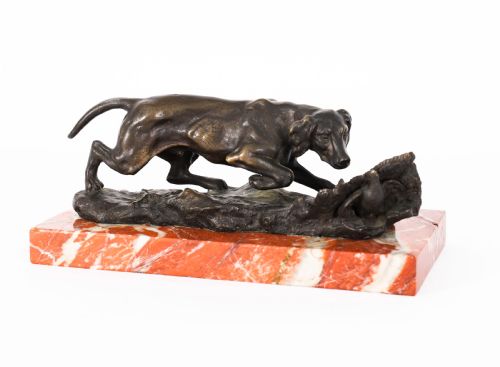
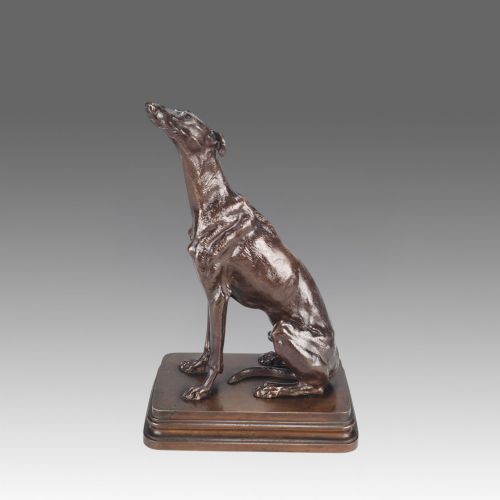
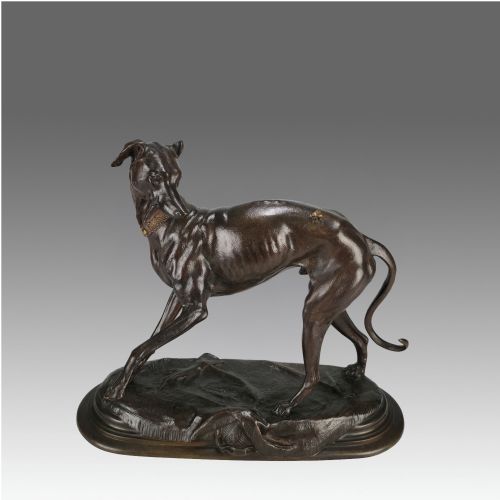
An antique hound statue encompasses sculptural representations of hunting dogs, greyhounds, bassets, and setters produced across the nineteenth and early twentieth centuries. You will frequently encounter nineteenth-century French animalier bronzes depicting resting, sitting, or hunting hounds mounted on marble bases. These sculptures range from small mantel figures and table lamps to large garden statues and life-size pairs.
The makers and founders working during the Victorian and Edwardian periods utilised diverse materials to capture canine anatomy with precision. Alongside bronze, the listings reveal porcelain figurines, spelter figures, cast iron pairs, and terracotta models. Many pieces reflect specific artistic movements including the Grand Tour, Art Nouveau, and Art Deco styles.
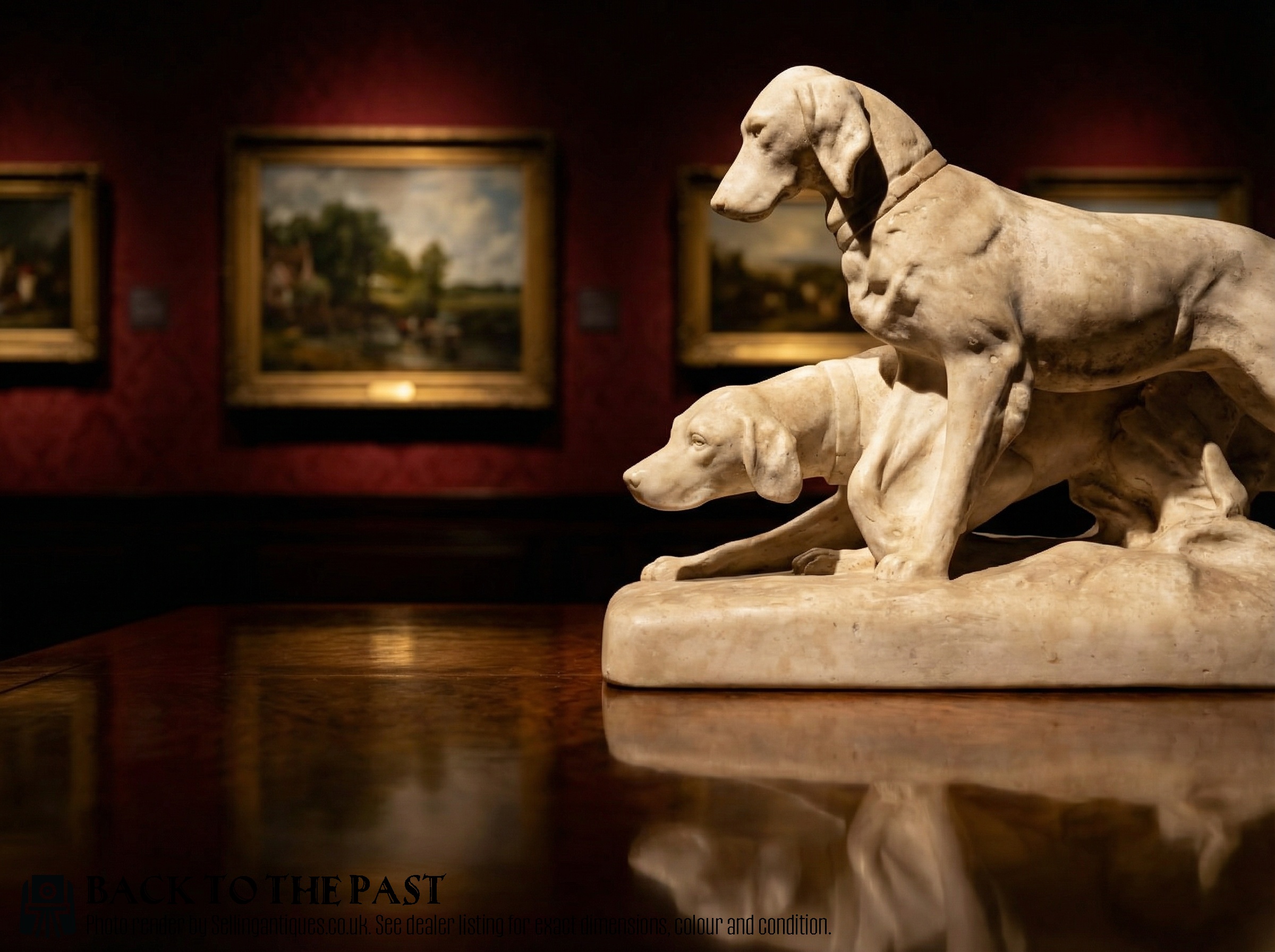
How they were made
Bronze sculptures relied on the lost-wax casting technique, allowing founders to capture fine muscular detail and textures in fur. Finished bronzes were often mounted on marble bases or combined with ormolu mounts and brass elements.
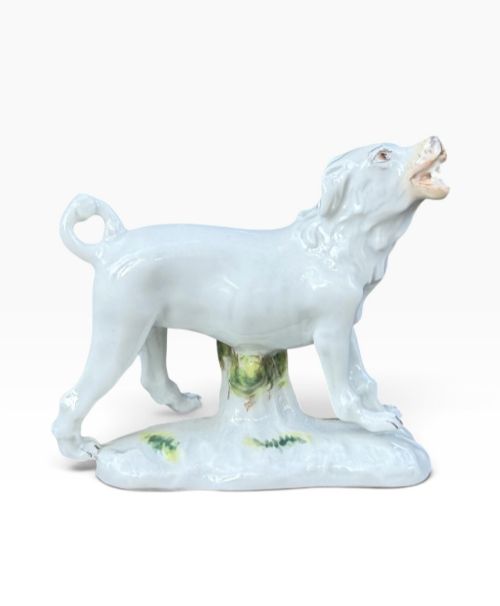
Ceramic figures utilised porcelain, Parian ware, or glazed earthenware, modelled and fired in European potteries. Cast iron and lead served for larger garden and fireside statues, while spelter provided an alternative metallic medium for twentieth-century Art Deco pieces.
Listings feature hound statues cast in bronze, carved in marble, and modelled in porcelain across the nineteenth and twentieth centuries.
What varies in quality
Quality rests primarily in the fidelity of the casting and the crispness of the chisel work on metal surfaces. Superior bronzes exhibit sharp muscle definition and sensitive rendering of the animal's coat, whereas secondary casts lose fine details.
The material integration dictates overall refinement, particularly in how securely metal sculptures anchor to their marble or serpentine bases. In ceramic figures, the finesse of the modelling and the depth of the glaze separate standard production pieces from finer examples.
Carl Kauba·Alfred Dubucand·Alfred Barye·Pierre Jules Mene·Auguste Nicholas Cain·Arthur Waagen·Geo Maxim·Antoine Louis Barye·Louis Lejeune·Joseph Francois Victor Chemin·Christophe Fratin·John Willis Good·Nikolai Lieberich·Barbedienne·Royal Dux·Henri Jaquesmart·Meissen
The Antique Hound Statue Glossary
- Animalier
- A nineteenth-century artistic movement focusing on the realistic portrayal of animals. Sculptors in this tradition studied anatomy closely at menageries.
- Lost-wax casting
- A metalcasting method where a molten metal is poured into a mould that has been created by means of a wax model. This technique permits intricate undercuts and delicate surface textures.
- Parian ware
- A type of bisquit porcelain resembling white marble, developed in the mid-nineteenth century. It was widely utilised for portrait busts and animal figures.
- Spelter
- An alloy of zinc and lead used as a cheaper substitute for bronze. It requires careful finishing and plating to imitate genuine bronze patination.
- Grand Tour
- A cultural trip through Europe undertaken by upper-class young men in the eighteenth and nineteenth centuries. Travellers frequently collected small marble and bronze sculptures as mementos.
Antique Hound Statue: Frequently Asked Questions
What is an animalier hound sculpture?
An animalier sculpture is a nineteenth-century artwork dedicated to the realistic depiction of animals in motion or repose. Hound statues within this genre focus heavily on the musculature and physical traits of sporting dogs.
These pieces were typically cast in bronze by specialised European founders and often mounted on heavy marble plinths for display on desks or mantelpieces.
How do I identify a bronze hound from a spelter one?
Bronze is heavier, colder to the touch, and develops a stable, rich patina over time. Spelter is a softer zinc alloy that often shows grey metal beneath worn paint or plating.
Lifting the piece and examining areas of friction usually reveals the underlying metal composition without damaging the surface.
Where were nineteenth century dog sculptures displayed?
Nineteenth-century hound figures adorned studies, libraries, and grand hallways as symbols of sporting pursuits and refined taste. Smaller bronzes and porcelain figurines sat on writing desks and mantelpieces.
Larger cast iron or terracotta examples stood beside hearths or served as garden statuary on country estates.