


Bronze Hunting Dog Sculpture
A bronze hunting dog sculpture captures the taut muscle and keen focus of hounds and gun dogs in durable metal.
Bronze Hunting Dog Sculpture
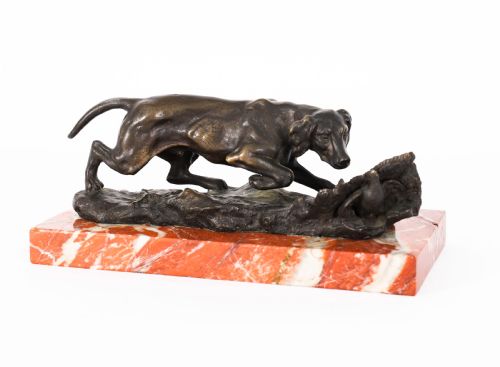
A bronze hunting dog sculpture brings the intensity of the field into the interior through figures of setters, pointers, hounds, and retrievers. These works capture resting hounds, active retrievers flushing pheasants, and dogs with prey like rabbits.
The dominant style on this page is Animalier, originating predominantly from nineteenth century French workshops. French Animalier sculptors focused on realistic animal anatomy, often mounting their bronzes on marble or onyx bases.
Works range from modest nineteenth century Victorian figures to later Art Deco interpretations of breeds such as the Russian borzoi and Italian greyhound. Many pieces depict specific sporting scenes involving gundogs and game.
How they were made
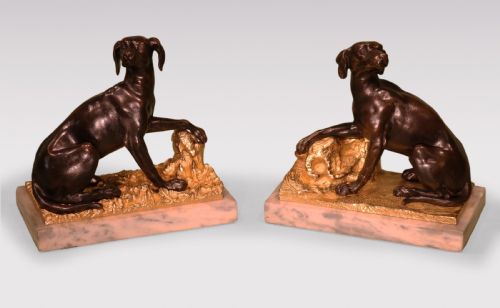
The primary material is bronze, cast using traditional foundry methods and finished with varied patination to emphasise muscular definition and fur texture. Some pieces combine bronze with ormolu highlights or cold painted details.
Alternative metals such as spelter and cast iron appear in later or more commercial figures, offering a different weight and surface texture than true bronze. Heavy bases of marble or onyx provide stable plinths for many of the sculptures.
Cast figures often rely on patinated bronze surfaces, while others incorporate intricate auxiliary elements like birds, pheasants, or carved stone plinths to ground the narrative of the hunt.
Listings span the nineteenth century through the Art Deco era, featuring materials including bronze, spelter, marble, and onyx.
What varies in quality
Quality rests in the anatomical accuracy of the canine form and the crispness of the chasing after casting. Superior sculpture conveys taut energy, accurate bone structure, and convincing texture in the coat.
The integration of the figure with its base matters greatly, particularly where bronze meets marble or onyx plinths. Castings produced after renowned artists show varying degrees of fidelity to the original models.
Carl Kauba·Jules Moigniez·Delabrierre·Auguste Nicholas Cain·Antoine Louis Barye·Christophe Fratin·Pierre-Jules Mêne·L.Bureau·Richard
The Bronze Hunting Dog Sculpture Glossary
- Animalier
- A nineteenth century artistic movement focused on the realistic portrayal of animals, particularly wild beasts and sporting dogs. Practitioners studied live subjects in menageries and the field to achieve anatomical precision.
- Patinated bronze
- Bronze treated with chemical solutions to produce a specific surface colour and tone. This treatment protects the metal and highlights sculptural detail.
- Spelter
- An alloy of zinc and other metals utilised as a cheaper alternative to bronze. It accepts surface finishes well but possesses lower tensile strength.
- Ormolu
- Gilt bronze produced by applying a finely ground gold mercury amalgam to a bronze base and heating it. The technique creates a rich golden surface.
- Cold painted bronze
- Bronze painted with non-fired colours, a technique popular for adding realistic detail to small animal figures. The paint remains susceptible to wear if handled frequently.
Bronze Hunting Dog Sculpture: Frequently Asked Questions
What is an Animalier bronze dog sculpture?
An Animalier bronze dog sculpture is a nineteenth century or later cast metal figure depicting sporting breeds with anatomical realism. These works focus on the natural postures and intense focus of working hounds and setters.
Created primarily in France, these sculptures capture dogs in moments of rest, tracking, or interacting with game such as pheasants and hares.
How do I identify a cast after a known sculptor?
Pieces marked as after a specific artist indicate a later casting produced from an established model rather than a contemporary lifetime cast. These works still demonstrate skilled foundry techniques and detailed patination.
Examining the crispness of the chasing and the quality of the bronze alloy helps determine the period and standard of the casting.
What materials are used besides bronze?
While bronze remains the primary medium, some pieces utilise spelter or cast iron for the sculptural figures. Bases are frequently constructed from marble or onyx to provide weight and contrast.
Certain works incorporate ormolu mounts or cold painted surfaces to enhance the visual detail of the animals and their quarry.
Where were these dog sculptures displayed?
These sculptures traditionally decorated libraries, studies, and drawing rooms of nineteenth century homes as expressions of sporting interests. Fireside statues served both decorative and functional domestic roles.
Today, they function as tabletop or mantelpiece ornaments that highlight specific canine breeds and nineteenth century casting arts.