
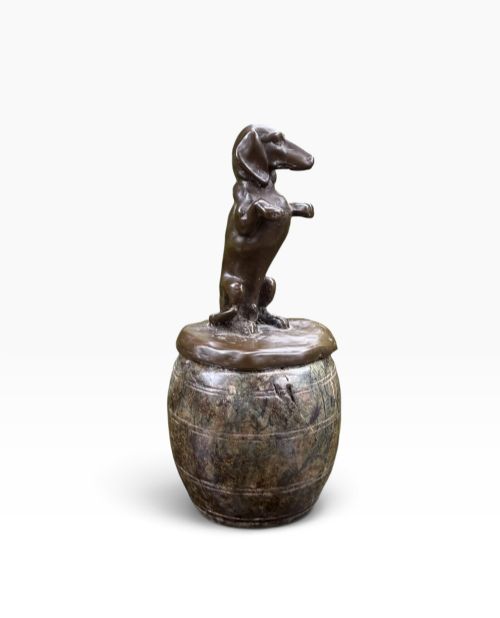
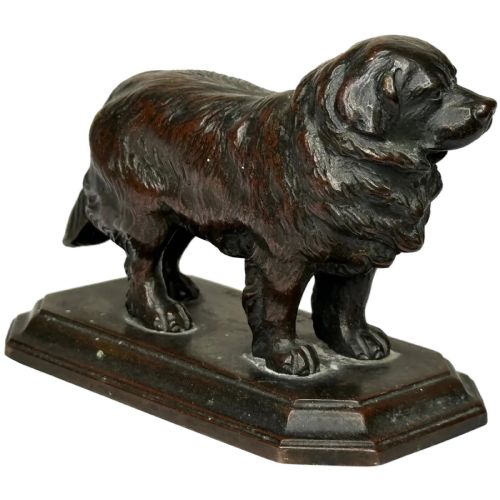
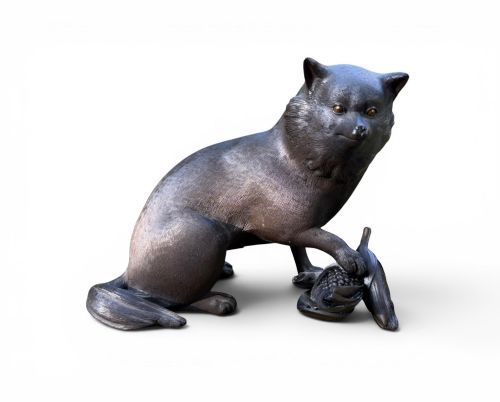
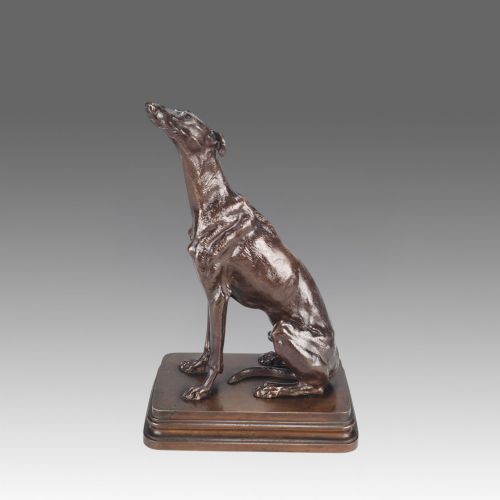



Dark Bronze Dog Statue
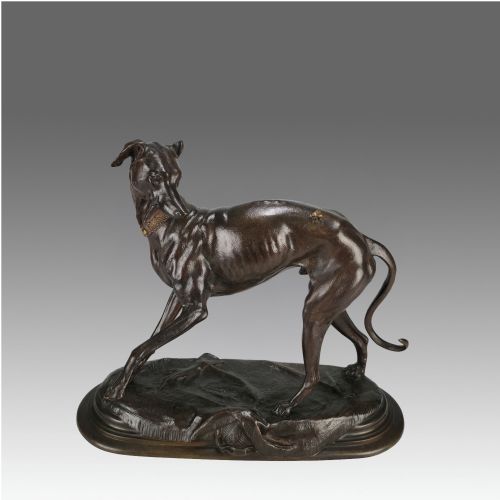
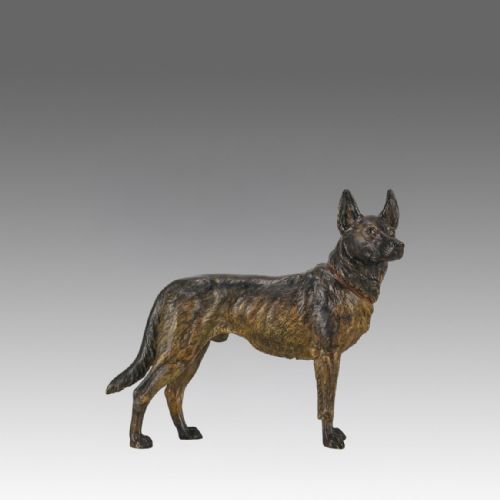
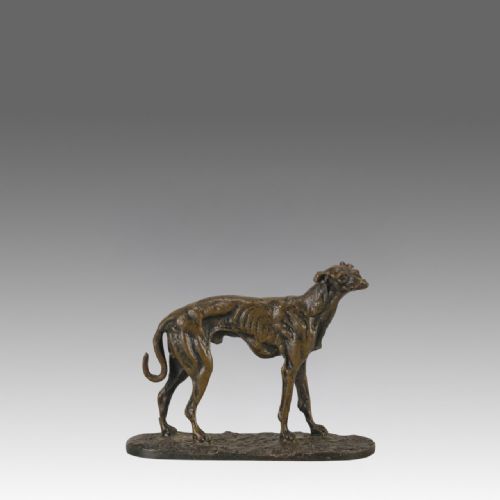
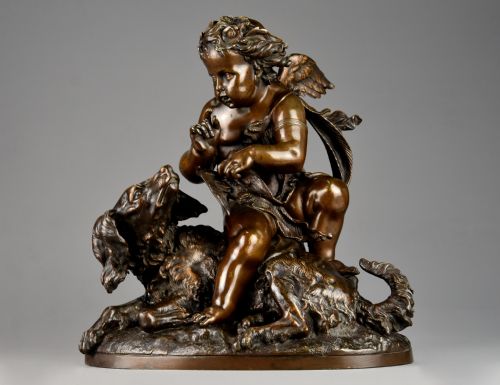
These dark bronze dog statue examples capture the muscular energy and faithful stance of hounds, greyhounds, and sporting dogs in enduring metal.

Understanding the Dark Bronze Dog Statue
A dark bronze dog statue brings the realism of nineteenth and early twentieth century animal sculpture into domestic interiors. These decorative sculptures depict greyhounds, hunting dogs, and hounds resting upon marble, onyx, or wood bases.
The selections span the Victorian era, the year eighteen seventy, nineteen ten, and the Art Deco period of nineteen twenty. French Animalier sculptors dominate the forms, capturing canine anatomy with precision.
Materials and Construction
Foundries cast these figures in solid bronze, often utilising cold painted finishes to add colour and texture to the surface of the metal. Heavier bases of polished marble or onyx provide stability for the animal sculptures.
Makers integrated natural wood components alongside stone mounts to elevate the height and presence of the hounds. The bronze surface patination ranges from rich dark browns to near black tones.
Retail Price Guide 2026
Typical UK retail prices for dark bronze dog statue, calculated from the Sellingantiques database of over a million retail prices indexed since 2003. This retail price guide relies exclusively on Sellingantiques data; no external sources or auction records are used, so the figures do not describe the wider market.
French Animalier style dominates the selections, featuring sculptures of greyhounds, basset hounds, and hunting dogs.
Assessing Quality and Execution
The articulation of musculature and the sharpness of the casting separate superior animalier bronzes from simpler decorative ornaments. Finer examples display meticulous chiselling after the cast to define fur, collars, and facial expressions.
The choice and finish of the supporting marble or onyx base indicate the ambition of the original piece. Heavier, well-fitted stone plinths complement the proportions of the hound rather than simply acting as weights.
Alfred Barye·Antoine Louis Barye·Jules Moigniez
The Dark Bronze Dog Statue Glossary
- Animalier
- A nineteenth century artistic movement focused on the realistic depiction of animals. Sculptors in this tradition studied anatomy closely at menageries.
- Cold painted
- A coloration technique where oil or water-based paint is applied to cold bronze rather than fired in a kiln. This finish requires careful preservation to prevent chipping.
- Patina
- The surface sheen and colour acquired by bronze through age or chemical treatment. Dealers value an untouched dark patina that shows the true age of the metal.
- Foundry mark
- A stamp or signature cast into the bronze by the workshop that produced the piece. These marks help identify the maker and period of manufacture.
Frequently Asked Questions
What is an animalier bronze dog?
An animalier bronze dog is a nineteenth century sculpture created by artists who specialised in realistic animal forms. These works focus on the accurate anatomy and natural movement of hounds and sporting dogs.
French ateliers produced many of these figures, mounting them on stone bases for display in studies and drawing rooms.
How do I identify a Victorian bronze hound?
Victorian bronze hounds often feature dark patination and heavier casting techniques typical of nineteenth century foundries. They frequently appear mounted on contrasting marble or wooden plinths.
Examining the underside and surface tool marks helps confirm the period of production.
What is cold painted bronze?
Cold painted bronze refers to metal sculptures painted after the casting process without subsequent kiln firing. This method allowed artists to render realistic fur colours and natural markings on the dogs.
Careful handling is necessary because the paint sits on the surface of the bronze.
Where were these dog statues displayed?
Owners placed these bronze dog figures on desks as paperweights, on mantelpieces, or on dedicated display tables in Victorian and Edwardian homes. Their compact size made them versatile decorative ornaments.
Collector taste favoured subjects like greyhounds and hunting hounds for their association with sporting life.