


Bronze Whippet Sculpture
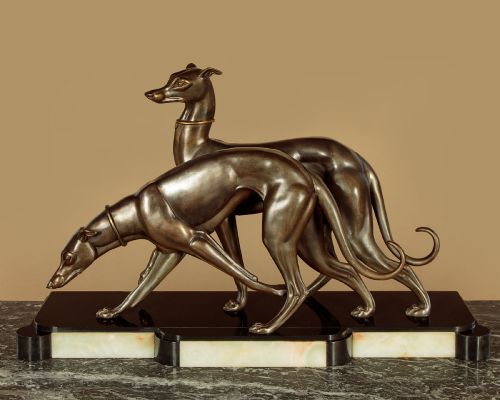
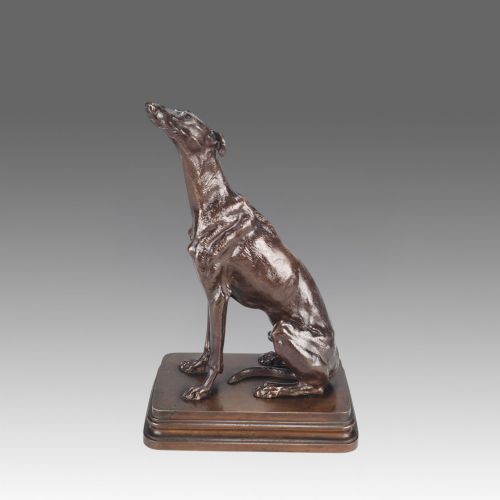
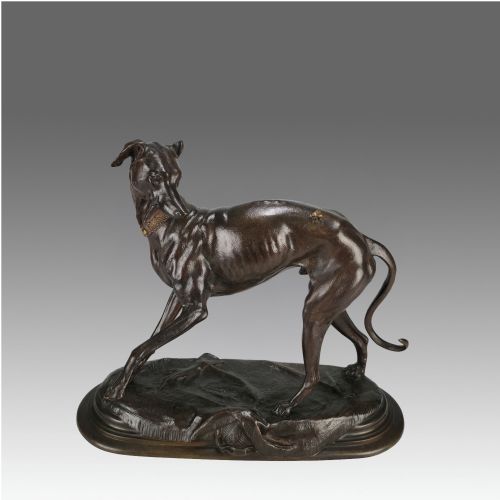
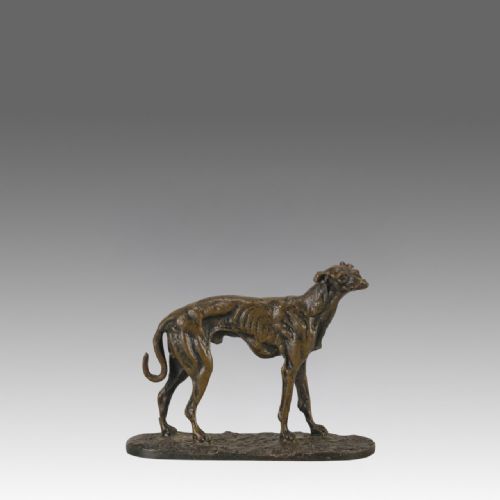
A bronze whippet sculpture captures the slender grace and tense muscle of the breed, a favourite subject for nineteenth-century and twentieth-century animalier founders.
Bronze Whippet Sculpture
A bronze whippet sculpture brings home the distinct silhouette of greyhounds, sighthounds, and whippets cast during the nineteenth and twentieth centuries. These figures range from recumbent dogs and playful pairs to functional paperweights and decorative boxes mounted on marble or stone bases.
The pieces appearing most frequently on this page belong to the French animalier tradition alongside later Art Deco interpretations. Buyers encounter nineteenth-century foundry works by renowned sculptors as well as twentieth-century decorative editions.
Materials and casting methods
Foundries utilised traditional lost-wax or sand-casting techniques to shape molten bronze into intricate canine forms, applying patinas ranging from deep dark tones to bright silvered finishes. Many of these sculptures integrate contrasting materials such as marble or stone bases and ormolu mounts.
Makers achieved realistic textures through meticulous chiselling and filing of the raw metal after casting. The application of chemical patination then created subtle tonal variations across the coat and musculature.
Materials documented across the inventory include cast bronze, silvered bronze, ormolu, marble, stone bases, and wood.
Distinguishing quality in cast bronze
Quality rests upon the crispness of the chase work, where finer casts retain sharp definition in the ribs, joints, and facial expressions without blurring the underlying musculature. The depth and warmth of the original patina also distinguish superior studio output from later, flatter surfaces.
The integrity of the mount contributes significantly to the piece, particularly where bronze meets marble bases or ormolu mounts. Heavier, more substantial metalwork paired with stable stone foundations indicates greater foundry care.
Alfred Dubucand·Alfred Barye·P J Mêne·Karl Hagenaur·Joseph Francois Victor Chemin·Christophe Fratin·Arthur Waagen
The Bronze Whippet Sculpture Glossary
- Animalier
- A nineteenth-century artistic movement focused on the realistic depiction of animals, particularly in bronze. Sculptors in this genre studied anatomy closely at menageries and veterinary colleges.
- Patina
- The surface coloration and sheen developed naturally over time or applied chemically by the foundry. It protects the metal and defines the sculptural contours.
- Ormolu
- Gilded bronze, typically created by applying a mercury-gold amalgam to cast bronze and heating it to drive off the mercury. This technique produces a rich golden finish found on nineteenth-century decorative pieces.
- Lost-wax casting
- A method of metal casting in which a molten metal is poured into a mould that has been created by means of a wax model. Once the mould is heated, the wax melts away, leaving a cavity for the bronze.
Bronze Whippet Sculpture: Frequently Asked Questions
How do I clean a bronze whippet sculpture?
Dust the surface regularly with a soft, dry brush to prevent particulate buildup in the recesses of the casting. Avoid chemical cleaners or water, which can strip the historic patina.
Apply a very thin layer of microcrystalline wax occasionally if the metal appears dry, buffing it gently with a clean cloth. This protects the bronze from atmospheric moisture without altering the finish.
Are these sculptures solid bronze?
Most nineteenth- and twentieth-century animalier figures are hollow cast to save weight and metal, utilising the traditional lost-wax method. The walls of the casting maintain an even thickness throughout the body.
Solid bronze pieces do exist, particularly among smaller items like paperweights or decorative boxes, but they are noticeably heavier for their size than hollow figures.
What is an animalier bronze?
An animalier bronze is a nineteenth-century sculpture focusing on realistic animal subjects, popularized by French artists who studied live specimens. These works emphasise anatomical accuracy and natural movement.
Foundries produced everything from resting hounds to playful groups, capturing the distinct personality and physical tension of the breed.
Why are some sculptures mounted on marble?
Foundries added marble or stone bases to provide physical stability and visual weight to the composition. Heavier bases prevented slender sighthound figures from tipping over.
These mounts also served an aesthetic function, framing the bronze sculpture and elevating it above the surface of a desk or mantelpiece.