
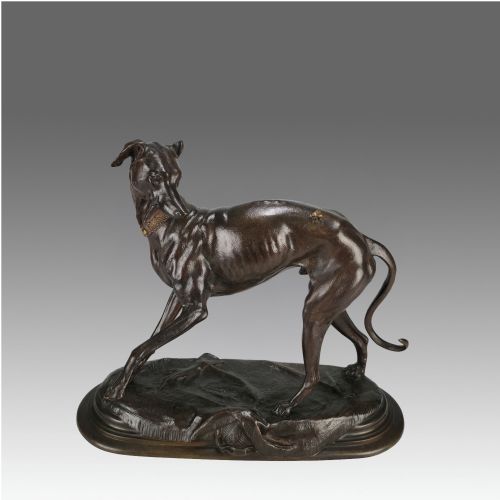
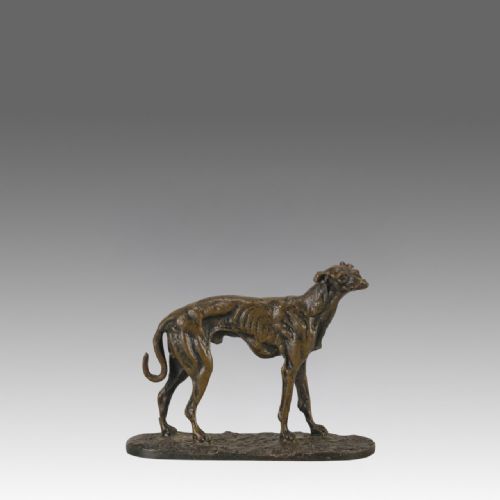


Bronze Greyhound Figure
A bronze greyhound figure captures lean muscle and tense energy, offering a lasting slice of canine movement in metal.
Bronze Greyhound Figure
A bronze greyhound figure embodies the athletic build and sleek lines of the breed through sculptural metalwork. These pieces span the nineteenth century and the art deco era, appearing both as standalone animalier studies and as decorative objects like paperweights or dishes.
Most examples hail from French animalier traditions or later twentieth century workshops, capturing hounds either standing, running or resting. Buyers meet figures mounted upon stone bases, marble blocks or wooden plinths, often finished with distinct patination.
The selection ranges from mid nineteenth century French casts to twentieth century interpretations in silvered bronze and spelter. Each bronze greyhound figure reflects the changing tastes of its period, moving from naturalistic nineteenth century realism to stylised art deco geometry.
What varies in quality
The quality of the mount and the depth of the patina also shape the character of the object. Richly applied patination and well fitted marble or stone bases elevate the presence of the sculpture.
One exceptional piece captures a curious monkey racing a greyhound in vibrant cold painted Vienna bronze.
Alfred Barye·P J Mêne·Karl Hagenauer·Geo Maxim·Joseph Francois Victor Chemin·Christophe Fratin
The Bronze Greyhound Figure Glossary
- Animalier
- A nineteenth century artistic movement focused on the realistic depiction of animals, particularly predators and sporting dogs. Sculptors in this field studied anatomy closely to render muscle and movement with precision.
- Patina
- The surface sheen or colour achieved through age, natural oxidation or chemical treatment applied by the founder. This finish protects the metal while enhancing visual depth.
- Spelter
- A zinc alloy frequently utilised as a less expensive alternative to bronze during the nineteenth and twentieth centuries. It often received a bronze coloured coating to mimic the heavier metal.
- Vienna Bronze
- Small, highly detailed bronze figures produced in Austrian workshops, typically characterised by vibrant cold painted enamel finishes. These decorative items often depicted whimsical or narrative scenes alongside animal subjects.
Bronze Greyhound Figure: Frequently Asked Questions
What periods do these figures come from?
The pieces span the nineteenth century, the Victorian era, the Edwardian period and the art deco nineteen twenties and thirties. French animalier works dominate the earlier Victorian decades, while stylised modernist interpretations emerge later.
Makers and founders adapted their styles across these decades, shifting from strict nineteenth century anatomical realism to the sleek geometric lines typical of art deco design.
How were these bronze figures used originally?
Many acted as desk ornaments, heavy paperweights or mantelpiece decorations for collectors of sporting dogs. Some served purely as sculptural art displayed on furniture or dedicated pedestals.
Smaller iterations occasionally formed part of functional items such as sculptural dishes or tabletop smoking accessories.
How do I care for a bronze greyhound figure?
Dust the sculpture gently with a soft, dry cloth to prevent particulate accumulation on the surface. Avoid using chemical polishes or water, which can damage or strip the historic patina.
Keep the piece away from direct sunlight and damp environments to protect both the metal casting and any attached marble, stone or wooden base.