
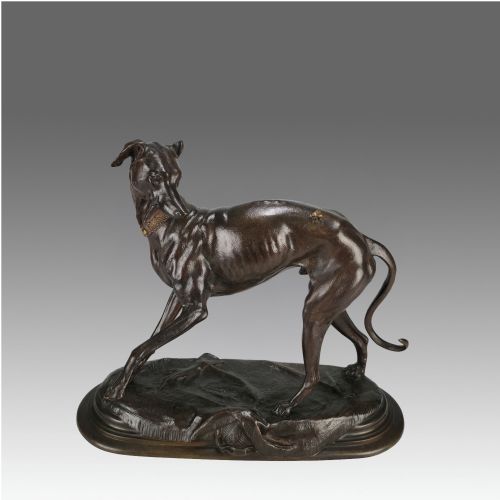
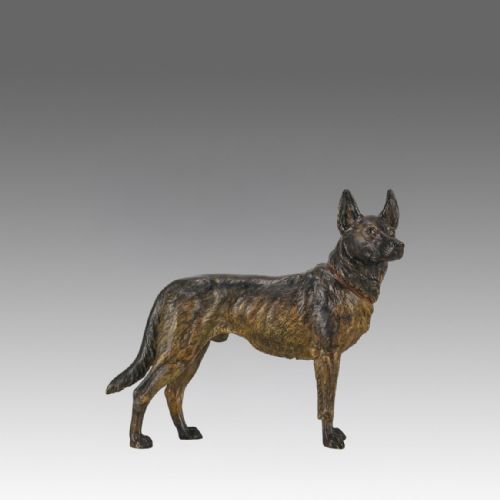
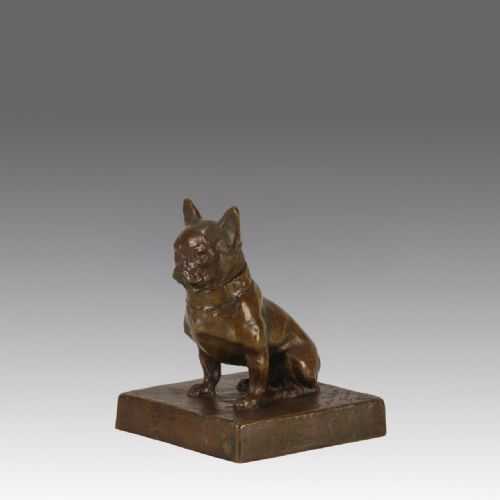
Antique Bronze Dog
An antique bronze dog brings character and weight to a desk or mantelpiece, capturing real canine spirit in solid metal.
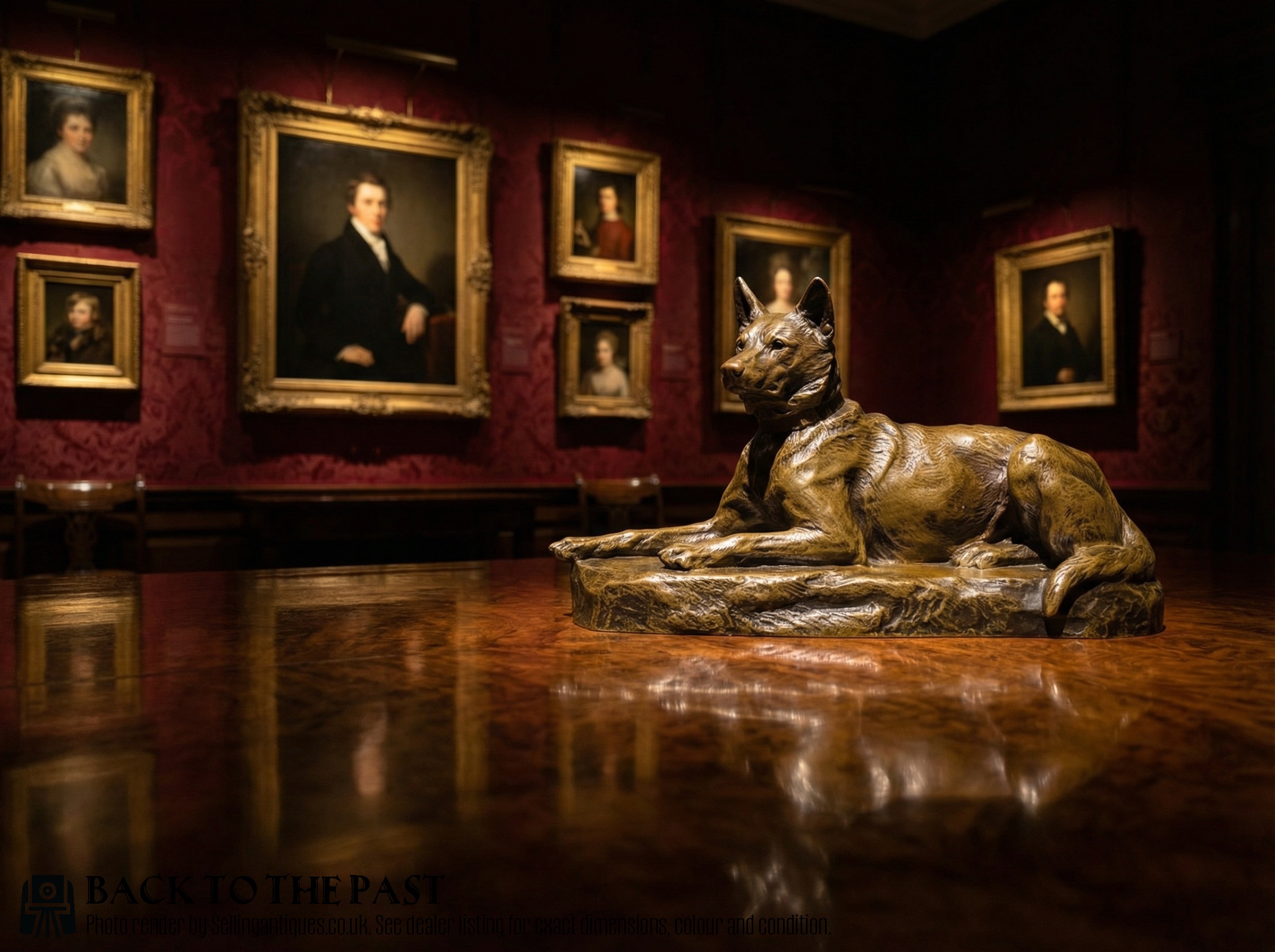
Identifying an antique bronze dog
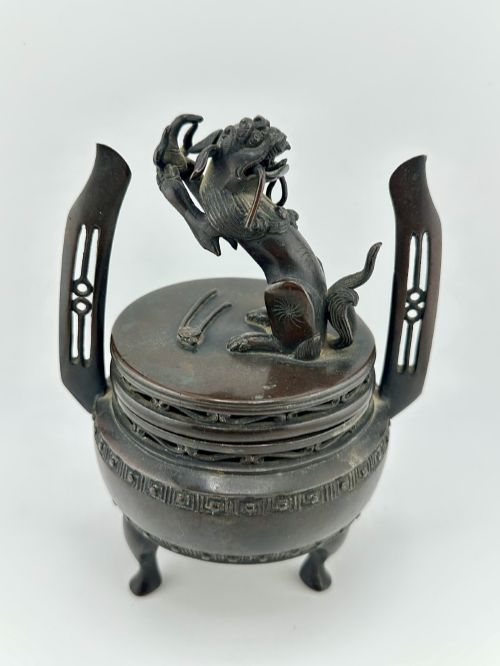
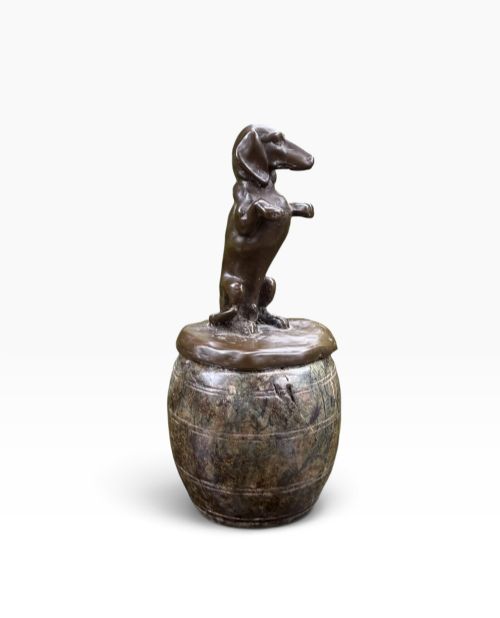
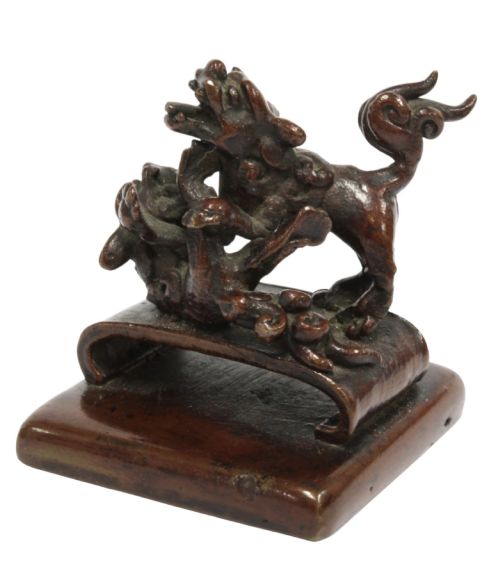
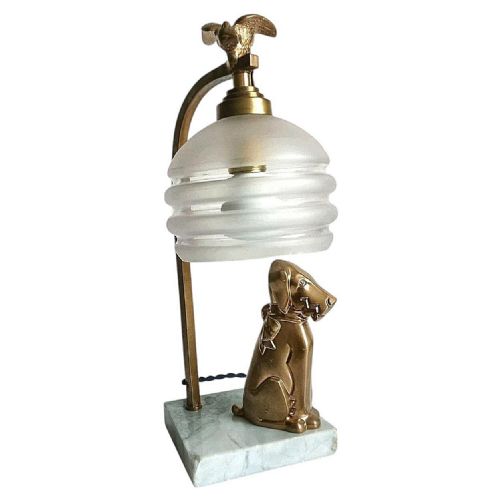
An antique bronze dog encompasses practical desk accessories and sculptural studies, spanning inkwells, letter clips, stamp boxes, door stops and freestanding statues.
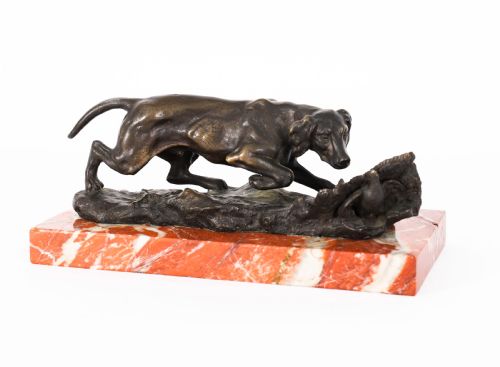
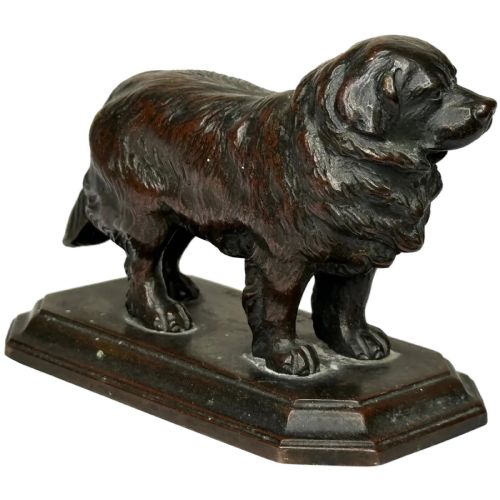
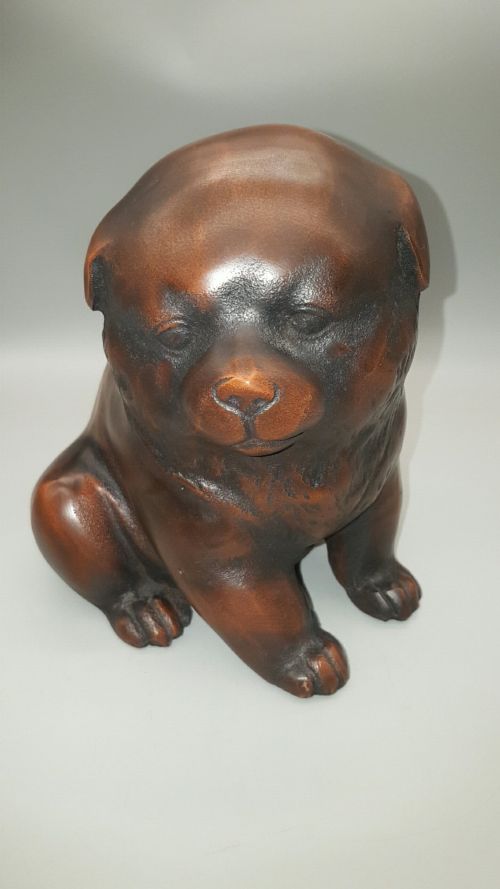
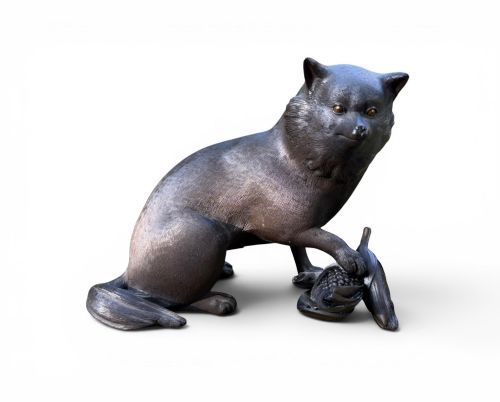
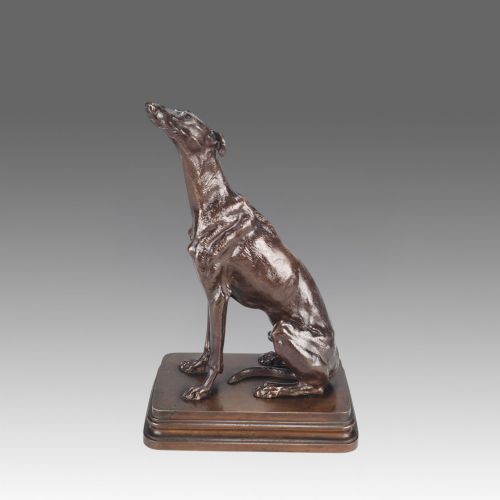
The selections here range from free-standing Animalier sculptures of hounds, pointers and retrievers to small decorative figures and utility items.
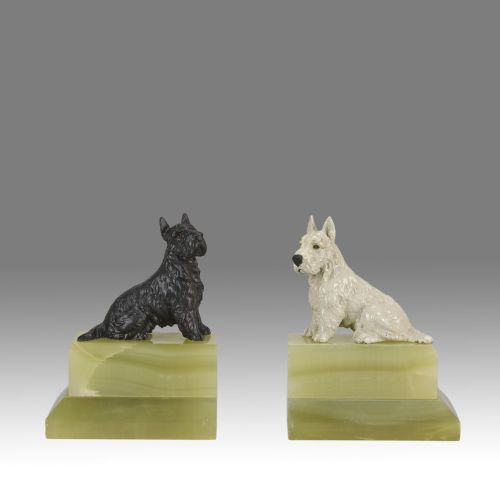
Pieces from nineteenth-century France and England sit alongside Austrian cold-painted examples and twentieth-century Japanese works, reflecting distinct regional casting traditions.
Materials and casting methods
Foundries utilised traditional casting in bronze, sometimes combining the metal with marble bases, leather mounts or glass eyes to heighten realism.
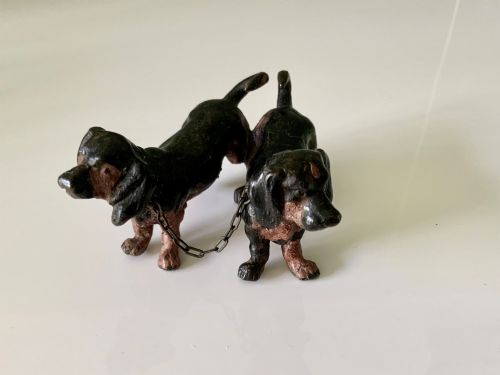
Cold-painted pieces received hand-applied enamel pigments over the finished bronze surface rather than high-heat firing.
Gilt finishes and polished highlights reveal the careful chasing and finishing work applied after the metal cooled.
Retail Price Guide 2026
Typical UK retail prices for bronze dog, calculated from the Sellingantiques database of over a million retail prices indexed since 2003. This retail price guide relies exclusively on Sellingantiques data; no external sources or auction records are used, so the figures do not describe the wider market.
A surprising number of Victorian dogs double as office stationery, holding your stamps, wiping your pen nibs and watching you write.
Judging the work
Superior examples show anatomical precision and expressive detail in the fur, muscle and posture, distinguishing a master's model from a basic commercial casting.
Original surface treatments, whether a rich dark patina or intact cold-painted colours, elevate a piece above later interventions.
Tsunemitsu·J. Moigniez·Antoine Louis Barye·Louis Riche·Robert Bousquet
The Antique Bronze Dog Glossary
- Animalier
- A nineteenth-century artistic movement focused on realistic depictions of animals, particularly associated with French bronze sculpture. Masters of this style captured beasts in motion or repose with careful anatomical study.
- Cold-painted bronze
- A technique where bronze figures receive paint layers applied after casting without subsequent firing. This method was a speciality of Austrian workshops producing vivid animal figures.
- Chasing
- The manual refinement of a raw metal casting using chisels and punches to sharpen details and texture. Skilled chasing transforms a rough foundry output into a finished sculpture.
- Patina
- The surface coloration and sheen developed by bronze through age or chemical treatment. A stable, undisturbed patina is a primary indicator of authenticity.
- Vide poche
- A small tray or dish intended for emptying pockets upon entering a room. In bronze form, these often feature canine figures integrated into the rim.
Frequently Asked Questions
What is cold painting?
Cold painting involves applying polychrome pigments directly onto a cured bronze casting without subjecting the piece to a kiln. This technique allowed Austrian makers to render realistic coats on dogs like pugs and pekingese.
Over decades, handling causes this paint surface to wear naturally, making intact colour a notable feature for collectors.
How were these bronzes used originally?
Many bronze dogs served utilitarian roles on Victorian and Edwardian desks as inkwells, stamp boxes, pen wipes, seals and letter clips. Others functioned as door stops, match strikes or mantel clock ornaments.
Their dual purpose as practical desk furniture and fine sculpture explains their survival in domestic settings.
How do I spot an Animalier piece?
Animalier bronzes concentrate on realistic animal behaviour, musculature and texture without sentimentality. French nineteenth-century foundries excelled at this style, depicting hounds and hunting dogs in alert, natural stances.
Signatures or foundry marks often appear near the base of these sculptures.
Why do some dogs have glass eyes?
Makers inserted small glass eyes into bronze animal figures to heighten lifelike expression, particularly in inkwells and desk ornaments from the late nineteenth century. These additions catch the light and add immediacy to hounds and retrievers.
Original glass eyes remain secure within the cast sockets and match the scale of the head.