





Bronze Hunting Hounds
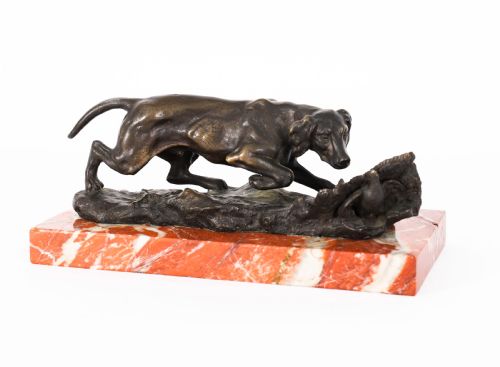
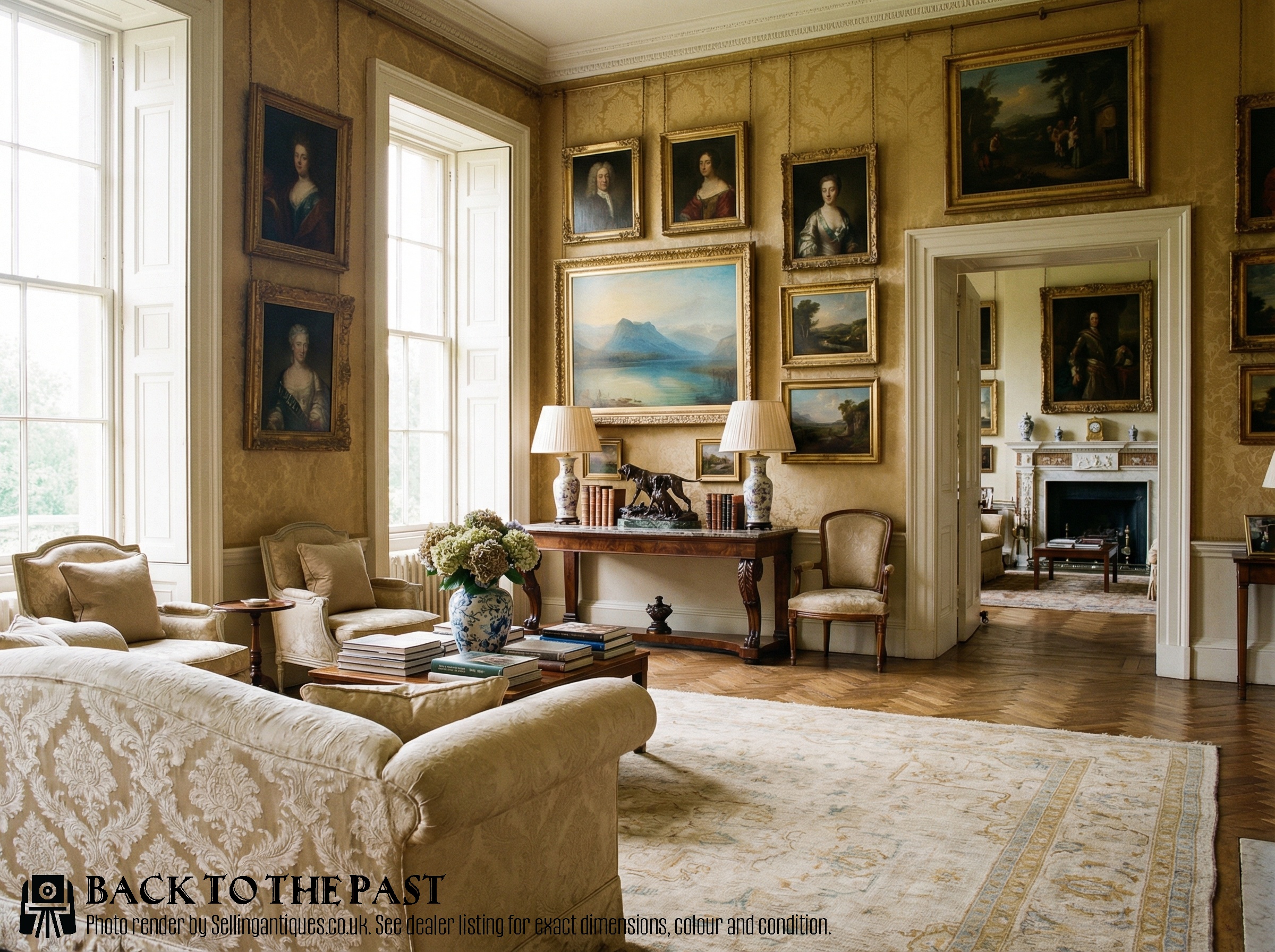
These bronze hunting hounds capture the tense energy of the chase, bringing 19th-century animalier sculpture into your home.
Bronze Hunting Hounds
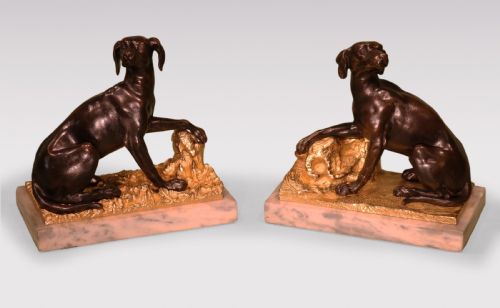
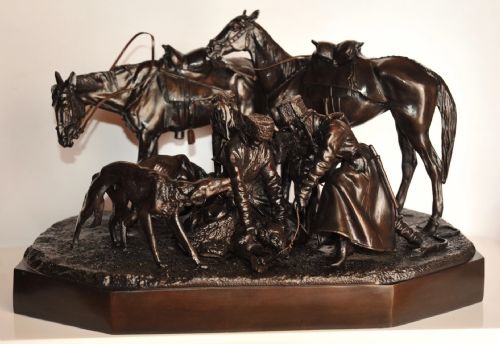
When you search for bronze hunting hounds, you are looking at figural sculptures depicting dogs in resting, stalking, or racing poses. These pieces predominantly date from the nineteenth century, with strong representation from French animalier schools as well as English and Russian workshops.
The most common versions on this page are single hounds or small groups mounted on marble or onyx bases. You will also encounter fireside statues and complex hunting scenes involving birds or prey.
Makers ranged from accomplished foundry artists to larger commercial enterprises producing decorative works for Victorian interiors. The subjects stretch from setters and basset hounds to greyhounds and wolves.
Materials and casting methods
Many of these works utilise traditional lost-wax casting in bronze, capturing fine musculature, fur texture, and collar details. Patination was applied by hand to achieve dark brown or golden tones.
Alternative materials appear in the evidence, notably spelter for twentieth-century pieces and cast iron for heavier utility items. Bases are frequently fashioned from polished marble, onyx, or wood to anchor the composition.
Several hounds are accompanied by unsuspecting pheasants and birds.
Distinctions in craftsmanship
Quality rests upon the crispness of the chase work and the fidelity of the cast to the animal's anatomy. Finer sculptures display precise chiselling in the fur and realistic tension in the limbs.
The integration of the figure with its base also marks the tier of the piece. Superior examples show seamless mounting on heavy marble or ormolu plinths, whereas lesser works rely on simpler materials.
Carl Kauba·Auguste Nicholas Cain·Antoine Louis Barye·Christophe Fratin·John Willis Good·P J Mene·Dubucand·Nikolai Lieberich·L Bureau·Francisque Joseph Duret
The Bronze Hunting Hounds Glossary
- Animalier
- A 19th-century art movement focused on the realistic depiction of animals, particularly in sculpture. Practitioners often studied subjects closely in menageries.
- Patinated bronze
- Metal treated with chemical solutions to produce a specific surface colour or aged finish. This layer protects the bronze and defines the visual mood of the sculpture.
- Lost-wax casting
- A historic method where a molten metal is poured into a mould created by melting away a wax model. It allows for intricate undercuts and fine surface detail.
- Spelter
- An alloy of zinc and other metals utilised as a cheaper alternative to bronze in decorative figures. It is lighter and softer than true bronze.
- Ormolu
- Gilded bronze used for decorative mounts and accents alongside the main sculptural figures. The technique involves applying a gold amalgam to the bronze surface.
Bronze Hunting Hounds: Frequently Asked Questions
How do I identify a genuine bronze from spelter?
Bronze feels noticeably heavier and colder to the touch than spelter. You can also inspect any points of wear where the underlying metal is exposed.
Spelter tends to show a silvery grey beneath the painted surface, whereas bronze reveals a golden or reddish hue.
What is the animalier style?
Animalier refers to nineteenth-century sculpture dedicated to realistic representations of animals in motion or repose. French and Russian artists were particularly prominent in this genre.
These works capture the muscular tension and distinct anatomy of hunting dogs and wildlife.
Why are some hounds mounted on marble bases?
Marble and onyx bases provided stability and visual weight to heavy bronze sculptures. They also served as a clean architectural framing for the naturalistic figures.
Many nineteenth-century sculptures utilise these fitted stone plinths to elevate the artwork.
How should I clean my bronze hound?
Dust the surface gently with a soft, dry brush to prevent dirt accumulation in the crevices. Avoid using commercial metal polishes or water.
Harsh cleaning agents can strip away the historical patination and damage the metal surface permanently.