
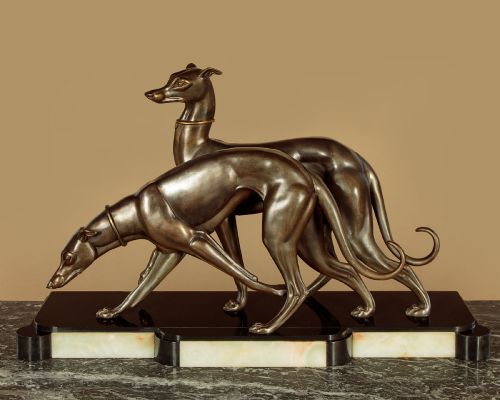
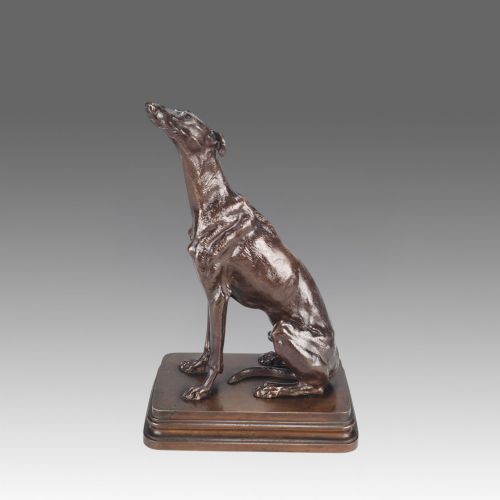
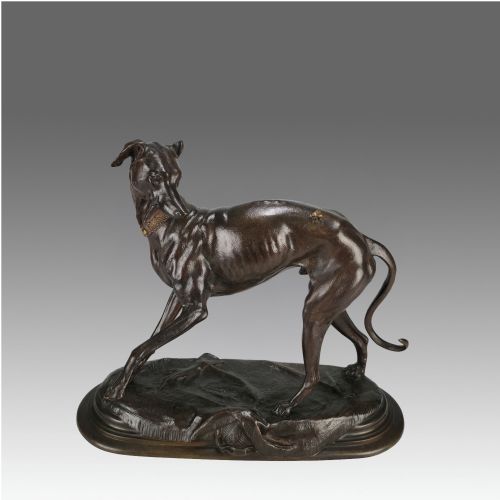


French Bronze Hounds
These French bronze hounds capture the intense realism and kinetic energy of the Animalier movement, offering collectors exceptional sculptural fidelity.
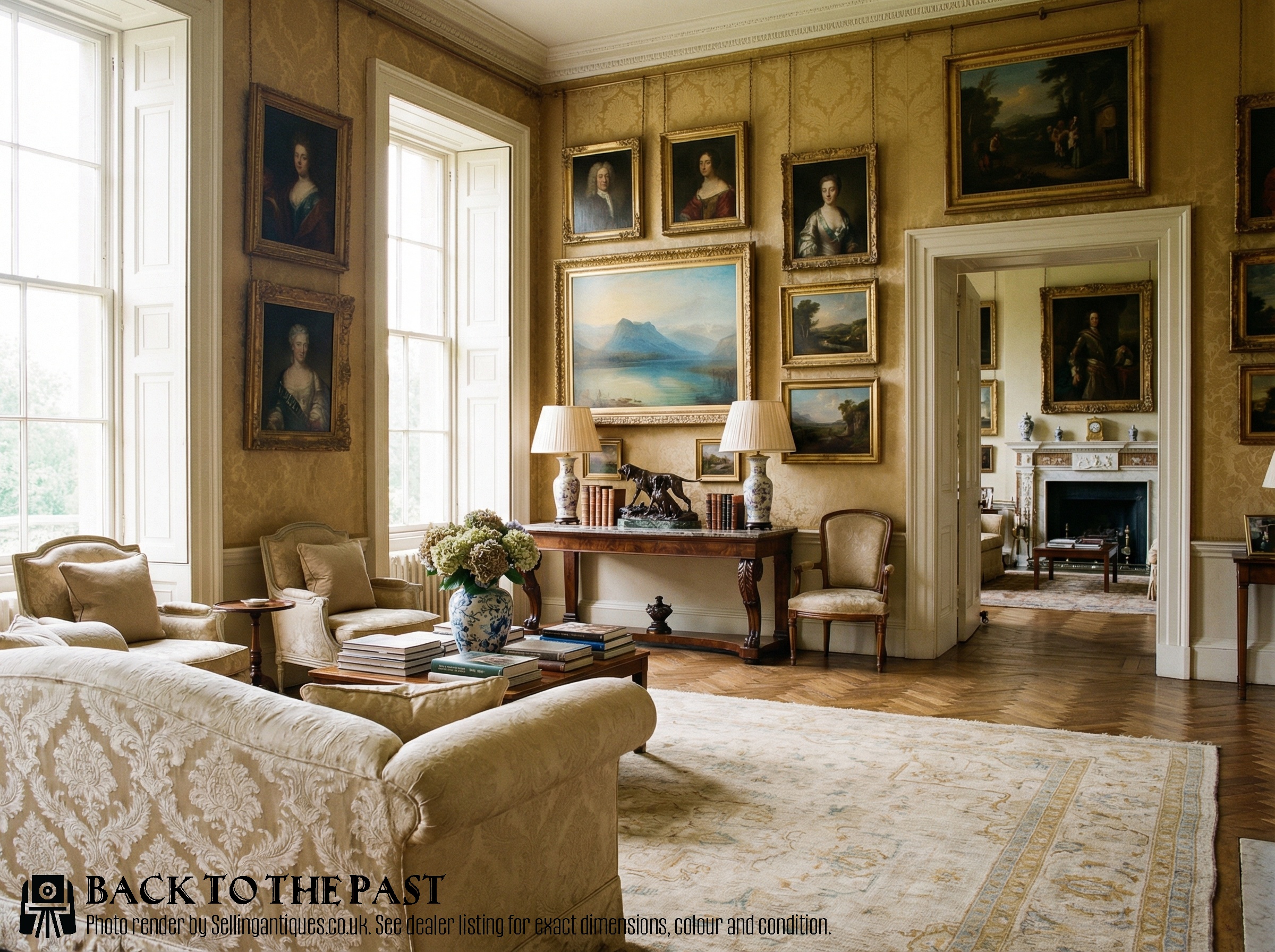
French Bronze Hounds
When you search for french bronze hounds, you encounter dynamic sculptural works depicting sporting dogs, greyhounds, bassets, and setters. These pieces primarily emerge from the nineteenth century and the Art Deco period, spanning table lamps, night lights, and standalone figures.
The assortment on this page ranges from fierce hunting dogs with game to resting hounds and racing greyhounds. Many figures are mounted on marble or onyx bases, while others integrate into ormolu assemblies and clock cases.
How they were made
Foundries utilised the lost-wax casting method or sand-casting techniques to shape the metal from clay or wax models. Artisans then applied patination to the bronze surfaces to achieve deep brown, black, or gilded finishes.
Many sculptures incorporate mixed media, anchoring metal figures onto polished bases of marble, onyx, or cast iron. Specific works also feature ormolu mounts and applied details that highlight the textures of fur and foliage.
Several hounds share their bronze space with unexpected companions, including flying birds, rolling balls, and captured pheasants.
What varies in quality
The nuance of the chasing work dictates the definition in muscle, bone, and fur across the animal's body. Superior casts retain crisp detail in the facial expressions and paws without softening from worn moulds.
The choice and density of the mounting base contribute to the overall presence of the piece. High-grade examples feature dense, well-polished marble or onyx plinths that complement the proportions of the metalwork.
Alfred Dubucand·Alfred Barye·Pierre Jules Mene·Auguste Nicholas Cain·Arthur Waagen·Geo Maxim·Antoine Louis Barye·Joseph Francois Victor Chemin·Christophe Fratin·L Bureau·Francisque Joseph Duret·Ary Bitter
The French Bronze Hounds Glossary
- Animalier
- A nineteenth-century artistic movement dedicated to the realistic portrayal of animals. Sculptors in this tradition focused heavily on anatomical accuracy and observed behaviour.
- Spelter
- A zinc alloy frequently utilised as a cost-effective alternative to bronze. It often received a patinated finish to mimic the appearance of heavier metals.
- Ormolu
- Gilded bronze produced by applying a mercury-gold amalgam to the metal surface. This technique imparts a rich, golden lustre to decorative elements.
- Patination
- The chemical treatment applied to the surface of metal to create colour and depth. It protects the material while defining shadows and highlights on the sculpture.
French Bronze Hounds: Frequently Asked Questions
How do I clean french bronze hounds?
Dust the surface gently with a soft, dry brush to remove particles settled in the recesses of the casting. Avoid liquid cleaners or polishes that can strip the original patination.
Maintain a stable room environment away from excess moisture to protect both the metal and any attached stone bases.
What is the difference between bronze and spelter?
Bronze is a heavy, durable copper alloy that takes a deep, lasting patina and holds crisp detail from the foundry. Spelter is a lighter zinc-based metal that feels softer and appears more frequently in Art Deco pieces.
Examining the underside or areas of wear often reveals the lighter grey metal beneath a surface finish on spelter pieces.
Are these figures signed by artists?
Many nineteenth-century and Art Deco sculptures feature artist signatures or foundry marks stamped directly into the metal base. These inscriptions help identify the creator and occasionally point to the producing foundry.
Unsigned works still reflect the stylistic conventions and casting standards of their respective periods.
How should I display a heavy sculpture on marble?
Place the piece on a sturdy, level surface that supports the full weight of both the metal figure and the stone base. Keep the sculpture away from direct sunlight and heat sources to prevent thermal stress on the stone.
Ensure the display area allows adequate space to view the profile and depth of the animal's pose.