




Vintage Bronze Hound Statue
These vintage bronze hound statue pieces capture the musculature and alertness of hunting dogs in substantial metal.
Vintage Bronze Hound Statue
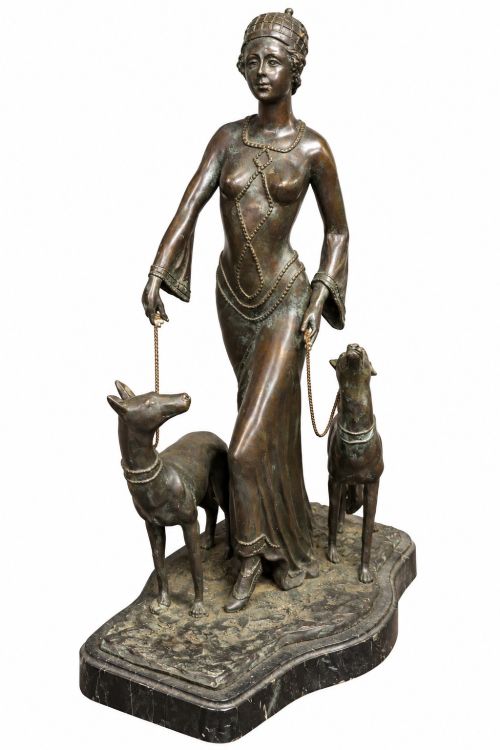
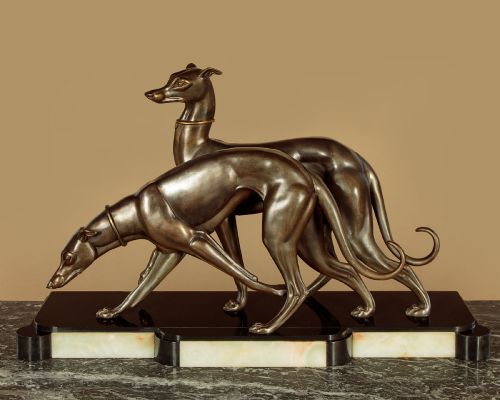
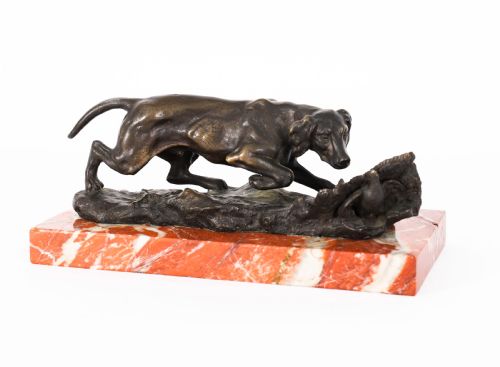
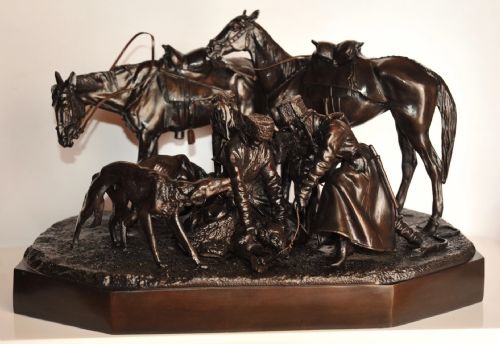
A vintage bronze hound statue brings the dynamic energy and attentive posture of hunting dogs into interior spaces. These sculptures typically depict resting hounds, hunting dogs with game, or greyhounds in motion upon substantial bases. Most examples on this page date from the nineteenth century or the art deco decades of the early twentieth century, originating primarily from French and Russian workshops.
Collectors encounter both solid cast metal figures and compositions paired with mineral plinths. Marble and onyx bases provide a heavy foundation for patinated bronze subjects, while alternative metal alloys such as spelter appear in twentieth-century pieces. The animalier tradition dominates the selection, focusing on realistic animal anatomy and naturalistic poses.
What varies in quality
The integration between the metal figure and its stone base indicates overall standard. Finely fitted marble plinths, secure fixings, and high-grade patination separate workshop pieces from simpler decorative objects.
Listings feature nineteenth-century animalier bronzes alongside twentieth-century art deco spelter figures mounted on marble and onyx bases.
Carl Kauba·C Masson·Arthur Waagen·Geo Maxim·Antoine Louis Barye·Christophe Fratin·Nikolai Lieberich·Barbedienne
The Vintage Bronze Hound Statue Glossary
- Animalier
- A nineteenth-century artistic movement focused on the realistic portrayal of animals, particularly in sculpture. Practitioners studied live subjects in menageries to capture authentic movement and anatomy.
- Patinated Bronze
- Metal treated with chemical solutions to produce a specific surface colour, most commonly deep brown, green, or black. This finish protects the metal and defines the sculptural details.
- Spelter
- A zinc alloy commonly used as a cost-effective alternative to bronze during the art deco period. It accepts various surface finishes to simulate more expensive metals.
- Base
- The plinth or foundation supporting the sculpture, frequently fashioned from marble or onyx to provide stability and visual contrast.
Vintage Bronze Hound Statue: Frequently Asked Questions
What is a vintage bronze hound statue?
These sculptures are metal depictions of hunting dogs, greyhounds, and bassets created in nineteenth and twentieth-century European foundries. They portray hounds in resting, running, or hunting poses.
Many examples incorporate stone bases such as marble or onyx to anchor the heavy metal figures. The selection spans the animalier school and art deco design periods.
How do I identify nineteenth-century pieces?
Nineteenth-century animalier bronzes typically exhibit naturalistic patination, heavy cast construction, and detailed anatomical modelling. They often feature signatures or foundry marks associated with French workshops.
Base materials from this era frequently include veined marble complementing the dark bronze metalwork. Twentieth-century art deco pieces introduce alternative alloys and stylised geometric forms.
Where should I display a heavy bronze sculpture?
These statues require stable, level surfaces capable of supporting substantial weight, particularly pieces mounted on marble bases. Consoles, heavy sideboards, and dedicated mantelpieces provide suitable placement.
Keeping the sculptures away from direct heat sources helps preserve the stability of stone plinths and metal patination over time.
How do I clean patinated bronze safely?
Dusting with a soft, dry cloth removes surface particles without disturbing the underlying chemical patination. Avoid abrasive cleaners, oils, and moisture that can damage the metal finish.
Stone bases benefit from gentle wiping with a dry microfiber cloth to maintain the polish of the marble or onyx.