
Antique English Blue White
These antique English blue white ceramics span centuries of domestic tableware, prized for rich cobalt pigments and transfer-printed or handpainted storytelling scenes.
Antique English Blue White
When you search for antique english blue white, you encounter a diverse domestic material history ranging from early tin-glazed vessels to refined porcelain tableware. The selection centres on serving platters, tureens, tea wares, and decorative dishes produced across the seventeenth, eighteenth, and nineteenth centuries.
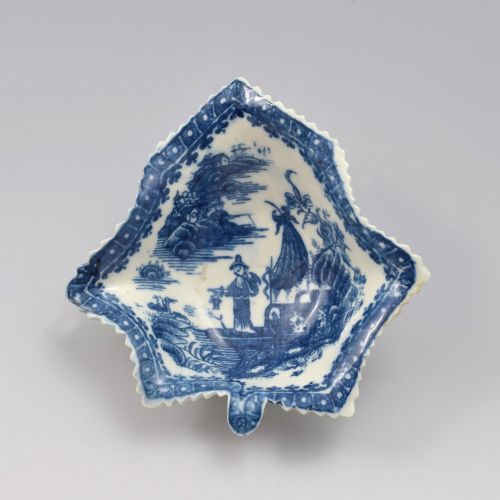
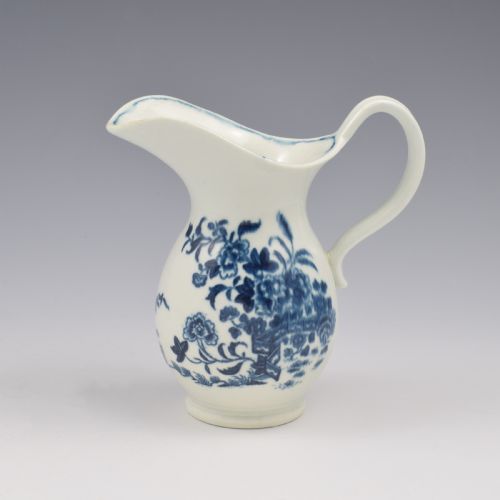
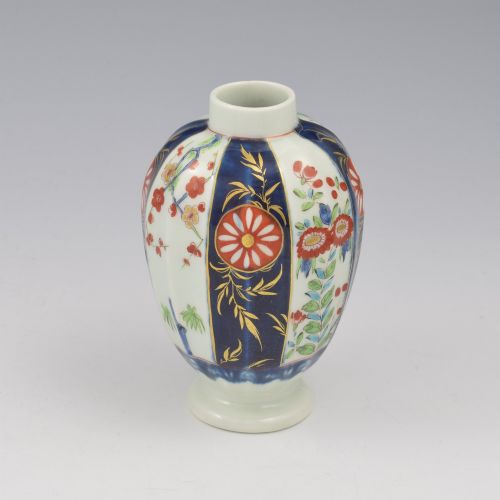
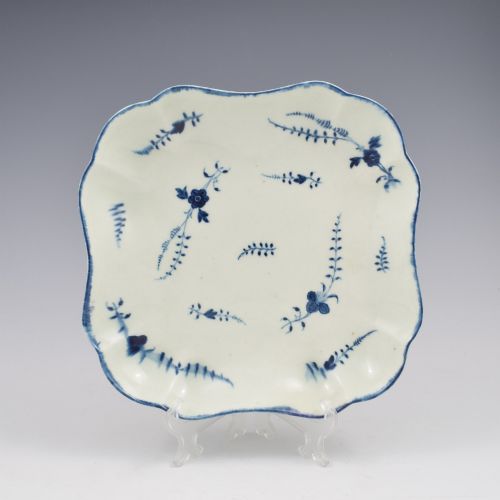
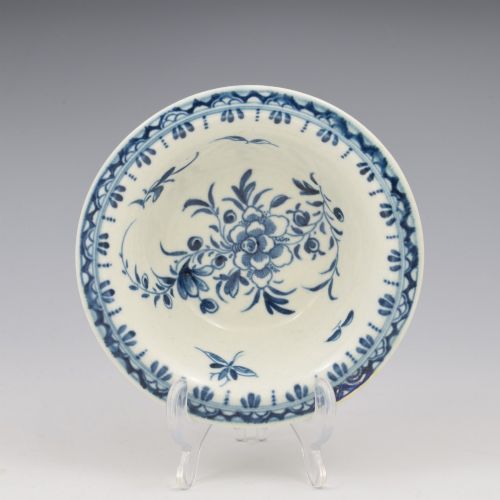
The objects on this page include fragile soft-paste porcelain tea canisters from the factories of the seventeen-seventies alongside sturdy earthenware transfer-printed platters depicting distant architectural views. Potters across Staffordshire, London, and Worcester shaped these items for everyday dining, grand display, and specialised domestic duties such as toothbrush storage.
How they were made
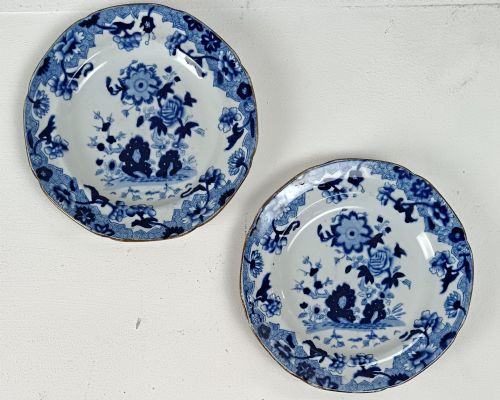
Makers utilised earthenware, soft-paste porcelain, and pearlware bodies, coating them with tin glazes or clear lead formulas to receive the cobalt pigment. Artisans applied designs either by hand with fine brushes or by pressing copperplate transfer paper onto the damp or biscuit ceramic surface.
High-temperature kiln firings bonded the cobalt blue under the glaze, creating permanent decoration across chargers, bowls, and plates. Ironstone and new stone variations emerged later, providing greater durability for heavy serving vessels and large vegetable tureens.
Pups peep out beside ceramic poodles, proving Staffordshire potters understood the irresistible pull of a floppy-eared dog.
What varies in quality
The distinction between standard domestic wares and exceptional pieces rests upon the crispness of the transfer print and the delicacy of the potting. Sharp definition in complex scenic patterns and smooth, evenly glazed surfaces mark superior examples from prominent potteries.
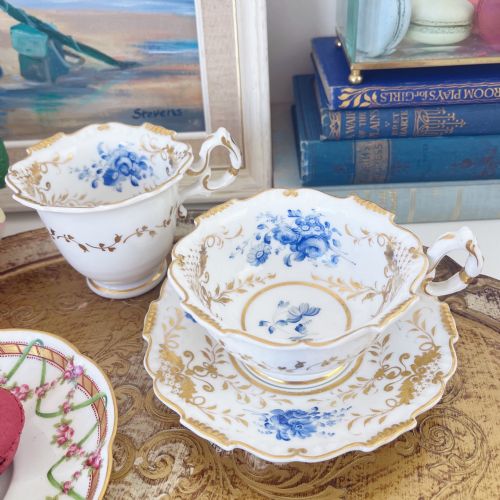
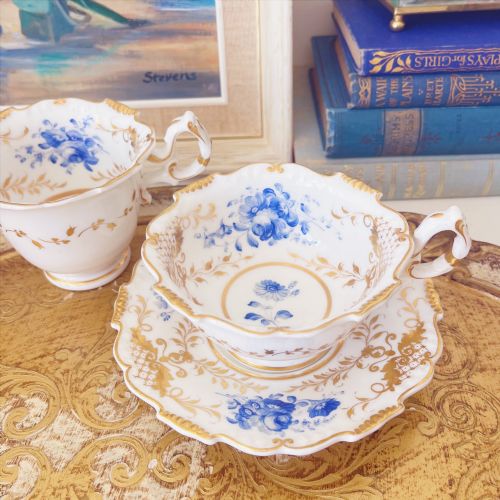
Handpainted items depend entirely on the steady hand and skill of the decorator, where confident brushwork on porcelain shapes creates a vibrant depth missing from mechanical copies. Rarity of specific scenic series and specialised functional forms also elevate certain plates and baskets above common table dishes.
H & R Daniel·Caughley Porcelain·Dr Wall Worcester·Bow Porcelain·Spode·John Rogers and Son·J and R Clews·Mintons·John Davenport·William Adams and Sons
The Antique English Blue White Glossary
- Transfer ware
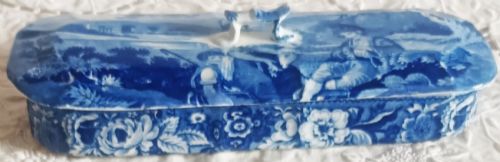
- Pottery decorated by applying a printed paper design from an engraved copper plate onto the ceramic body. This technique allowed intricate topographical and narrative scenes to be reproduced consistently across large dinner services.
- Tin-glazed earthenware
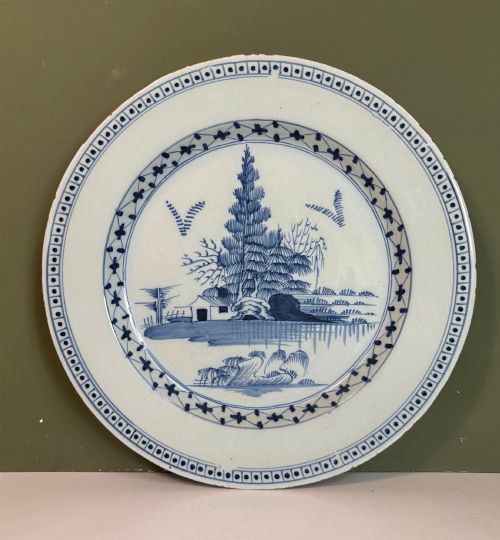
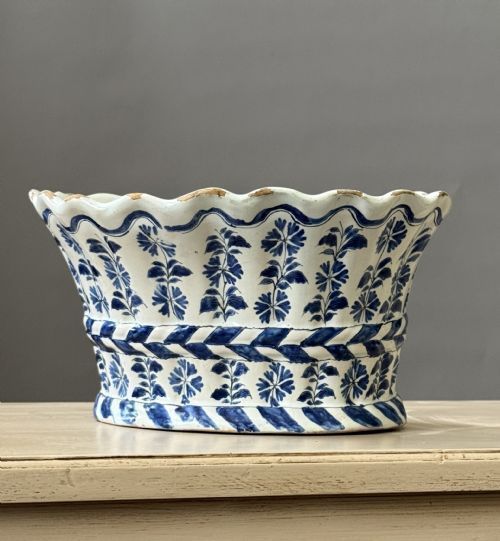
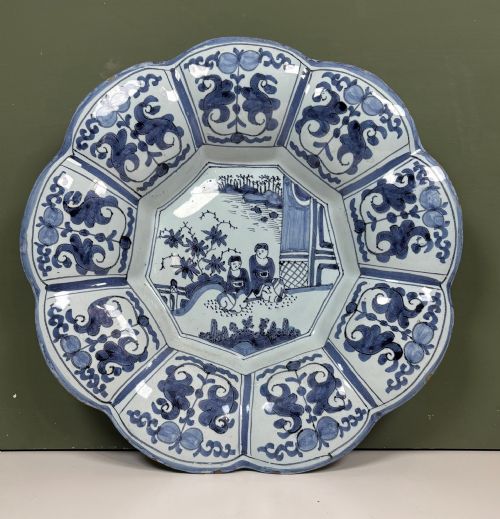
- Earthenware covered with an opaque white tin oxide glaze that provided a smooth canvas for painted blue designs. This method characterises early delftware dishes and chargers before the widespread adoption of refined body pastes.
- Soft-paste porcelain
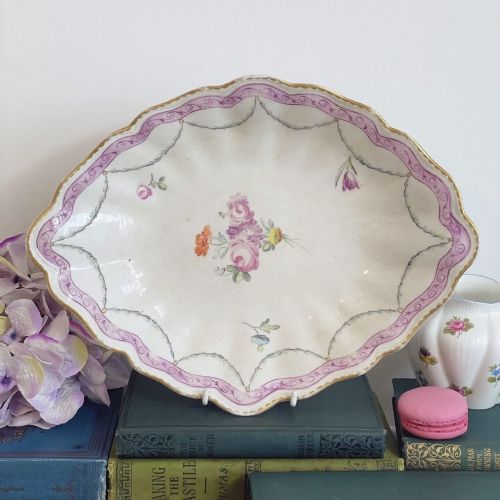
- A vitrified ceramic composition made from white clay, glass frit, and alabaster, fired at lower temperatures than hard-paste porcelain. Eighteenth-century factories utilised this material to produce translucent tea wares and decorative dessert dishes.
- Pearlware
- A refined earthenware developed by Josiah Wedgwood featuring a thin lead glaze with a small amount of cobalt to create a bluish tint. It bridged the gap between creamware and later white ironstone bodies.
- Kakiemon
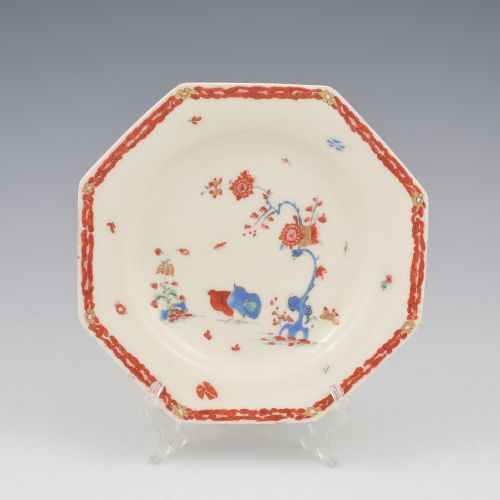
- An asymmetric Japanese porcelain style featuring restrained enamel or underglaze painting of birds, flowers, and quail. English factories eagerly copied these motifs on octagonal plates and bowls during the mid-eighteenth century.
Antique English Blue White: Frequently Asked Questions
Can I use these antique dishes for serving food?
Most antique earthenware and soft-paste porcelain pieces are porous and susceptible to staining from modern foods and liquids. Historic glazes may also contain trace elements that make them unsuitable for regular daily dining.
Reserve these items for decorative display, dry storage, or occasional gentle use. Hand-washing immediately after any careful use protects the historic surface from further wear.
How do I distinguish pearlware from standard earthenware?
Examine the pooled glaze in carved recesses or foot rims for a subtle bluish tinge characteristic of pearlware. Standard creamware displays a warmer, buttery yellow tone under the glaze.
Transfer-printed patterns on pearlware often accompany finer, lighter potting bodies than those found in heavy nineteenth-century utility ironstone.
What is the difference between transfer printed and handpainted wares?
Handpainted ceramics reveal subtle brush strokes, variations in pigment density, and individual artistic nuances upon close inspection. Transfer-printed items display a repeating, mechanically precise dot or line pattern applied from a copper plate.
Early eighteenth-century delftware and porcelain often feature handpainted floral or landscape motifs, while nineteenth-century tableware relies heavily on mass-produced transfer printing.