


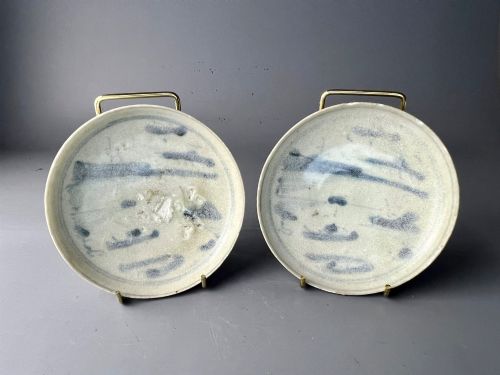

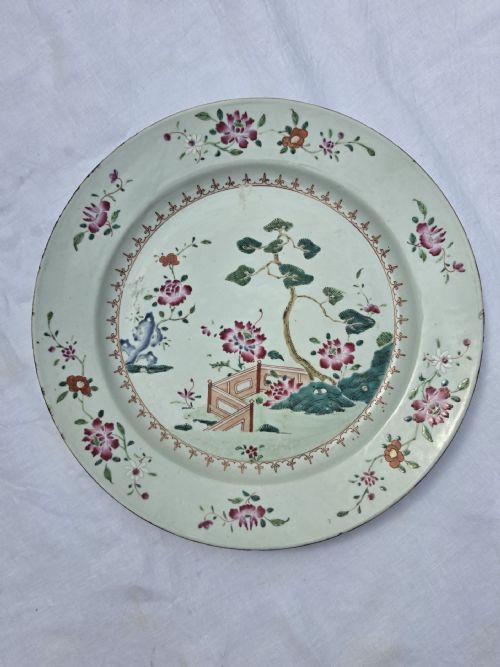
Antique Chinese Porcelain Plate
An antique chinese porcelain plate brings centuries of kiln mastery into a room, offering intricate cobalt underglaze and vibrant enamels.
Antique Chinese Porcelain Plate
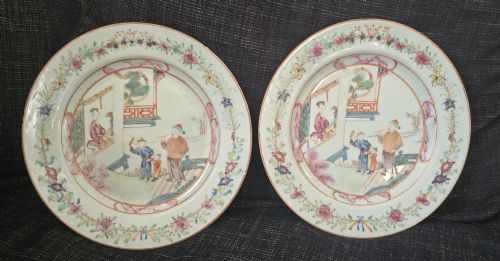
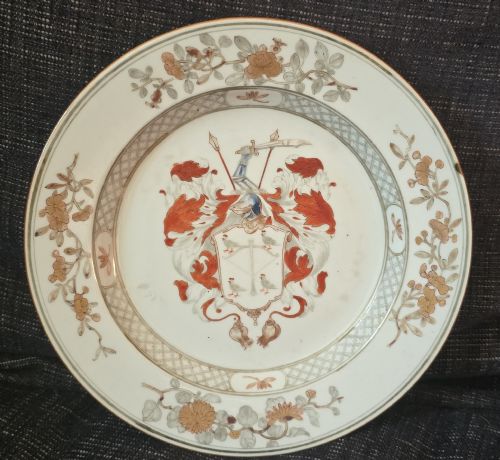
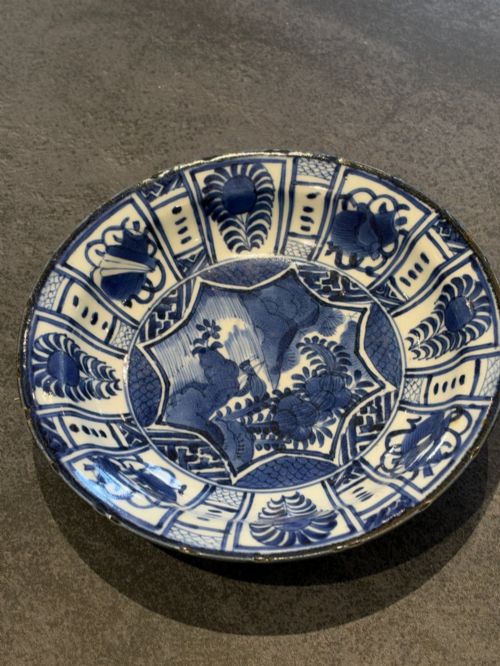
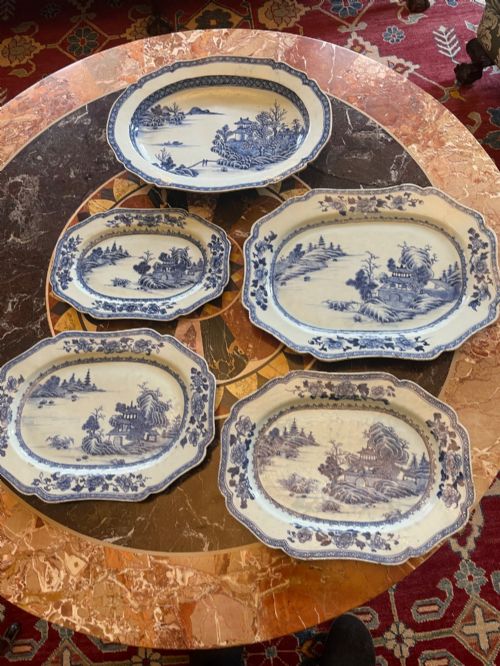
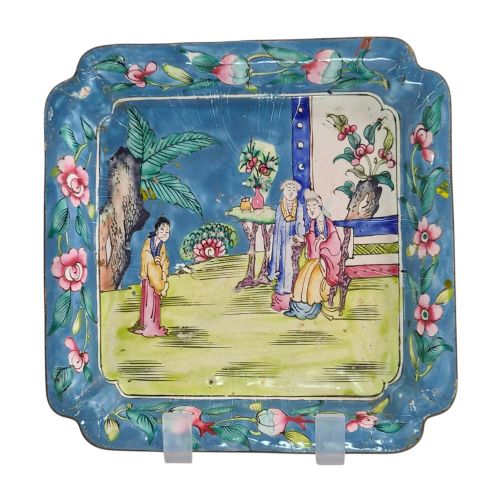
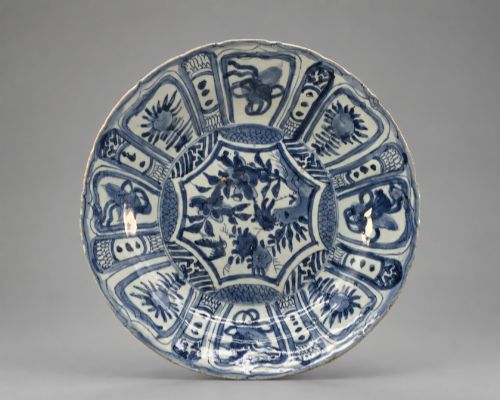
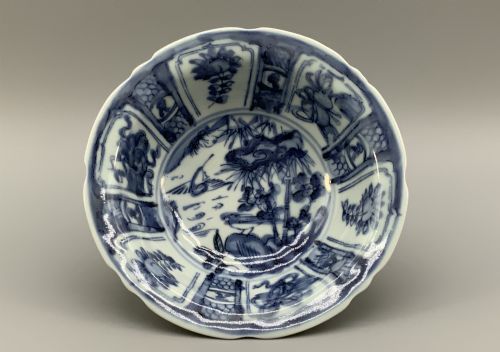
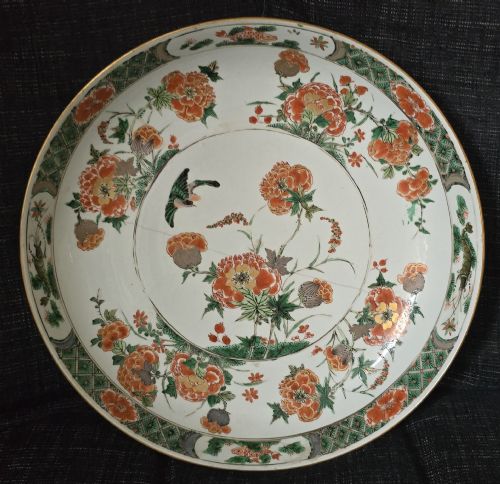
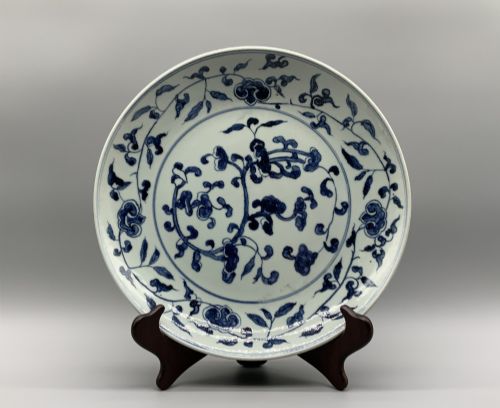
An antique chinese porcelain plate spans domestic dining wares and ceremonial chargers originating from dynasties such as the Ming and Qing, alongside export variations destined for European markets. Buyers commonly encounter robust blue and white chargers from the seventeenth and eighteenth centuries, as well as delicate enamel-painted dishes.
Forms extend from standard round plates to lobed bowls, octagonal soup plates, and large display platters. The aesthetic crosses from simple celadon glazes to busy court scenes and armorial commissions tailored for Western patrons.
Materials and methods
Potters shaped these pieces from fine ceramic clay combined with petuntse, firing them at high temperatures to achieve a vitrified, resonant porcelain body. Artisans then applied cobalt underglaze before the first firing or painted over the glaze using iron-red, gold leaf, and polychrome enamels.
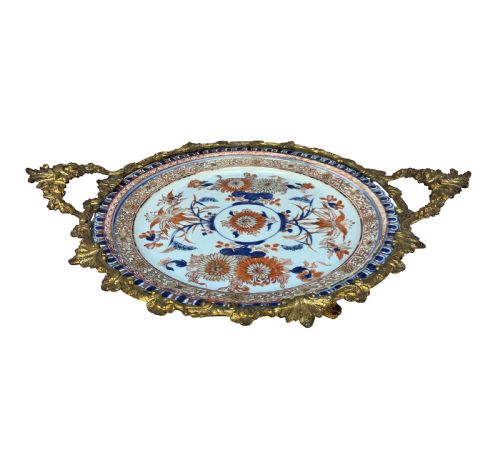
Many items underwent subsequent decoration phases, whilst select pieces received French or British ormolu mounts to suit Western interior tastes. Surface textures range from smooth celadon green finishes to raised enamel motifs.
Antique Chinese Porcelain Plate Retail Price Guide 2026
Typical asking prices for chinese porcelain plate among the pieces listed under this phrase on Sellingantiques today, from the lower quarter to the upper quarter. They describe what is for sale here now, not the wider market.
Listings feature porcelain pieces spanning from the Ming Dynasty through the Qing period and into the nineteenth century.
Assessing execution and condition
Quality rests upon the crispness of the painted detail, the purity of the white porcelain ground, and the control demonstrated in high-temperature kiln firing. Superior examples display precise brushwork in cobalt underglaze or finely rendered human figures within court and floral scenes.
The sophistication of the imperial marks or the rarity of the palette, such as iron-red and gilt combinations, separates standard domestic wares from exceptional collector pieces. Original mounts and intact armorial crests elevate the historic importance of export items.
Edmé Samson & Cie·C.J. Mason
The Antique Chinese Porcelain Plate Glossary
- Celadon
- A transparent green glaze over a grey-white clay body that often displays subtle crackle patterns. This ancient finish imitates the appearance of jade.
- Famille Rose
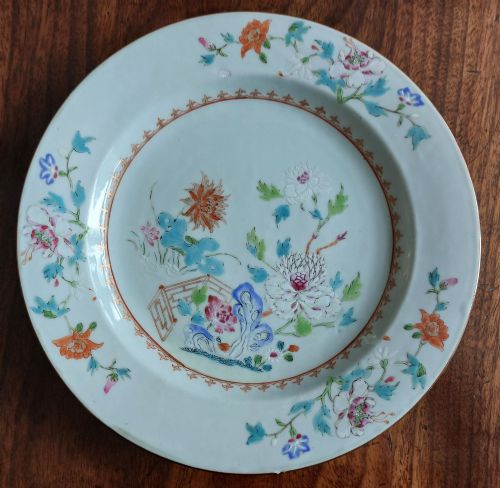
- A palette dominated by opaque pink enamel introduced during the Qing dynasty. It allowed artists to achieve delicate tonal gradations in floral and figural scenes.
- Underglaze Blue
- Cobalt pigment painted directly onto the raw porcelain body before applying a clear glaze and firing. The colour sinks into the ceramic for permanent durability.
- Charger
- A large ceremonial or decorative plate intended for display on a sideboard rather than daily dining. These pieces measure considerably wider than standard table plates.
- Export Porcelain
- Wares manufactured specifically for shipment to Western markets from the sixteenth century onwards. Designs frequently combined traditional Chinese motifs with European armorial commissions.
Antique Chinese Porcelain Plate: Frequently Asked Questions
How do I date a blue and white plate?
Dating relies on combining stylistic clues such as rim shapes, painting style, and cobalt tone with any reign marks present on the base.
Comparison with documented pieces from periods like the Kangxi or Qianlong reigns provides a reliable chronological anchor.
Were these plates used for dining?
Many export plates served wealthy European households for formal dining, whilst larger chargers acted as centrepieces.
Substantial chargers and armorial services were often kept primarily for display.
What is the difference between Canton and Famille Rose?
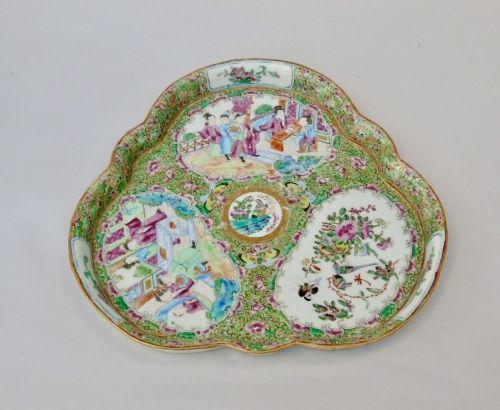
Canton wares typically feature dense panelled decoration combining figures with birds and butterflies, framed by gilt-rich borders.
Famille Rose describes the overarching palette defined by pink enamel, which encompasses various styles including imperial court designs.
How should I display a heavy charger safely?
Large chargers require purpose-built wall hangers or sturdy display stands designed to support the weight of dense porcelain.
Placement should avoid direct sunlight and areas subject to sudden temperature changes.