








Antique Ceramic Wall Platter
An antique ceramic wall platter brings rich hand-painted colour and centuries of kiln mastery straight onto your interior walls.
Antique Ceramic Wall Platter
When you search for an antique ceramic wall platter, you encounter large decorative chargers and heavy earthenware or porcelain display dishes designed primarily for suspension rather than dining. These pieces span centuries of global ceramic traditions, taking circular or scalloped forms intended to draw the eye across a room.
These items transition easily from flat table surfaces onto vertical spaces through original hanging holes or specialist wire mounts, anchoring interior design schemes with historical weight. Their varied diameters provide strong visual focal points above mantelpieces or along hallway partitions.
Materials and production techniques
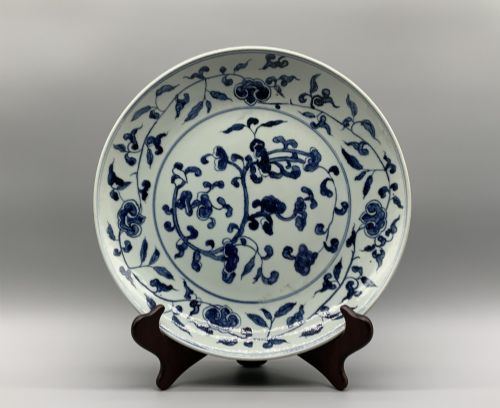
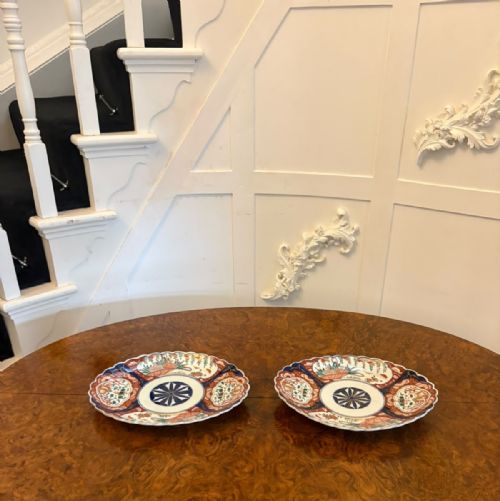
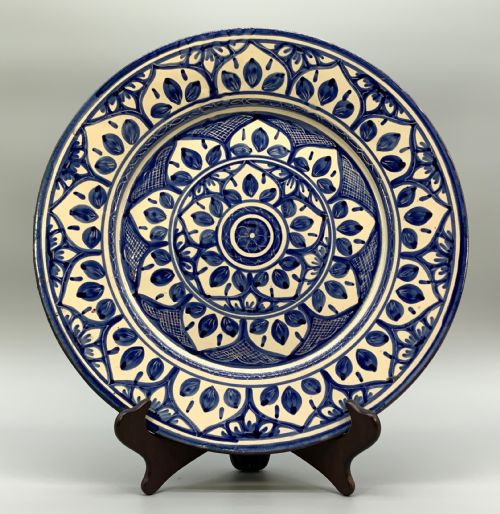
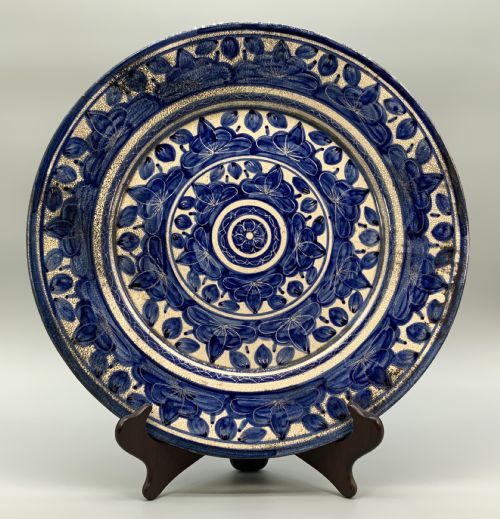
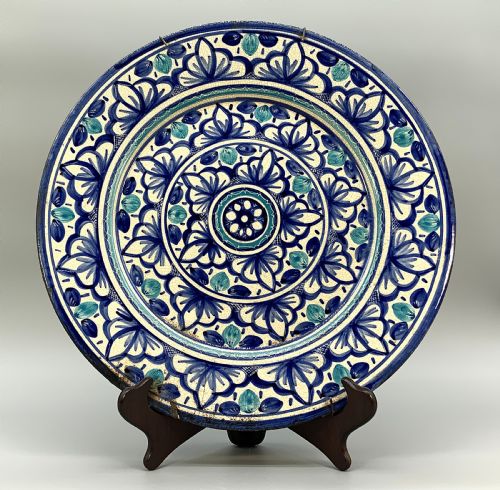
Makers shaped dense earthenware, tin-glazed faïence, and fine porcelain bodies by hand or on the potter's wheel before applying mineral pigments beneath or over the glaze. Cobalt blue dominated early Chinese export and Dutch Delft production, while Japanese workshops combined cobalt with iron red, enamel, and occasional gold leaf details.
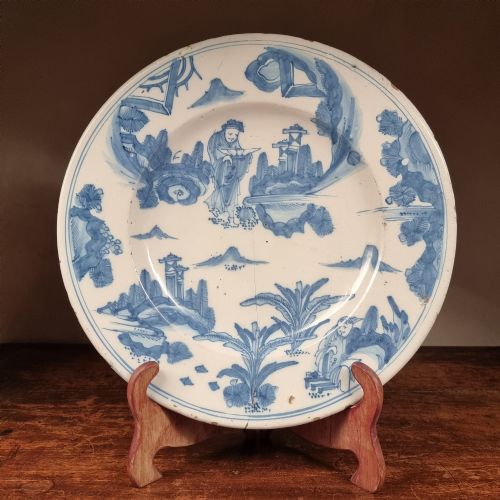
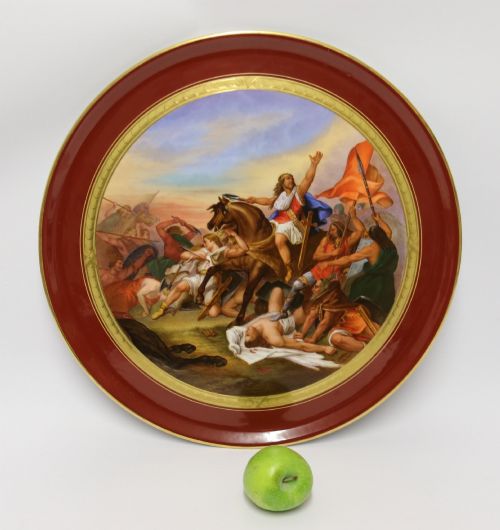
Firing took place inside wood or coal-burning kilns where high temperatures fused the vitreous glazes to the clay body, locking in hand-painted motifs like Chinoiserie landscapes, narrative battle scenes, or symmetrical foliage. Specialised techniques such as moriage applied raised slip decoration to Satsuma wares, adding tactile dimension to the finished surface.
Several platters depict the Seven Lucky Gods sharing space with traditional Dutch windmills and intricate Japanese peonies.
Assessing visual standard and execution
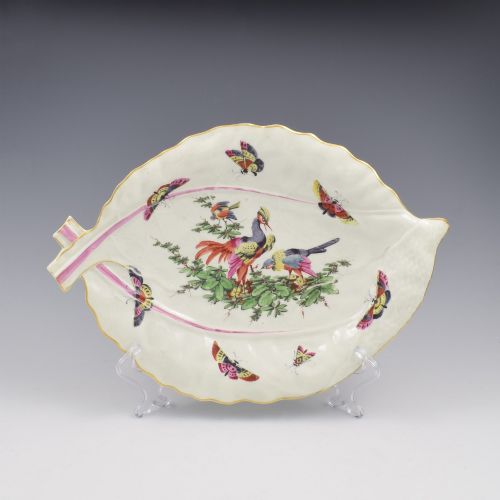
Quality rests entirely on the crispness of the hand-painted brushwork and the complexity of the pigment layering across the surface. Superior examples demonstrate confident, fluid lines in intricate motifs such as peacocks, figures, or floral panels, whereas lesser pieces exhibit rushed or heavy-handed execution.
The stability of the glaze and the purity of the white ground separate ordinary production from masterwork output, alongside the precision achieved during high-temperature kiln firing. Heavier, well-balanced ceramic bodies with intact original enamels and minimal kiln distortion represent the peak of the maker's art.
John Davenport of Longport·William Yale
The Antique Ceramic Wall Platter Glossary
- Charger
- A large ornamental plate, typically exceeding thirty centimetres in diameter, created specifically for display on furniture or walls rather than for serving food.
- Tin-Glazed Earthenware
- Pottery coated with an opaque white tin oxide glaze that provides a smooth, pale ground for painting in imitation of expensive imported porcelain.
- Imari
- A Japanese export style originating in Arita, defined by a distinct palette of cobalt blue, iron red, and gold applied to porcelain bodies.
- Moriage
- A Japanese ceramic technique using liquid clay trailed from a syringe to build up raised decorative patterns and textured surfaces.
- Chinoiserie
- European artistic interpretation and imitation of Chinese and East Asian decorative styles, popular on 18th-century Delft and porcelain dishes.
Antique Ceramic Wall Platter: Frequently Asked Questions
How were antique chargers hung on walls?
Many large antique dishes were manufactured with pierced foot rings designed to take cord, or they relied on heavy brass wire spring clips fitted securely around the rim by later owners. These mounting methods allowed heavy earthenware and porcelain platters to be displayed safely at eye level without risking table damage.
When hanging heavier pieces today, sturdy wall fixings and specialised weight-rated display brackets remain essential to support the substantial mass of 18th and 19th-century ceramics.
What is the difference between Delft and Imari?
Delft refers to tin-glazed earthenware originating primarily in the Netherlands and England, typically featuring blue and white or polychrome designs on a chalky opaque glaze. Imari denotes Japanese porcelain decorated in rich cobalt blue, burnt orange, and gilt highlights.
While Delft relies on absorbent earthenware bodies and opaque surface glazes, Imari utilises vitrified, translucent porcelain fired at significantly higher temperatures with distinct eastern motifs.
Can antique ceramic platters still be used for dining?
Most antique wall platters and chargers are best reserved for display rather than daily culinary use due to their age, historical significance, and potential glaze sensitivity. Historic tin-glazed earthenware and soft-paste porcelains can absorb moisture or sustain surface scratching from modern cutlery.
Exhibiting these pieces on walls or sturdy plate stands protects their fragile hand-painted surfaces from the wear and tear associated with regular food service.
How do I identify a 18th-century charger?
Eighteenth-century chargers typically feature thick, heavy earthenware bodies with hand-thrown concentric ridges visible on the unglazed base. The tin glaze on these early pieces often shows minor pitting, crazing, or slight fritting around the exposed rims where the soft body meets the kiln support.
Pigment application on these pieces displays the soft, bleeding edges characteristic of iron-based or cobalt colours sinking into wet or semi-fired glaze layers.