




Blue Earthenware Charger
These large blue earthenware charger pieces deliver bold cobalt decoration across substantial wall-hanging surfaces.
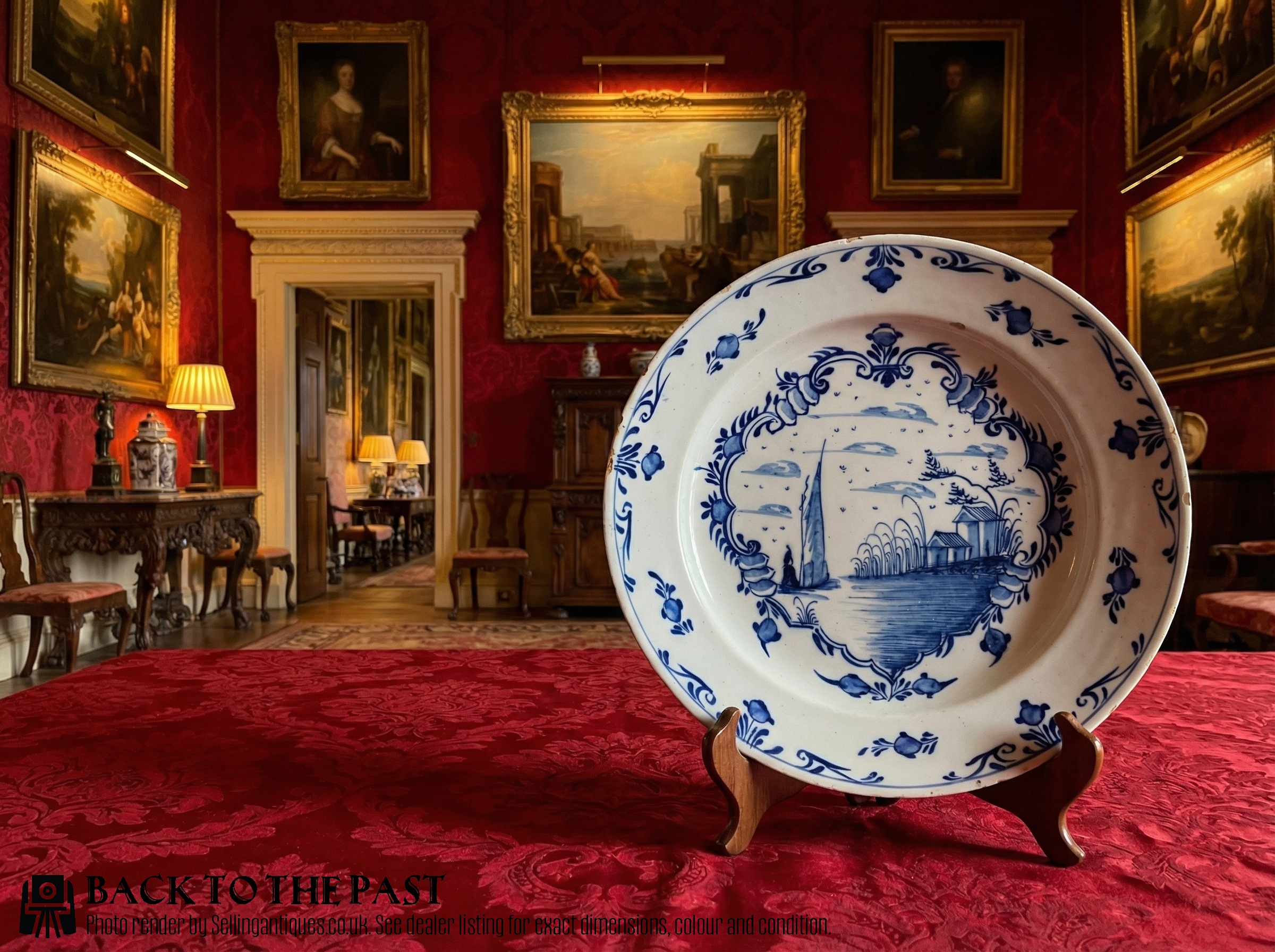
Blue Earthenware Charger
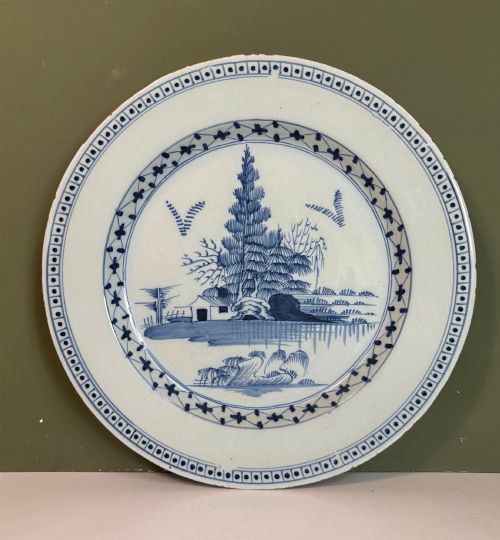
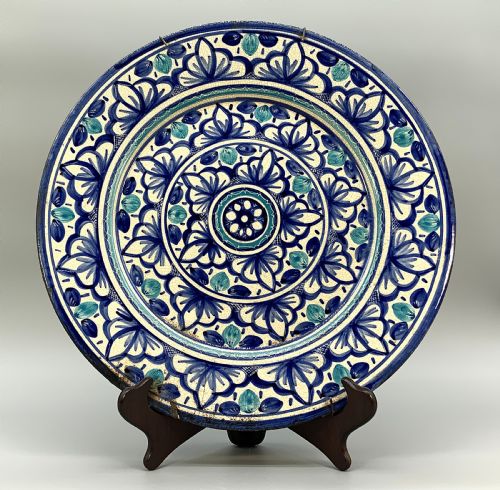
A blue earthenware charger is a wide decorative plate or serving platter finished in tin glaze and cobalt pigment. When searching this phrase, a buyer encounters substantial round display dishes designed to hang on walls or anchor large sideboards.
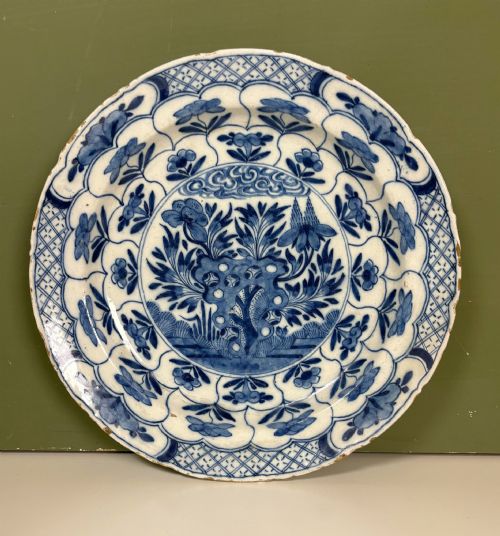
The pieces on this page span several centuries, originating from English potteries, Dutch kilns, and continental workshops. Seventeenth-century and eighteenth-century Delftware examples appear frequently alongside nineteenth-century transferware and faience productions.
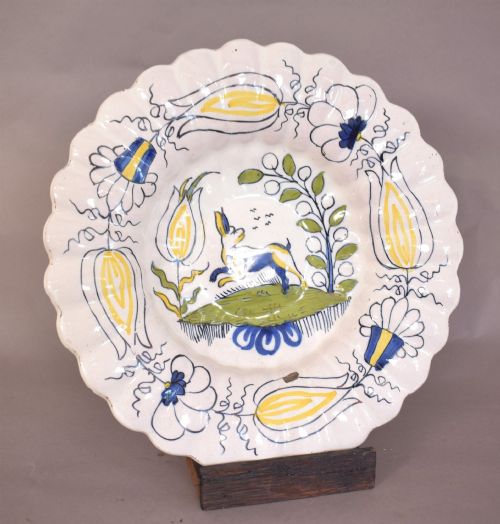
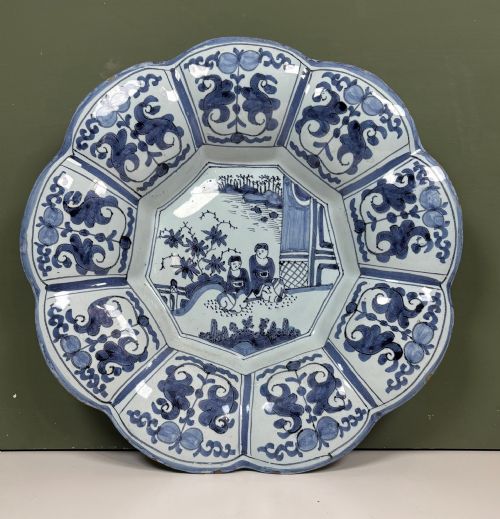
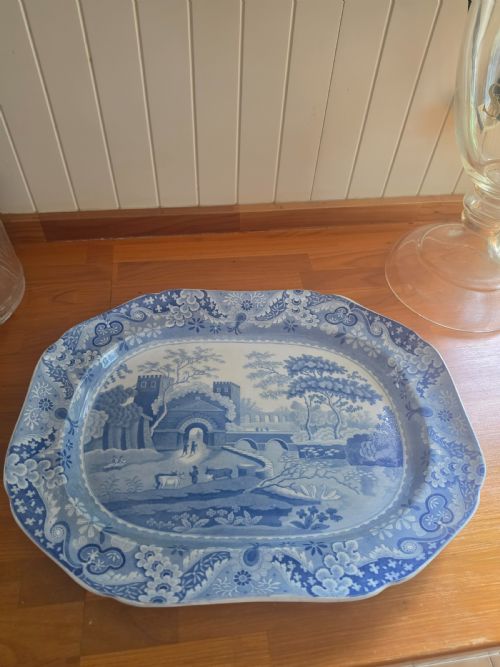
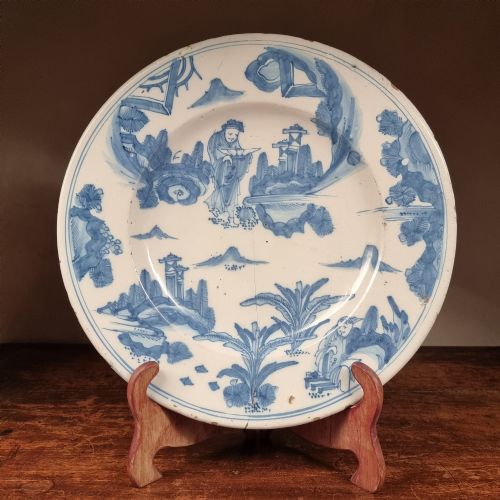
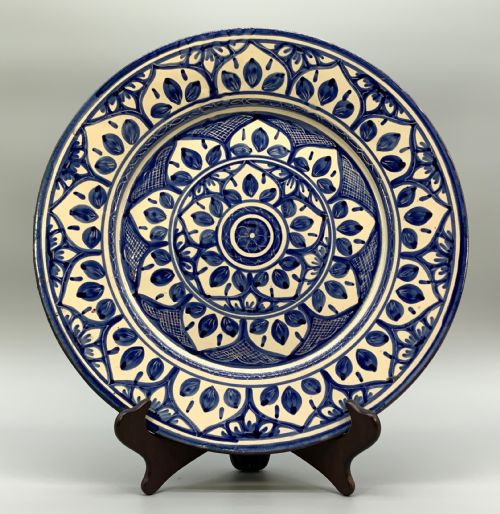
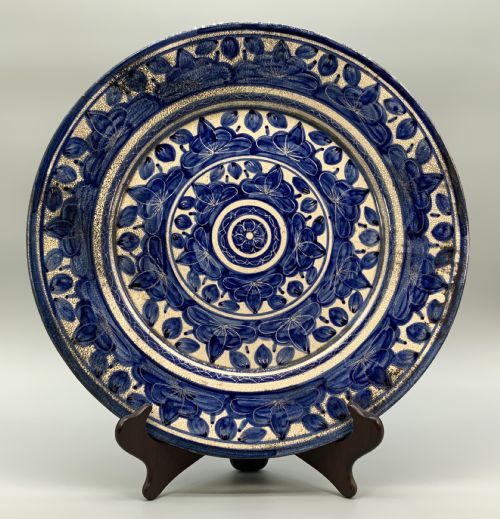
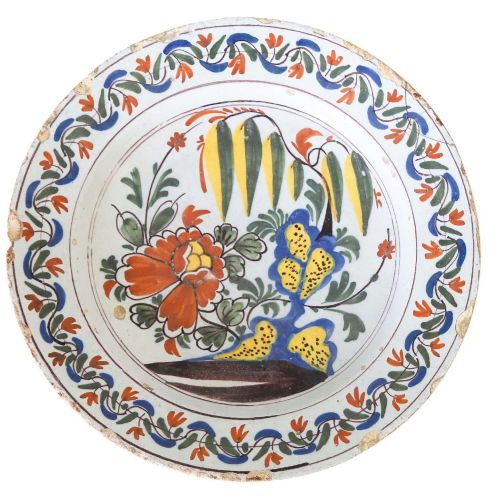
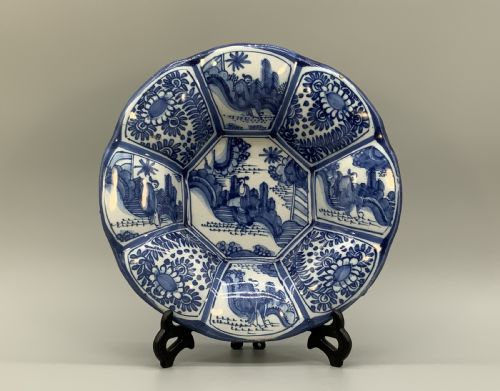
Forms range from shallow bowls and lobed dishes to massive meat platters and marriage plates. Many carry classical scenes, floral motifs, or Chinoiserie patterns painted directly onto the porous ceramic body.
How they were made
Potters shaped the earthenware body from clay before applying an opaque tin-glazed coating that dried to a smooth white surface. Artisans painted cobalt oxide motifs directly onto this absorbent glaze before the final firing fixed the deep blue pigment.
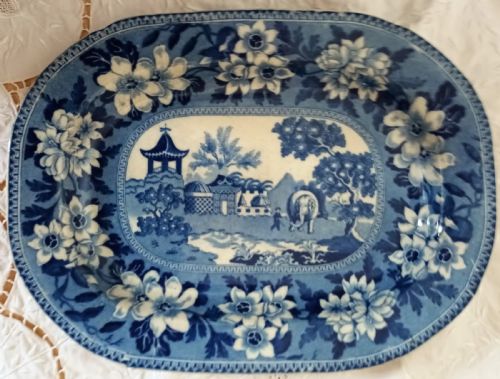
Transfer printing emerged in later periods to apply intricate patterns mechanically onto ceramic platters. Hand-painted polychrome details occasionally supplement the cobalt oxide, adding manganese purple or copper green highlights to the design.
Listings span periods from the 17th century through the Victorian era, utilising tin glaze, earthenware, and cobalt pigment.
What varies in quality
Quality rests in the crispness of the cobalt brushwork and the stability of the tin glaze across the broad centre. Early seventeenth-century and eighteenth-century pieces show organic variation in the pigment, whereas later transferware exhibits mechanical precision.
The depth and diameter of the charger plate dictate its visual presence on a wall. Intact rims and minimal glaze flaking preserve the integrity of these fragile ceramic surfaces.
Van Genden·Spode·John Rogers and Son
The Blue Earthenware Charger Glossary
- Tin-Glaze
- A ceramic finish made by adding tin oxide to a lead glaze to create an opaque white background for painting. This surface absorbs cobalt pigment readily during decoration.
- Cobalt Oxide
- A mineral pigment used to achieve deep blue colour on pottery. It withstands high kiln temperatures without losing intensity.
- Delftware
- Tin-glazed earthenware produced in the Netherlands and England, often featuring blue and white decoration. The style borrows heavily from imported Chinese porcelain.
- Chinoiserie
- European interpretations of Chinese artistic motifs and landscapes. This style appears frequently on eighteenth-century plates and dishes.
- Faience
- European tin-glazed earthenware produced in France, Spain, and other continental regions. The term encompasses various decorative chargers and dishes.
- Kraak Style
- A Dutch and English interpretation of late Ming dynasty Chinese porcelain featuring segmented panel borders. These designs define many seventeenth-century chargers.
Blue Earthenware Charger: Frequently Asked Questions
How do I hang a heavy charger safely?
Large earthenware platters require dedicated wall-mounting hardware that supports the entire rim without placing stress on the centre. Spring-loaded brass wire hangers distributed evenly around the circumference provide a secure hold for display.
Ensure the wall fixing anchors directly into solid masonry or a timber stud. Heavy tin-glazed pieces should sit at a slight backward angle against the wall for maximum stability.
Were these large plates used for dining?
Historical chargers served primarily as ceremonial display pieces on sideboards or dining tables rather than daily tableware. Their generous diameter made them ideal for presenting meats or fruit at formal banquets.
Over time, many transitioned to purely decorative wall hangings because of their fragile tin-glazed surfaces and artistic value. Surviving examples often display suspension holes drilled into the foot rings during earlier centuries.
How do I tell seventeenth-century delft from later copies?
Early seventeenth-century delft bodies feel heavier and show irregular glaze pooling near the unglazed foot rim. The cobalt pigment often sinks deeply into the tin-glaze, creating soft borders around the painted motifs.
Later nineteenth-century revivals exhibit different clay densities and mechanical transfer marks beneath the glaze. Comparing foot rings and pigment behaviour reveals the manufacturing period.