
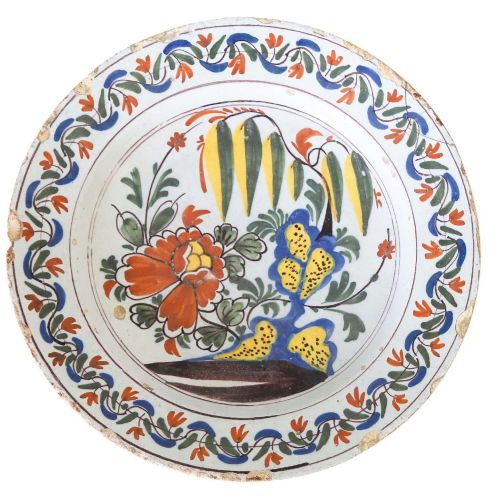


Floral Delft Display Plate
These floral delft display plate examples bring hand-painted tin-glazed earthenware into modern interiors with lasting charm.
Floral Delft Display Plate
A floral delft display plate is primarily an 18th century ceramic form produced in Dutch and English potteries. These chargers and decorative plates feature hand-painted botanical motifs executed in cobalt pigment, manganese, and polychrome palettes.
Most items encountered on this page belong to the 18th century, encompassing styles such as Dutch Delftware, Georgian, and Dutch Baroque. Forms range from large wall-hung chargers to smaller decorative plates and associated plate racks.
Makers and workshops of the period utilised tin-glazed earthenware to create bold decorative statements for domestic display. Collectors frequently find pairs alongside individual large chargers bearing geometric floral designs.
Materials and construction methods
Potters shaped these objects from earthenware bodies before coating them in an opaque white tin glaze that provided a smooth canvas for painting. Cobalt pigment and manganese were then applied directly to the unfired glaze.
Grand feu techniques allowed pigments to fuse with the tin glaze during a single high-temperature firing, resulting in durable surfaces with integrated colours. Polychrome examples received additional pigment applications for richer floral decoration.
Several items retain their original hanging quirks, reminding us that eighteenth-century walls were just as eager for colour as our own.
Factors influencing quality and appeal
The precision and fluidity of the hand-painted floral brushwork dictate the visual success of each individual piece. Master painters achieved greater depth and definition in their botanical arrangements compared to more repetitive workshop output.
Condition and glaze integrity also differentiate examples, as tin-glazed earthenware is naturally prone to edge chipping over centuries of handling. Larger chargers maintaining strong glaze coverage command particular attention from advanced collectors.
The Floral Delft Display Plate Glossary
- Tin-Glazed Earthenware
- A ceramic body covered in an opaque white glaze containing tin oxide. This technique creates the characteristic smooth surface found on historic delftware.
- Charger
- A large decorative plate traditionally intended for display on walls or sideboards rather than everyday dining use. These substantial pieces often measure well over twelve inches across.
- Polychrome
- A multi-coloured decorative scheme utilising several pigments beyond standard blue. On these items, it typically combines greens, yellows, oranges, and manganese.
- Grand Feu
- A high-temperature kiln firing technique that fuses painted pigments directly into the raw tin glaze. This process produces a characteristic gloss and permanence.
- Cobalt Pigment
- A metallic oxide used to create deep blue underglaze decoration on ceramics. It remains the most widely recognised colour on historic delft pieces.
Floral Delft Display Plate: Frequently Asked Questions
What is a delft charger?
A delft charger is a large decorative plate produced primarily during the eighteenth century for display in the home. These wide earthenware pieces were hung on walls or stood on dressers rather than used at the table.
The tin-glazed surface provided a bright white background for hand-painted cobalt or polychrome designs. They remain popular focal points for period and contemporary interior decoration.
How do I hang a heavy charger?
Displaying large earthenware plates requires specialised spring-loaded brass wire hangers that distribute weight evenly across the rim. Ensure the wall fixing is secure and anchored directly into studwork or masonry.
Avoid using adhesive disc hangers on historic tin-glazed earthenware because the glaze surface can flake or detach from the ceramic body over time.
Are these plates safe for food?
Historic tin-glazed earthenware is not recommended for serving food today due to the porous nature of the ceramic body and potential hairline cracks in the glaze. Centuries of ageing make the glaze vulnerable to staining and moisture absorption.
These pieces function best as purely decorative items or collector displays rather than active tableware.
How do I date an 18th century plate?
Dating relies on stylistic clues, glaze characteristics, and the physical weight and thickness of the earthenware body. Eighteenth-century pieces often exhibit slight warping from the kiln and subtle variations in the tin glaze.
Comparing the brushwork style and palette against documented workshop examples helps narrow down the period of production within the 1750 to 1800 bracket.