
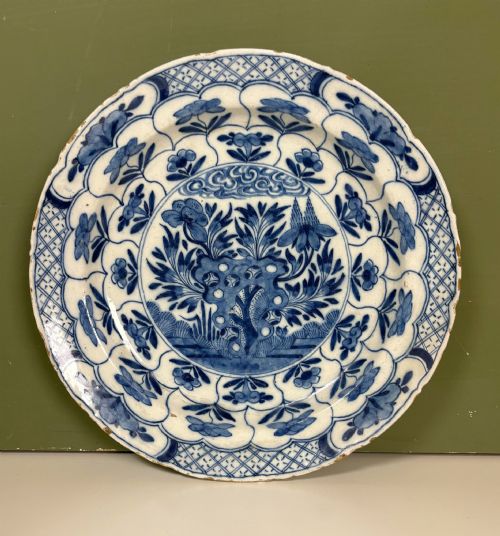
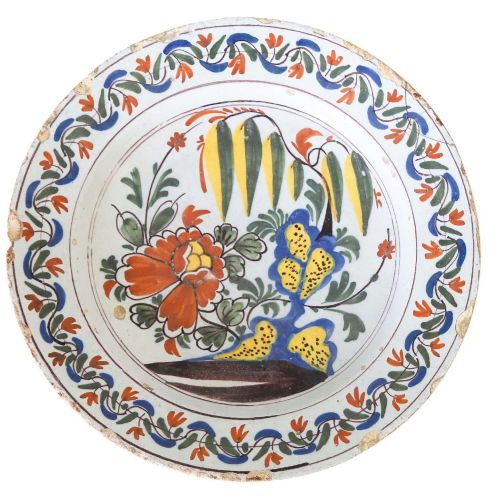


Antique Delft Floral Dish
An antique delft floral dish brings hand-painted colour and centuries of earthenware heritage directly to your table.
Antique Delft Floral Dish
When you search for an antique delft floral dish, you encounter chargers, plates and platters originating from the eighteenth century. These pieces encompass English polychrome work alongside Dutch delftware from periods such as the Dutch Baroque and Georgian eras.
The objects take the form of decorative plates, large chargers and pairs of smaller plates. Most examples belong to the eighteenth century, spanning periods around seventeen hundred through to seventeen eighty.
How they were made
Potters shaped clay into earthenware bodies before applying a tin glaze that provided an opaque white surface. Cobalt pigment and polychrome colours were then hand-painted directly onto the unfired glaze.
Firing transformed the tin-glazed earthenware, fusing the mineral pigments with the background glaze to fix the floral and geometric patterns. This technique required precise kiln control to achieve the characteristic depth of Dutch and English delftware.
Some eighteenth-century chargers bear kiln scars where tiny support pins touched the glaze, leaving permanent signatures of their fiery birth.
What varies in quality
The precision and fluidity of the hand-painted floral brushwork separate standard plates from superior chargers. Finer pieces display confident polychrome detailing and well-balanced geometric floral compositions.
The smoothness and opacity of the tin glaze also determine quality, alongside the crispness of the earthenware form. Larger chargers require greater skill to fire without distortion, making substantial plates notable achievements of eighteenth-century kilns.
The Antique Delft Floral Dish Glossary
- Tin-glazed earthenware
- Earthenware pottery covered with a white tin oxide glaze that provides an opaque ground for painting. This method defines the primary material of all delftware.
- Charger
- A large decorative plate, typically exceeding twelve inches in diameter, designed for display or ceremonial use. These form a major portion of the larger platters available.
- Polychrome
- Decoration utilising multiple colours rather than a single pigment like cobalt blue. Eighteenth-century examples often combine floral hues across tin-glazed surfaces.
- Cobalt pigment
- A metallic oxide used to produce deep blue painted decoration on ceramic wares. It remains stable at high kiln temperatures, yielding intense hues.
- Dutch delftware
- Tin-glazed earthenware produced in the Netherlands, particularly around Delft, during periods spanning the seventeenth and eighteenth centuries. It heavily influenced contemporary English production.
Antique Delft Floral Dish: Frequently Asked Questions
Were these dishes used for food?
Many large chargers served primarily for display on sideboards or walls rather than daily dining. Smaller plates saw functional use at table before surviving as decorative items.
The porous earthenware body and tin glaze mean these pieces require gentle handling if used for serving today. Most collectors now display them to protect the hand-painted surfaces.
How do I tell English and Dutch delft apart?
Distinguishing English delft from Dutch delft involves examining the body fabric, glaze characteristics, and palette choices. English pieces often utilise slightly different clay bodies and local painting conventions compared to workshops in Delft.
Both traditions rely on tin-glazed earthenware and cobalt or polychrome pigments. Comparing the specific brushwork style helps attribute pieces to particular regional aesthetics.
How do I date an eighteenth century delft plate?
Dating relies on stylistic markers, potting characteristics, and the evolution of floral motifs across the eighteenth century. Early pieces often reflect Dutch Baroque influences, while later items align with Georgian preferences.
Tin glaze consistency and pigment tones also shift across decades from seventeen hundred to eighteen hundred. Examining the foot ring and raw clay body provides additional clues to age.