
Antique Black Accent Chair
An antique black accent chair brings dark timber and painted surfaces into a room, offering a seat with strong visual presence.
Antique Black Accent Chair
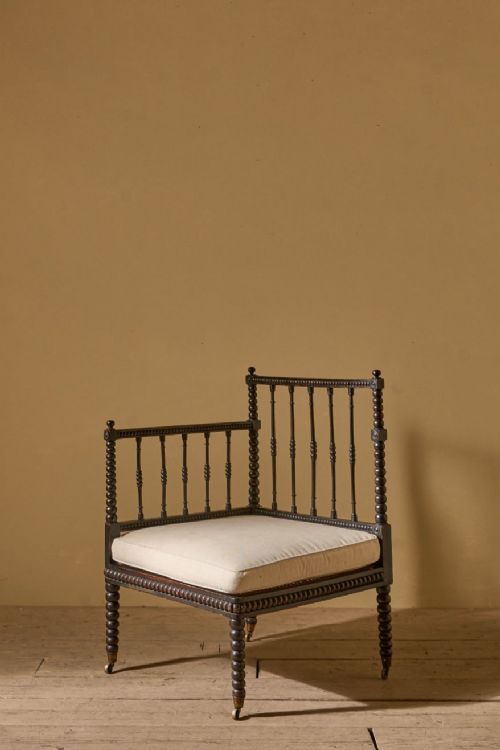
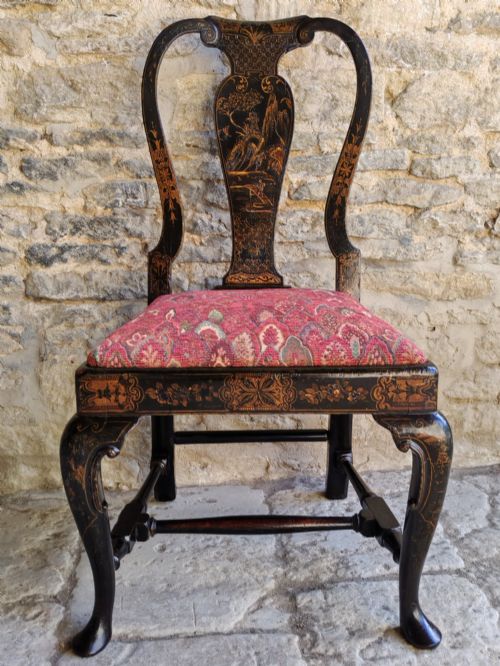
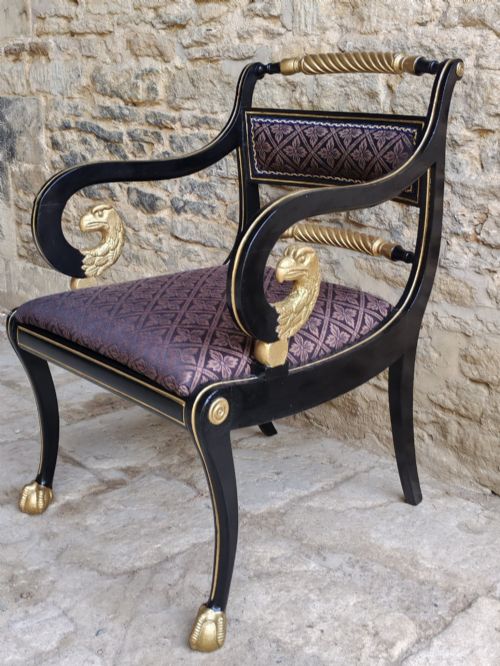
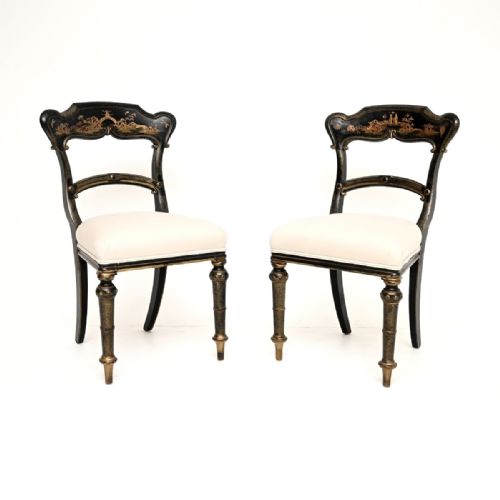
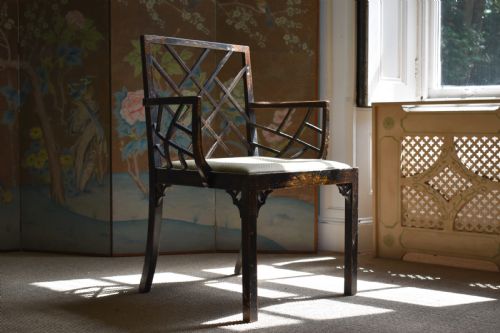
An antique black accent chair spans forms from low salon chairs and side chairs to library armchairs and rocking chairs, originating across the seventeenth, eighteenth, nineteenth, and early twentieth centuries. These seats appear in styles such as Regency, Victorian, Aesthetic Movement, Gothic Revival, and Chinoiserie, drawing on British, French, and Indian workshop traditions.
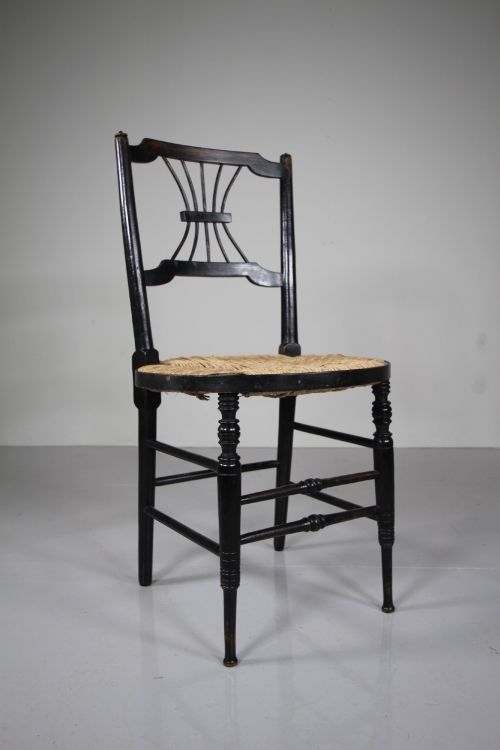
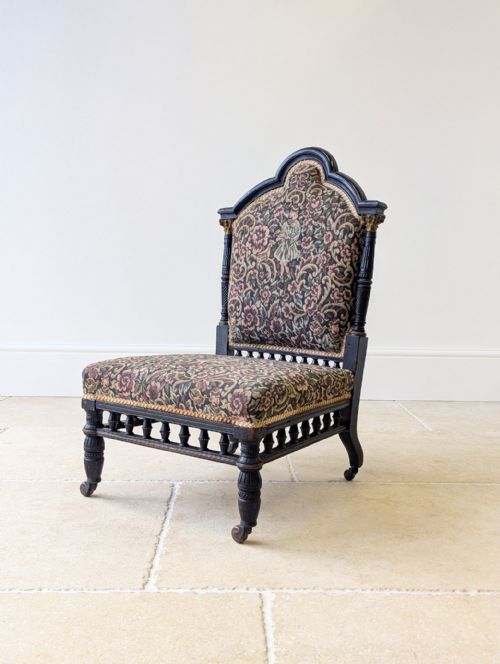
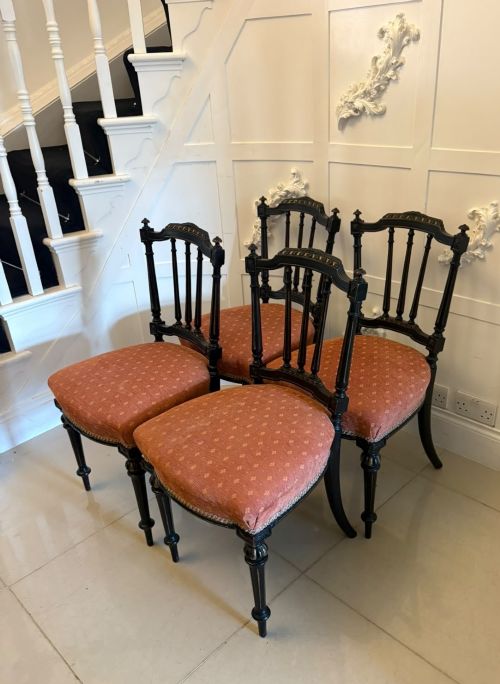
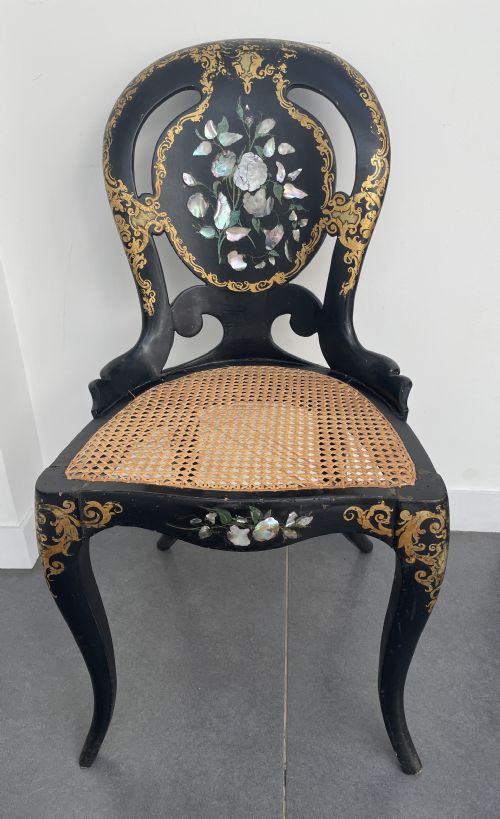
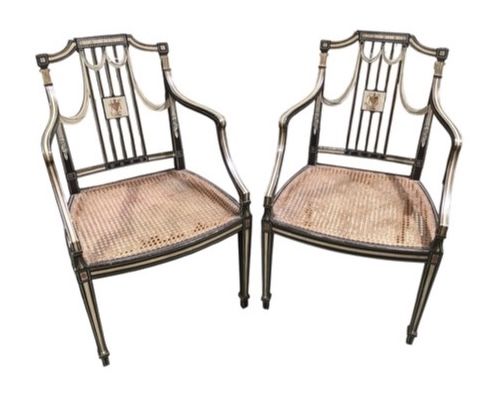
The most common examples on this page date to the nineteenth century, particularly the Victorian period and the Aesthetic Movement. These pieces utilise ebonised wood or dark painted finishes, often incorporating cane seats, upholstery in fabric or velvet, and decorative details like mother of pearl or gilding.
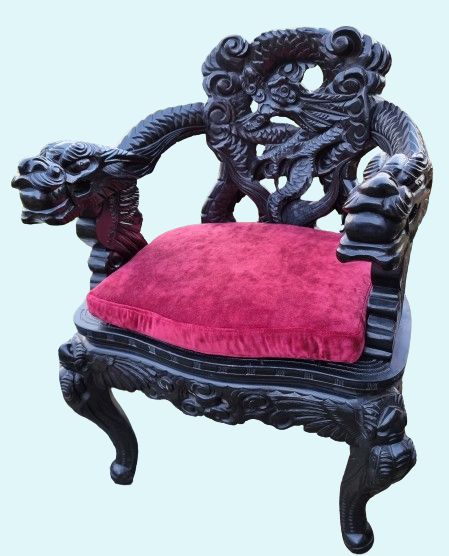
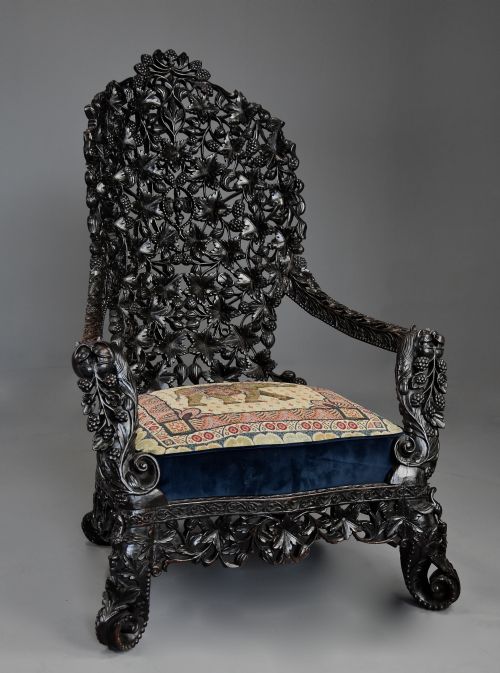
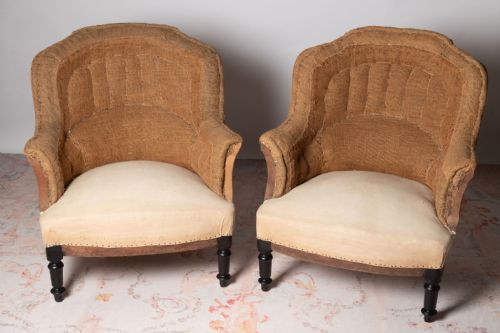
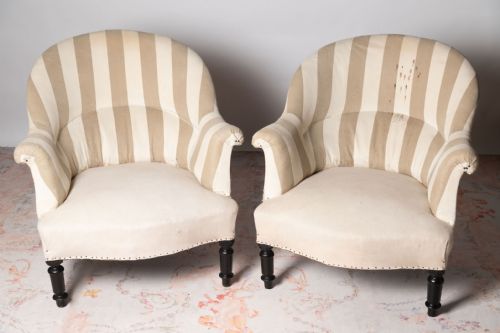
Regional variations include Anglo-Indian carved blackwood pieces, French salon chairs, and vernacular British windsor or spinning chairs. Each form serves a specific function, from decorative hall seating to low chairs designed for domestic parlours.
How they were made
Makers built these frames using traditional timbers such as ash, elm, beech, birch, walnut, and mahogany, applying ebonising, black lacquer, or dark paint to achieve the desired tone. Solid ebony and blackwood also appear in specific regional pieces imported from India.
Surface decoration involved intricate hand carving, japanning, parcel gilt highlights, and mother of pearl inlay embedded directly into the dark wood or papier mâché. Seats utilised woven cane panels, traditional stuffing with fabric or velvet covers, or plain wooden planks.
Stags antler and musical mechanisms occasionally appear inside the wooden frames.
What varies in quality
The distinction between ordinary and superior pieces rests on the crispness of the hand carving, the depth of the ebonising or lacquer work, and the integrity of the underlying timber frame. Early chairs with original surfaces and undisturbed construction details command greater attention than heavily refinished examples.
Design sophistication also marks the range, from simple provincial utility seating to elaborate Aesthetic Movement or Regency commissions featuring specialised joinery, brass mounts, or fine marquetry inlay.
William Morris·Collier and Plucknett
The Antique Black Accent Chair Glossary
- Ebonised wood
- Timber treated with stain, dye, or polish to imitate the deep black appearance of ebony. This technique gained widespread popularity during the nineteenth century, particularly in Victorian and Aesthetic Movement furniture.
- Cane
- Woven material made from the peeled bark of rattan palm, utilised for breathable seat panels and chair backs. It requires careful handling to prevent splitting over decades of use.
- Chinoiserie
- European artistic style reflecting Chinese motifs and decorative techniques, applied through lacquerwork and painted scenes. It appears frequently on eighteenth and nineteenth-century furniture.
- Aesthetic Movement
- Late nineteenth-century design current prioritising visual beauty over moral narrative, often featuring ebonised surfaces, Japanese-inspired motifs, and simplified geometric lines.
- Sabre leg
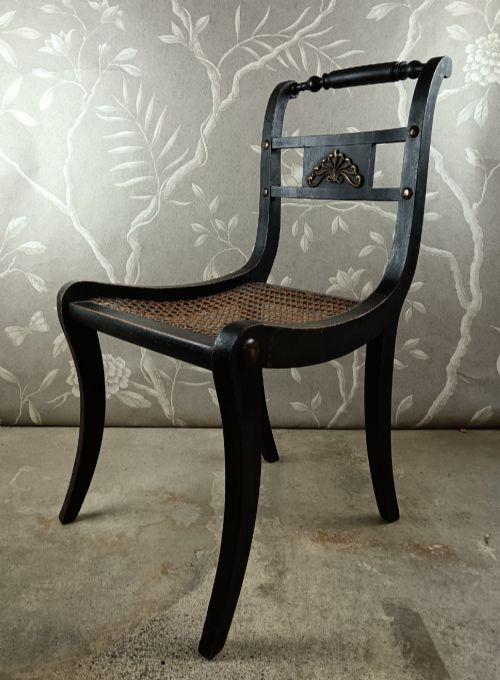
- Concave, outwardly curved furniture leg tapering towards the foot, characteristic of Regency design. This form borrows from ancient Greek and Roman klismos chairs.
Antique Black Accent Chair: Frequently Asked Questions
How do I identify an ebonised chair?
Examine the timber under bright light to check if the black finish penetrates the wood or sits as a surface paint. Look for wear on high-touch areas that reveals the underlying lighter wood grain.
Ebonising was common in nineteenth-century workshops to simulate costly exotic hardwoods. Genuine ebonising stains the timber pores rather than forming a thick opaque coat.
Where should I place an accent chair?
These chairs function well in corners, entryways, or paired with a reading lamp where their dark frames create a visual anchor. Their compact footprints suit bedrooms and smaller reception spaces.
Consider the surrounding palette to ensure the black finish contrasts effectively with walls and soft furnishings. Low salon chairs work well where standard seat heights might crowd a low table.
How do I care for cane seats?
Keep cane seats clean using a soft brush to remove dust from the woven interstices. Avoid placing them near direct heat sources that can dry out and snap the natural fibres.
Applying a damp sponge occasionally to the underside helps maintain the moisture of the cane. Professional re-caning remains necessary if the woven panel breaks entirely.
What defines Aesthetic Movement seating?
Aesthetic Movement chairs reject heavy Victorian ornamentation in favour of clean structural lines and ebonised finishes. They frequently incorporate spindled galleries and simple geometric forms inspired by Japanese design.
These pieces often bear maker stamps or labels from progressive design firms of the late nineteenth century. Their decoration relies on subtle contrast rather than lavish carving.