



Gilded Regency Chairs
These gilded regency chairs bring sculptural presence and golden warmth to a room, offering both decorative impact and comfortable seating.
Gilded Regency Chairs
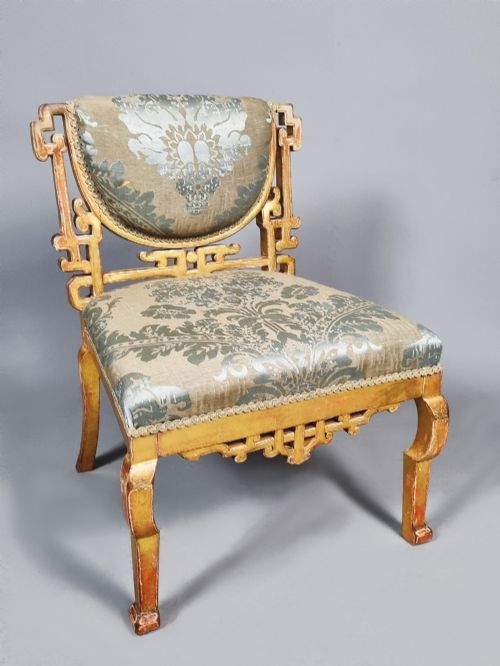
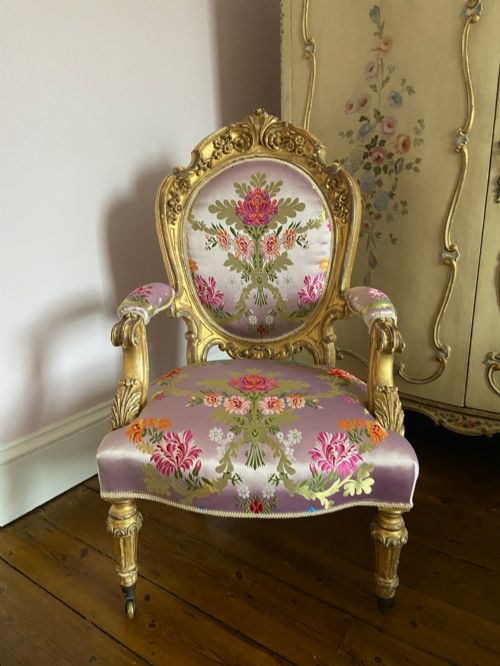
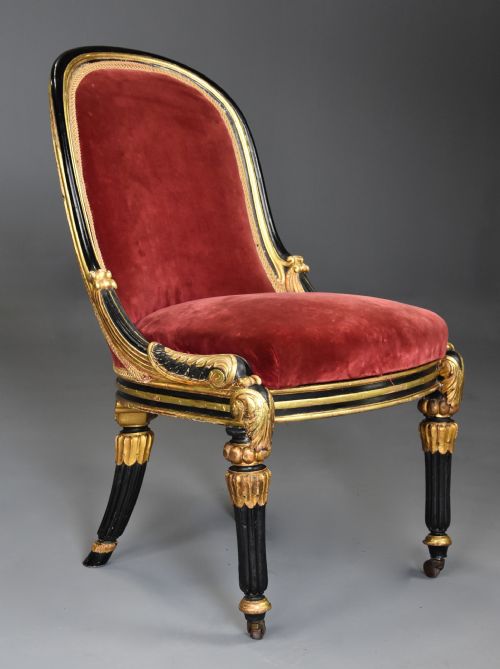
When you search for gilded regency chairs, you enter a field defined by neoclassical elegance, sculptural frames and rich surface decoration. These seating forms span armchairs, side chairs, hall chairs, settees, window seats and stools, shaped by the design vocabulary of the early nineteenth century and later revivals.
You are most likely to meet pieces finished in giltwood, ebonised wood with gilt highlights, or painted and gilded surfaces, often upholstered in velvet or fabric or featuring cane seats. The forms draw on Regency, Regency Revival, French Neoclassical, Louis XVI, Chinese Chippendale and Rococo Revival styles.
The selection ranges from genuine nineteenth-century examples to twentieth-century revivals like Regency Style and pieces from 1900, 1910 and 1920. Each object displays the characteristic proportion, curved lines and gilded detail that marked the period and its later revivals.
How they were made
Makers utilised wood, including walnut and ebonised wood, as the structural core for these frames, shaping them into open armchairs, curule stools and side chairs. Joinery and carving created the foundational form before surface preparation began.
Surfaces received layers of gold leaf or gilt paint to achieve the characteristic metallic sheen, often paired with brass elements and contrasting ebonised details. Upholstery completed the work, utilising fabric, velvet and cane to provide seat comfort.
Gilded Regency Chairs Retail Price Guide 2026
Typical asking prices for gilded regency chairs among the pieces listed under this phrase on Sellingantiques today, from the lower quarter to the upper quarter. They describe what is for sale here now, not the wider market.
What varies in quality
The finesse of the carved wooden detail and the depth of the gilding set the finer examples apart from simpler production. Crisp lines in the carving and skilful application of gold leaf indicate superior craftsmanship.
The integrity of the structural frame, the harmony of the upholstery materials such as velvet or cane, and the fidelity to period styles like French Neoclassical or Chinese Chippendale determine the overall standing of each piece.
Waugh & Son
The Gilded Regency Chairs Glossary
- Giltwood
- Wood that has been coated with gold leaf or gold paint. This finish creates the bright, reflective surface characteristic of many neoclassical seating pieces.
- Ebonised
- Wood treated to resemble ebony, typically by staining it black. This dark finish frequently provides a striking contrast against gilt highlights on Regency frames.
- Curule
- An ancient chair shape featuring two curved legs crossing to form an X-form base. These stools often incorporate gilt finishes and structural brass elements.
- Bergere
- An enclosed upholstered armchair with wooden framing. Walnut and painted frames frequently support the padded seat and back in these comfortable forms.
Gilded Regency Chairs: Frequently Asked Questions
What periods do these chairs cover?
The listings span the early nineteenth century into the twentieth century, including the Regency era alongside later revivals from 1900, 1910 and 1920.
You will find genuine nineteenth-century pieces alongside twentieth-century interpretations that mirror earlier neoclassical and Regency aesthetics.
How do I identify a true Regency piece?
Look for the characteristic structural lines, ebonised and gilt finishes, and traditional joinery typical of the early nineteenth century.
Comparing construction methods and decorative motifs against dated examples helps distinguish original pieces from later twentieth-century revivals.
Where were these seats used?
These chairs and stools served formal reception rooms, halls, drawing rooms and music rooms within grand interiors.
Specific forms like hall chairs, window seats and piano stools fulfilled particular functional roles in nineteenth-century domestic spaces.
What seating forms are available?
The category includes armchairs, side chairs, hall chairs, settees, occasional chairs, window seats, stools and adjustable piano stools.
Each form adapts the gilded and ebonised aesthetic to a different domestic seating requirement.