

Antique Cane Side Chairs
Antique cane side chairs bring lightness and texture to a room, offering practical seating shaped by centuries of cabinet-making traditions.
Antique Cane Side Chairs
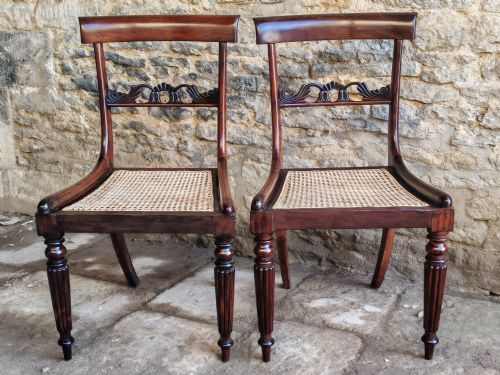
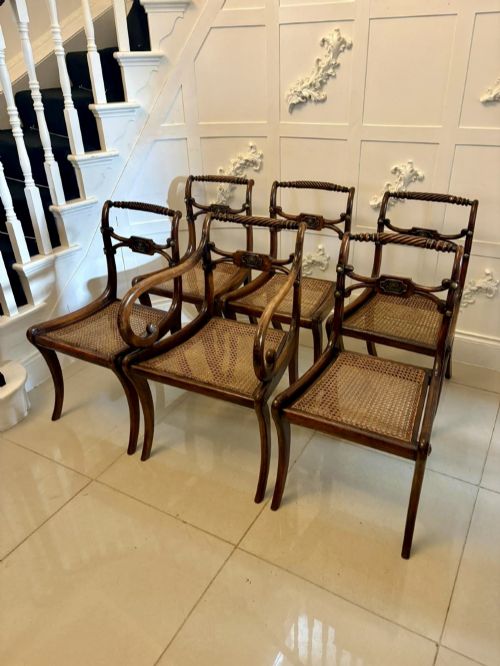
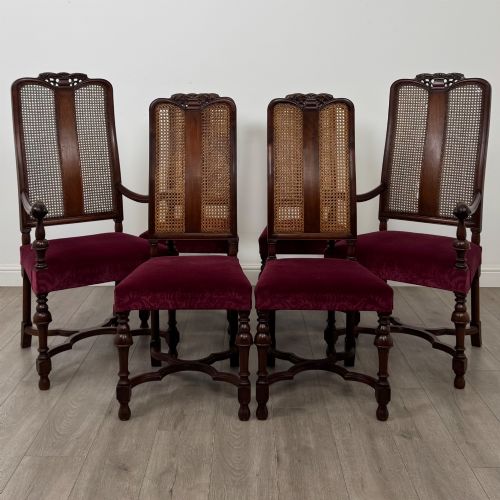
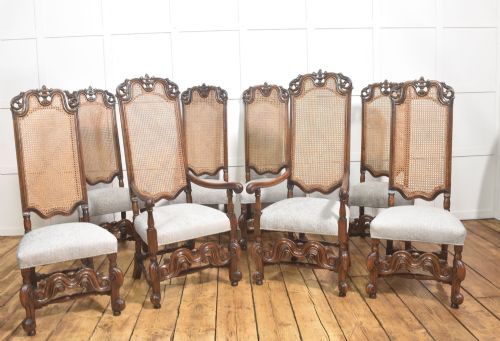
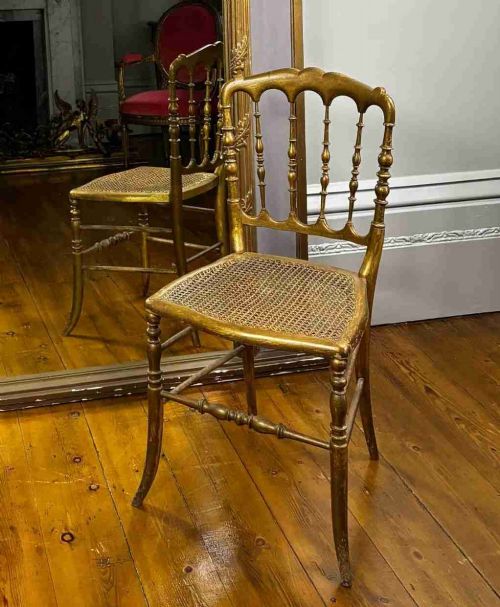
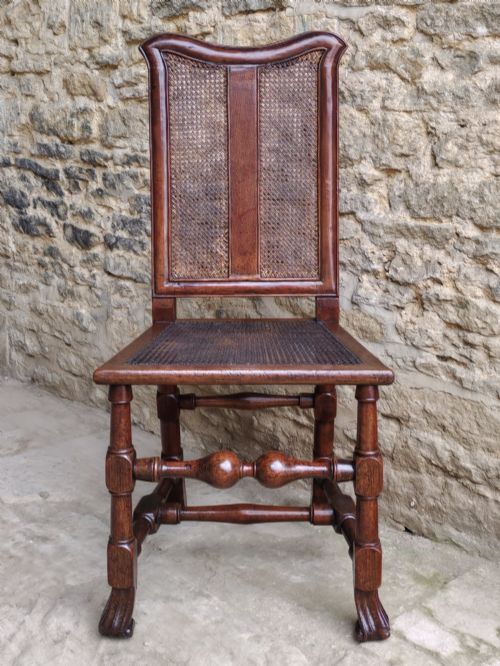
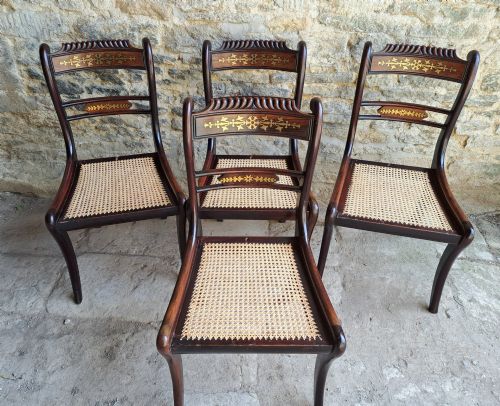
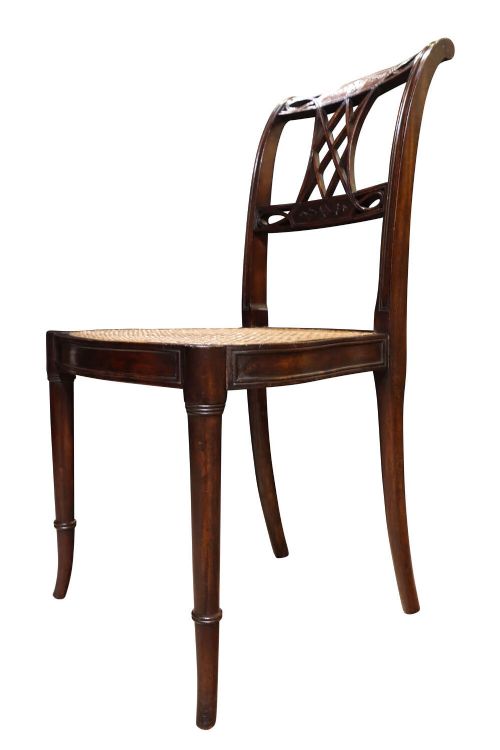
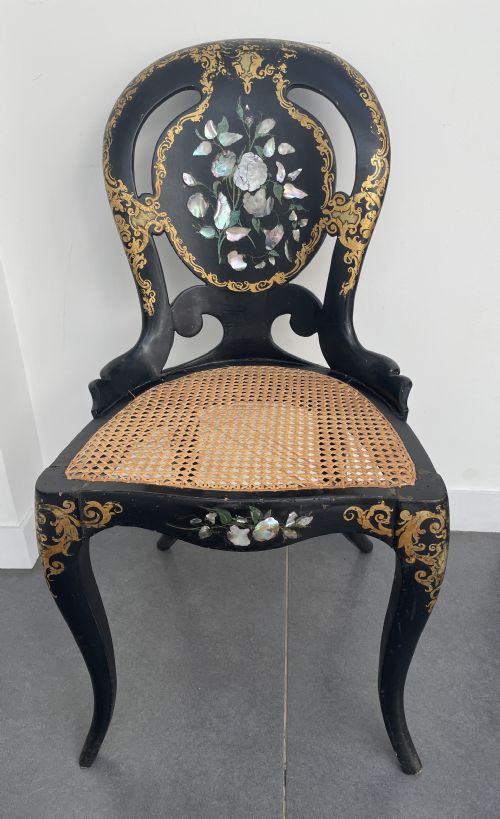
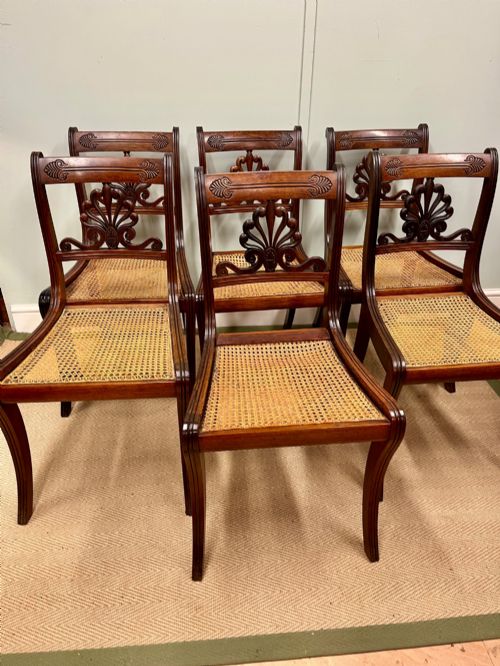
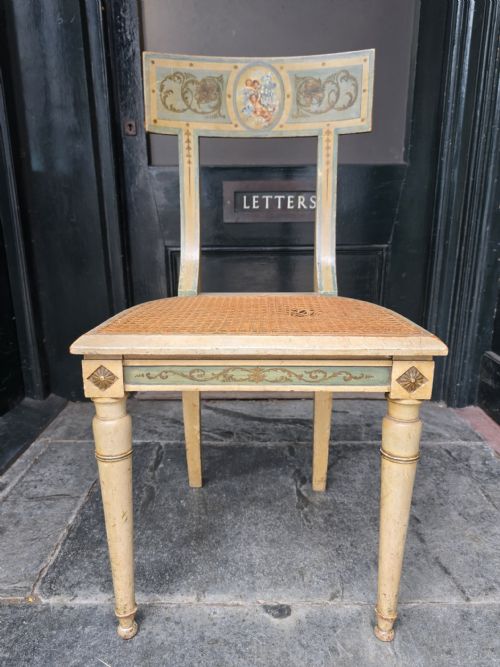
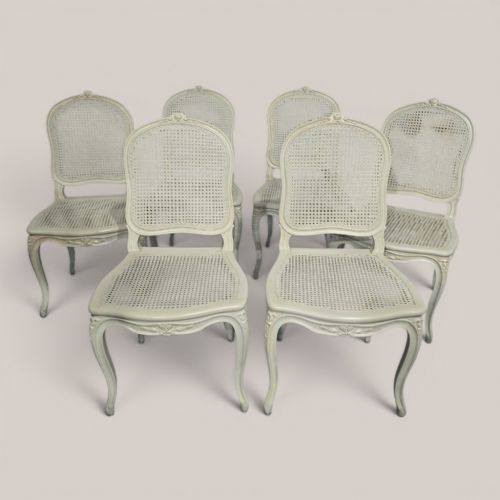
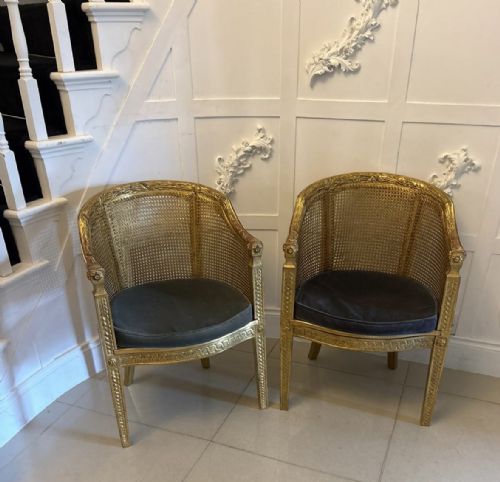
The selection ranges from formal Regency dining sets with sabre legs to smaller bedroom and salon chairs from the nineteenth and early twentieth centuries. These pieces reflect stylistic revivals, including Jacobean, Carolean, and Regency taste, alongside French influences like the bergère.
Most examples date from the nineteenth century onward, though stylistic revivals reach back to earlier centuries in form and ornament. Side chairs appear singly, in pairs, or in larger dining sets suited to domestic interiors.
Materials and Construction
Makers utilised dense hardwoods like mahogany, walnut, and rosewood for structural durability, alongside softer woods finished with paint, gilt, or ebonising. Timber selection dictated the carved detail and the weight of the frame, from slender bedroom chairs to robust library seating.
Caning involved hand-weaving split rattan through holes drilled around the seat or back frame, creating a resilient, flexible surface. This technique required precision to ensure the mesh maintained tension under weight while retaining its characteristic pattern.
Some nineteenth-century campaign chairs fold flat for travel, proving that portable comfort occupied Victorian innovators just as much as modern ones.
Assessing Quality
Quality rests in the crispness of the timber carving and the integrity of the joinery, where tight joints and well-seasoned woods ensure lasting stability. Finer examples display refined proportions, superior turning, and thoughtful integration of brass inlay or painted decoration.
The preservation and execution of the cane work distinguish higher-grade pieces, particularly where original weaving remains intact or period-appropriate restoration has been applied without altering the frame.
The Antique Cane Side Chairs Glossary
- Cane
- A material woven from split rattan used for seats and back panels. It provides a light, resilient surface.
- Sabre leg
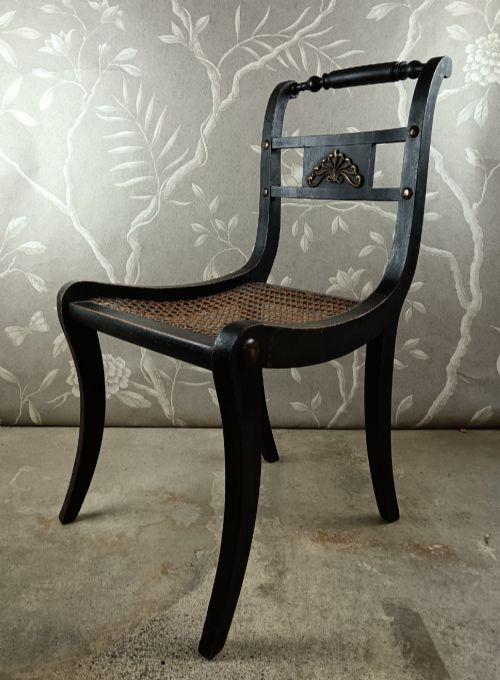
- A curved, outward-swooping furniture leg tapering toward the foot. This form is characteristic of Regency design.
- Klismos
- An ancient Greek chair shape with curved back rails and sabre legs. It was revived during the Regency period.
- Carving
- The art of cutting designs into wood surfaces. It defines the decorative character of revival styles.
Antique Cane Side Chairs: Frequently Asked Questions
How do I care for cane seats?
Keep cane seats away from direct heat sources and extreme dryness to prevent the rattan from becoming brittle. Occasional gentle dusting and wiping with a damp cloth help maintain the moisture of the fibres.
Avoid placing excessive or concentrated weight on the woven panels. Proper support preserves the tension of the weave over time.
Are these chairs suitable for daily dining?
Many antique cane side chairs were built for dining use and remain sturdy enough for regular seating. Selecting pieces with sound joinery ensures they withstand daily domestic life.
Heavier dining sets offer stability, while lighter bedroom chairs suit occasional use. Checking the frame construction determines the practical capability of each piece.
How do I identify a Regency period chair?
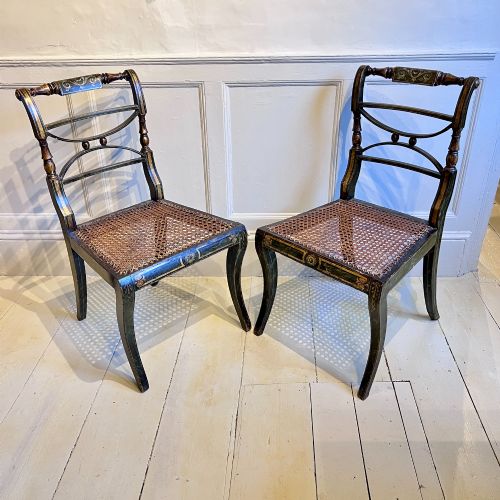
Regency chairs often feature classical motifs, sabre legs, and dark timbers like mahogany or rosewood. Ebonised finishes and brass inlay also point toward this early nineteenth-century era.
Proportions tend to be refined and architectural, drawing inspiration from ancient Greek and Roman designs. Revival pieces from later decades often mimic these specific characteristics.